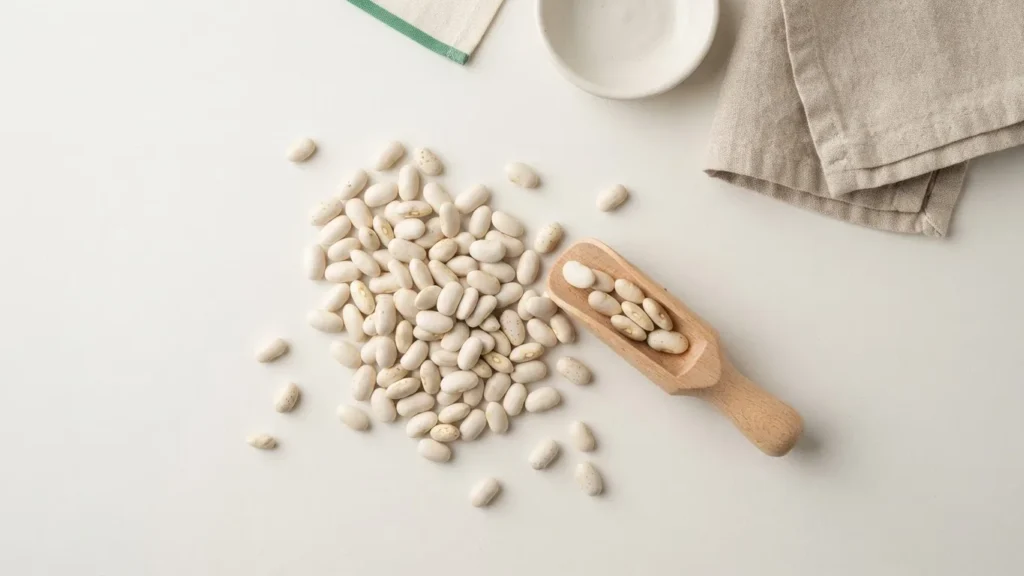
One cup of cooked, boiled navy beans without salt logs 19.11 g of dietary fiber and 0 mg of sodium – two numbers that move in opposite directions the moment the beans come out of a can instead of a pot. That split is the heart of navy beans nutrition: the same legume reads differently depending on how it was prepared and which serving base the figure is tied to. The numbers below are drawn from University Hospitals’ per-cup reference table, a USDA Foundation Foods record for canned beans, and the Daily Values published by the U.S. Food and Drug Administration, assembled here into one standardized reference table.
That fiber and folate load is what defines navy beans nutrition at the per-cup level. Canned navy beans are a separate record: a drained-and-rinsed, sodium-added sample reports 190 mg of sodium per 100 g, measured against the whole bean weight rather than a cup. Which figure applies to you depends on what you cooked and how you measured it.
What one cooked cup carries, line by line
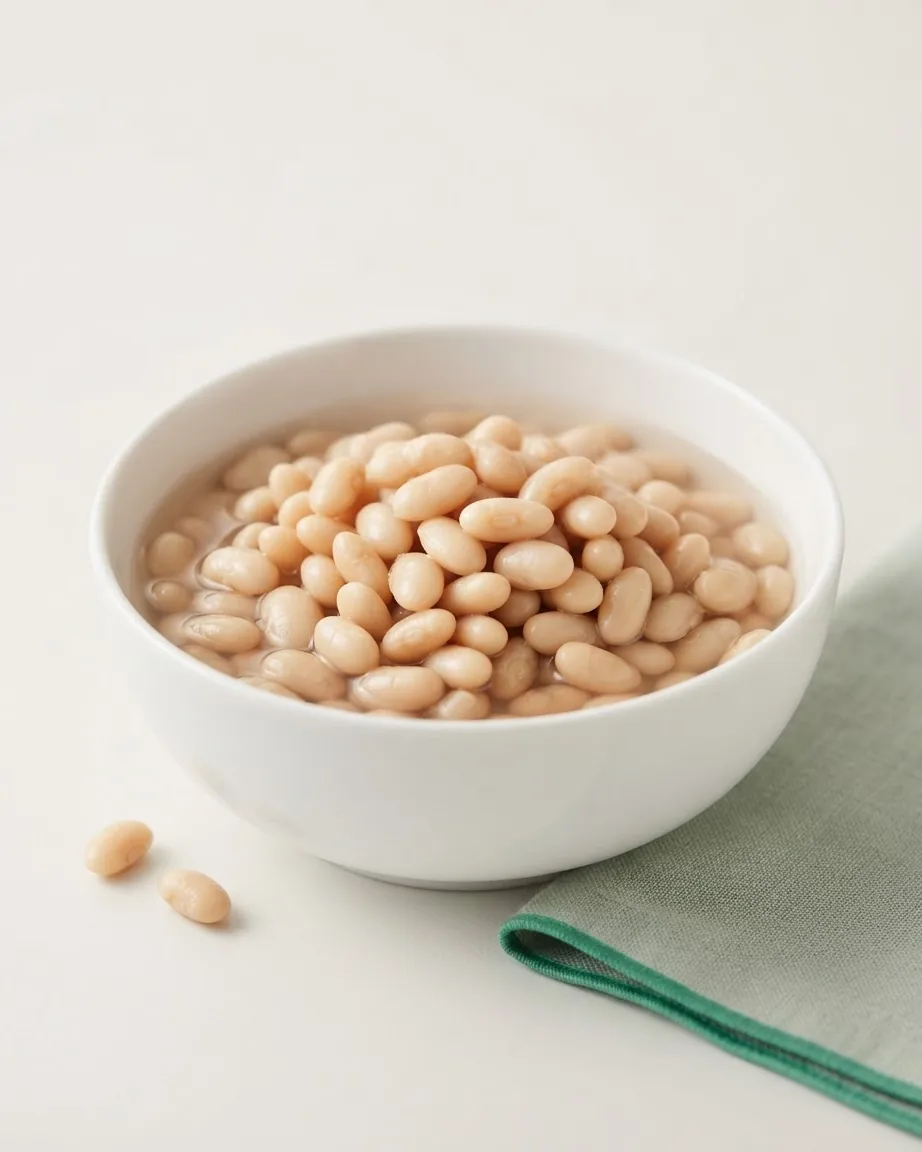
The per-cup reference below describes the plain version: dried navy beans boiled in water with no salt added. The serving base is one cup, and University Hospitals publishes the macro and micronutrient line for exactly that quantity. The 255-calorie figure comes from Medindia, which attributes its navy-bean profile to USDA data.
| Nutrient | Per 1 cup, cooked (boiled, no salt) |
|---|---|
| Calories | 255 |
| Protein | 14.98 g |
| Carbohydrate | 47.41 g |
| Dietary fiber | 19.11 g |
| Iron | 4.3 mg |
| Folate | 254.8 mcg DFE |
| Sodium | 0 mg |
The fiber number is the one that stands out. At 19.11 g in a single cup, it does most of the work in this profile, and it sits alongside 14.98 g of protein and 47.41 g of carbohydrate. The University Hospitals table for this food carries calories, protein, carbohydrate, fiber, iron, folate, and sodium; it does not break out a separate added-sugar or fat story, so this guide reports what the source records and nothing it doesn’t.
Sodium: 0 mg boiled, 190 mg canned per 100 g
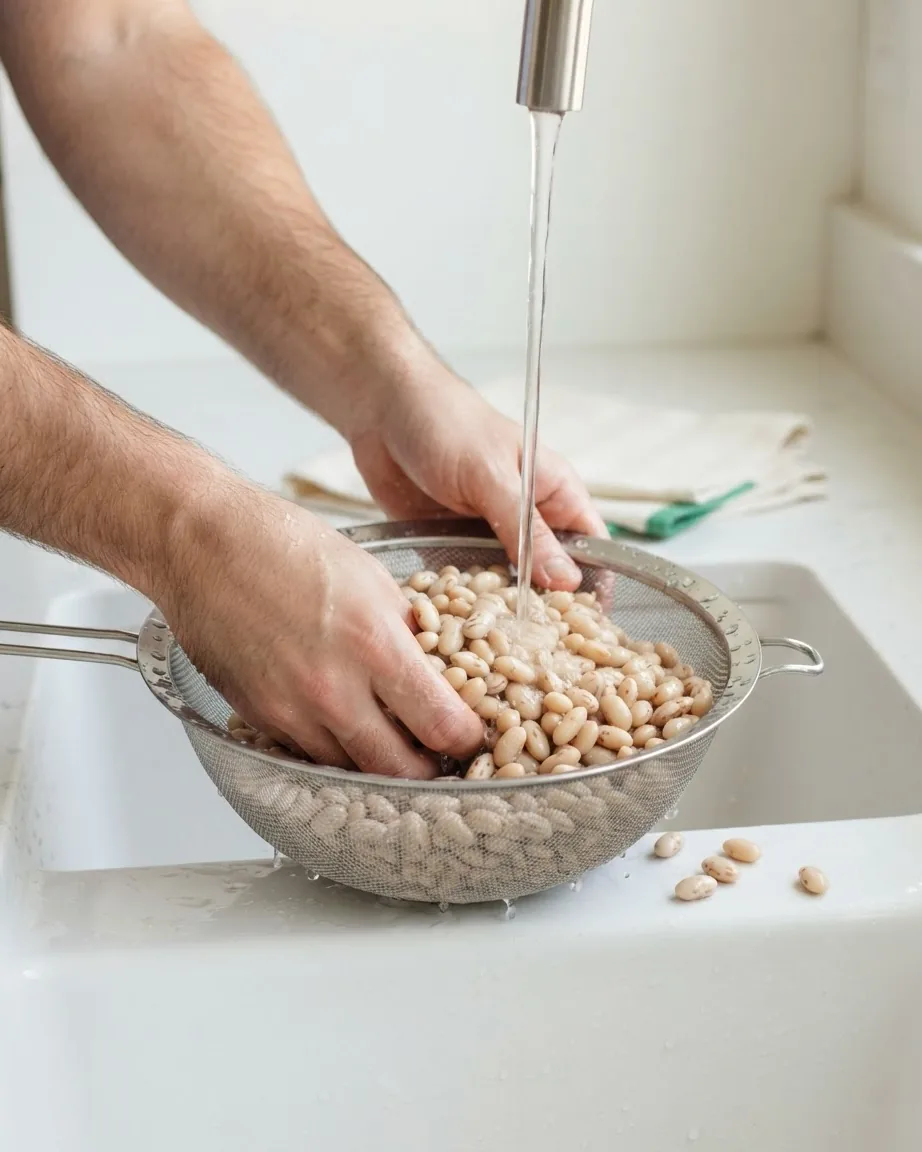
Sodium is where “navy beans” stops being one food. Boiled without salt, the per-cup figure is 0 mg. Canned is a different record on a different base. FoodData Explorer, reproducing USDA FoodData Central Foundation Foods record 2644286, reports 190 mg of sodium per 100 g for canned, sodium-added navy beans that were drained and rinsed.
Two things keep those numbers from being compared head to head. The canned value is per 100 g of beans, not per cup, so the serving bases don’t line up. And the two foods are in different preparation states – one salted at the cannery, one never salted at all. Treating them as interchangeable is the common error.
The canned figure also carries a sampling caveat worth knowing. It rests on eight market samples acquired in Maryland and Virginia during May 2023, which makes it a sampled food record rather than a fixed value for every brand on the shelf. Draining and rinsing canned beans lowers their sodium, but the size of that reduction isn’t settled here, so the number on the can you actually bought is the one to read. Against the FDA Daily Value of 2300 mg for sodium, 190 mg per 100 g sits well under the threshold that would flag the nutrient as high.
The 255-calorie figure and its missing serving basis
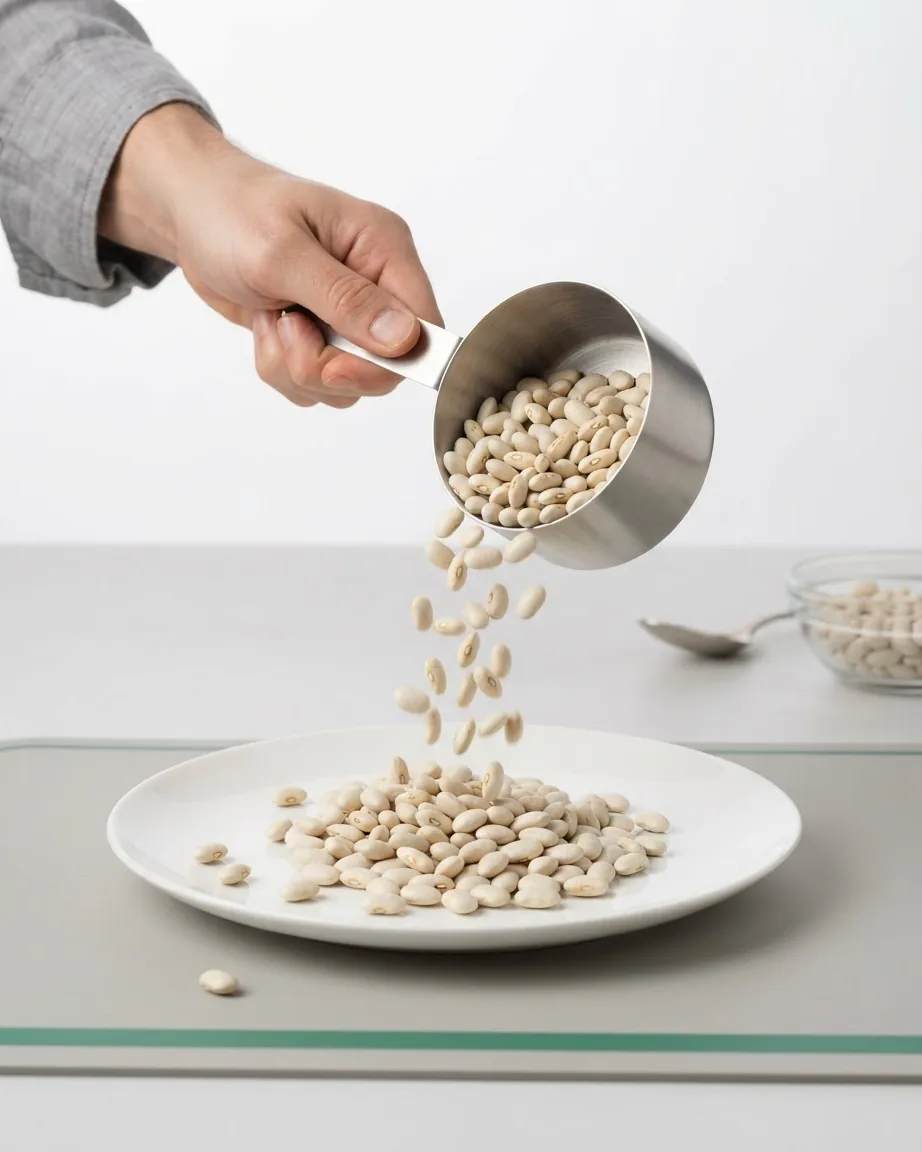
The 255-calorie figure needs a serving size attached before it means anything, and its source is read two ways. That basis is left unresolved by the secondary source. This guide anchors the cup to University Hospitals’ explicitly per-cup line and uses 255 as the matching calorie figure for that cup.
There’s a second misreading built into the word “serving.” The FDA sets serving sizes on labels to reflect how much people typically eat, not how much a person should eat; the serving size is a reference quantity, not a portion recommendation. A one-cup reference for navy beans is a measurement convenience, so the figures scale up or down with whatever you actually put on the plate.
Reading navy beans nutrition against FDA Daily Values
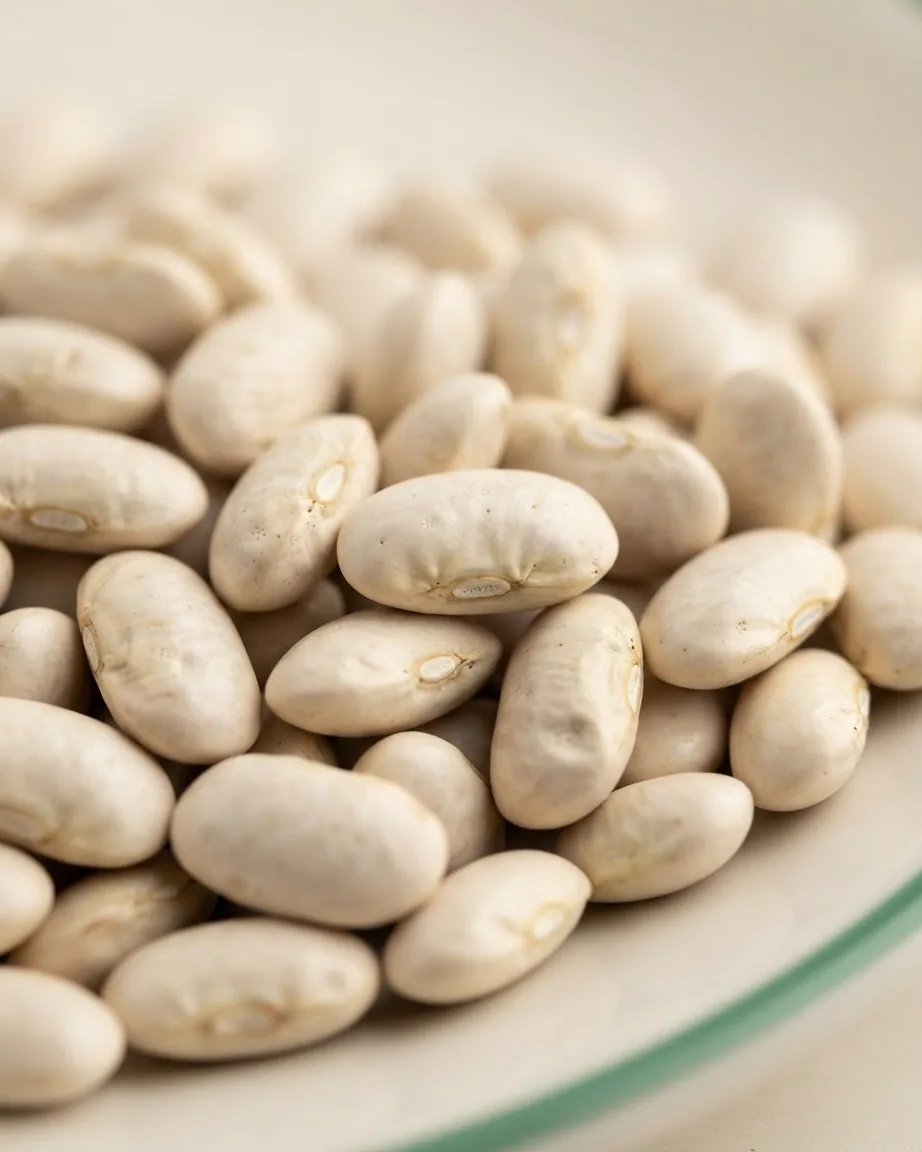
You don’t have to trust a secondary site’s calculated percentages. The FDA publishes the Daily Values and the rule for reading them, and the arithmetic is one division. The current Daily Values that matter for this food are 28 g for dietary fiber, 400 mcg DFE for folate, 18 mg for iron, and 2300 mg for sodium. The FDA treats 20% of the Daily Value or more per serving as a high amount of a nutrient.
The panel-to-DV check is simple: take the raw amount, divide by the Daily Value, and read the share. Run it on the per-cup navy-bean line yourself:
- Fiber: 19.11 g against a 28 g Daily Value – clears the 20% “high” mark by a wide margin.
- Folate: 254.8 mcg DFE against a 400 mcg DFE Daily Value – also clears 20%.
- Iron: 4.3 mg against an 18 mg Daily Value – clears 20% as listed.
- Sodium (canned): 190 mg per 100 g against a 2300 mg Daily Value – sits well below the threshold.
The raw amount and the Daily Value are the only two inputs you need, and both come from named sources rather than a middle layer that already did the math for you.
Iron on the label vs iron you absorb
The 4.3 mg of iron in a cup is listed iron, not absorbed iron, and the gap between those two is the part most tables skip. The iron in beans is nonheme iron, and the National Institutes of Health Office of Dietary Supplements describes nonheme absorption as affected by what else is in the meal and enhanced by vitamin C. Eating navy beans with a vitamin-C source – tomato, citrus, peppers – raises the share your body takes up, while the milligram figure on the panel stays the same.
For context on how far 4.3 mg goes, the federal iron recommendations run from 8 to 27 mg for adults depending on age, sex, and life stage, with higher needs during pregnancy pushing toward the top of that range. The Tolerable Upper Intake Level for iron is 45 mg for adults, and ranges from 40 mg upward for infants, children, and adolescents. A plate of beans comes nowhere near that ceiling; the upper-limit concern is tied to supplements, not food.
Matching the number to the bean you bought
Which line applies to you is a question of product form, not of reading a chart harder. If you simmered dried navy beans in plain water, the University Hospitals per-cup profile is your sheet, sodium included at 0 mg. If you opened a can, the 190 mg per 100 g from the USDA-derived record is a sampled average built from eight products in two states – useful as a reference, but the panel printed on your own can is the figure that governs your kitchen. Navy beans are one more line item among our pantry basics. See also our baked beans and bean sprouts breakdowns.
The per-cup %DV the panel doesn’t print
Here it is, worked straight from the per-cup amounts and the FDA Daily Values already quoted above (raw amount ÷ Daily Value × 100). All three sit well past the 20% line the FDA treats as a high amount:
- Fiber: 68% DV – 19.11 g against a 28 g Daily Value. More than three times the 20% threshold.
- Folate: 64% DV – 254.8 mcg DFE against a 400 mcg DFE Daily Value.
- Iron: 24% DV – 4.3 mg against an 18 mg Daily Value. The narrowest margin of the three, but still over the line.
Sodium is left out of this list on purpose: the only sodium figure available is 190 mg per 100 g for the canned bean, a different serving base than the per-cup amounts above, so it can’t share the same table.
Navy beans nutrition FAQ
Are canned navy beans as nutritious as home-cooked?
They’re close on protein, carbohydrate, and fiber, but sodium separates them. Home-boiled beans without salt record none; a drained-and-rinsed canned sample reports 190 mg per 100 g. That canned value was built from eight products bought in Maryland and Virginia, so your brand can land higher or lower – the printed label settles it, not a database average.
How much iron does a cup of navy beans give toward my daily need?
A cup lists 4.3 mg against an 18 mg Daily Value, so it clears the FDA’s 20% “high” mark on paper. The milligrams you actually take up are lower, since this is plant-form iron whose uptake shifts with the meal. Adding a vitamin-C food at the same sitting lifts the absorbed share without changing the number printed on any chart.
Can you get too much iron from eating beans?
Not realistically. The ceiling for adults is 45 mg per day, and for younger ages it starts around 40 mg. Even several cups of beans fall far short of that figure. Overshooting the upper limit is a supplement problem rather than a food one, because concentrated pills deliver iron in doses whole legumes never approach at the dinner table.
Does draining and rinsing canned beans change the nutrition much?
Rinsing mainly targets sodium, since some of the added salt sits in the packing liquid you pour off. How large the drop runs isn’t pinned to a confirmed figure here, so treat it as a real but unquantified reduction. Protein, carbohydrate, and fiber stay put. For your exact product, compare the drained-weight line on the can’s own panel.