


Understanding Saltines Nutritional Value: What the Numbers Really Mean
“Are saltines actually healthy, or are they just empty calories?” It’s a question I hear regularly in my practice—and after 16 years and over 3,200 patients, I understand why this simple cracker causes so much confusion. Saltines sit in nearly every pantry in America, yet few people truly understand their saltines nutritional value beyond the basic calorie count.
Here’s what I tell my patients: saltines aren’t inherently “good” or “bad”—context matters far more than any single food. Whether you’re managing blood pressure, recovering from stomach upset, or simply looking for a light snack, understanding the complete nutritional profile helps you make informed decisions. In my clinical experience, patients who learn to evaluate foods objectively—rather than labeling them—develop healthier, more sustainable eating patterns. For a broader perspective on making smart choices, see our complete snack nutrition guide.
Let me walk you through exactly what those nutrition facts mean and how saltines can fit into your daily diet without guilt or confusion.
Complete Saltines Nutritional Content Breakdown

The saltines nutritional value per standard serving reveals important details most consumers overlook. Based on USDA FoodData Central data, here’s what you’re actually consuming:
Standard Saltine Crackers Nutrition Facts (Per 5-Cracker Serving)
| Nutrient | Amount | % Daily Value |
|---|---|---|
| Calories | 60-70* | 3-3.5% |
| Total Fat | 1.5g | 2% |
| Saturated Fat | 0g | 0% |
| Trans Fat | 0g | — |
| Cholesterol | 0mg | 0% |
| Sodium | 135-150mg* | 6-7% |
| Total Carbohydrates | 11-12g | 4% |
| Dietary Fiber | 0g | 0% |
| Total Sugars | 0g | — |
| Protein | 1-2g | 2-4% |
| Iron | 0.7mg | 4% |
*Values may vary slightly by brand. Data sourced from USDA FoodData Central and manufacturer nutrition disclosures.
What stands out in my clinical practice is the sodium content. At 135-150mg per five crackers, the saltines calories remain modest, but sodium accumulates quickly if you’re eating them by the sleeve. I’ve worked with patients who consumed 600-900mg of sodium from saltines alone during a single snacking session—that’s approximately 26-39% of the recommended daily limit.
The saltines macros tell an interesting story: they’re predominantly carbohydrates with minimal protein and fat. This makes them a quick energy source but not particularly satiating on their own. The Dietary Guidelines for Americans emphasize including protein and fiber-rich foods to promote satiety. Pairing carbohydrate-rich snacks with protein or healthy fats may help support more stable blood sugar levels.
How Saltines Compare to Other Common Crackers

For a detailed side-by-side analysis, see our full crackers nutrition comparison guide.
| Cracker Type | Calories (per serving) | Sodium (mg) | Fiber (g) | Protein (g) |
|---|---|---|---|---|
| Saltines (5 crackers) | 60-70 | 135-150 | 0 | 1-2 |
| Whole Wheat Crackers (5 crackers) | 80 | 135 | 2 | 2 |
| Ritz Crackers (5 crackers) | 80 | 105 | 0 | 1 |
| Graham Crackers (2 sheets) | 130 | 170 | 1 | 2 |
| Rice Cakes (2 cakes) | 70 | 50 | 0 | 1 |
Wondering how other popular snacks compare? Our analysis of oreo nutrition facts provides another perspective on packaged snack options.
Saltines Health Benefits and Practical Applications
In my 16 years of clinical practice, I’ve observed that saltines serve specific practical purposes that extend beyond basic nutrition. Understanding these applications helps you use them strategically rather than mindlessly.
Digestive Support
A study of 45 gastroparesis patients published in Digestive Diseases and Sciences found that saltine crackers moderately improved symptoms. The researchers noted that bland, starchy, and salty foods like saltines were well-tolerated in this population. The saltines per serving provide easily digestible carbohydrates without the fats that can aggravate digestive discomfort. Many of my patients managing morning sickness, chemotherapy side effects, or acute gastritis find saltines helpful as a gentle first food. For more options, explore our gastroparesis diet foods recommendations.
However, I always caution patients: while saltines may help ease symptoms temporarily, they shouldn’t replace proper medical evaluation for persistent digestive issues. Consult your healthcare provider if nausea continues beyond a few days.
Blood Sugar Considerations
The saltines nutritional content includes 11-12 grams of refined carbohydrates per serving with virtually no fiber. This means they digest quickly, potentially causing rapid blood sugar fluctuations. For patients I counsel with diabetes or prediabetes, I recommend:
- Pairing saltines with protein (cheese, nut butter, hummus)
- Limiting portion size to 5-10 crackers
- Choosing whole grain alternatives when blood sugar stability is a priority
According to the NIH National Institute of Diabetes and Digestive and Kidney Diseases, combining carbohydrates with protein and fat slows glucose absorption and may help maintain steadier energy levels. For more ideas, see our guide to diabetes snack options that support stable blood sugar.
Sodium Awareness
The 135-150mg sodium per serving represents approximately 6-7% of the 2,300mg daily limit recommended by the FDA. For my patients managing hypertension or heart conditions, I emphasize tracking total daily sodium rather than eliminating saltines entirely. For practical meal planning strategies that account for sodium intake from various sources, see Garrett Thornhill’s industry analysis on Fast Food Sodium Content Guide.
Smart Portion Control and Dietary Integration
One of the most common mistakes I see in my practice is portion distortion with crackers. The standard saltines per serving is five crackers—yet most people eat far more without realizing it.
Practical Portion Strategies
Based on what I’ve seen work for hundreds of patients, here are evidence-based approaches:
Visual Portion Guide:
- 5 saltines = approximately the size of a deck of cards
- One sleeve typically contains 40 crackers (8 servings)
- A reasonable snack portion: 5-10 crackers with added protein
Mindful Eating Approach:
Rather than eating directly from the box, I recommend portioning crackers onto a plate. This simple strategy, part of my Real Food Navigation System, has helped clients develop awareness without restrictive counting.
Building Balanced Snacks with Saltines

The saltines nutritional value improves significantly when paired strategically. For more creative combinations, explore our healthy snack pairings guide.
| Pairing | Added Benefits | Total Calories (approx.) |
|---|---|---|
| 5 saltines + 1 oz cheese | Protein, calcium, satiety | ~180 |
| 5 saltines + 2 tbsp hummus | Fiber, plant protein | ~140 |
| 5 saltines + 1 tbsp peanut butter | Healthy fats, protein | ~165 |
| 5 saltines + ¼ cup cottage cheese | High protein, low fat | ~130 |
These combinations transform saltines from a simple carbohydrate into a more nutritionally complete snack that supports sustained energy.
Saltine Variations and Specialty Options
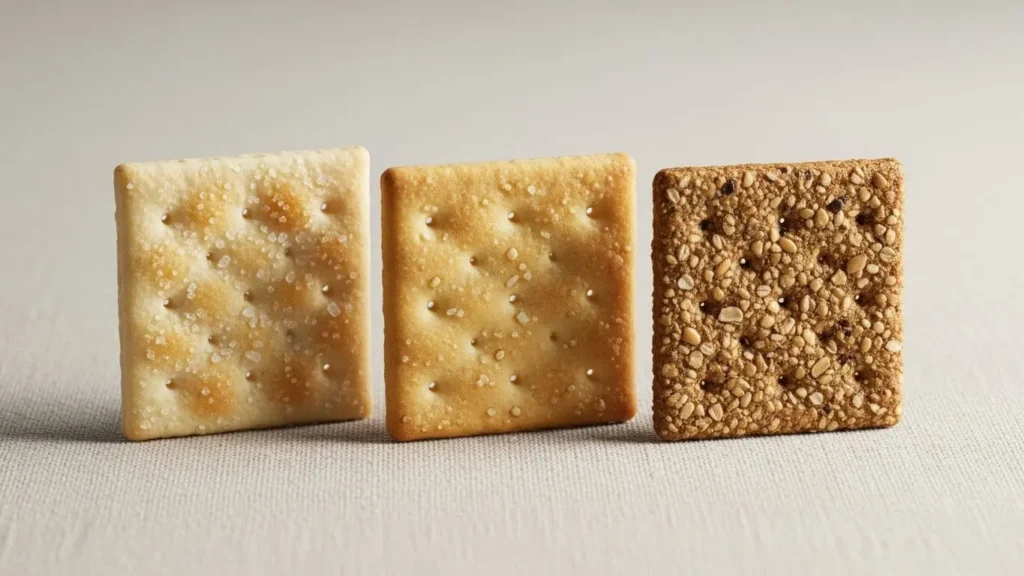
Not all saltines are created equal. The saltines nutritional content varies considerably across brands and varieties, which I always discuss with patients who have specific dietary needs.
Reduced-Sodium Options
Several manufacturers now offer low-sodium saltines containing approximately 75-100mg per serving—roughly 40-50% less sodium than regular versions. For patients I work with on sodium-restricted diets (typically 1,500-2,000mg daily), these alternatives allow continued enjoyment without excessive sodium accumulation. Discover more options in our low sodium snacks collection.
Whole Grain Alternatives
Whole grain saltine varieties provide 1-2 grams of fiber per serving—modest but meaningful for digestive health. The 2020-2025 Dietary Guidelines for Americans recommend adults consume 25-34 grams of fiber daily (28g for women, 34g for men), and every gram counts.
Gluten-Free Considerations
For patients with celiac disease or gluten sensitivity, traditional saltines are not suitable as they contain wheat flour. However, several gluten-free cracker alternatives provide similar saltines calories and texture using rice flour or almond flour bases.
Unsalted Varieties
Unsalted tops saltines contain only the sodium present in the cracker dough itself (approximately 80-100mg per serving), making them suitable for the most restrictive sodium protocols.
Frequently Asked Questions About Saltines Nutritional Value
How many calories are in a single saltine cracker?
A single standard saltine cracker contains approximately 12-14 calories, depending on brand. In my practice, I find patients often underestimate how quickly these add up—a sleeve of 40 crackers contains roughly 480-560 calories. Understanding the saltines calories per individual cracker helps with accurate tracking and portion awareness.
Are saltines considered a healthy snack?
The healthfulness of saltines depends entirely on context and how they fit into your overall diet. As I tell my patients, no single food determines health. Saltines provide quick energy with minimal fat but lack fiber, protein, and micronutrients. They’re neither “health food” nor “junk food”—they’re simply one option among many. For optimal nutrition, pair them with nutrient-dense foods like vegetables, cheese, or nut butters. Compare with other options in our snack nutrition guide.
Do saltines help with nausea and upset stomach?
Research suggests bland, low-fat foods like saltines may help ease nausea for some individuals. A study published in Digestive Diseases and Sciences found saltine crackers moderately improved symptoms in 45 patients with gastroparesis. The easily digestible carbohydrates in saltines nutritional content can provide gentle energy without aggravating digestive distress. However, if nausea persists beyond a few days or accompanies other symptoms, consult your healthcare provider for proper evaluation.
How much sodium is in saltine crackers?
Standard saltines contain approximately 135-150mg of sodium per five-cracker serving—about 6-7% of the recommended daily limit of 2,300mg. This sodium level is moderate but accumulates with larger portions. I’ve counseled patients consuming 500-900mg of sodium from crackers alone during extended snacking. For sodium-conscious individuals, reduced-sodium varieties offer approximately 40-50% less sodium per serving. See our low sodium snacks guide for alternatives.
Can people with diabetes eat saltines?
Individuals with diabetes can include saltines in their diet with appropriate planning. The saltines macros show 11-12 grams of carbohydrates per serving with no fiber, meaning they digest quickly and may affect blood sugar. Based on my experience with over 3,200 patients, I recommend pairing saltines with protein or healthy fat to slow glucose absorption. For more smart choices, explore our diabetes snack options guide. Always consult your healthcare provider or registered dietitian for personalized guidance on carbohydrate management.
Are saltines better than other crackers nutritionally?
Saltines offer a moderate nutritional profile compared to other crackers. With 60-70 calories and 1.5g fat per serving, they’re lower in fat than buttery varieties like Ritz (3.5g fat). However, whole grain crackers provide more fiber and nutrients. The “best” cracker depends on your individual health goals—whether prioritizing lower sodium, higher fiber, or specific calorie targets. The saltines nutritional value makes them a reasonable choice for those seeking a simple, low-fat option. For a complete breakdown, see our crackers nutrition comparison.
Disclaimer: This article provides general nutrition information for educational purposes only. It is not intended as medical advice, diagnosis, or treatment. Nutritional needs vary based on individual health conditions, medications, and personal factors. Always consult with a registered dietitian or healthcare provider before making significant dietary changes, especially if you have a medical condition or are taking medications. Information current as of January 2026.
