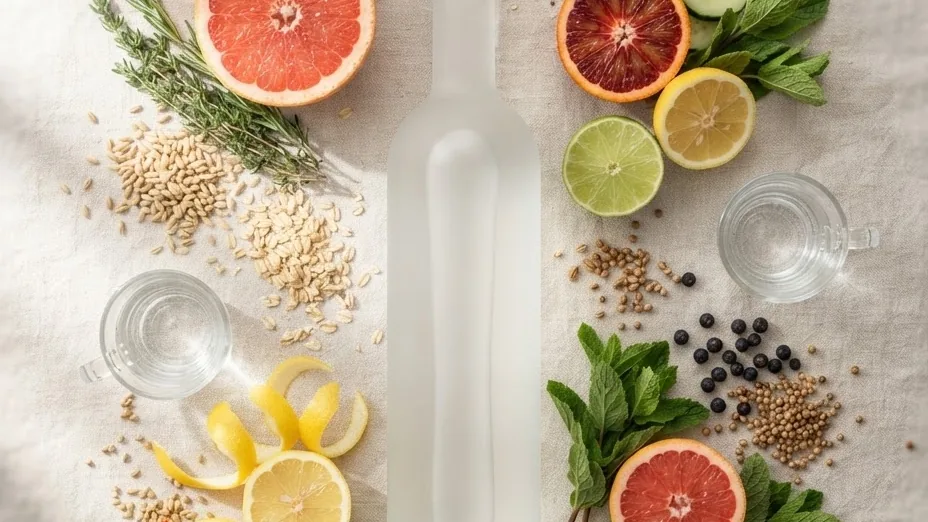
Nutrition Tito’s vodka comes down to one honest line on the label most people never see: 98 calories per 1.5 fluid ounce pour, and nothing else. No carbs. No sugar. No fat. No protein. No sodium. The bottle carries no nutrition panel because the Alcohol and Tobacco Tax and Trade Bureau, not the Food and Drug Administration, regulates spirit labeling in the United States, which is why you have to hunt for these figures. The number that actually wrecks a calorie budget is not the vodka at all. It is whatever you pour on top of it, and that is the part every popular guide skips.
The 98-calorie figure is the official one published by Tito’s and its distributors. A smaller 1 fluid ounce pour lands at 65 calories. Those two numbers, plus the mixer you choose, tell you everything about what a glass really costs.
Quick answer: A standard 1.5 fl oz pour of Tito’s Handmade Vodka has 98 calories, 0 grams of carbohydrate, 0 grams of sugar, and 0 grams of fat, because distillation strips sugars and starches out before bottling. Nutrition Tito’s vodka only balloons when you add a sweet mixer, which can pile on 10 to 30 grams of sugar per glass. Neat or with soda water, one pour stays near 98 calories.
What one pour of Tito’s actually contains
One standard 1.5 fluid ounce pour of Tito’s Handmade Vodka delivers 98 calories and zero of everything else that shows up on a nutrition label. A smaller 1 fluid ounce pour comes in at 65 calories. The macros read as 0 grams carbohydrate, 0 grams sugar, 0 grams fat, 0 grams protein, and 0 grams sodium. That is not a rounding trick. Unflavored distilled spirits genuinely carry no measurable carbohydrate, which the USDA FoodData Central database confirms for plain vodka across brands. The reason is mechanical, not marketing.
Those calories are all ethanol. If you want the same panel-reading exercise on a very different drink, the way canned energy formulas stack sugar next to caffeine is unpacked in our Monster Energy nutrition label breakdown. Vodka is the mirror image: high energy, empty of the sugar that dominates those cans.
Why the carbs and sugar hit zero
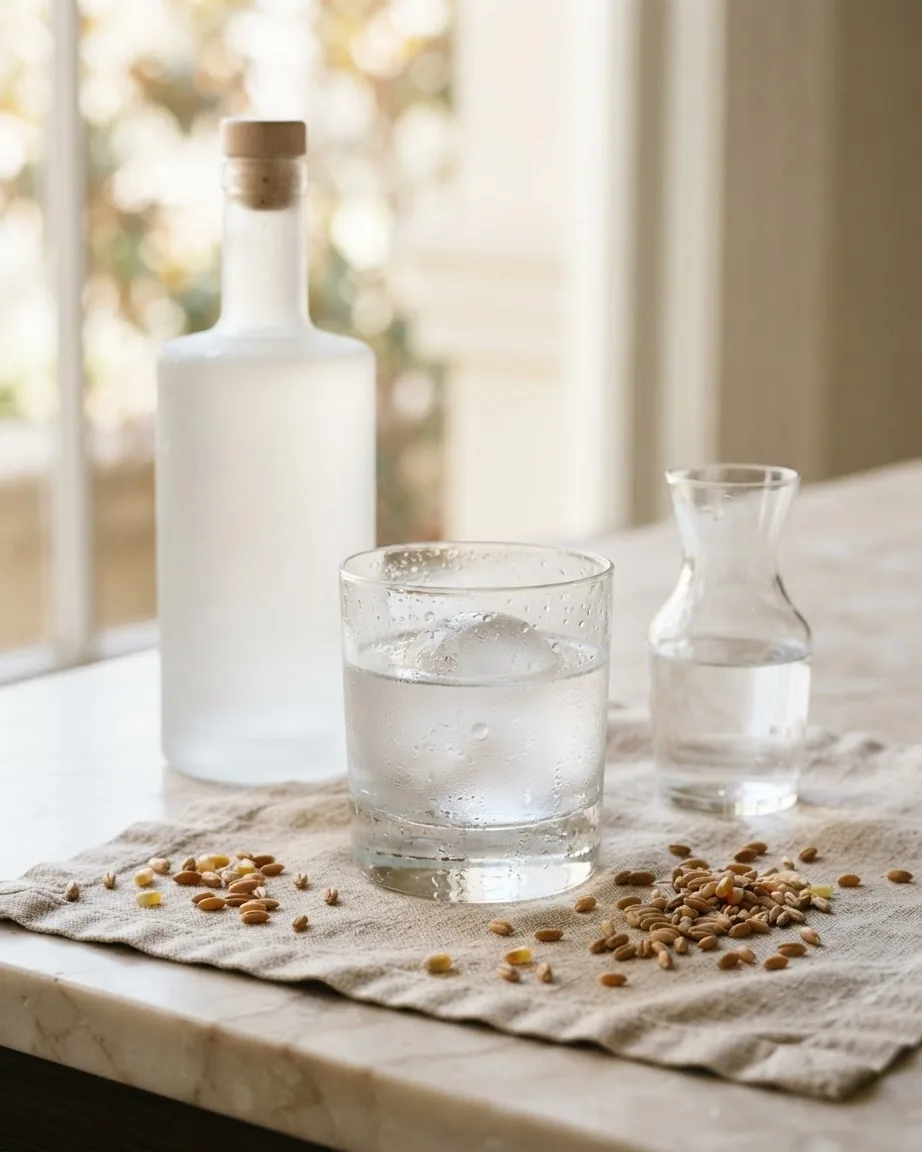
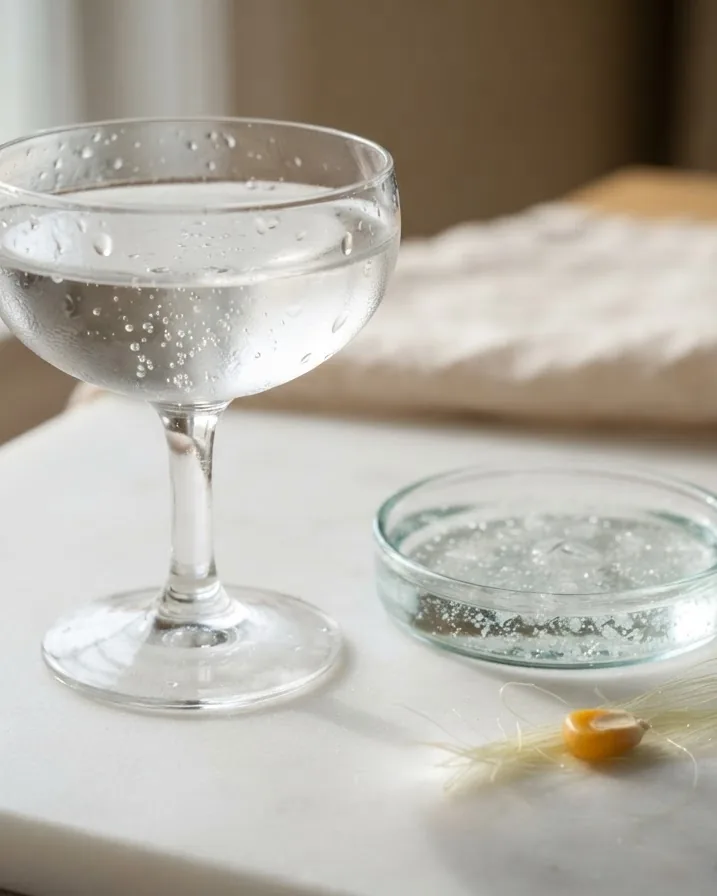
The carbs and sugar hit zero because distillation physically separates alcohol from the sugars and starches that fed the fermentation. Tito’s starts from American corn, ferments it, then runs the liquid through pot stills six times. During each pass, ethanol and water vaporize and get collected while the heavier carbohydrate residue stays behind in the still. What ends up in the bottle is essentially alcohol and water. That is why plain vodka can honestly claim 0 grams of sugar even though it began as a starchy grain mash.
Flavored vodkas break this rule. Once a distiller adds fruit essences, sweeteners, or syrups after distillation, sugar and carbohydrate come back. The zero figures above apply only to the unflavored Tito’s Handmade Vodka at 40 percent alcohol by volume.
A quick caution on databases: some third-party listings are simply wrong. One popular tracking app shows Tito’s at 13 grams of carbs, 6 grams of fat, and 100 calories. That entry is a data-entry error and contradicts both the corn-distillation chemistry and every primary source. When two apps disagree, the physics of distillation is the tiebreaker.
Where the 98 calories come from: empty calories explained
The 98 calories in a 1.5 fluid ounce pour of Tito’s come from ethanol and nothing else, which is exactly what the phrase empty calories means. Alcohol carries none of the vitamins, minerals, fiber, or protein that would make those calories nutritionally useful. Your body cannot store alcohol, so it prioritizes burning it, which is one mechanical reason drinking slows fat loss: the ethanol jumps the metabolic queue while other fuels wait.
Proof drives the whole calculation. Tito’s is 40 percent alcohol by volume, labeled 80 proof, where proof is simply twice the alcohol-by-volume percentage. More alcohol per ounce means more grams of ethanol, which means more calories. This is also why premium branding does not buy you a lighter drink, a point covered in its own section below.
For weight management, the National Institute on Alcohol Abuse and Alcoholism defines the numbers worth remembering. One standard drink in the United States equals 0.6 fluid ounces, or 14 grams, of pure alcohol. A 1.5 fluid ounce pour of a 40 percent spirit is exactly one standard drink. The Dietary Guidelines for Americans, published jointly by the USDA and the Department of Health and Human Services, put moderate drinking at 2 drinks or fewer per day for men and 1 or fewer for women. The full standard-drink math is laid out on the NIAAA standard drink page.
The mixer trap: your real drink calorie count
The mixer is where nutrition Tito’s vodka stops being simple. The vodka holds at 98 calories, but the liquid you add can double or triple the glass. A sweet mixer such as tonic, cranberry cocktail, or ginger beer can bring 10 to 30 grams of sugar per serving, and that sugar rides on its own calories that no vodka math accounts for. This is the single biggest blind spot in the popular calorie comparisons, which flag sugary mixers in passing but never total the finished drink.
Below is the full-glass calculation using the official 98-calorie vodka base plus a typical mixer pour. Read these as one standard pour plus one serving of mixer.
| Drink (1.5 oz Tito’s + mixer) | Approx. total calories | Added sugar |
|---|---|---|
| Vodka soda (club soda) | ~98 kcal | 0 g |
| Vodka soda with lime | ~98 kcal | 0 g |
| Vodka tonic | higher, +10-30 g sugar range | 10-30 g |
| Vodka cranberry | higher, +10-30 g sugar range | 10-30 g |
| Vodka ginger beer | higher, +10-30 g sugar range | 10-30 g |
The lesson is blunt. Club soda has no sugar and no calories, so vodka soda stays parked at roughly 98 calories, essentially the pour itself. Swap in tonic water and you are drinking quinine syrup that carries the same kind of sugar load you would flag on a soda can. If you track sugar the way our readers scrutinize a label like the Twisted Tea Light nutrition facts read off the can, apply that same suspicion to the mixer bottle. The vodka is honest. The mixer is the ambush.
A useful rule of thumb: if the mixer would taste sweet on its own, its sugar goes straight into your glass. Soda water, plain seltzer, a squeeze of citrus, and a splash of diet tonic keep the drink near the vodka floor. Everything else is a dessert with alcohol in it.
Low-calorie ways to drink Tito’s
The lowest-calorie way to drink Tito’s is to keep the mixer sugar-free so the glass stays near the vodka’s own 98 calories per 1.5 fluid ounce pour. Three builds do this reliably: a straight vodka soda, a vodka soda with fresh lime, and a homemade spiked seltzer using plain sparkling water. Each holds at roughly 98 calories because the mixer contributes nothing. That is the entire trick. There is no low-calorie flavored vodka shortcut, because flavoring adds sugar back.
Three builds worth keeping in rotation:
- Vodka soda, lime: 1.5 oz Tito’s, club soda, fresh lime. Roughly 98 calories, 0 g sugar.
- Homemade spiked seltzer: 1.5 oz Tito’s, plain flavored sparkling water, ice. Roughly 98 calories if the seltzer is unsweetened.
- Vodka with diet tonic: keeps the bitter tonic flavor without the 10 to 30 grams of sugar of regular tonic.
If you cook and entertain, the same restraint applies to food pairings. A drinks night built around high-protein recipes keeps you full so you sip slowly, and appetizers like a batch of crispy vegan buffalo cauliflower wings deliver crunch without the fried-food calorie spike. For something zesty to pass around, these air fryer chatpata chicken bites hit the same salty-spicy note that pairs with a clean vodka soda. Pace the food with the drinks and the whole evening stays lighter.
Gluten-free status: certified, and the debate behind it
Tito’s is certified gluten-free, distilled from corn rather than wheat, and carries formal certification recognized in the celiac community. The corn base matters to shoppers who search for this brand specifically, because it sidesteps the wheat, barley, and rye that seed most gluten worry. The Food and Drug Administration sets the legal standard for a gluten-free claim at under 20 parts per million, and distilled spirits generally fall well below that threshold because distillation leaves gluten proteins behind in the still, the same way it leaves sugar behind.
There is a genuine scientific debate worth naming. Many experts argue that any properly distilled spirit is gluten-free by process, even one made from wheat, because gluten proteins do not carry over in distillation. Others prefer certification for peace of mind, since flavorings or additives introduced after distillation could reintroduce gluten. Tito’s sidesteps the argument entirely by starting from corn and seeking certification through the gluten-free certification framework, so the reassurance is both procedural and physical.
For readers who read every label for hidden gluten and additives, our approach to the A2 cow milk nutrition facts and what the label really says uses the same habit of checking the claim against the ingredient reality. The FDA gluten-free labeling rule that governs all of this is summarized on the FDA gluten and food labeling page.
Keto, low-carb, and low-FODMAP: what to order
For keto, low-carb, and low-FODMAP eating, plain Tito’s fits because it carries 0 grams of carbohydrate and 0 grams of sugar per 1.5 fluid ounce pour. The catch is never the vodka; it is the mixer and the metabolic detour. On keto, your body burns the incoming ethanol before returning to fat, so a night of drinking can stall ketosis even though the vodka logs zero carbs. The drink is compliant on paper, but the physiology slows your goal, which is a nuance most diet guides gloss over.
What to actually order at a bar to stay in range:
- Ask for: Tito’s with club soda, seltzer, or water, plus lime or lemon. Zero added carbs.
- Skip: tonic, cranberry, orange juice, ginger beer, and energy-drink mixers, each carrying real sugar.
- Low-FODMAP note: plain distilled vodka is generally tolerated; the FODMAP risk lives in fruit juices and syrups, not the spirit.
Portion discipline still governs the calories. A 1.5 fluid ounce pour is one standard drink; a double at 3 fluid ounces is considerably more before a single mixer. Track pours the way you would track servings on a snack box, the same care our readers bring to the Club Crackers nutrition, calories, and sodium facts. Two invisible doubles cost more than a full meal.
Premium does not mean lighter: the brand-calorie myth
Premium price does not buy fewer calories. Any unflavored vodka at 40 percent alcohol by volume lands in the same narrow band of roughly 96 to 98 calories per 1.5 fluid ounce pour, because calories track alcohol content, and alcohol content is fixed by proof. Tito’s at 80 proof is not metabolically lighter than a cheaper 80 proof bottle or a luxury 80 proof bottle. What you pay extra for is the corn base, the six-distillation process, the gluten-free certification, and the brand story, not a calorie discount.
The math is simple. Two spirits at the same proof contain the same grams of ethanol per ounce. There is no premium filtration that removes calories without removing alcohol. Marketing that implies a lighter luxury pour is selling perception.
The brand context is real, just not caloric. Tito’s Handmade Vodka was founded in 1997 by Tito Beveridge and was the first legal distillery in Texas, based in Austin. That heritage explains the price and the loyalty. It does not change the number on the calorie side, which is governed by chemistry, not chronology. Coffee obsessives run into the same premium-versus-substance debate, dissected in the coffee science breakdowns of what roast and origin actually change in the cup.
Reading the numbers next to other drinks
Put next to other everyday drinks, a 98-calorie pour of Tito’s is modest, but only when it stays a pour and not a sugar delivery system. A standard drink of 40 percent vodka equals 0.6 fluid ounces, or 14 grams, of pure alcohol, which is the fixed unit the Dietary Guidelines for Americans use to define moderation. Compared against sweetened canned drinks, the vodka wins on sugar and loses on nutritional payoff, since every one of its calories is empty. Context decides whether that trade is smart.
For a side-by-side habit, our teardown of the Monster Energy nutrition facts shows how a canned drink stacks caffeine and sugar into the same volume, a completely different calorie profile from a clean spirit. Where and how you drink matters too. If your calories come from bar food more than the glass, the way the mobile scene handles portions is worth reading in the world of food trucks, where a single order can eclipse three vodka sodas. The pour is rarely the problem. The plate and the mixer usually are.
Frequently asked questions
Does Tito’s vodka have sugar or carbs?
No. Plain Tito’s Handmade Vodka has 0 grams of sugar and 0 grams of carbohydrate per 1.5 fluid ounce pour. Distillation separates alcohol from the corn’s starches and sugars, leaving only ethanol and water. The USDA FoodData Central database confirms zero carbs for unflavored vodka. Sugar only appears when you add a sweet mixer or choose a flavored vodka.
How many calories are in a shot of Tito’s?
A standard 1.5 fluid ounce shot of Tito’s contains 98 calories, according to the official brand figure. A smaller 1 fluid ounce pour is 65 calories, and a 3 fluid ounce double is 196 calories. All of those calories come from ethanol, so the count rises directly with the size of your pour and the proof of the spirit.
Is Tito’s vodka keto-friendly?
Yes, on paper. Tito’s has 0 grams of carbohydrate, so it fits a ketogenic macro budget. The catch is metabolic: your body burns the incoming ethanol first, which can pause fat burning and ketosis even though the vodka logs no carbs. Pair it with club soda and lime, never sugary mixers, to keep the whole drink close to its base calorie count.
Is Tito’s really gluten-free?
Yes. Tito’s is distilled from corn and carries formal gluten-free certification. The FDA sets the gluten-free threshold at under 20 parts per million, and distilled spirits fall below it because gluten proteins stay behind in the still. Some experts hold that all properly distilled spirits are gluten-free regardless of grain, but the corn base and certification make Tito’s a safe pick for celiac shoppers.
Does premium vodka have fewer calories than Tito’s?
No. Any unflavored vodka at 40 percent alcohol by volume carries roughly 96 to 98 calories per 1.5 fluid ounce pour, because calories track alcohol content, and both share the same 80 proof. A luxury bottle and a budget bottle at the same proof have the same grams of ethanol. You pay extra for base grain, process, and brand, not for a lighter drink.
Can I drink Tito’s while trying to lose weight?
In moderation, yes, but be strategic. The Dietary Guidelines for Americans define moderate drinking as 1 drink or fewer daily for women and 2 or fewer for men. Alcohol is metabolized first, which slows fat loss, and its calories per pour are empty. Choose vodka soda over sugary mixers and count doubles honestly.
The bottom line on Tito’s numbers
Strip away the marketing and the picture is clean: 0 grams of carbs, 0 grams of sugar, 0 grams of fat, all of it empty ethanol calories. That holds because six distillations from American corn leave the sugars behind in the still, and it is why the gluten-free certification stands up. The vodka is the honest part of the glass.
Everything risky lives above the pour. Sweet mixers add 10 to 30 grams of sugar and can double the finished drink. Premium branding buys you corn, process, and the 1997 Texas story, not a lighter calorie count. Keep the mixer to soda water and lime, count your pours as standard drinks, and nutrition Tito’s vodka stays exactly as simple as the number on the label. For readers who track every panel, our habit of reading the fine print carries over from spirits to snacks like the Eggo waffles nutrition facts and what two waffles actually cost you.