If you are looking for Twisted Tea nutrition facts, here is the short answer: a standard 12 fl oz can of Twisted Tea Original has about 194 calories, 25.9 grams of total carbohydrate, 23 grams of sugar, no fat, no protein, and 5 percent alcohol by volume. The rest of this guide breaks down where those numbers come from, how the lighter and flavored versions differ, whether it has caffeine or gluten, and how a can stacks up against beer, wine, hard seltzer, and soda so you can read the label with confidence.
Twisted Tea is a flavored malt beverage, which means it is brewed like beer and then sweetened and flavored to taste like sweet iced tea. That production method is the reason the nutrition panel looks the way it does: most of the calories come from a near even split between alcohol and added sugar, with almost nothing else along for the ride.
Twisted Tea Original nutrition panel (12 fl oz)
The values below reflect a single 12 fl oz can of Twisted Tea Original at 5 percent ABV. Twisted Tea is also sold in 24 fl oz cans, which count as two servings, so you would double every number on this panel for a full tallboy.
| Nutrient | Amount (12 fl oz) | % Daily Value |
|---|---|---|
| Calories | 194 | – |
| Total fat | 0 g | 0% |
| Sodium | 8 mg | 0% |
| Total carbohydrate | 25.9 g | 9% |
| Total sugars | 23 g | – |
| Protein | 0 g | 0% |
| Potassium | 271 mg | 6% |
| Vitamin C | 3 mg | 3% |
| Alcohol | 14 g (5% ABV) | – |
A few things stand out. The sodium is very low at 8 mg, so this is not a salty drink. There is a small amount of potassium and a trace of vitamin C from the tea and flavoring, but neither is high enough to count as a meaningful source. The headline numbers are the calories, the sugar, and the alcohol, and those three move together across the whole product line.
How to read the Twisted Tea label step by step
The single most common mistake people make with Twisted Tea is misreading the serving size. Many cans are sold as 24 fl oz, and the nutrition panel on those cans usually lists values per 12 fl oz with two servings per container. That means a quick glance at the calories can show 194 when the full can actually delivers closer to 390. Always check the servings per container line first, then multiply.
After the serving size, look at the sugar line, since that is where Twisted Tea differs most from other alcoholic drinks. Then check the ABV, which tells you how many standard drinks you are holding. Reading those three lines in that order, serving size, sugar, then alcohol, gives you an accurate picture in about ten seconds and prevents the most common counting errors.
Where the calories in Twisted Tea come from
Twisted Tea has two calorie sources that matter: alcohol and sugar. Alcohol carries 7 calories per gram, and a 12 fl oz can at 5 percent ABV holds roughly 14 grams of pure alcohol, which works out to close to 98 calories. The 23 grams of sugar add about 92 calories at 4 calories per gram. Add those together and you are already at roughly 190 calories, which accounts for nearly the entire 194 calorie total.
This is worth understanding because it explains why Twisted Tea cannot be made truly low calorie without changing one of those two inputs. Cutting the sugar lowers calories but leaves the drink less sweet, while cutting the alcohol changes the product category. The Light version, covered below, does a bit of both, which is why it lands at roughly half the calories of the Original.
Carbs and sugar in context
The 25.9 grams of total carbohydrate in Twisted Tea Original are almost entirely sugar, with no fiber and no starch to speak of. At 23 grams, one can delivers more added sugar than many people expect from a drink that tastes like tea.
For perspective, the American Heart Association suggests a daily added sugar limit of about 25 grams for women and 36 grams for men, as explained in its guidance on added sugars. A single Twisted Tea Original sits at or near a full day of added sugar for many adults before any food is counted. If you want to compare this with the sugar in other sweet items, our snacks and sweets nutrition guides show how quickly sugar adds up across a typical day.
Alcohol content and ABV explained
Twisted Tea Original is 5 percent alcohol by volume, the same strength as many regular beers. In United States terms, one 12 fl oz can at 5 percent contains about 14 grams of pure alcohol, which is the amount that defines one standard drink according to the National Institute on Alcohol Abuse and Alcoholism.
The serving size matters here. A 24 fl oz can is two standard drinks, not one, even though it is a single container. The Light version is slightly weaker at 4 percent, and the higher strength variants reach 8 percent, which roughly doubles the alcohol per ounce compared with the Light. Tracking ABV alongside calories is the most reliable way to know what you are actually drinking, especially across an evening with more than one can.
Does Twisted Tea have caffeine?
Twisted Tea is made with real brewed tea, so it does contain a small amount of caffeine. The amount is low and is not comparable to coffee, soda, or an energy drink, and Twisted Tea is not marketed or formulated as an energy product. For most people the caffeine in a can is a minor footnote rather than a reason to choose or avoid the drink.
That said, if you are sensitive to caffeine or are trying to avoid it entirely in the evening, it is worth knowing the trace is there. Combining even a small amount of caffeine with alcohol can make it harder to judge how intoxicated you feel, since the mild stimulant effect can mask some of the sedative effect of the alcohol. This is a general caution that applies to any caffeinated alcoholic drink, not a unique risk of Twisted Tea.
Is Twisted Tea gluten free?
No. Twisted Tea is brewed from malted barley as part of its malt beverage base, and barley contains gluten. That makes it unsuitable for people with celiac disease or a diagnosed gluten sensitivity. Because the gluten comes from the brewing grain itself rather than from an added ingredient, there is no version of the standard lineup that can be considered gluten free.
If you need a gluten free alcoholic option that still feels light and refreshing, hard seltzers and some ciders are generally made without gluten containing grains, though you should always confirm on the individual label. For Twisted Tea specifically, the safe assumption is that every variety in the core range contains gluten.
Twisted Tea varieties compared
Twisted Tea sells several versions, and the nutrition shifts mostly with sugar and alcohol. The table below compares the most common 12 fl oz options. Flavored versions such as Peach, Raspberry, Mango, and Blueberry track closely to Original, since they share the same base recipe with different flavoring. There is also a higher strength line that reaches 8 percent ABV and a Sweet Tea style, both of which sit at the higher end for calories and alcohol.
| Variety (12 fl oz) | Calories | Carbs | Sugar | ABV |
|---|---|---|---|---|
| Twisted Tea Original | 194 | 25.9 g | 23 g | 5% |
| Twisted Tea Half and Half | ~215 | 30 g | 29 g | 5% |
| Twisted Tea Light | 110 | 8.8 g | 6.2 g | 4% |
| Flavored (Peach, Raspberry, Mango) | ~190 to 200 | ~24 to 26 g | ~22 to 24 g | 5% |
The Light version is the clear outlier. By trimming sugar from 23 grams down to about 6 grams and dropping the ABV to 4 percent, it cuts calories nearly in half to 110. Half and Half, which blends the tea with lemonade, runs the other way with the most sugar in the lineup. If you are watching either sugar or calories, the gap between Light and the rest of the range is the most important number to remember, and it is large enough to change how a full evening adds up.
How Twisted Tea compares to beer, wine, hard seltzer, and soda
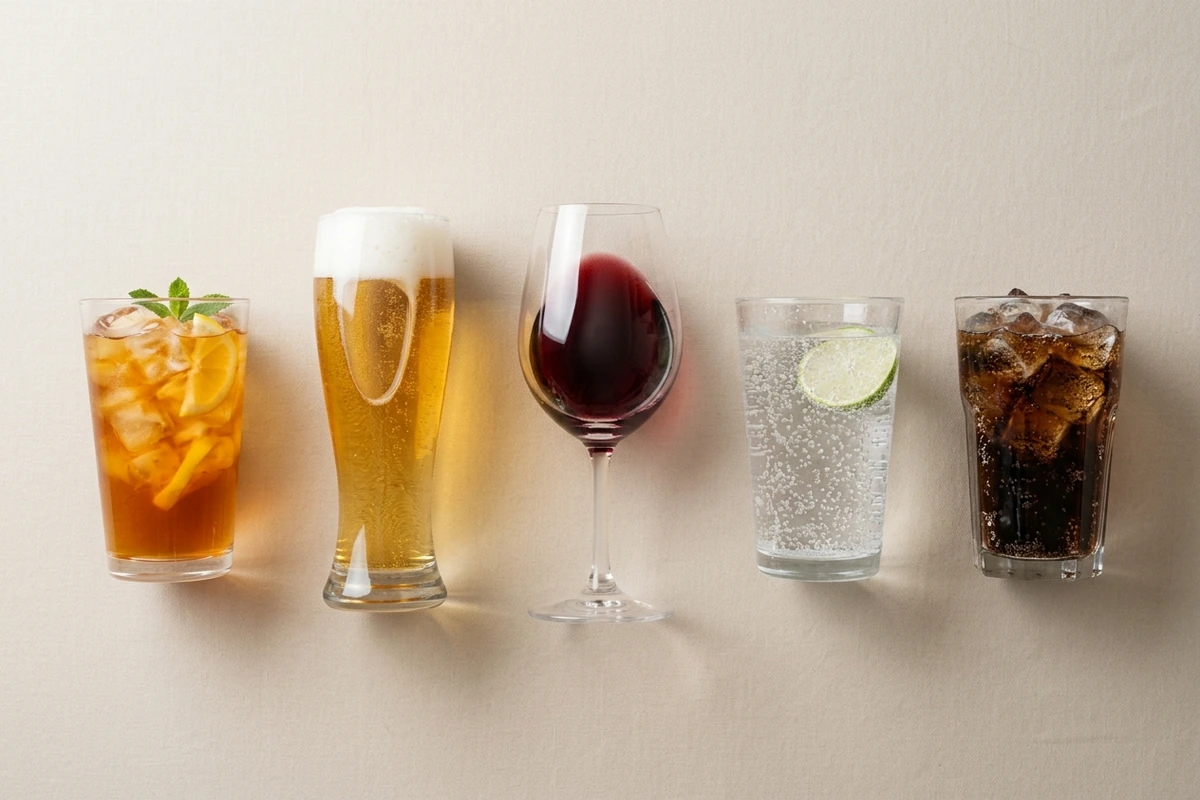
Reading nutrition facts in isolation rarely tells the whole story, so it helps to place Twisted Tea next to the drinks people often choose instead. The comparison below uses common 12 fl oz servings, except wine, which uses its 5 fl oz standard pour.
| Drink (typical serving) | Calories | Sugar | ABV |
|---|---|---|---|
| Twisted Tea Original (12 oz) | 194 | 23 g | 5% |
| Regular beer (12 oz) | ~150 | 0 g | 5% |
| Light beer (12 oz) | ~100 | 0 g | 4% |
| Hard seltzer (12 oz) | ~100 | ~1 to 2 g | 5% |
| Red or white wine (5 oz) | ~125 | ~1 g | 12% |
| Regular cola (12 oz) | ~140 | ~39 g | 0% |
The pattern is clear. Twisted Tea carries more calories and far more sugar than beer, wine, or a hard seltzer at the same alcohol level, mostly because those drinks do not add sugar the way a sweet tea malt beverage does. Compared with a regular soda, Twisted Tea has fewer grams of sugar but adds alcohol that soda does not have. In other words, it behaves like a sweet soda and a beer combined, which is exactly how it is built. For more on sugary drinks sold at chains, see our fast food and chain drink guides, and you can browse the full set of drink and beverage nutrition facts for side by side numbers.
Twisted Tea on a low-carb or keto diet
Twisted Tea Original does not fit a low-carb or keto plan well. With about 26 grams of carbohydrate per 12 fl oz, almost all of it sugar, a single Original can use up or exceed a strict keto carb budget for the entire day. The Light version is far more workable at roughly 9 grams of carbohydrate, though it still adds up if you have more than one.
If staying low in carbs is the priority, a hard seltzer or a dry wine will almost always be the better fit, since both keep sugar near zero. Anyone counting net carbs should treat Twisted Tea Original as a high-carb drink and plan the rest of the day around it rather than the other way around. The same logic applies to diabetes friendly eating, where the rapid sugar load from a sweetened malt beverage is the part to watch.
What Twisted Tea is made of
Twisted Tea starts as a brewed malt base, similar to beer, which is where the alcohol comes from. From there it is blended with brewed tea, water, sugar or other sweeteners, natural flavors, and acids such as citric acid that give it the bright, lemony iced tea taste. The result is classified as a flavored malt beverage rather than a beer or a spirit, which is why you will find it sold next to beer and hard seltzer rather than in the liquor aisle.
Because the sweetness is added during production rather than coming from whole ingredients, the sugar counts as added sugar on the nutrition panel. That distinction is the same one the U.S. USDA FoodData Central database uses when it separates naturally occurring sugars from sugars added during processing.
Vitamins, minerals, and what is not in the can
Twisted Tea is not a meaningful source of vitamins or minerals. The 271 mg of potassium covers about 6 percent of the daily value and the 3 mg of vitamin C is only about 3 percent, both likely from the tea and flavoring. There is no fiber, no protein, and no fat. This is what people mean when they describe a drink as having empty calories: the calories arrive without the nutrients that usually come with food.
That is not a unique flaw of Twisted Tea, since most alcoholic drinks share the same profile. It simply means the calories should be counted as a treat rather than as nourishment, and the drink should not be relied on for hydration given the alcohol it contains. If anything, alcohol has a mild dehydrating effect, so water is still the drink to reach for when you are actually thirsty.
Twisted Tea and weight management
From a weight standpoint, the challenge with Twisted Tea is that the calories are easy to drink quickly and easy to overlook. Two Original cans add nearly 400 calories without touching any food, and because liquid calories do not fill you up the way a meal does, they tend to be added on top of the day rather than in place of anything. Over a week, a few cans can quietly account for a meal or more worth of calories.
None of that makes Twisted Tea off limits if you enjoy it. The practical approach is to plan for it: choose the Light version when you can, stick to a 12 fl oz serving, and account for the calories the same way you would for a dessert. Treating the drink as a deliberate choice rather than a background habit is usually enough to keep it from undermining a calorie goal.
How to fit Twisted Tea into your day
If you enjoy Twisted Tea and want to keep the numbers in check, the most useful habits are simple. Choose the 12 fl oz can over the 24 fl oz tallboy so you are counting one serving rather than two. Consider the Light version when you want the flavor with roughly half the calories and a quarter of the sugar. And treat the sugar in a can as part of your daily added sugar budget rather than as a free extra, especially if you are also eating sweet snacks or desserts that day. If you are putting out food for a cookout or game day, it pairs naturally with finger foods like air fryer snacks and dip recipes.
None of this requires giving up the drink. It just means reading the can the same way you would read any other label, with the serving size, the sugar, and the alcohol all in view at once. Once you know that one Original is about 194 calories and close to a full day of sugar in a glass, you can decide how it fits the rest of what you eat and drink.
Twisted Tea versus regular iced tea
It is easy to assume Twisted Tea is close to the iced tea you might brew at home, but the two are very different on paper. Plain unsweetened brewed tea has essentially zero calories, no sugar, and no alcohol. Even a sweetened homemade iced tea, while it can carry a lot of sugar, still has no alcohol and lets you control exactly how much sweetener goes in. Twisted Tea fixes both the sugar and the alcohol at the levels set during brewing, so there is no light pour or half sugar option once the can is sealed.
This matters when people switch to Twisted Tea expecting a tea-like drink and end up consuming a beer’s worth of alcohol and a soda’s worth of sugar at the same time. The tea flavor is real, but the nutrition belongs in the alcohol category, not the tea category. If you want the taste of iced tea without the calories, sugar, or alcohol, brewed tea over ice remains the lowest cost option by a wide margin, and you can sweeten it to your own taste or not at all.
Health considerations
Two parts of the panel deserve attention if you drink Twisted Tea regularly: the sugar and the alcohol. The added sugar can crowd out room in your day for other foods and contributes to the same risks as sugary soda when intake is high over time. The alcohol carries its own considerations, and the Centers for Disease Control and Prevention summarizes current thinking in its overview of alcohol use.
Federal guidance defines moderate drinking as up to one drink per day for women and up to two per day for men, with one Twisted Tea Original counting as one standard drink. People who are pregnant, who do not drink, or who take medications that interact with alcohol should not start drinking it for any reason. As with any alcoholic beverage, the safest amount for some individuals is none.
Frequently Asked Questions
How many calories are in a Twisted Tea?
A 12 fl oz can of Twisted Tea Original has about 194 calories. A 24 fl oz can has roughly 390 calories because it counts as two servings. Twisted Tea Light has about 110 calories per 12 fl oz can.
How much sugar is in a Twisted Tea?
Twisted Tea Original has about 23 grams of added sugar in a 12 fl oz can, which is close to a full day of added sugar for many adults. Twisted Tea Light has about 6 grams, and Half and Half has about 29 grams.
What is the alcohol content of Twisted Tea?
Twisted Tea Original is 5 percent alcohol by volume, the same as many regular beers, and one 12 fl oz can equals one standard drink. The Light version is 4 percent, and the higher strength variants reach 8 percent.
Does Twisted Tea have caffeine?
Yes, a small amount, because Twisted Tea is made with real brewed tea. The level is low and far below a cup of coffee or an energy drink, and the product is not designed as a caffeinated energy drink.
Is Twisted Tea gluten free?
No. Twisted Tea is brewed from malted barley, which contains gluten, so it is not suitable for people with celiac disease or gluten sensitivity. There is no gluten free version in the standard lineup.
Is Twisted Tea keto friendly?
Twisted Tea Original is not keto friendly because it has about 26 grams of carbohydrate, almost all sugar, in a single can. The Light version is lower at roughly 9 grams but still adds up if you have more than one.
Is Twisted Tea bad for you?
Twisted Tea is not unhealthy in moderation, but it is high in added sugar and contains alcohol, so it is best treated as an occasional drink. Watching serving size and choosing the Light version are the easiest ways to reduce the sugar and calories.