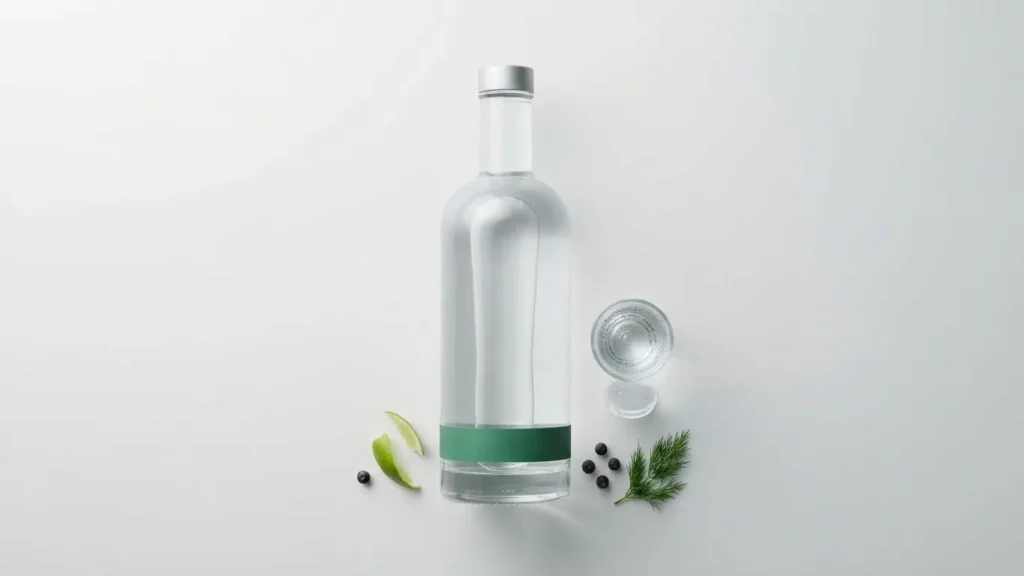
Vodka nutrition facts come down to one line most drinkers skip: the calories are real, the carbs are not. A standard pour carries its energy from alcohol alone, and the number moves with strength.
Here is the short version. A 1.5 oz shot of 80-proof vodka reports about 97.02 kcal in the University Hospitals nutrition table, alongside 0 g carbohydrate, 0 g fat, and 0 g total sugars. Those calories trace to the alcohol itself, not to any macro on the panel. The figure is not fixed: raise the proof and it climbs to 110.46 kcal at 90 proof and 123.9 kcal at 100 proof. Vodka nutrition facts shift with strength and with whatever goes in the glass next to it.
Where a shot’s calories actually come from
The panel for straight distilled spirits lists 0 g carbohydrate, 0 g fat, and 0 g total sugars, yet the same 1.5 oz serving still registers 97.02 kcal in the University Hospitals dataset. The energy is the ethanol. That is why cutting carbs does not cut a shot’s calories.
The documented figures, side by side
The table sets two independent sources next to each other, a health-system dataset reporting by proof and a manufacturer guide reporting by ABV, so serving and strength are visible on every row.
| Serving | Strength | Calories | Carbs | Source |
|---|---|---|---|---|
| 1.5 oz | 80 proof | 97.02 kcal | 0 g | University Hospitals |
| 1.5 oz | 90 proof | 110.46 kcal | University Hospitals | |
| 1.5 oz | 100 proof | 123.9 kcal | University Hospitals | |
| 42 g | 40% ABV | 97 kcal | 0 g | Absolut |
| 42 g | 50% ABV | 124 kcal | Absolut |
One rule governs every figure above: calories track proof, not brand. The same 1.5 oz pour swings from 97.02 kcal to 123.9 kcal on strength alone, so fix the proof before trusting any single number.
Calories in a single shot, and what counts as one
A single 1.5 oz shot of 80-proof vodka is roughly 97.02 kcal. The National Institute on Alcohol Abuse and Alcoholism defines a U.S.
The caution worth keeping: a standard drink is a measuring unit, not a description of what gets poured. The NIAAA notes the amounts “may not reflect customary serving sizes,” per its standard-drink guidance. A free-hand bar pour can run well past one shot’s calories, so count the pour, not the glass.
None worth logging. Plain, unflavored vodka reports 0 g carbohydrate and 0 g total sugars per serving. There is no sugar, starch, or fiber in the neat spirit to track.
Why zero carbs still means calories
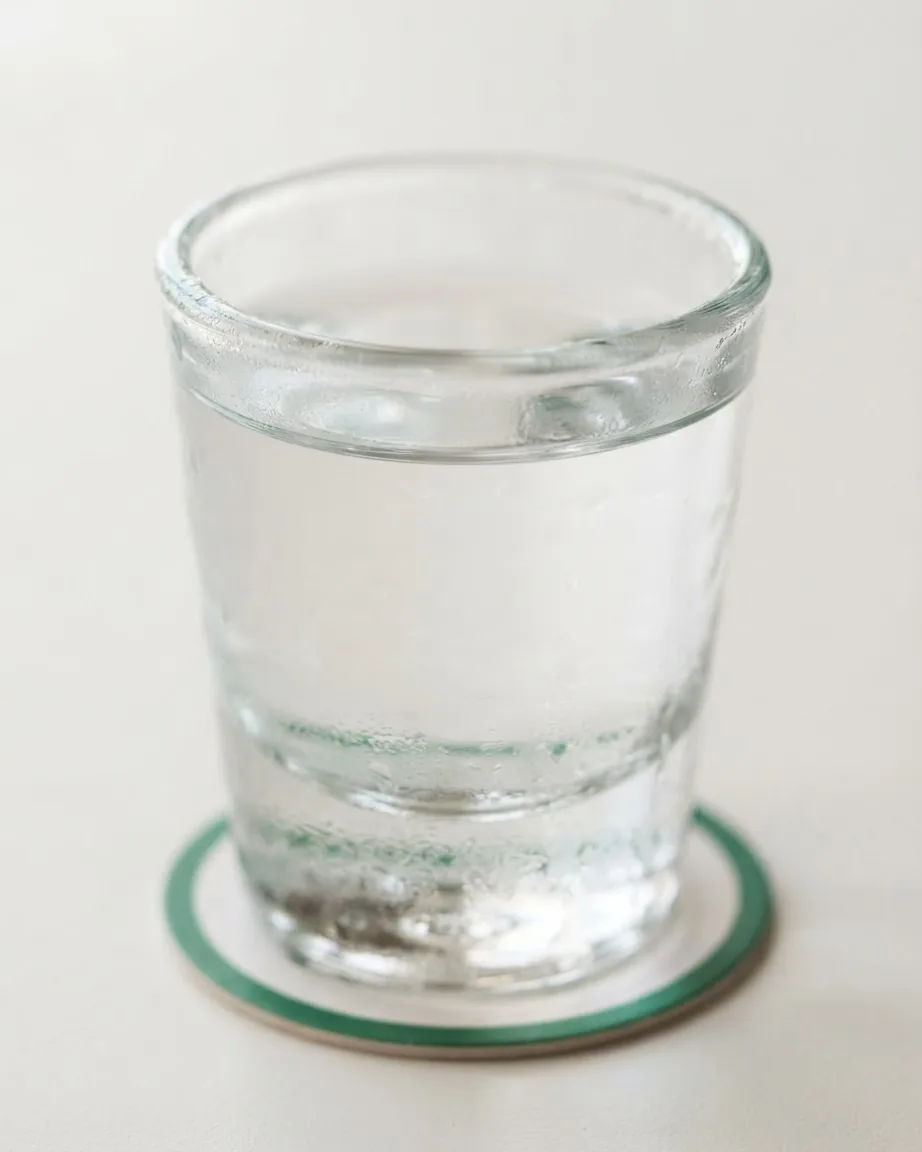
The zero-carb line applies to the unflavored spirit only, and it does not cancel the calories. Distillation leaves alcohol and water, so the macro fields read 0 g while the alcohol still supplies about 97.02 kcal per 1.5 oz. A 42 g serving at 40% carries the same profile: zero sugar, zero fat, energy from ethanol.
Vodka’s macro line versus beer and wine
The split is structural. Distilled spirits, including gin, rum, vodka, and whiskey at a given proof, share the 0 g carbohydrate line and the 97.02 kcal figure at 80 proof. Beer and wine keep carbohydrate from fermentation, so their panels carry grams the spirit does not. Among spirits, proof sets the calories; the name on the bottle does not.
Flavored and infused vodkas, where the numbers move
Two things push a bottle’s figure above the neat baseline: strength and added sugar. On strength alone, Absolut’s guide reports a 42 g shot at 40% alcohol at 97 kcal, and the same 42 g shot at 50% at 124 kcal. Flavored and dessert vodkas then layer sugar on top of that, which the base distilled-spirit record does not account for. The only reliable number for a flavored product is that product’s own statement, not the 97-kcal reference.
Vodka against other spirits, calorie for calorie
The base spirit’s calories are small and strength-driven, from 97.02 kcal up to 123.9 kcal per 1.5 oz as proof rises. What inflates a finished drink is almost always what joins the vodka: a sugary mixer or a sweet flavoring adds carbohydrate and calories the neat pour never had. Compare drinks at equal proof and with the mixer counted, not by spirit name, or the comparison misleads.
Lower-calorie ways to drink vodka
To stay near the 97.02 kcal baseline, the move is to protect it: pour vodka neat, over ice, or with a zero-calorie mixer such as soda water or a squeeze of citrus. The calories climb from the glass, not the bottle. Regular tonic, juice, and sweetened sodas carry their own sugar, which stacks onto the spirit. See also our tonic water breakdown. Measuring the pour at 1.5 oz rather than free-pouring is the other half of keeping the count honest.
Vodka among the leanest pours
For an 80-proof neat serving, vodka ranks low: 97.02 kcal and 0 g carbohydrate per 1.5 oz is hard for beer or wine to match ounce for ounce. The ranking holds only under those conditions. Push to a higher proof, or add a sweet mixer, and the “lean” advantage disappears.
Vodka and weight loss, what the numbers do and don’t say
The calories are real even at zero carbs
Zero carbs does not mean zero calories to count. Each 1.5 oz pour at 80 proof is about 97 calories, and those accumulate with every round. For tracking, a shot is logged as alcohol energy, not as a free pour.
Where the extra calories hide
Strength and mixers are the variables. The same volume reaches 123.9 kcal at 100 proof, and a sweet mixer or a flavored bottle adds grams on top of that. The base distilled-spirit figure assumes neither. Log the proof and the mixer, or the daily total runs lower on paper than in the glass.
Logging vodka so the count is right
Before you record a vodka drink, three details decide whether a generic 80-proof entry applies:
- The pour. One standard shot is 1.5 oz; a heavy bar pour is more than one entry.
- The proof. Confirm the strength on the label, since the figure moves from 97.02 kcal to 123.9 kcal with it.
- Straight or mixed. A sugary mixer adds carbohydrate and calories the neat-spirit record ignores.
Get those three right and the generic entry is close. Skip one, and the log drifts.
Grey Goose at 1.5 oz, what the panel supports
As an unflavored 80-proof vodka, it tracks the documented distilled-spirit line: about 97.02 kcal per 1.5 oz, with 0 g carbohydrate. Confirm the proof on the bottle, then apply that baseline; if the label shows a different strength, the calorie figure shifts with it.
Vodka nutrition facts in aggregator guides like VinePair
Guides that compile drink data, the kind readers reach for from sites like VinePair, tend to report the same distilled-spirit baseline rather than a brand-specific one. The anchor to trust is the proof-specific figure, 97.02 kcal at 80 proof, not a single flat “vodka equals X.” U.S. spirit labels carry a Serving Facts panel only voluntarily, and where calories are stated they carry a tolerance: the Alcohol and Tobacco Tax and Trade Bureau treats a label as misbranded when calories exceed the stated value by more than 20 percent.
Pinnacle salted caramel vodka, reading a flavored label
No standard database carries a nutrition record for Pinnacle’s salted caramel vodka, and the straight-vodka 0 g carbohydrate line does not transfer to it. A salted-caramel flavoring means added sugar, which the base 97-kcal reference does not include. The usable number lives on that specific bottle’s statement or the brand’s own site. Do not apply the neat-spirit figure to a dessert vodka; expect it to read higher once sugar is in the recipe.
Tito’s, an unflavored 80-proof baseline
Tito’s is an unflavored vodka, so the distilled-spirit record is the right reference: around 97.02 kcal per 1.5 oz at 80 proof, with 0 g carbohydrate and 0 g total sugars. Standard databases do not publish a separate brand panel, so confirm the strength on the label and apply that baseline. For the brand-level numbers, see our pour of Tito’s page, and the wider drinks section.
What a shot really costs per ounce, and why proof breaks the 20% tolerance
The label gives calories per 1.5 oz, but almost nobody pours exactly 1.5 oz. Divide the figure by the serving and you get a rate you can apply to any free-hand pour:
- 80 proof: 97.02 ÷ 1.5 = 64.68 kcal per ounce
- 90 proof: 110.46 ÷ 1.5 = 73.64 kcal per ounce
- 100 proof: 123.9 ÷ 1.5 = 82.6 kcal per ounce
Now the part that catches people out. Keep the pour at 1.5 oz but move from 80 to 100 proof and the same glass gains 123.9 − 97.02 = 26.88 kcal. As a share of the 80-proof number that is 26.88 ÷ 97.02 = 27.7% more.
Why it matters for logging: the TTB treats a spirit label as misbranded once stated calories are understated by more than 20 percent. Confirm the proof before you trust any single calorie number.
Vodka nutrition FAQ
where to find nutrition facts on flavored vodka
Federal rules make a spirit’s Serving Facts panel optional, so many flavored bottles print none. Look on the brand’s own website or the back label first. Where a panel does appear, its stated calories carry a margin: a label counts as misbranded only once the real content runs more than 20 percent over the printed figure.
Does vodka have sugar or carbs?
Straight, unflavored vodka lists 0 g total sugars and 0 g carbohydrate; its calories are alcohol, not sweetener. That zero holds for the plain spirit only. Flavored, dessert, and pre-mixed versions add sugar, so their own panels, not the neat-vodka figure, set the carbs you log.
Is vodka the lowest calorie alcohol?
Among common spirits an 80-proof neat pour sits low, about 97.02 kcal per 1.5 oz with no carbs. But “lowest” depends on strength: a 50% vodka runs 124 kcal per 42 g shot, and a sweet mixer closes the gap against beer or wine entirely.