A 20-ounce bottle of classic Gatorade Thirst Quencher carries 140 calories, 36 grams of carbohydrate, 34 grams of sugar, 270 milligrams of sodium, and 80 milligrams of potassium, with no fat and no protein. Read the Gatorade nutrition label closely and one line dominates the rest: almost every calorie comes from sugar, and that sugar is added, not natural. That single fact is the key to understanding when Gatorade earns its place and when it is just a sweetened drink.
Gatorade was built to replace what you lose in sweat during hard, sustained exercise: fluid, sodium, potassium, and the quick carbohydrate that fuels working muscles. The label reflects that design. The question worth answering is not whether the formula works, it does what it was made to do, but whether your situation actually calls for it. This guide walks through the full panel, the differences between the major Gatorade lines, and how it stacks up against soda, juice, and plain water.
Gatorade Nutrition Facts: The Full Label
Here is the complete Gatorade Thirst Quencher panel, shown per 12-ounce serving (the official serving size printed on the bottle) and per full 20-ounce bottle, which is the size most people actually drink in one sitting.
| Nutrient | Per 12 fl oz | Per 20 fl oz bottle | % DV (20 oz)* |
|---|---|---|---|
| Calories | 80 kcal | 140 kcal | – |
| Total fat | 0 g | 0 g | 0% |
| Sodium | 160 mg | 270 mg | 12% |
| Potassium | 45 mg | 80 mg | 2% |
| Total carbohydrate | 21 g | 36 g | 13% |
| Total sugars | 21 g | 34 g | – |
| Added sugars | 21 g | 34 g | 68% |
| Protein | 0 g | 0 g | 0% |
*Percent Daily Values are based on a 2,000-calorie diet.
The most important number on the entire label is added sugars. A 20-ounce bottle delivers 34 grams of added sugar, which is 68 percent of the 50-gram Daily Value the FDA uses on the label, and it exceeds the American Heart Association’s recommended daily limit for many adults in a single drink. The AHA guidance on added sugars suggests no more than roughly 25 grams a day for women and 36 grams for men, so one classic Gatorade can spend most or all of that budget.
That sugar is not an accident or filler. During prolonged exercise, fast carbohydrate helps maintain blood glucose and spares muscle fuel, and the sugar also drives the absorption of sodium and water through the gut. The catch is simple: if you are not doing prolonged, sweaty exercise, you do not need the fuel, and the 34 grams becomes a liability rather than a feature.
What the Electrolytes Actually Do

The two electrolyte numbers on the label, 270 milligrams of sodium and 80 milligrams of potassium per bottle, are the reason Gatorade exists. When you sweat heavily, you lose sodium in significant amounts and potassium in smaller amounts, and replacing them helps you keep absorbing and retaining fluid instead of just urinating it out. The sodium figure is the meaningful one; Gatorade is a sodium-forward drink, and that is by design.
For everyday hydration, though, the electrolyte load is modest and the sodium can even work against you. The NIH MedlinePlus overview of fluid and electrolyte balance explains that a healthy person eating normally rarely needs added electrolytes to stay balanced during light activity, and most Americans already consume more sodium than recommended. The American Heart Association’s notes on hydration and exercise point in the same direction: for activity under an hour, water is generally enough.
So the electrolyte content is a genuine benefit during a long run, a two-hour practice, or work in the heat, and a near-irrelevant one when you are sipping it at a desk. Same label, completely different value depending on the context.
It is also worth knowing that potassium, the second electrolyte on the label, is present in fairly small amounts. At 80 milligrams per bottle, Gatorade supplies only about 2 percent of the Daily Value, far less than a banana or a serving of beans. The sodium is the headline electrolyte; the potassium is more of a supporting note. If you are specifically chasing potassium for cramps or recovery, food does the job far better than any sports drink, and the drink should be thought of as a sodium-and-fluid tool first.
Why the Label Looks the Way It Does
Gatorade was created in the 1960s for a college football team that was losing too much fluid and salt in the heat, and the formula on today’s label still traces back to that original problem. Three ingredients do the heavy lifting: water for volume, sodium to drive fluid retention and replace sweat losses, and sugar for both fast fuel and to help the body absorb the sodium and water more efficiently. The flavor and color are cosmetic; the sugar-and-salt backbone is the functional part.
That backbone is why you cannot simply read the sugar line as a flaw. In the use case the drink was built for, prolonged hard exercise, the carbohydrate concentration is tuned to be absorbed quickly without sitting heavy in the stomach, which is a real engineering choice rather than a marketing one. The problem is purely one of context. The same 34 grams of sugar that fuels a two-hour soccer match is just 34 grams of empty added sugar when you drink it on the couch. The label never changes; only the situation does.
It also helps to know that the printed serving is 12 ounces of fluid carrying 21 grams of carbohydrate, a concentration of roughly 6 percent. That number is deliberate. Sports-nutrition research has long landed on a 6-to-8 percent carbohydrate solution as the range the gut tolerates best during exercise, which is why most mainstream sports drinks, Gatorade included, cluster around it. Drinks much sweeter than that empty from the stomach more slowly and can cause discomfort mid-effort.
Comparing Gatorade’s Different Lines
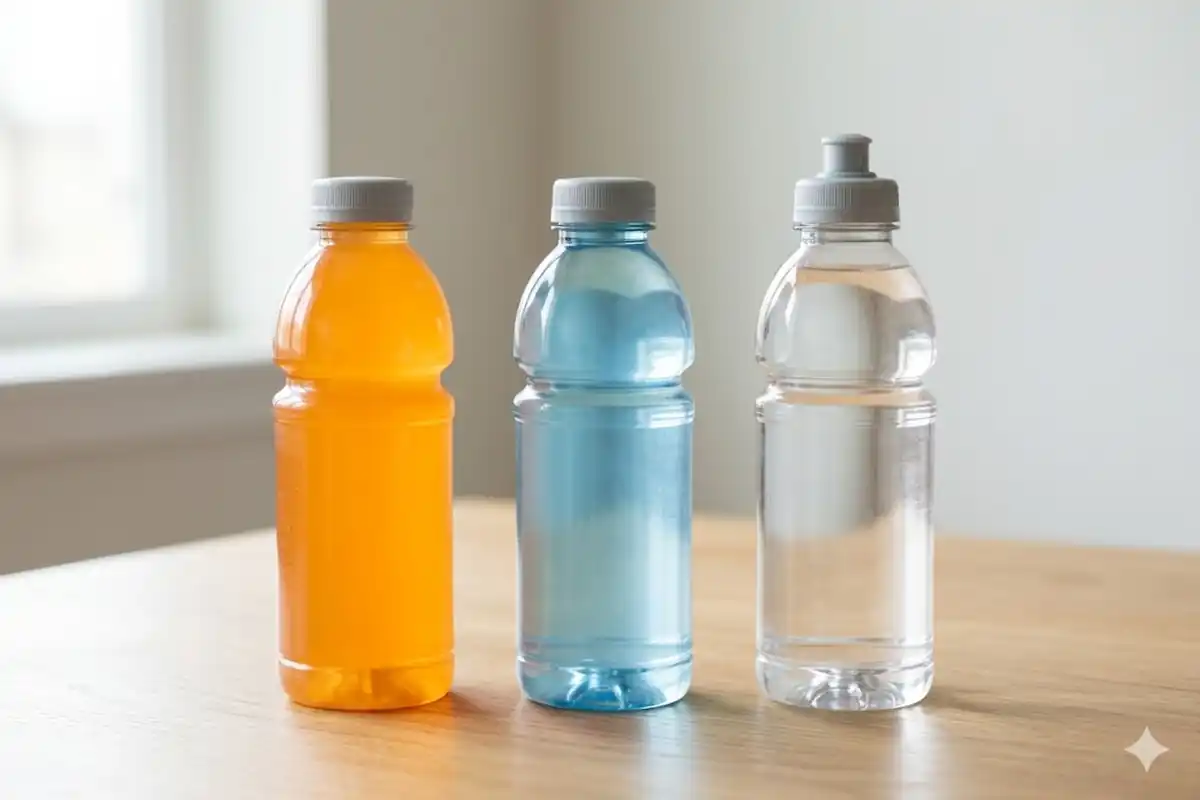
Gatorade is no longer a single product. The label changes dramatically across the lineup, mostly in sugar, while sodium stays fairly consistent. Here is how the main varieties compare per 20-ounce serving.
| Gatorade variety (20 fl oz) | Calories | Sugars | Sodium | Potassium |
|---|---|---|---|---|
| Thirst Quencher (classic) | 140 kcal | 34 g | 270 mg | 80 mg |
| Gatorade Zero | 5 kcal | 0 g | 270 mg | 90 mg |
| G2 (lower sugar) | 30 kcal | 7 g | 270 mg | 80 mg |
| Gatorlyte (rapid rehydration) | 50 kcal | 12 g | 490 mg | 350 mg |
| Gatorade Fit (12 oz) | 10 kcal | 1 g | 200 mg | 350 mg |
Gatorade Zero is the standout for anyone who wants the electrolytes without the sugar load: it keeps the 270 milligrams of sodium and 90 milligrams of potassium but drops to 5 calories and zero sugar by using non-nutritive sweeteners. G2 splits the difference at 30 calories and 7 grams of sugar. Gatorlyte is a different animal, a rapid-rehydration formula with far more sodium and potassium, built for serious fluid loss rather than casual sipping. If your only reason for reaching for Gatorade is the electrolytes, Zero gives you essentially the same hydration profile as the classic without the 34 grams of sugar.
Gatorade Versus Soda, Juice, and Water
People often reach for Gatorade as the healthy alternative to soda. The label only partly supports that. Here is the side-by-side per 20 ounces.
| Drink (20 fl oz) | Calories | Sugars | Sodium |
|---|---|---|---|
| Gatorade Thirst Quencher | 140 kcal | 34 g | 270 mg |
| Powerade Mountain Berry | 130 kcal | 34 g | 250 mg |
| Coca-Cola | 240 kcal | 65 g | 75 mg |
| Orange juice | 275 kcal | 50 g | 5 mg |
| Water with electrolyte tab | 5 kcal | 0 g | 300 mg |
Classic Gatorade does come in lower than soda and juice on both calories and sugar, so as a swap it is a step in the right direction. But it still carries 34 grams of added sugar, which is a lot for a drink most people treat as hydration rather than a treat. The honest framing is that Gatorade sits between soda and water: better than a cola, far heavier than the water-plus-electrolyte-tab option that delivers the sodium with none of the sugar. If hydration is the only goal, water wins on the label every time; if fast fuel during hard exercise is the goal, the sugar earns its keep.
The one place Gatorade clearly beats both soda and juice is sodium, and that is the point. Soda has almost none, and juice has essentially none, so neither replaces what you sweat out. Gatorade’s 270 milligrams of sodium is the functional difference that makes it a rehydration drink rather than just a sweet one. Powerade lands in nearly the same spot on every line, so the choice between the two is mostly flavor preference rather than nutrition. Against orange juice, Gatorade actually wins on calories and sugar despite its reputation, because a 20-ounce pour of juice is deceptively heavy. None of this changes the core verdict: the comparison only flatters Gatorade against drinks that are themselves sugar-heavy, and water remains the baseline for ordinary thirst.
Gatorade for Kids and Everyday Drinking
A common scene is a kid drinking Gatorade after a 45-minute practice or just because it is in the fridge. By the label, that is a 20-ounce serving of 34 grams of added sugar going into a child who likely did not lose enough fluid or salt to need it. For most youth activity under an hour, water is the appropriate choice, and the sugar in a sports drink is simply extra. The drink is not dangerous in moderation, but treating it as a default beverage rather than an exercise tool quietly adds a soda’s worth of sugar to the day.
The same logic applies to adults who keep Gatorade around as a flavored hydration habit. If you genuinely like it and drink it occasionally, that is fine, the issue is only frequency. A bottle a day, every day, is roughly 240 grams of added sugar a week from one source. If the appeal is the taste and the electrolytes rather than the fuel, Gatorade Zero gives you the same flavor and sodium with none of that sugar, which is the single easiest swap on this entire page.
Worth flagging too: because Gatorade is sodium-forward, people watching blood pressure should count it the way they count any salty food, not treat it as neutral because it is a drink. At 270 milligrams per bottle it is not extreme, but it is not nothing, and it adds to a daily total that most Americans already overshoot.
Making Your Own Electrolyte Drink
If you want what Gatorade does, fluid plus sodium plus a little carbohydrate, without a fixed 34 grams of sugar, you can build it yourself and control every number on the label. A simple homemade version is water, a pinch of salt for roughly 200 to 300 milligrams of sodium, a small splash of fruit juice for flavor and a few grams of carbohydrate, and optionally a squeeze of citrus. You decide the sugar level, from nearly zero up to whatever fuels a long effort.
The advantage is not that homemade is magically healthier, it is that you set the carbohydrate to match the activity instead of accepting a one-size formula. For a short workout you can make it almost sugar-free; for a long endurance day you can dial the carbohydrate up to the same 6 percent concentration the commercial drink uses. Pairing that with real food rehydrates you better than any drink alone, which is why a salty, brothy meal is such an effective recovery tool after heavy sweating.
Reading the Serving Size Trap
One detail trips up almost everyone. The Gatorade nutrition label lists its numbers per 12-ounce serving, but the common single-serve bottle holds 20 ounces, and the large bottle holds 28 or 32. If you glance at the panel and read 80 calories without checking the serving size, you will underestimate a full 20-ounce bottle by nearly half. The 32-ounce bottle, drunk in one go, delivers more than 220 calories and over 50 grams of sugar.
This is not unique to Gatorade; the FDA’s interactive Nutrition Facts label tool is built specifically to teach people to check the serving size before the calorie line, because the per-serving figure is meaningless until you know how many servings the container holds. With Gatorade, always multiply the panel by the number of servings in your bottle, then judge the sugar against your day.
When Gatorade Makes Sense, and When It Does Not
The label points to a clear rule of thumb. Gatorade earns its sugar and sodium during prolonged, sweaty exercise lasting roughly an hour or more, in hot conditions, or during illness with fluid loss, where the fast carbohydrate and replaced electrolytes genuinely help. Outside those situations, it is a sweetened beverage that happens to contain some salt, and water or a sugar-free electrolyte option does the hydration job without the sugar.
If you drink Gatorade for the flavor or the habit rather than for performance, the simplest upgrade is to switch to Gatorade Zero, which keeps the taste and electrolytes while removing the 34 grams of sugar. For sodium awareness in general, the CDC’s sodium overview is a useful reminder that most of our salt already comes from food, so a sodium-heavy drink adds up faster than it feels like it should.
If you are rehydrating after a long session, pairing the drink with a real meal beats relying on the bottle alone. A bowl of chicken soup delivers fluid, sodium, and protein together, and a balanced low-carb breakfast restores energy without piling on more added sugar.
Where These Numbers Come From
The figures here reflect Gatorade’s published United States labels, which can vary slightly by flavor and are occasionally reformulated, so the bottle in your hand is always the final authority for a specific product. For the underlying nutrient data on beverages and sugars, the USDA FoodData Central database is the reference standard. For more drink breakdowns in this format, see our panels on Twisted Tea nutrition facts and Tito’s nutritional value.
Frequently Asked Questions
How much sugar is in a bottle of Gatorade?
A 20-ounce bottle of classic Gatorade Thirst Quencher contains 34 grams of added sugar, which is about 68 percent of the FDA Daily Value and more than the American Heart Association’s suggested daily limit for many adults. A 32-ounce bottle exceeds 50 grams.
How many calories are in Gatorade?
Classic Gatorade has 80 calories per 12-ounce serving, or 140 calories in a full 20-ounce bottle. Gatorade Zero has just 5 calories per bottle, and G2 has about 30, because they cut the sugar.
Is Gatorade healthier than soda?
By the label, classic Gatorade has fewer calories and less sugar than most sodas of the same size, so as a swap it is an improvement. But it still carries 34 grams of added sugar per bottle, so it is not a low-sugar drink. For plain hydration, water or a sugar-free electrolyte option is the better choice.
What electrolytes are in Gatorade?
The main electrolytes on the Gatorade label are sodium, at 270 milligrams per 20-ounce bottle, and potassium, at 80 milligrams. These help replace what you lose in sweat during prolonged exercise, which is the situation Gatorade was designed for.