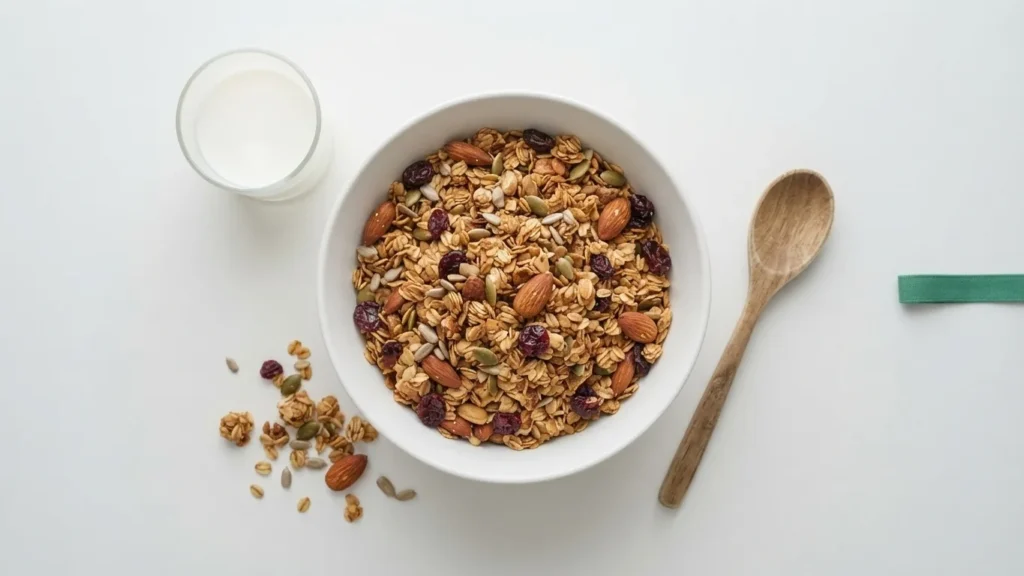
The one number that decides every granola nutrition facts panel is weight, not the pretty cup fraction on the box. The calorie figure you trust depends entirely on how many grams land in your bowl. For wider breakfast reading, see our snacks sweets section.
In short: granola runs high relative to most cereals because of added oil and nuts. A realistic bowl of 1 cup (122 g) carries far more than the panel’s listed 1/4 cup or 0.667 cup serving. Watch added sugar first: one serving can reach 15 g, or 30% of the Daily Value. To pick a better jar, aim for at least 3 to 5 grams of fiber per serving and under 5 grams of sugar per 1/3 cup.
What is in the USDA homemade-granola reference
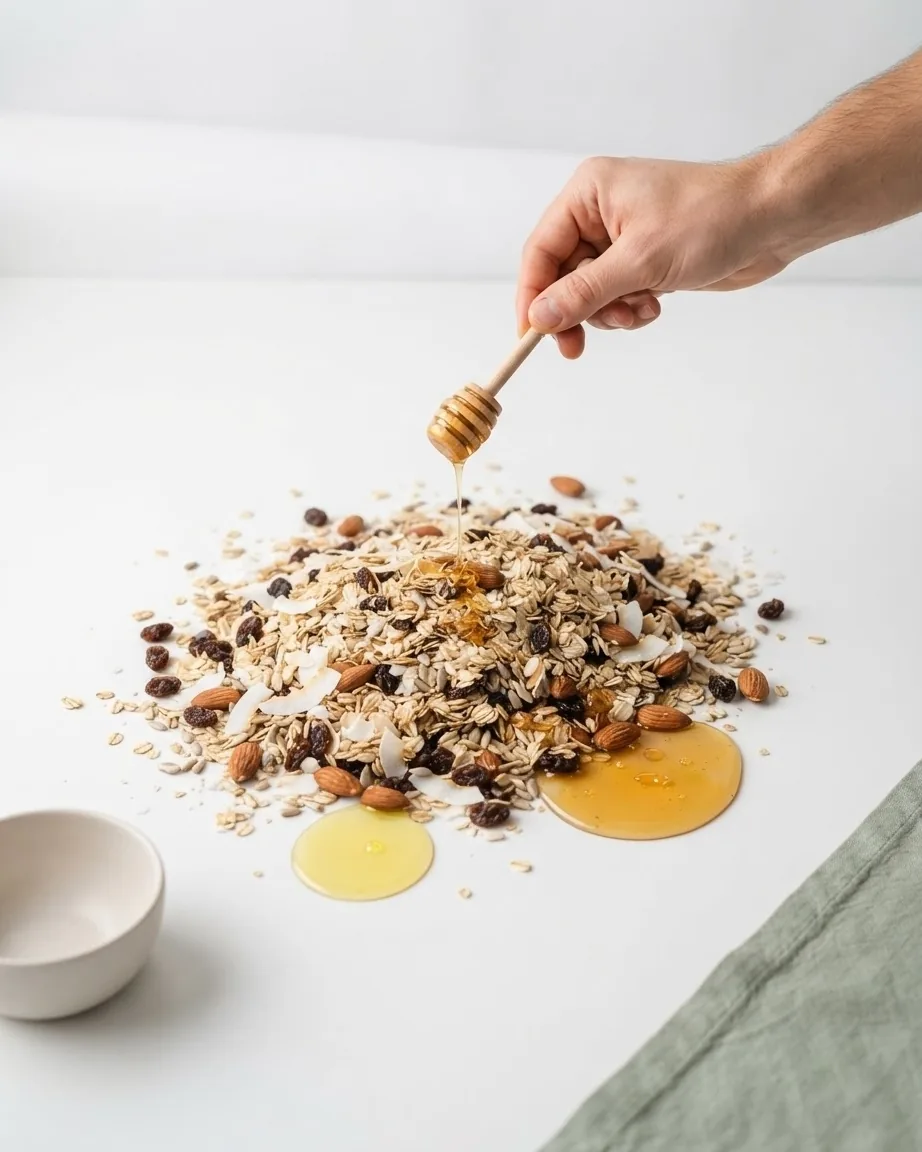
The USDA’s homemade-granola reference, drawn from FoodData Central, describes a recipe of oats, raisins, sunflower seeds, almonds, wheat germ, honey, coconut and canola oil. You can read the full profile at FoodData Central.
Two things drive those numbers: oil and nut content. Granolas with more oil and nuts can land near the top of the stated calorie and fat ranges. Sodium stays low, and there is no cholesterol, so the calorie weight comes from carbohydrate and fat, not salt.
Quick granola nutrition facts, by base
The table below lines up the same question (how much is in granola) across the three bases labels actually use, so a per-100g figure is never mistaken for a per-serving one. Each row is one named source at its own stated serving weight.
| Source | Base | Calories | Fat | Carbs | Sugar | Protein |
|---|---|---|---|---|---|---|
| USDA (homemade) | 100 g | 489 | 24.31 g | 53.88 g | 19.80 g | 13.67 g |
| Foodstruct | 100 g | 389 | 5.7 g | 81 g | 28 g | 8.7 g |
| EatThisMuch | 1 cup (122 g) | 597 | 29 g | 65 g | 24 g | 18 g |
| Verywell Fit | 1/4 cup (29 g) | 140 | 9 g | 14 g | 4 g | 3 g |
| Whole Foods (USDA) | 0.667 cup (55 g) | 240 | 7 g | 40 g | 11 g | 5 g |
Hold the gram weight constant before comparing jars. A 1/4 cup serving looks light next to a 1 cup pour because it is roughly a quarter of the food, not because the recipe is leaner.
Benefits of granola worth the calories
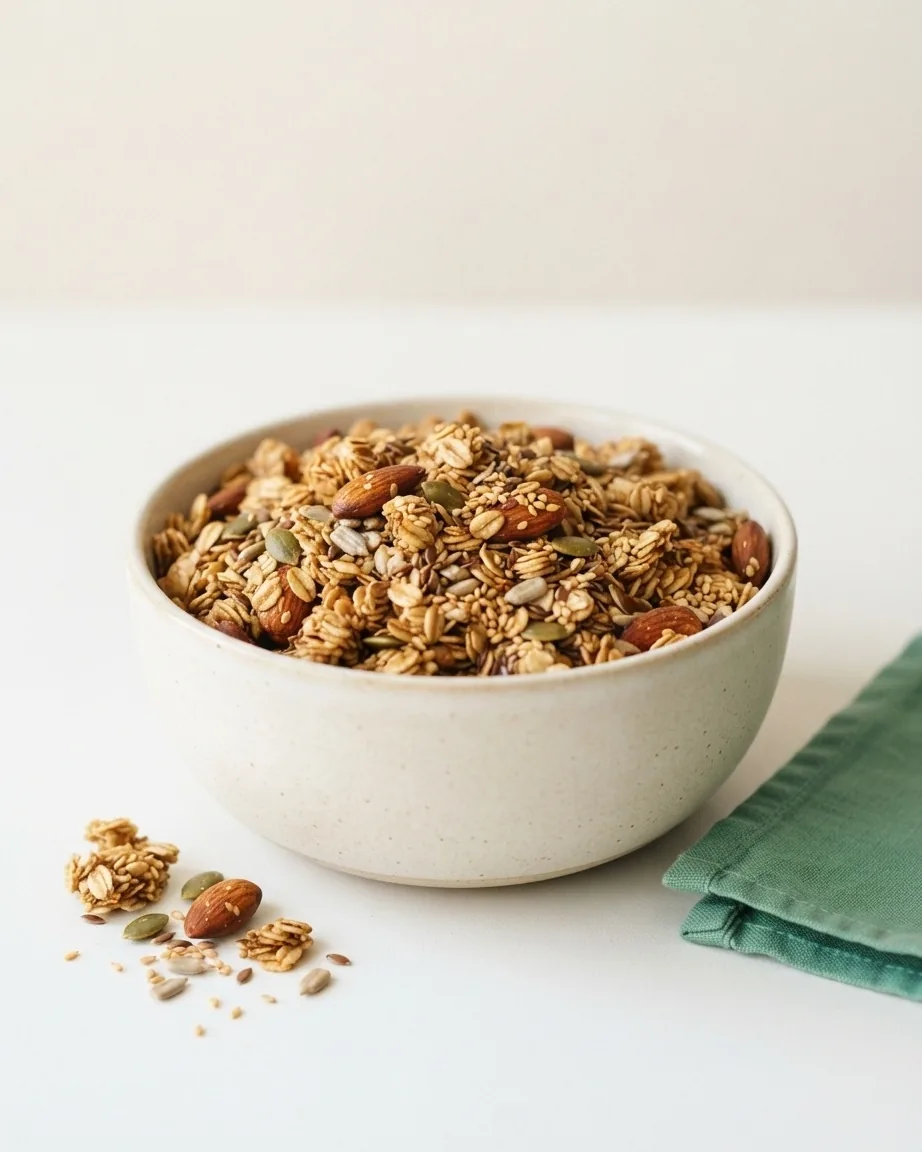
Granola earns its place through whole grains, fiber, protein and healthy fats: when the sugar stays in check. The whole-grain oats, nuts, and seeds supply dietary fiber (8.90 g per 100 g in the USDA homemade reference), total fat (24.31 g per 100 g), and protein (13.67 g per 100 g).
The protein numbers can be meaningful at a realistic portion. Nature Valley’s Protein Oats & Honey lists 13 g of protein and energy from 33 g whole grain per 2/3 cup serving, against the at-least 48 g of whole grain suggested daily, per the brand’s own panel. That one bowl covers more than two-thirds of the day’s whole-grain target.
Fiber is the other reason to keep granola on the shelf. The USDA reference carries 8.90 g of fiber per 100 g, and even the smaller 1/4 cup classic serving from Verywell Fit holds 3 g of it. Fiber is why granola feels more filling than a sugary flake cereal at the same calorie count.
Where granola helps:
- Whole grain delivery. A single 2/3 cup protein-granola serving supplies 33 g of the at-least 48 g whole grain suggested per day.
- Plant protein. Nut- and seed-heavy blends reach 13 g protein per serving.
- Fiber for fullness. The homemade reference carries 8.90 g fiber per 100 g, helping steady the carbohydrate load.
- Low sodium. The USDA homemade profile keeps sodium low with no cholesterol.
See also: our cereal nutrition facts guide.
Granola calories and nutrition by brand
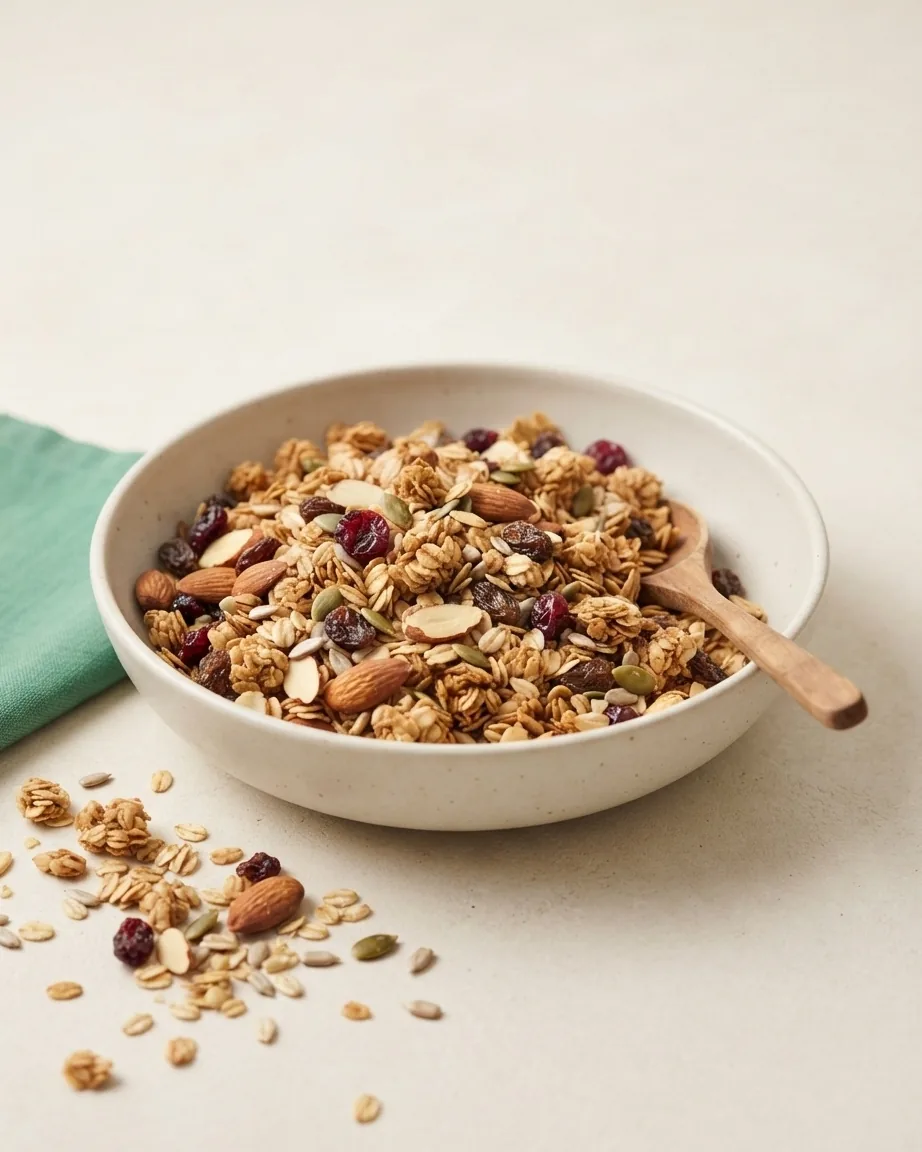
At matched weight the spread between brands is wide, and it comes down to oil and nut content. Healthline’s figures put two granolas at the same 50 g amount: Kellogg’s Low Fat at 195 cal, 2.9 g fat, 40.5 g carbs and 14.2 g sugar, versus Gypsy Crunch Roasted at 260 cal, 13 g fat, 28 g carbs and 7 g protein; a 65-calorie gap for the same half cup, detailed at Healthline.
Per 100 g, energy ranges from 389 to 489, and fat from 5.7 g to 24.31 g. The low-fat end trades oil for carbohydrate; the high-fat end packs nuts and canola oil. Nature Valley’s Protein line lists a 2/3 cup bowl at 280 calories, 7 g total fat, 170 mg sodium, 41 g carbohydrate, 16 g total sugars and 13 g protein. The 16 oz crunchy pouch is described as holding 21 bars’ worth of granola.
As naturevalley.com notes: “Contains one plastic pouch of crunchy Nature Valley Crunchy Oats and Honey Granola, 16 oz; perfect for instant snacking, or a part of breakfast and meals.”
Granola versus muesli at a glance
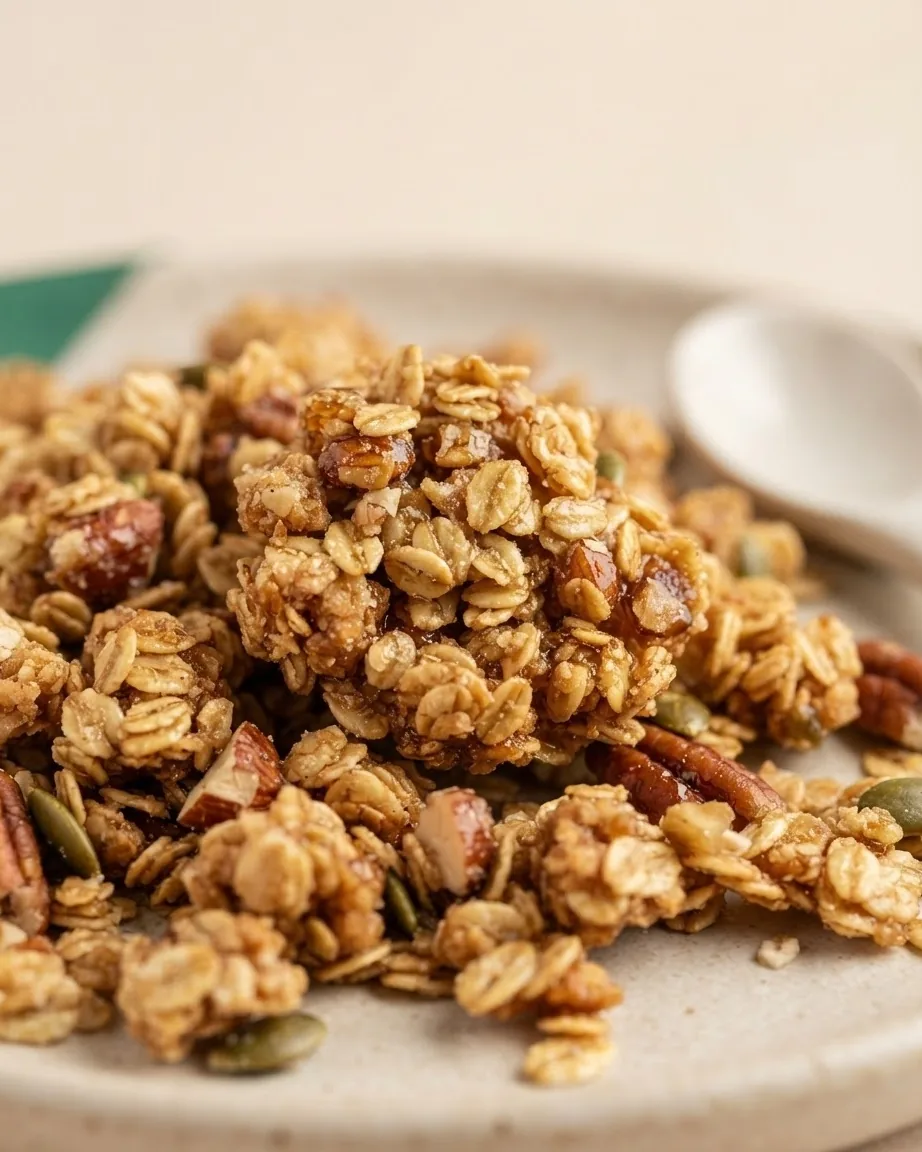
The split comes down to the oven. Granola is baked with added oil and is typically higher in sugar; muesli is raw or dry-toasted with no binding oil, which is why its fat and calorie load usually sits lower at the same weight, per WebMD. If the calorie count is your main lever, muesli tends to win by default on the oil it skips. If texture and a protein hit matter more, baked granola delivers the crunch and, in protein-forward blends, up to 13 g protein per serving: at the cost of the baking oil the calories reflect.
Downsides of granola to watch on the label
The sugar is the catch. Some granolas carry nearly 4 teaspoons, or 17 grams, of sugar in a single serving. Nature Valley’s Protein line lists 15 g of added sugar per serving (30% of the Daily Value in one bowl), and the Whole Foods Market blend lists 9 g added within its 0.667 cup (55 g) serving.
The second trap is the serving size itself. Labeled servings run from 2 tablespoons (12.5 g) up to a 2/3 cup (67 g) bowl, and small servings mislead because people pour more. A full cup is 122 g, so a casual bowl can be several times the smallest labeled 12.5 g portion, and every calorie, gram of fat and gram of sugar scales with it.
For example, if a jar lists 2 tablespoons at a modest number and you pour a 1 cup bowl, you are eating close to ten servings, not one. Multiply the panel by your real pour before trusting the number.
The table below shows what three sources say about added sugar per serving, so you can set your own ceiling against a real label.
| Source | Serving | Sugar shown |
|---|---|---|
| Nature Valley Protein | 2/3 cup | 15 g added (30% DV) |
| Whole Foods (USDA) | 0.667 cup (55 g) | 9 g added |
| Healthline example | one serving | nearly 17 g |
Health benefits beyond the calorie count
A no-sugar-added granola shows what the base ingredients contribute once the syrup is stripped out. A 1/4 cup serving of no-sugar-added healthy granola contains 130 calories, 7 g fat, 1 g sugar, 2 g fiber, 3 g protein and 14 g carbohydrate, with 0 mg sodium, per WebMD. Against the Crunchy Oats & Honey 1/4 cup at 7 g sugar, that is the same portion carrying a fraction of the sugar.
For example, if two jars both read 130 calories at 1/4 cup but one lists 1 g sugar and the other 7 g, the fiber and protein are doing more of the work in the low-sugar jar. The calorie count alone would have hidden that.
How to choose a healthy granola from the label
Two sourced rules turn “read the label” into a checkable test. For fiber, aim for at least 3 to 5 grams per serving. For sugar, WebMD’s benchmark is under 5 grams per 1/3 cup serving, or sugar not listed among the first 3 ingredients.
- Check the serving weight in grams first. A 1/4 cup (29 g) and a 0.667 cup (55 g) are not the same portion: convert to your real pour before reading anything else.
- Scan added sugar. Reject anything near 15 g (30% DV) per serving if sugar is your concern; favor under 5 grams per 1/3 cup.
- Confirm fiber. Look for 3 to 5 grams per serving to get the fullness benefit.
- Read the ingredient order. Sugar should sit outside the first 3 ingredients.
For example, if a jar lists 4 g fiber and 4 g sugar at a 1/4 cup serving with oats first and honey fifth, it clears all four checks. One that lists 2 g fiber and sugar as the second ingredient fails two of them.
On shelf life, store-bought granola and granola bars generally shouldn’t be eaten 8 months after the expiration date, per WebMD. See also: our Honey Bunches of Oats guide.
Frequently asked questions about granola
Is granola too high in sugar?
It can be. Certain blends pack nearly 4 teaspoons of sugar per portion, and a protein line lists 15 g of added sugar: a full 30% of the Daily Value in one bowl. A low-sugar pick stays under 5 grams per 1/3 cup, so the answer depends entirely on the jar you grab.
How many carbs are in a 1/2 cup of granola?
At a 50 g half cup, Healthline’s figures put Kellogg’s Low Fat at 40.5 g of carbohydrate versus Gypsy Crunch Roasted at 28 g: a wide gap for the identical volume. The low-fat version swaps oil for carbohydrate, which is why its carb column climbs while its fat stays near 2.9 g.
Which is healthier, oatmeal or granola?
Plain oats skip the baking oil that pushes granola higher in fat and calories. Granola answers back with crunch and, in protein blends, 13 g protein per serving. If calorie density is the deciding factor, the un-oiled option sits lower at the same weight.
How much granola a day is too much?
Watch grams, not cups. A full cup is 122 g at roughly 597 calories, while a labeled serving may be as small as 2 tablespoons (12.5 g). A casual bowl can hit several times the smallest listed portion, so the line is crossed when your pour multiplies the panel past what your day allows.