Drafted with AI language models. How this page was made
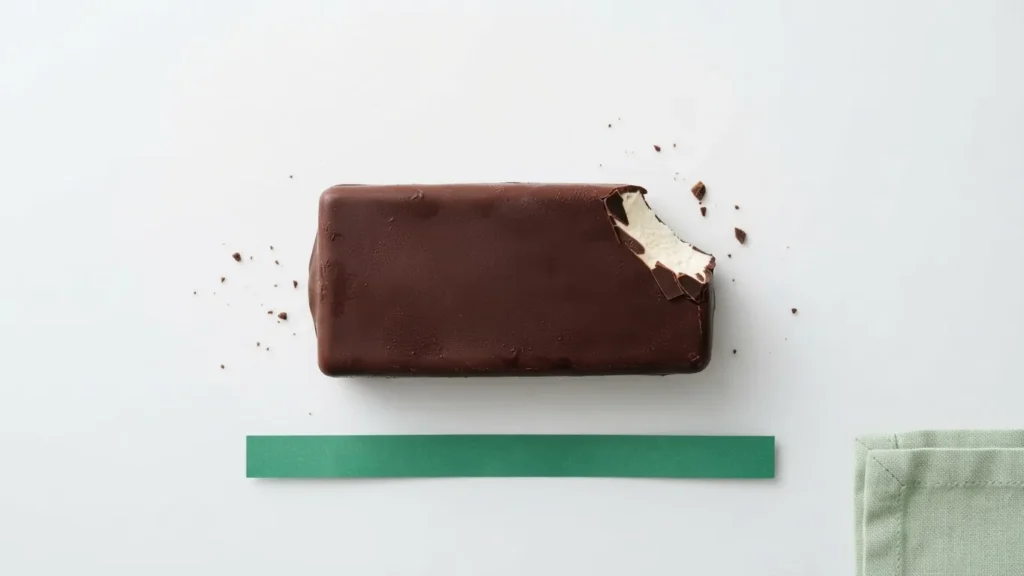
One Original Klondike bar lists 11g of saturated fat, and the panel marks that as 55% of a day’s value: more than half, in a single 85g square. That one figure does the most work when you look at Klondike bar nutrition, because the word “light” on the wrapper describes fat relative to full-fat ice cream, not a low-fat snack. The Original runs 250 calories per bar; the No Sugar Added Vanilla reads lower but swaps sugar for sugar alcohol and artificial sweeteners. The three common bars are different products at different weights, so their numbers do not line up the way a wrapper implies.
The figures below are sourced from the manufacturer’s product pages and from retailers displaying the manufacturer-supplied Nutrition Facts panel, structured into reference tables. Where two sources print different numbers for the same bar, both appear, with the discrepancy named rather than averaged.
The Original bar: 250 calories and 11g saturated fat per 85g square
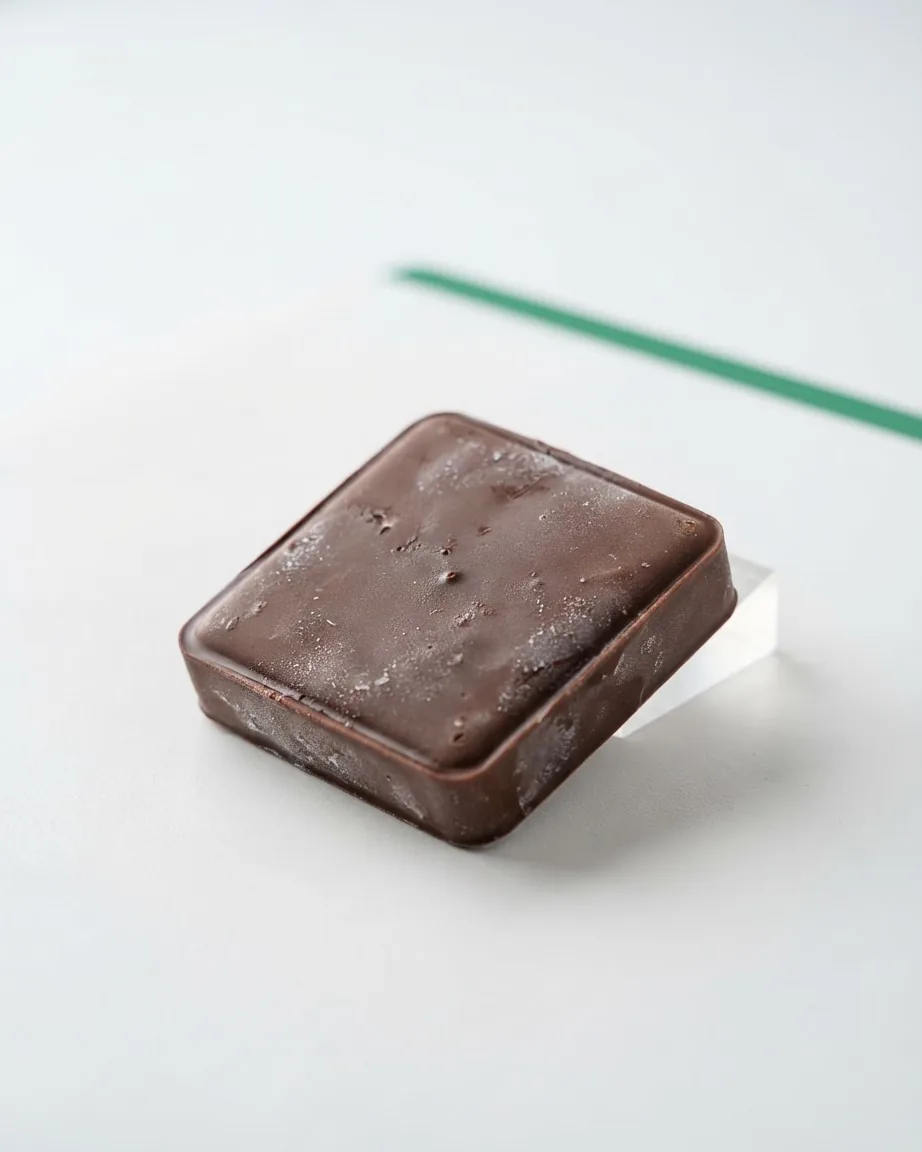
The labeled serving is one bar at 85g, the basis Klondike uses for the 6-count multipack. On that serving the Original Vanilla Light Ice Cream Bar carries 250 calories, per the manufacturer page for the bar that has been produced since 1922.
The full macro line, read off the retailer panel that reproduces the manufacturer label: 14g total fat, 11g of it saturated, 0g trans fat, 10mg cholesterol, 60mg sodium, 28g total carbohydrate, 1g dietary fiber, 23g total sugars of which 18g are added sugars, and 3g protein. It also supplies 100mg calcium and 190mg potassium. Those values are listed by PriceRite Marketplace, which displays the manufacturer-fed label for the Original ice cream bars.
| Nutrient (per 85g bar) | Amount | % DV |
|---|---|---|
| Calories | 250 | |
| Total fat | 14g | 18% |
| Saturated fat | 11g | 55% |
| Trans fat | 0g | |
| Cholesterol | 10mg | 3% |
| Sodium | 60mg | 3% |
| Total carbohydrate | 28g | 10% |
| Dietary fiber | 1g | 4% |
| Total sugars | 23g | |
| Added sugars | 18g | 36% |
| Protein | 3g | |
| Calcium | 100mg | 8% |
| Potassium | 190mg | 4% |
One number to carry out of this section: the 18g of added sugars works out to 36% of the daily value, and the saturated fat to 55%. Those two percentages, both printed on the same label, are what the “light” wording does not tell you.
A source note worth having: PriceRite and Giant Food, both reading the manufacturer-fed panel, print 60mg sodium for the Original. A secondary database snippet shows 65mg. The two retailers agree with each other, so 60mg is the figure to trust here; the lone 65mg reading is not treated as comparable.
“Light ice cream” and “not a light food” on the same wrapper
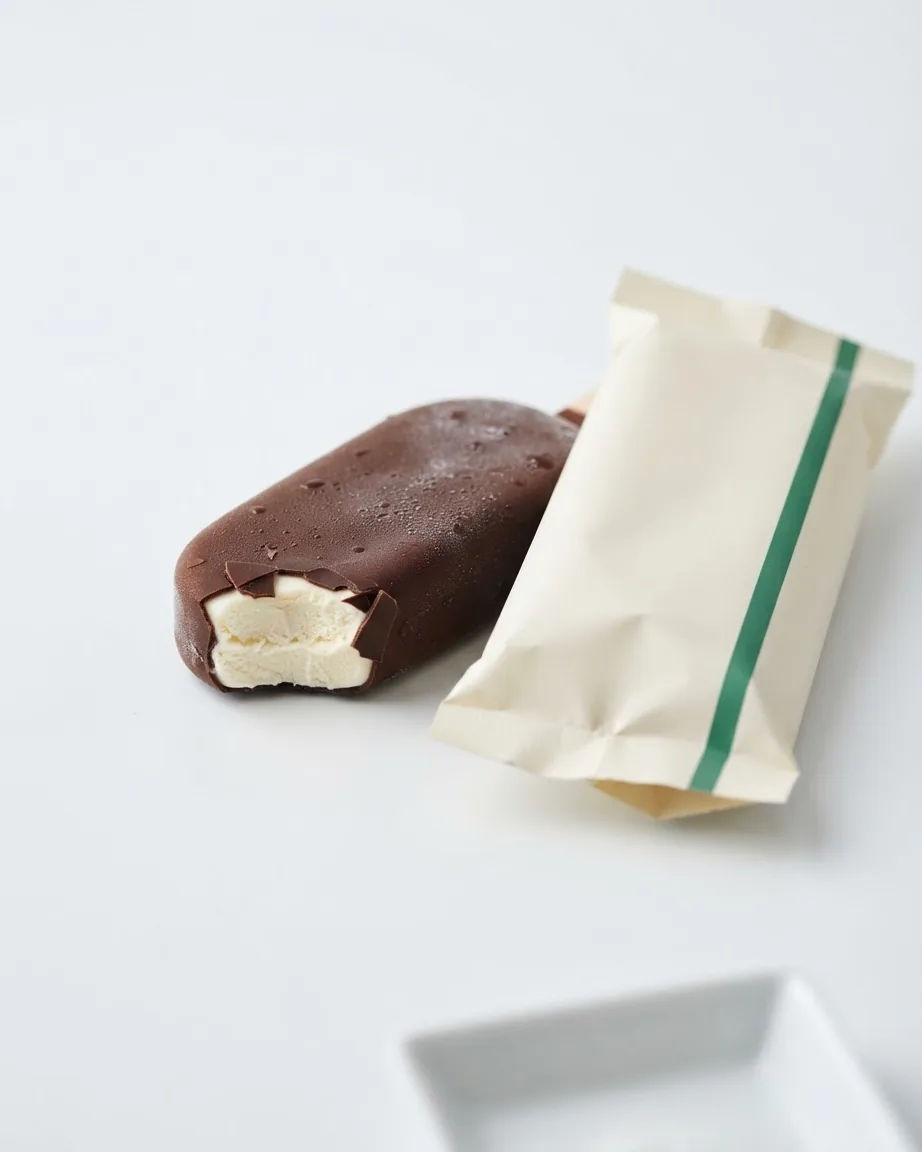
The Original is labeled “light ice cream,” and that claim is strictly relative to full-fat ice cream. The manufacturer itself resolves the ambiguity on the retailer listing: the Original bars page from Giant Food carries the statement “Not a light food.”
Both things are true at once. The ice cream inside has less fat than a standard full-fat scoop, which earns the “light” descriptor; the finished bar, with its chocolate-flavored coating, still delivers 55% DV saturated fat per square. If you read “light” as “dietetic” or “diet-safe,” the label is telling you not to. The mechanism is simple: the coating is a hardened fat shell, and fat is the most calorie-dense macronutrient, so a thin chocolate layer pushes both the calorie count and the saturated-fat line well past what the ice cream alone would read.
Original vs No Sugar Added: lower sugar, not lower everything
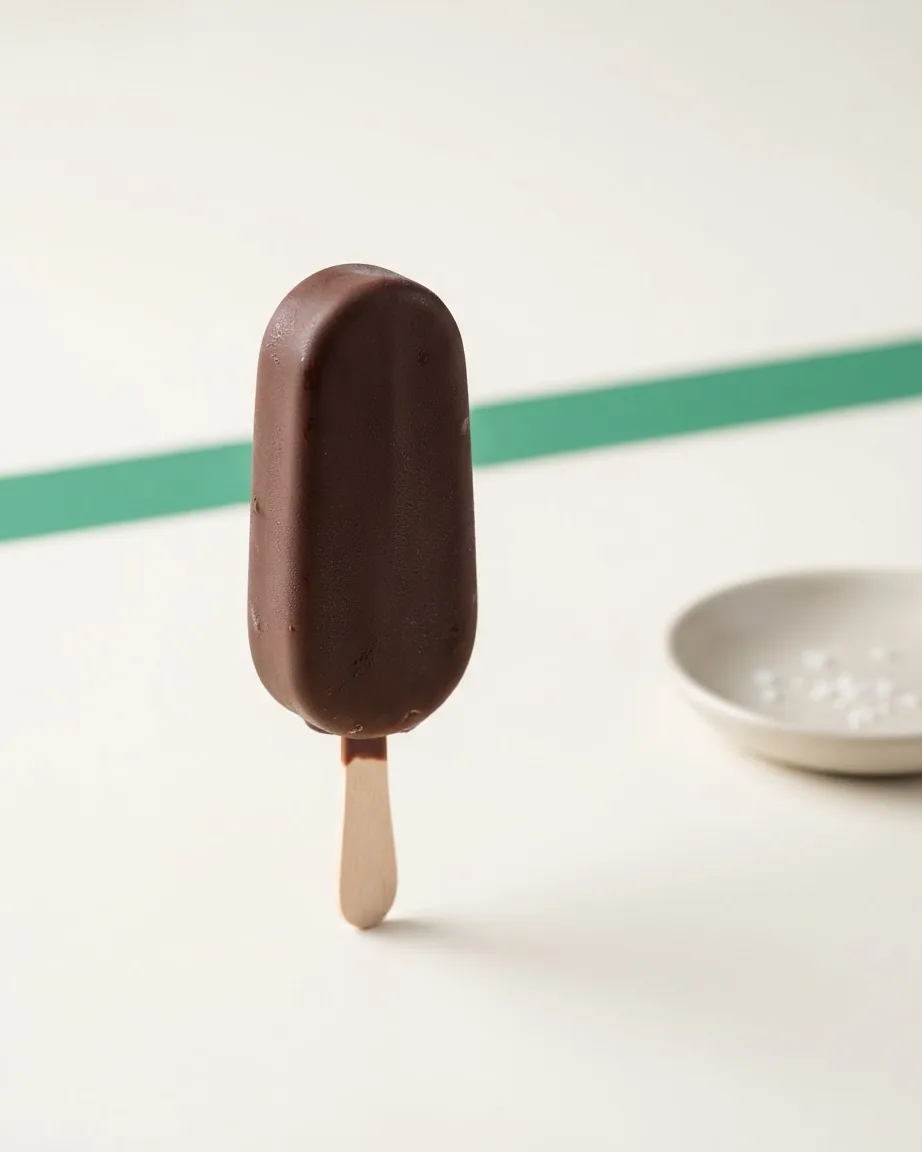
The No Sugar Added Vanilla bar is a separate product at a smaller labeled serving: one bar at 74g in the 6-count pack. Retailer and manufacturer sources disagree on its calories, and the gap matters because it is a same-basis disagreement, not a serving-size artifact.
Fairway Market, reading the manufacturer-supplied label for the No Sugar Added vanilla bar, prints 170 calories per 74g bar. Klondike’s own product page prints 180 calories for the same labeled 74g serving. Both identify the serving identically, so this is not a 74-versus-85 gram mismatch; it is a straight 170-versus-180 difference on the current product, likely a formulation or label-revision date gap. We do not pick one as “correct”: plan around the range of 170 to 180 calories.
Where the two bars genuinely differ: the NSA Vanilla carries 9g total fat, 8g of it saturated (40% DV), 23g total carbohydrate, 6g total sugars, 0g added sugars, 11g sugar alcohol, 65mg sodium, and 5mg cholesterol, per Fairway’s panel.
| Per bar | Original (85g) | NSA Vanilla (74g) |
|---|---|---|
| Calories | 250 | 170-180 |
| Saturated fat | 11g (55% DV) | 8g (40% DV) |
| Total sugars | 23g | 6g |
| Added sugars | 18g | 0g |
| Sugar alcohol | 0g | 11g |
| Sodium | 60mg | 65mg |
The trade-off is specific: NSA cuts total sugars from 23g to 6g and added sugars to 0g, but saturated fat is still 40% DV, and the sugar is replaced by 11g of sugar alcohol. Call it lower-sugar, not low-fat. And because the Original bar is 85g while the NSA bar is 74g, you cannot read a clean “calorie saving” off the two numbers: they are different products at different bar weights, so the per-bar gap mixes a recipe change with a size change.
One more source conflict on the NSA Vanilla micros: Fairway’s panel shows 0g added sugars, 11g sugar alcohol and 0g fiber, while CalorieKing lists 21g carb, 7g sugars, 6g sugar alcohol and 4g fiber for the No Sugar Added vanilla bar; CalorieKing bases its figure on “a 35 year old female who is 5’7\” tall and weighs 144 lbs.” We treat the manufacturer-fed Fairway label as primary for the micros and flag the CalorieKing divergence rather than blending the two.
No Sugar Added bars and the phenylketonurics warning
If the reason you are reaching for a No Sugar Added bar is a sweetener sensitivity (or PKU), this is the section that changes which bar you buy. Both No Sugar Added bars contain aspartame and carry the phenylketonurics “Contains phenylalanine” warning. The Original does not.
The Fairway panel for the NSA Vanilla lists “Aspartame*, Sucralose, Caramel (For Color), Vitamin A Palmitate, Phenylketonurics: Contains Phenylalanine.” The manufacturer’s own ingredient list for the No Sugar Added vanilla bar adds names the retailer line does not: maltitol syrup, maltitol, and acesulfame potassium alongside aspartame and sucralose, all inside a “Less than 1%” grouping for the minor components. Both sources agree on aspartame and sucralose; cite the specific panel for any single ingredient, because the lists are not identical.
The No Sugar Added Krunch bar follows the same pattern. Per bar it reads 160 calories, 7g saturated fat (35% DV), 65mg sodium and 6g total sugars, and it also carries the phenylketonurics warning; those figures come from Hannaford’s listing for the No Sugar Added Krunch bars. Anyone managing PKU should skip both NSA bars and stay with the Original, whose sweeteners are sugar and corn syrup.
Three bars ranked on added sugar versus sugar alcohol
Lined up, the three common Klondike bars split cleanly on how they get their sweetness. The Original carries 18g added sugar and 0g sugar alcohol. The NSA Vanilla carries 0g added sugar and 11g sugar alcohol. The NSA Krunch reads 6g total sugars per bar.
- Original: 18g added sugar, no sugar alcohol (the sweetness is real sugar and corn syrup).
- NSA Vanilla: 0g added sugar, 11g sugar alcohol (the sweetness is maltitol-based plus high-intensity sweeteners).
- NSA Krunch: 6g total sugars per bar, also sugar-alcohol-sweetened and aspartame-containing.
The practical catch sits with the NSA Vanilla’s 11g of sugar alcohol: maltitol and similar polyols are incompletely absorbed, and in that quantity they can cause digestive upset for some people. That is the mechanism behind the “no sugar added but still sweet, and sometimes uncomfortable” experience: the sugar is gone, but the thing replacing it ferments in the gut. For broader reading on how labels count sweeteners, see our snacks sweets section, and for a cereal where every gram of sugar is added sugar, our Rice Krispies cereal breakdown.
Why SLIM-A-BEAR Fudge Bar numbers do not transfer to the vanilla bars
Detailed micronutrient figures circulate for a Klondike bar that is not the Original or the NSA Vanilla. The University of Rochester Medical Center Health Encyclopedia lists the SLIM-A-BEAR Fudge Bar, described as 98% fat free, no sugar added, per a 3.5 fl oz bar: a different product on a different serving basis.
On that record the bar shows total sugars of 5.25g, total dietary fiber of 4.44g, sodium of 88.8mg, and total saturated fatty acids of just 0.74g. That 0.74g saturated-fat figure is nothing like the Original’s 11g or the NSA Vanilla’s 8g: which is exactly why it cannot stand in for them. The academic entry names a separate KLONDIKE product and uses a 3.5 fl oz serving, whereas the current brand pages identify the vanilla bars by gram weight (85g and 74g). If you see a Klondike bar quoted at under a gram of saturated fat, it is the fudge bar, not the square.
This is the general rule for Klondike bar nutrition across sources: match the exact product name and the exact serving basis before you trust a number. Calories per bar, saturated fat and sugar all move between the Original, the NSA Vanilla, the NSA Krunch and the SLIM-A-BEAR, and the serving weight moves with them. For another frozen-adjacent item where the serving basis quietly controls the whole panel, see our evaporated milk guide.
Calorie density across Klondike bars, gram for gram
The article warns that you cannot read a clean comparison off the raw per-bar numbers, because the Original is an 85g square and the No Sugar Added Vanilla is a smaller 74g bar. Dividing each bar’s calories by its own labeled weight removes the size difference and shows the true calorie density. The Original packs 250 calories into 85g, which works out to about 2.94 calories per gram. Even at its highest published figure, every gram of the No Sugar Added bar carries fewer calories than the Original, so the NSA bar is genuinely less calorie-dense gram for gram, not just smaller.
- Original Vanilla: 250 cal ÷ 85g = 2.94 cal/g.
- NSA Vanilla (Fairway’s 170-calorie reading): 170 cal ÷ 74g = 2.30 cal/g.
- NSA Vanilla (Klondike’s 180-calorie reading): 180 cal ÷ 74g = 2.43 cal/g.
Frequently asked questions about Klondike bar nutrition
Is Klondike ice cream bar healthy?
The Original bar carries 55% of a day’s saturated fat and 36% of the daily value for added sugars in one 85g square. The “light” descriptor is relative to full-fat ice cream only; the manufacturer label states plainly that it is not a light food. Read as an occasional treat rather than a diet item.
What’s the healthiest ice cream bar?
Among Klondike’s own line, the figures favor the SLIM-A-BEAR Fudge Bar, which the URMC encyclopedia lists at 0.74g total saturated fat and 4.44g fiber per 3.5 fl oz bar: far below the vanilla bars on saturated fat. It is a distinct product, so its numbers never substitute for the Original.
Are Klondike bars ok for diabetics?
That is a question for your clinician, and we are not providing medical advice. The data point that matters: the No Sugar Added Vanilla lists 0g added sugars but replaces them with 11g sugar alcohol per 74g bar, which still affects carbohydrate load and can cause digestive upset in quantity.