>
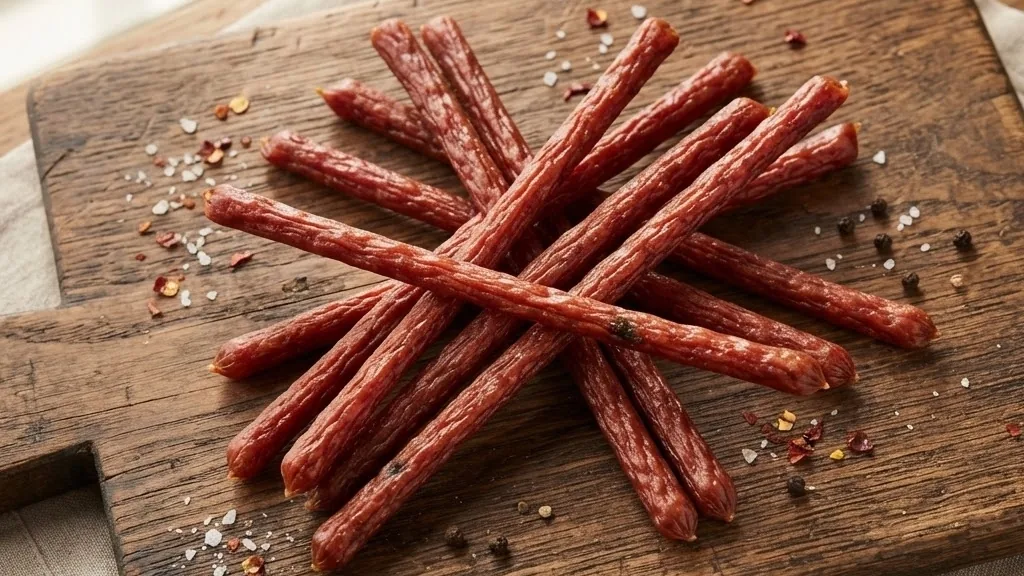
Slim Jim nutrition label numbers depend entirely on which stick you grab off the rack, and the spread is wider than most snackers expect. A 55-gram Monster Original stick carries 260 calories, 20 grams of fat, and 860 milligrams of sodium. The 28-gram Giant Original Smoked stick weighs half as much and lands at 130 calories. Same brand, same smoke, very different math. Anyone who has read how beef jerky nutrition stacks up will recognize the shape of it: dense protein, aggressive sodium, a serving smaller than your palm.
Quick answer: the Slim Jim nutrition label scales with stick size. A 55-gram Monster Original stick delivers 260 calories, 20 grams of total fat, 11 grams of protein, 8 grams of carbohydrate, and 860 milligrams of sodium, roughly 37 percent of a full day’s recommended sodium. A 28-gram Giant Original Smoked stick delivers 130 calories, 10 grams of fat, 3.5 grams of saturated fat, 6 grams of protein, and 460.1 milligrams of sodium. Snack-size sticks start near 9 grams. Across the whole line, the meat base is beef, pork, and mechanically separated chicken.
Why the Slim Jim nutrition label changes with every stick size
A Slim Jim panel is not one label but a family of them, because the U.S. Food and Drug Administration (FDA) prints daily values against the weight sealed in the package. A Monster stick weighs 55 grams. A Giant weighs 28 grams. Double the meat, and you roughly double the numbers on the panel.
That is the piece the boxes and product photos skip. The panel you actually read belongs to a specific weight, and the weight is doing all the work. Serving size and package size are not the same thing either. Some multi-packs list a single 0.28-ounce stick as the serving, while a Monster stick is the whole 1.94-ounce piece. Conagra Brands, the parent company that owns the formula, publishes each panel per stick format, so the calorie line, the fat line, and the sodium line all move together as the weight climbs. Read the grams first. Everything else follows from that one figure.
Here is the practical version. If a label says 130 calories, you are almost certainly holding a 28-gram Giant. If it says 260, that is the 55-gram Monster. The snack-size sticks in the big variety bags weigh far less, often around 9 grams each, so their panels shrink accordingly even though the flavor and the ingredient deck stay the same.
Two habits fix most of the confusion:
- Check the serving size in grams before you read anything else.
- Check whether the panel describes one stick or the whole bag.
Miss either one and the sodium figure will either shock you or lull you, depending on which direction you guessed wrong. Formulas also get tweaked over the years, and two packages of the same stick can carry slightly different panels. When they disagree, trust the grams on the package in your hand, not a number you remember from last year.
Monster stick macros: 260 calories in one 55-gram serving
One Monster Original stick is a 55-gram serving, and the panel reads 260 calories, 20 grams of total fat, and 11 grams of protein. Carbohydrate comes in at 8 grams, with 3 grams of sugars and 1 gram of dietary fiber. The fat number is the one that surprises people. Twenty grams in a single stick makes the Monster a fat-forward snack, not a lean protein bite. The 11 grams of protein is genuinely useful, but by weight the fat runs close to two to one against it, which flips the assumption most people bring to a meat stick. Sugars stay low at 3 grams, so nothing here reads as candy. Fiber lands at 1 gram, more a rounding artifact of the soy and spice than a number worth counting.
So what does 260 calories buy you? Roughly a meal’s worth of fat, a decent hit of protein, and very little that resembles a vegetable. For a quick protein grab in the car, that is fine. As an everyday habit, the fat and the sodium stack up faster than the protein pays off.
Put the numbers side by side and the Monster looks like a jerky-adjacent product with a richer, greasier profile. The 8 grams of carbohydrate barely register, and with only 3 of those grams as sugars, this is not a product doing much on the sweet or the fiber front. It is fat and protein wrapped around salt. If you want the source panel next to the packaging, Conagra Brands publishes it on its foodservice page for the 1.94-ounce Original stick.
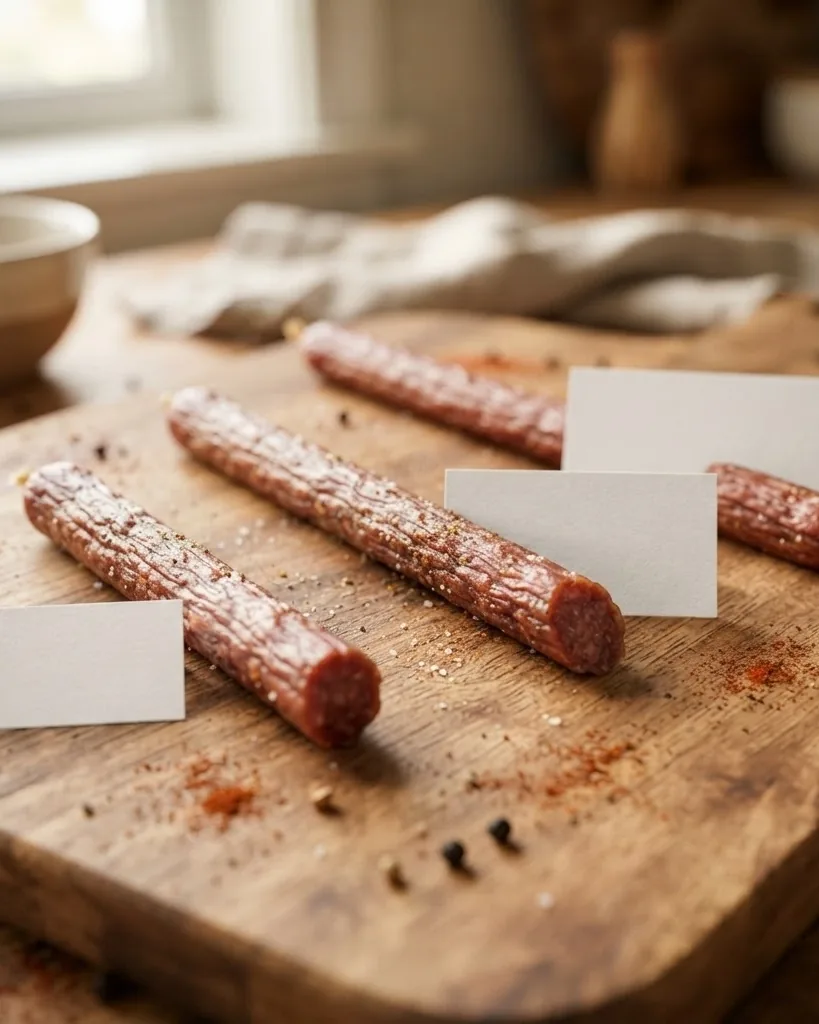
The 860 mg sodium problem and what 37 percent of a day looks like
Sodium is the headline the Monster panel does not brag about. One 55-gram stick carries 860 milligrams, roughly 37 percent of a full day’s recommended sodium. The 28-gram Giant is lighter but not light, at 460.1 milligrams. Eat one, and you are already a third of the way to the limit.
The ratio is what makes this worth flagging. Eleven grams of protein against 860 milligrams of sodium is a lot of salt per gram of protein, and it is why doctors tend to wave people off cured meat sticks as a daily staple. The Centers for Disease Control and Prevention (CDC) treats sodium as one of the biggest overlooked drivers of high blood pressure in American diets. A single Monster does not sink anyone. Two of them, plus a normal salty lunch, and the day’s sodium is spent before dinner.
Portion strategy helps more than swearing off the snack. If you like the flavor, the Giant at 460.1 milligrams is the saner default than the Monster at 860. Splitting the Monster’s 860 milligrams in half gives two 430-milligram servings, an easy way to keep a single sitting under the Giant’s load. For a wider salt reference point, seeing how the Big Mac’s sodium adds up puts a single 860-milligram stick in context.
Giant vs snack vs mini: a size-by-size numbers comparison
Line the formats up and the giant slim jim nutrition label and the mini slim jim nutrition label describe two different snacks. The Giant is a 28-gram stick at 130 calories and 460.1 milligrams of sodium. The Monster jumps to 55 grams, 260 calories, and 860 milligrams.
The middle formats fill the gap. A snack-size stick in a family pack runs from roughly 9 grams up toward 28 grams depending on the bag, which is why people hunting the small slim jim nutrition label rarely find one fixed answer. The panel tracks the exact weight in that specific pack. Because the figures move with grams, the smartest move is to read the serving size line first and treat every calorie, fat, and sodium number as a function of it.
Here is the side-by-side that the boxes never print together:
| Metric | Giant, 28 g | Monster, 55 g |
|---|---|---|
| Calories | 130 | 260 |
| Total fat | 10 g | 20 g |
| Protein | 6 g | 11 g |
| Sodium | 460.1 mg | 860 mg |
A few things jump out of that grid. Calories, fat, and sodium all roughly double from Giant to Monster, which tracks with the near-doubling of weight from 28 to 55 grams. Protein nearly doubles too, from 6 to 11 grams. The sodium climb is the one to watch, because 460.1 milligrams already claims a meaningful slice of the day and 860 milligrams claims about 37 percent of it in a single stick.
For the mini and snack formats, scale down from the Giant. A 9-gram snack stick is under a third of a 28-gram Giant, so expect calories and sodium to fall in that direction, though the exact panel always belongs to the exact weight in your pack. That is the trap with these products: the format names sound like flavor tiers, but they are really weight tiers, and the weight tier is the whole nutrition story.
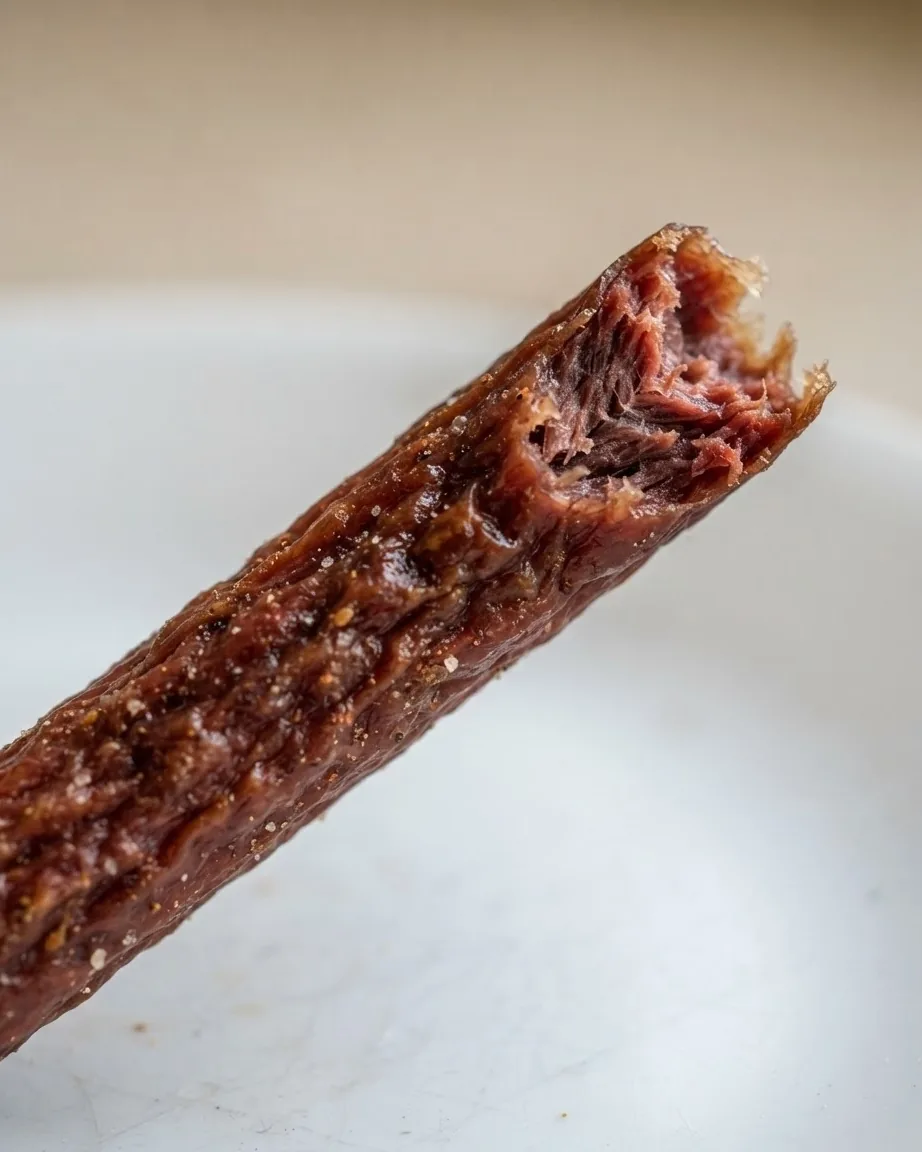
What’s actually in the meat: beef, pork, and mechanically separated chicken
The meat base is not a single cut. Slim Jim Original sticks are built on a blend of beef, pork, and mechanically separated chicken, bound and cured into that familiar dense, chewy stick. Around that meat sit the functional additives that give the stick its shelf life, tang, and color.
Textured soy flour stretches the protein and firms the texture. Corn syrup and dextrose feed the cure and round the flavor. Sodium nitrite is the curing agent that fixes the pink color and guards against spoilage organisms. A lactic acid starter culture provides the fermented tang that reads as that signature sourness. Barley malt extract adds flavor, and it is also where the gluten comes from. None of this is unusual for a shelf-stable meat snack, but the deck is long, and every item on it is there for a reason beyond nutrition.
Mechanically separated chicken is the ingredient shoppers ask about most. It is exactly what it sounds like: a paste-like product recovered from poultry bone under pressure, used across processed meats to keep costs down and texture consistent. Paired with beef and pork, it gives the stick its uniform bite. If you want the exact barcode-level ingredient list for a given pack, the crowd-audited entry on Open Food Facts for the Original snack-size sticks logs the deck alongside additive classifications, which is handy when the print on your bag has faded.

Soy, barley malt, and the ultra-processed question
Two allergens matter most on this panel: soy and gluten. The soy comes from textured soy flour, and the gluten rides in on barley malt extract, so anyone avoiding either should skip the stick. On top of that, the product sits firmly in the ultra-processed food category.
Ultra-processed is a classification, not an insult, but it is worth understanding. It means the stick is built from industrial ingredients and additives rather than whole cuts you would recognize in a kitchen. For most people that translates to an occasional snack, not a daily one. If you track clean-label eating, the textured soy flour, corn syrup, dextrose, sodium nitrite, and barley malt extract are the entries that will flag. Read the allergen line before the calorie line if soy or gluten is a hard limit for you.
Who decides what prints on a Slim Jim: FDA, USDA, and FSIS
More than one agency shapes a meat-stick panel. The U.S. Department of Agriculture (USDA) and its Food Safety and Inspection Service (FSIS) oversee meat and poultry, while the U.S. Food and Drug Administration (FDA) sets the nutrition labeling format and the daily value math. That split is why a cured stick carries a USDA inspection legend.
The FDA piece is the one shoppers touch most. Its rules dictate the serving size, the Daily Value (DV) percentages, and the exact order of the lines you scan. When the panel says a stick is 37 percent of your daily sodium, that percentage is an FDA construct, benchmarked against the agency’s reference daily value. Conagra Brands does the formulating and the printing, but it prints inside a template the government defines. For the plain-language version of how those labels are built, the agency keeps a public food labeling and nutrition guide.
Food safety sits on top of labeling. The FSIS runs the inspection program that lets a plant ship meat products at all, and it polices claims and recalls when something goes wrong. The Centers for Disease Control and Prevention (CDC) tracks the illnesses that make those recalls matter, and it is the body that ties diet-level sodium to population blood pressure. For consumers, FoodSafety.gov collects the practical handling and recall guidance across agencies in one place, and nutrition.gov gathers the federal dietary references that sit behind those DV percentages.
What does this mean when you are standing in the aisle? The panel you read is a negotiated document. Conagra sets the recipe. The FDA sets the format and the Daily Value benchmarks. The USDA and FSIS certify that the meat itself is safe to sell. When any of those numbers looks off between an old bag and a new one, the version tied to the current inspected package is the one to trust.
Slim Jim label FAQ
How many calories are in a Slim Jim?
It depends on the stick. A 55-gram Monster Original packs 260 calories, while a 28-gram Giant Original Smoked comes in at 130 calories. Snack-size sticks weigh far less, often near 9 grams, so their calorie counts drop accordingly. Always check the serving weight on the panel before trusting a single number.
How much sodium is in a Slim Jim?
A Monster stick carries 860 milligrams of sodium, roughly 37 percent of a full day’s recommended intake. A Giant carries 460.1 milligrams. That is a heavy sodium load for a small snack, especially against its 11 grams of protein, so treat one stick as an occasional grab rather than a daily habit.
What is actually in a Slim Jim?
The Original meat base blends beef, pork, and mechanically separated chicken. Around it sit textured soy flour, corn syrup, dextrose, sodium nitrite for curing, a lactic acid starter culture for tang, and barley malt extract for flavor. That barley malt extract is also the source of gluten in the stick.
Is a Slim Jim gluten-free?
No. Barley malt extract in the Original formula supplies gluten, so the stick is not safe for people with celiac disease or a gluten intolerance. Soy is also present through textured soy flour. Anyone managing either allergen should read the ingredient deck on the specific pack before eating it.
What is the difference between the giant and mini formats?
Weight, mostly. The Giant is a 28-gram stick at 130 calories and 460.1 milligrams of sodium. Mini and snack-size sticks start near 9 grams, so their panels scale down from there. The Monster sits at the top, 55 grams, 260 calories, and 860 milligrams of sodium. The names are weight tiers, not flavor tiers.
How much protein does a Slim Jim have?
A Monster stick provides 11 grams of protein, and a Giant provides 6 grams. That is respectable for a snack, but the sodium and fat ride along with it: 20 grams of fat in the Monster against those 11 grams of protein. It is real protein, delivered at a steep salt-and-fat cost.
The one-line takeaway on reading the panel
Read the grams before anything else. A Slim Jim panel is only meaningful next to its serving weight, and the jump from a 28-gram Giant to a 55-gram Monster doubles the calories, the fat, and the sodium at the same time. If you like the flavor, the Giant’s 460.1 milligrams of sodium is the saner default over the Monster’s 860. For a sense of how salt sneaks into snacks that never taste salty, how sodium adds up in Club Crackers is a useful yardstick next to a single meat stick.