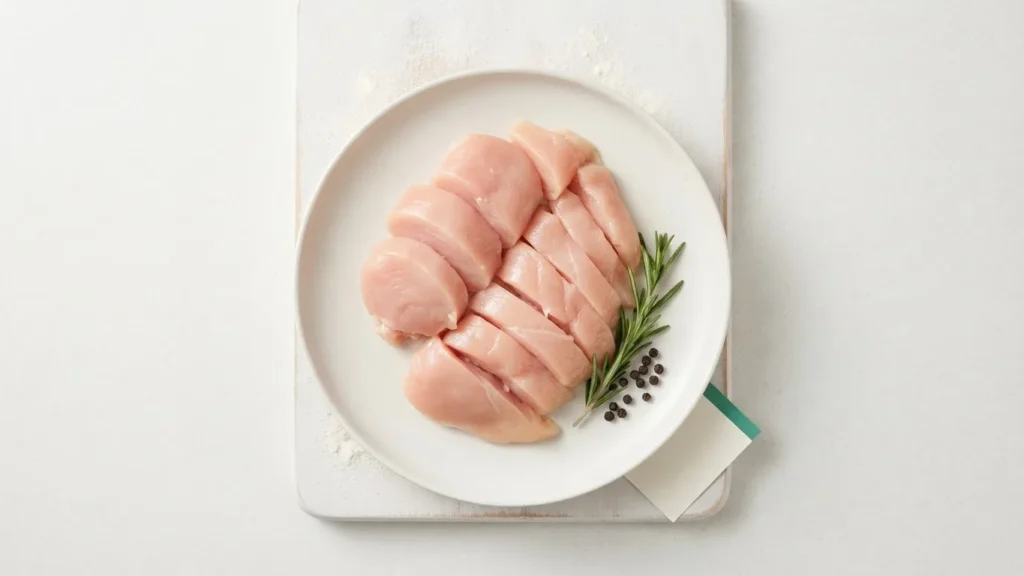
Raw boneless skinless chicken breast, measured meat only, records 120 kcal per 100 g in the USDA reference database. Grill that same cut and the figure climbs to 151 kcal per 100 g. Nothing was added; water left. That single gap explains most of the confusion around nutrition facts for chicken breast boneless skinless, and it is where this desk starts. Every number below is pulled directly from USDA FoodData Central and two reviewed nutrition publications, structured into standardized tables rather than estimated or averaged.
Chicken breast sits in the leaner half of the meat protein category, and the panel reflects that. Below is the short answer, then the sections that resolve the numbers people actually trip over.
The Answer Block: What a Serving Actually Logs
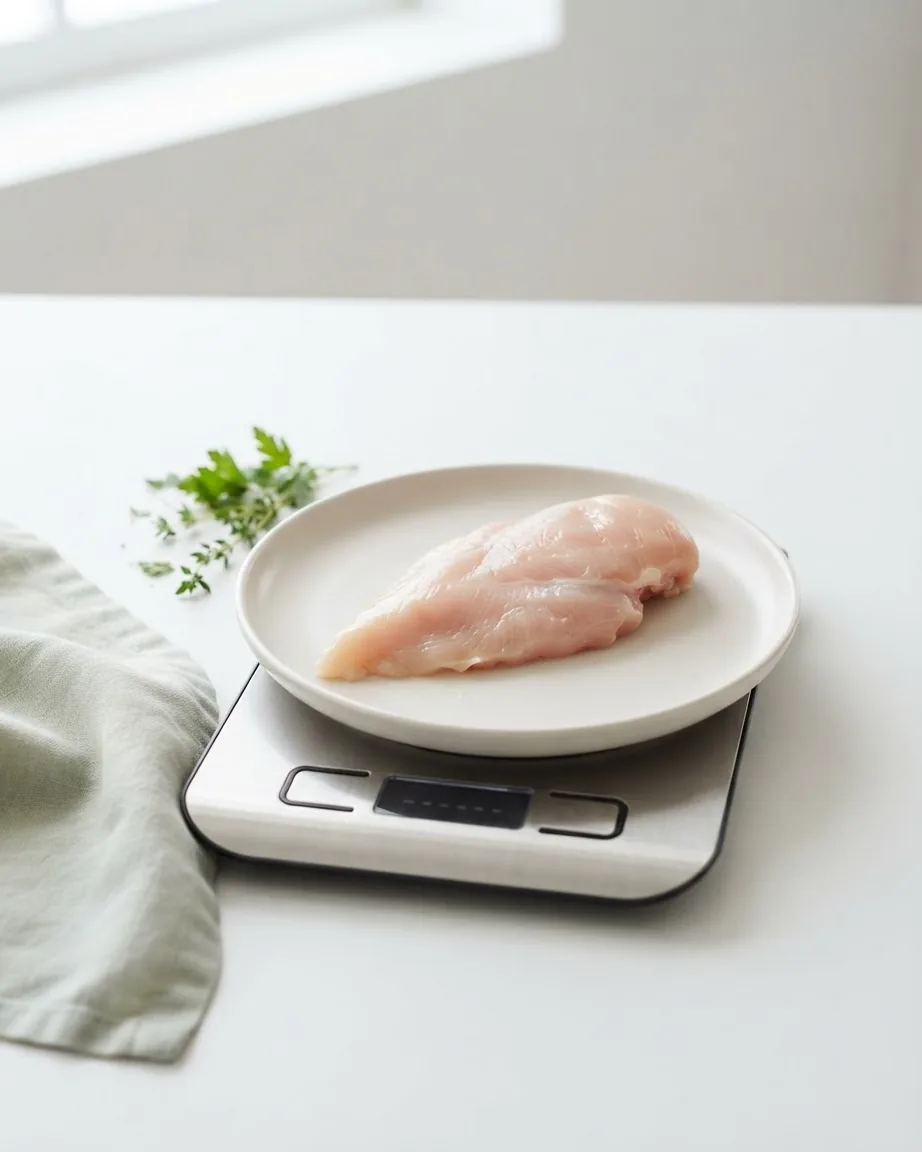
Boneless skinless chicken breast is a high-protein, near-zero-fat, zero-carb meat. Raw, meat only, it holds 120 kcal, 22.5 g protein, and 2.62 g fat per 100 g. Grilled, the same 100 g concentrates to 151 kcal and 30.5 g protein because cooking drives off water. At a 3-oz (85 g) serving, grilled skinless breast runs about 128 calories with 26 g protein and 2.7 g fat. Plain breast carries 0 g carbohydrate. Skin-on preparation pushes the same 3-oz serving to roughly 166 calories. The figure you cite depends entirely on whether you mean raw or cooked, and per 100 g or per serving.
Why “Chicken Breast” Shows Different Calories on Different Sites
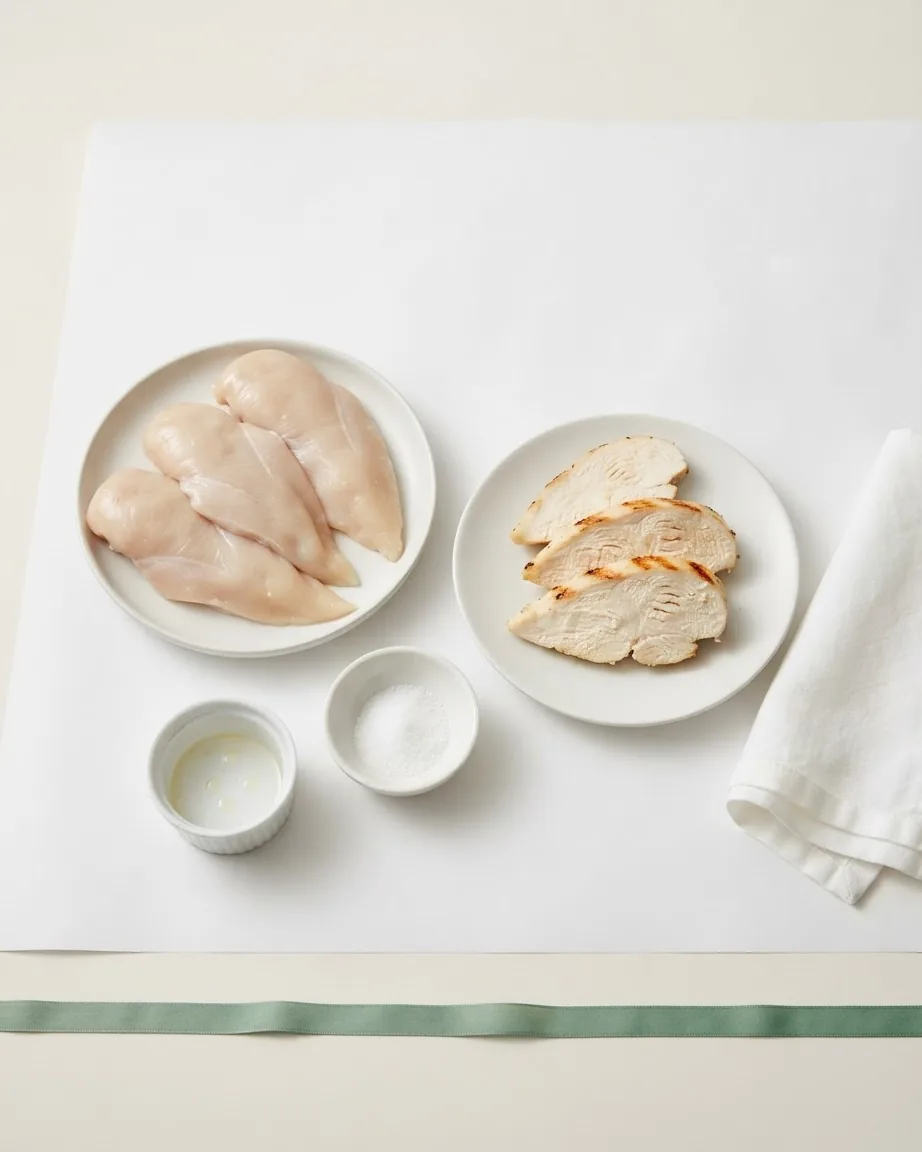
Open three nutrition pages and you will see three calorie counts for what looks like the same food. They are not errors. They describe different states of the meat.
USDA FoodData Central lists the raw, boneless, skinless, meat-only record at 120 kcal per 100 g with 22.5 g protein. The grilled record for the same cut reads 151 kcal per 100 g with 30.5 g protein. Cooking removes moisture, so protein and calories pack tighter into every 100 g. That is not spoilage or additive; it is water leaving the muscle.
Then a third number appears. Healthline reports a 3.5-oz (100-g) serving of cooked chicken breast at 165 calories, 31 g protein, and 3.6 g fat. That 165-kcal reading is a roasted “cooked” record, a separate dataset from the USDA grilled entry. Grilled and roasted lose water at slightly different rates, so 151 kcal and 165 kcal both describe cooked breast without contradicting each other.
The rule the aggregation pipeline applies here: never compare a raw figure to a cooked one, and never compare across serving weights without converting first. A raw 100 g and a cooked 100 g are not the same amount of meat before cooking. Readers who treat 120 and 165 as competing “truths” are stacking a raw number against a roasted one. If you want the same discipline applied to a canned food, the breakdown in Baked Beans Nutrition: The Numbers Behind the Can walks through how serving basis shifts a panel.
Skin On vs Skinless: The Fat Gap at a Fixed 3-oz Serving
The cleanest way to isolate what skin adds is to hold the serving weight steady and change only the skin. Verywell Fit does exactly that.
A 3-oz (85 g) grilled, boneless, skinless piece carries 128 calories, 26 g protein, 2.7 g fat, and 0 g carbohydrate. A 3-oz (85 g) serving of roasted, broiled, or baked chicken breast with skin on provides 166 calories, 6.6 g fat, and 25 g protein. Same weight on the plate; the skin roughly doubles the fat and adds about 38 calories.
- Skinless, grilled, 3 oz: 128 calories, 26 g protein, 2.7 g fat
- Skin-on, roasted, 3 oz: 166 calories, 25 g protein, 6.6 g fat
Two caveats keep this honest. The cooking methods differ (grilled vs roasted), and protein per serving is essentially flat, because the skin adds fat, not muscle. For a reader counting fat grams, pulling the skin is the lever. For a reader chasing protein, the skin barely moves the number.
Is Chicken Breast Really the Leanest, Highest-Protein Cut?
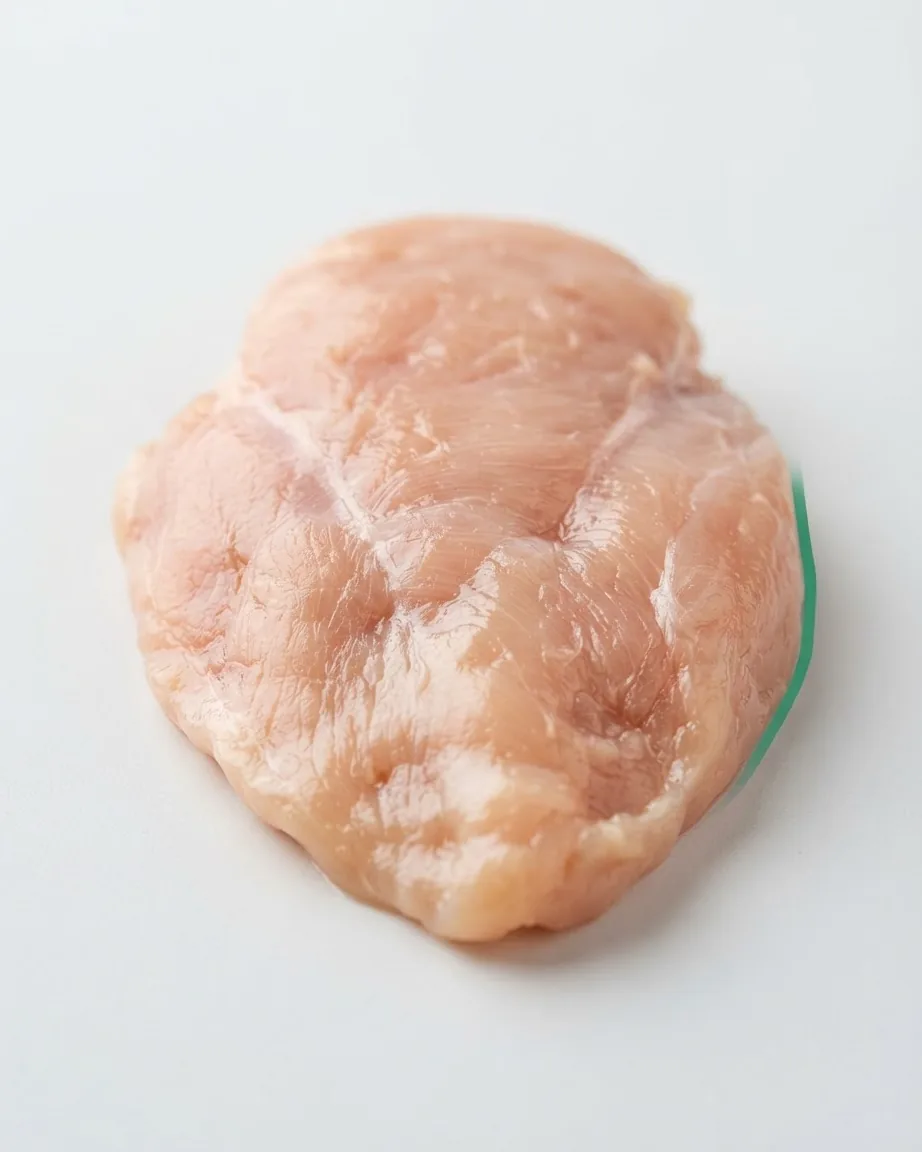
Yes, and one consistent dataset settles it rather than folding four sources together. Healthline reports a cooked skinless chicken breast at 32 g protein per 100 g, then lists the other cuts from the same bird on the same basis.
| Item | Value |
|---|---|
| Breast | 32 g protein per 100 g |
| Thigh | 25 g protein per 100 g |
| Drumstick | 24 g protein per 100 g |
| Wing | 24 g protein per 100 g |
The breast leads every other cut by 7 to 8 g of protein per 100 g. Healthline also notes that approximately 80% of the calories in chicken breast come from protein and 20% come from fat, which is why the cut shows up in high-protein meal plans. If the goal is maximum protein per gram of meat, the breast wins the bird outright. For a reader comparing meats rather than cuts, the leaner-end contrast holds against the Nutritional Value of Filet Mignon Steak.
Does Plain Chicken Breast Have Any Carbs?

No. This is the misconception worth correcting outright: a plain cut of muscle meat carries no hidden carbohydrate. Verywell Fit states that chicken breasts contain no sugar or starch, so they have zero carbohydrates unless prepared with breading or seasonings. The 3-oz grilled serving confirms it at 0 g carbohydrate.
Carbs only enter chicken breast when something is added: a flour or breadcrumb coating, a sugar-containing marinade, a barbecue glaze, or a spice blend with fillers. That matters for keto, low-carb, and diabetic meal planning, where the meat itself is a free line and the breading is the number to track. If you buy pre-marinated or breaded breast, the carbohydrate comes entirely from the coating, and only the product panel will tell you how much. A comparison for readers who assume dairy behaves the same way sits in Mozzarella Cheese Nutrition Facts: Reading the Panel Across Every Variety.
How Much of the Fat in Chicken Breast Is Saturated?
The headline is low total fat; the detail that matters for heart-health diets is what kind of fat. Verywell Fit reports that skinless chicken breast contains fewer than 3 grams of total fat per 3-oz portion, most of it unsaturated, with less than 1 gram of saturated fat in that same 3-ounce portion.
That tracks with the USDA analytical values: raw meat-only breast holds 2.62 g total fat per 100 g, and the grilled record reads 3.17 g per 100 g. Because the saturated share stays under 1 g at 3 oz, skinless breast fits comfortably inside a saturated-fat-limited plan. The number to watch is not the meat but the cooking fat and the skin. Leave the skin on and, as the section above showed, total fat jumps to 6.6 g per 3-oz serving. Fry it in oil or butter and the added fat lands outside anything the USDA breast record captures.
Raw vs Grilled: The Full Nutrition Table for Chicken Breast Boneless Skinless
Here the two USDA analytical records and the reviewed serving figures sit side by side, each on its stated basis. The desk keeps raw and cooked in separate columns rather than blending them into one deceptive average.
| Item | Value |
|---|---|
| Raw, meat only (per 100 g, USDA) | 120 kcal · 22.5 g protein · 2.62 g fat · 45 mg sodium · 0 g carbohydrate |
| Grilled, meat only (per 100 g, USDA) | 151 kcal · 30.5 g protein · 3.17 g fat · 0 g carbohydrate |
| Cooked (per 100 g, Healthline) | 165 calories · 31 g protein · 3.6 g fat |
| Grilled, skinless (per 3 oz / 85 g, Verywell Fit) | 128 calories · 26 g protein · 2.7 g fat · 44 mg sodium · 0 g carbohydrate |
| Roasted, skin-on (per 3 oz / 85 g, Verywell Fit) | 166 calories · 25 g protein · 6.6 g fat |
| Whole cooked breast (per 172 g, Healthline) | 284 calories · 53.4 g protein · 6.2 g fat · 0 g carbohydrate |
Sodium stays low for unseasoned meat. Any brine, rub, or packaged solution (“enhanced” or “up to X% solution” breast) adds sodium the USDA meat-only record does not include, so the product panel overrides these figures when you buy pre-treated cuts. Readers tracking sodium in cured products can see how much curing changes the line in Turkey Sausage Nutrition: What the Panels and USDA Records Actually Say.
Cooking the Number You Want to Keep
The panel you end up eating is set at the counter, not in the database. A few decisions move the figures more than the cut itself does.
To keep the 128-calorie, 2.7-g-fat profile of the grilled skinless serving, cook the breast dry: grill, broil, or bake without added oil, and pull the skin before cooking if it is on. Skin left on during roasting delivers the 166-calorie, 6.6-g-fat serving instead, because rendered skin fat soaks back into the meat. If you bread the breast, you stop describing it with any USDA meat-only record; the coating adds the carbohydrates that plain breast does not have.
One texture note grounded in the raw-versus-cooked figures: cooking drives water out of the muscle, which is why 100 g of raw meat shrinks and why the cooked number per 100 g is higher. Overcook it and more water leaves, concentrating calories further and drying the meat. Cook to done, not past it, if you want the meat to stay close to the lower cooked figures.
Boneless skinless breast is not the only lean protein a household rotates through. For plant and dairy comparisons at the same panel-reading level, the desk keeps parallel breakdowns for oats in Quaker Oats Nutrition Facts: What the Half-Cup Panel Actually Says and for cottage cheese in Low Fat Cottage Cheese Nutrition: What the 1/2 Cup Panel Actually Reports.
Raw vs Grilled: How Much Cooking Concentrates the Numbers per 100 g
The USDA records list the same boneless skinless cut at 120 kcal and 22.5 g protein raw, then 151 kcal and 30.5 g protein grilled – all per 100 g. Because no ingredient is added, the gap is water leaving the muscle, and the meat packs tighter after grilling:
- More calories per 100 g, because cooking concentrates the calorie density as water leaves the muscle.
- More protein per 100 g, because the same protein now occupies a smaller cooked mass.
The practical takeaway: if you weigh chicken after cooking and log it against a raw calorie figure, you will undercount both calories and protein. Match the state of your figure to the state of your meat – weigh raw against raw, cooked against cooked.
Frequently Asked Questions
Which calorie number should I trust: 120, 151, or 165?
All three are correct for different states. Use 120 kcal per 100 g only for raw meat you weigh before cooking. Use the grilled figure of 151 kcal per 100 g, or the roasted 165 calories, once the breast is cooked. Match the number to the state of the meat on your scale, not the other way around.
How much protein is in one whole chicken breast?
A whole skinless, boneless, cooked chicken breast weighing 172 g carries 284 calories, 53.4 g protein, 6.2 g fat, and 0 g carbohydrate, per Healthline’s USDA-based figures. That single breast covers a large share of a day’s protein target, which is why it anchors so many high-protein meal plans built around a fixed portion.
Is skinless chicken breast good for a low-fat diet?
By the numbers, yes. A 3-oz skinless portion holds fewer than 3 g of total fat, most of it unsaturated, with under 1 g saturated. That keeps it inside saturated-fat-limited plans. Leaving the skin on or frying in oil changes that profile, so the fat total depends on preparation as much as on the cut.
Do marinated or breaded breasts match these numbers?
No. Every figure here describes plain, unseasoned meat only. Breading adds carbohydrates and calories, marinades and brines add sodium and sometimes sugar, and “enhanced” packaged breast carries an added-solution sodium load. Once anything coats or soaks the meat, the product’s own Nutrition Facts panel replaces the USDA meat-only record as your source.
Why is the raw number lower than the cooked number if nothing is added?
Because cooking removes water, not nutrients. The raw meat-only record reads 120 kcal and 22.5 g protein per 100 g; the grilled record reads 151 kcal and 30.5 g protein per 100 g. The protein and fat do not increase in absolute terms. They simply occupy a smaller mass once moisture leaves, so every 100 g of cooked meat represents more original muscle than 100 g of raw meat did. That is the whole mechanism behind the gap.
The Bottom Line on Chicken Breast Boneless Skinless
Boneless skinless chicken breast is one of the leanest high-protein cuts a kitchen stocks, and its nutrition facts are stable once you fix two variables: the state of the meat and the serving weight. Raw meat only sits at 120 kcal and 22.5 g protein per 100 g; grilled, the same cut concentrates to 151 kcal and 30.5 g protein as water leaves. At a 3-oz serving, skinless grilled runs about 128 calories with 26 g protein, while skin-on roasted climbs to 166 calories on 6.6 g of fat.
The carbohydrate line stays at zero for plain meat, roughly 80% of the calories come from protein, and saturated fat holds under 1 g per 3-oz portion. The moment breading, marinade, brine, or an added-solution product enters the picture, the USDA meat-only record stops applying and the package panel takes over. Read the state, match the weight, and the number you log will be the number you actually ate.