A cooked 3 oz filet mignon trimmed to 0″ fat logs 185 calories and 23g of protein. The nutritional value of filet mignon steak moves with two variables that most quoted figures quietly bury: how much fat was left on the cut, and whether the number is measured per 3 oz serving or per 100 grams. This desk aggregates those declarations from public food databases and the USDA analytical record, then lines them up so the panel reads cleanly.
A 3 oz (85g) serving of cooked filet mignon – beef tenderloin, separable lean and fat, trimmed to 0″ fat – carries 185 calories, 9g total fat (3.5g saturated), 0g carbohydrate and 23g protein. It has no sugar and no fiber, and it stays naturally low in sodium. The nutritional value of filet mignon steak leans on strong micronutrient density – selenium, zinc, vitamin B12 and niacin – set against 73mg of cholesterol per serving. Trimmed lean-only to 1/8″ fat, the per-100g calorie count falls to 152.
How trim level swings the calories and fat
Two entries for the same cut can sit far apart per 100 grams, and the reason is bookkeeping about fat, not a different animal. Beef tenderloin steak, separable lean and fat, trimmed to 0″ fat, all grades, cooked and broiled, comes in at 218.0 calories, 11.12g fat and 27.58g protein per 100 grams, per the ReciPal nutrition record. Take the tenderloin lean-only, trimmed to 1/8″ fat, and FatSecret’s USDA-sourced entry lists 152 calories, 6.52g fat and 22.12g protein for the same 100 grams.
Those two lines are not a like-for-like pair. One includes the marbled and external fat left at a 0″ trim and was measured broiled; the other counts lean tissue only at a 1/8″ trim. So the spread you see reflects the trim definition and the preparation, not a cut that is somehow heavier by nature. The practical read: a quoted “filet mignon calorie” figure means very little until you know its trim basis. A 0″ separable-lean-and-fat number and a lean-only 1/8″ number answer two different questions about the same steak, and copying one into a meal tracker as though it were the other overstates or understates the plate.
How the 3 oz and 100 g bases relate for the same steak

Online figures for filet mignon split into two camps that describe one food. The 218-calorie number is measured per 100 grams. The 185-calorie number is measured per 3 oz, which is 85 grams. Same steak, same trim, different amount on the scale.
The USDA analytical dataset for retail beef cuts sets the convention. For cooked preparations, its values “are presented on a 100 g or 85 g basis, which equals a serving of cooked meat”. So the 3 oz (85g) panel showing 185 calories, 9g fat and 23g protein is the serving-size view, while the 218-calorie line is the per-100g reference view. Both are correct; mixing them is the trap.
Where this bites is comparison shopping between proteins. Quote a chicken breast per 100g and a filet per 3 oz and the steak looks lighter than it is by portion alone; flip the bases and it looks heavier. Put both foods on the same basis before you judge either – the same discipline used when lining up nonfat, whole-milk and strawberry cups of Chobani Greek yogurt against one fixed serving. Pick 3 oz or 100 g for the whole plate and stay there.
The micronutrients that put filet mignon ahead of plain protein
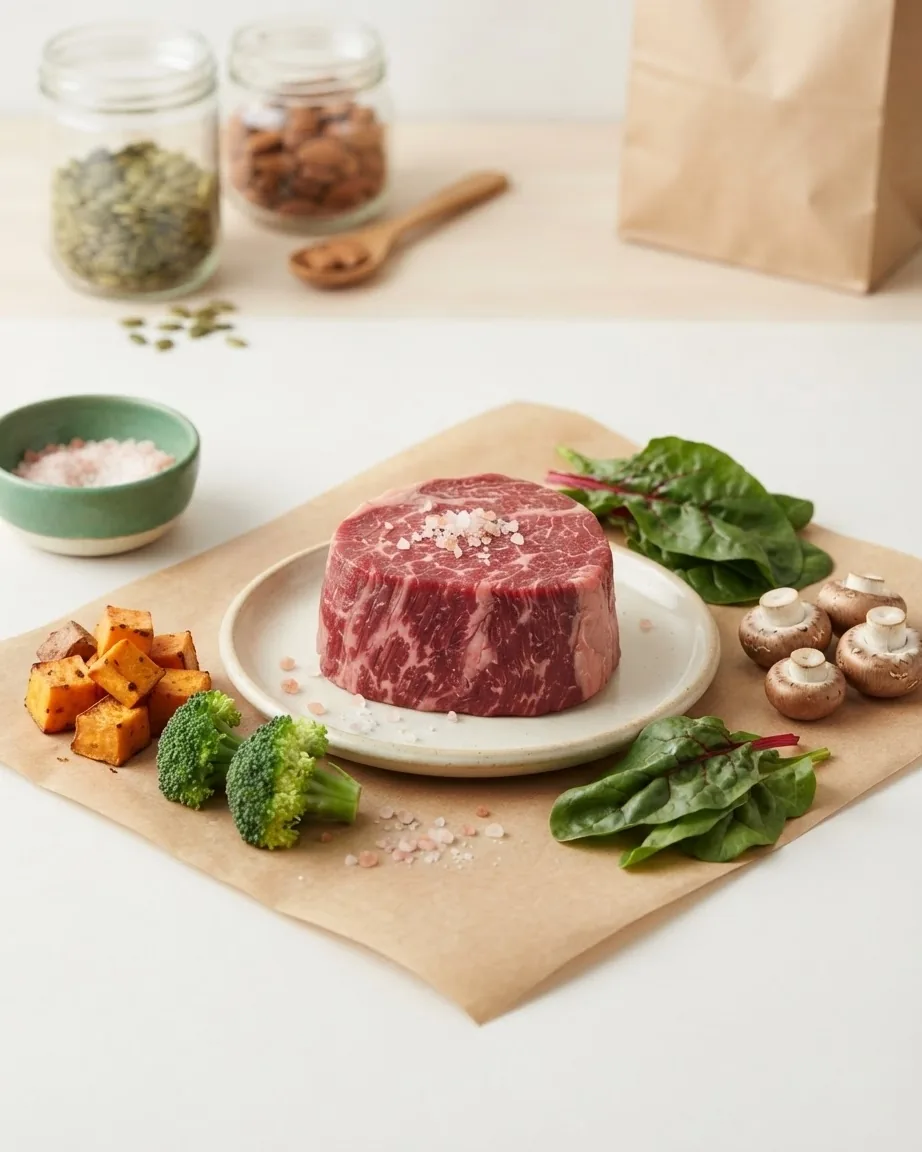
Protein is the headline, but the tenderloin’s mineral and B-vitamin load is where a 3 oz serving does work a protein powder does not. Per 3 oz, ReciPal’s panel lists 4.2mg zinc (38% DV), 25mcg selenium (46% DV), 1.4mcg vitamin B12 (57% DV) and 6.2mg niacin (39% DV). Nearly half a day’s selenium and more than half a day’s B12 come out of one modest steak.
The counterweight is cholesterol: 73mg per 3 oz, or 24% of the Daily Value. Sodium runs the other way, barely present at 48mg (2% DV) before any salt hits the pan, which is what makes the raw cut a low-sodium starting point next to cured or processed meats. Weigh the two together when you plan a plate. The filet is dense in the minerals and B-vitamins that lean whole-muscle beef concentrates, and it carries a cholesterol figure worth tracking if the rest of your day already runs high on it.
Why the tenderloin runs lean and tender
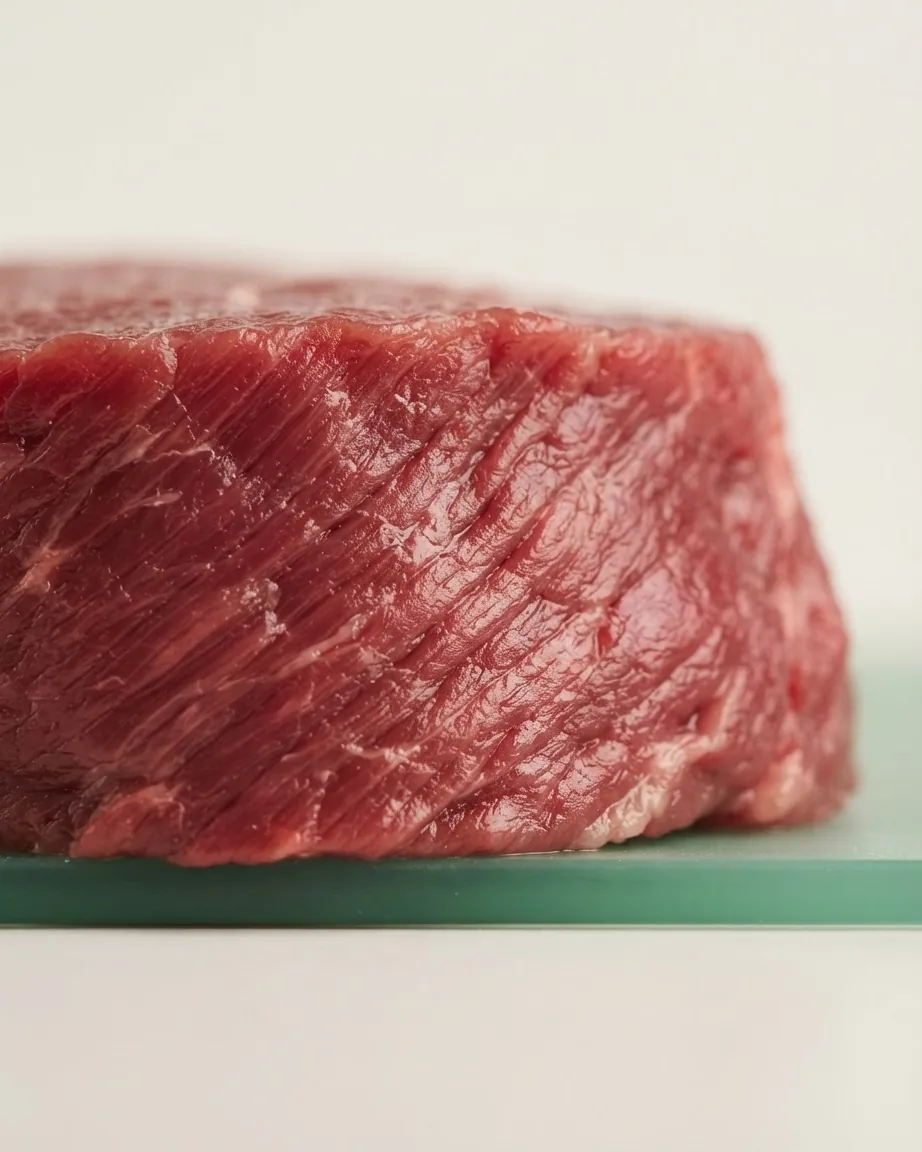
The nutrition profile follows the anatomy. Filet mignon is cut from the tenderloin, a small cylindrical muscle that runs along the cow’s spine and does little work over the animal’s life. Beef. It’s What’s For Dinner describes it as “the least exercised and most tender cut”, taken from the loin primal.
Muscles that barely move build little connective tissue, and US Wellness Meats’ Grassland Beef notes that filet mignon is “low in connective tissue” – the trait behind both its softness and its comparatively lean grain. That setup is the opposite of a ribeye, which sits over a harder-working section of the animal and marbles more heavily. More marbling means more intramuscular fat, which is why a ribeye’s calorie and fat numbers land above a trimmed tenderloin’s at the same weight. The leanness of the filet is built into where it comes from, not produced by the knife alone.
Reading the nutritional value of filet mignon steak on a 3 oz panel
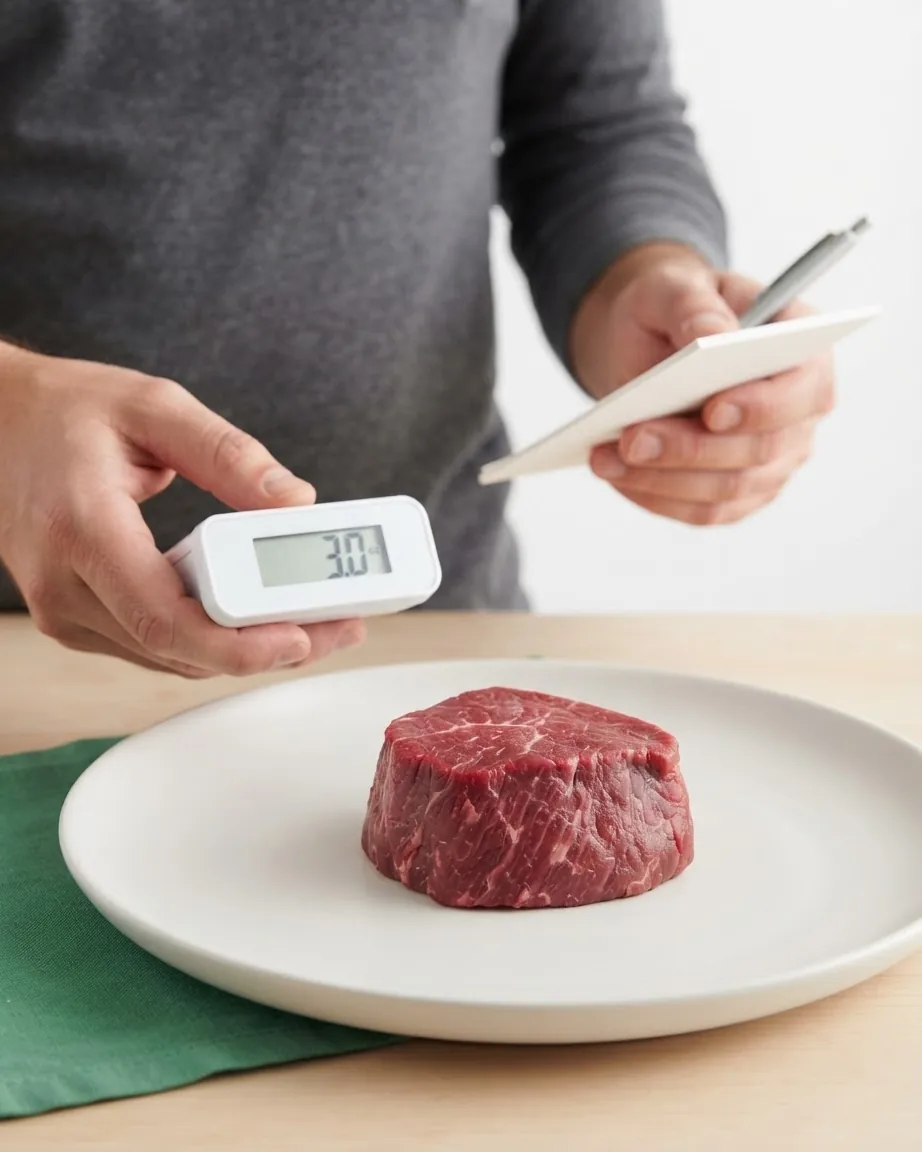
Here is the 3 oz (85g) cooked serving laid out as a panel, drawn from USDA-sourced values mirrored in the ReciPal record for beef tenderloin, separable lean and fat, trimmed to 0″ fat, all grades, broiled. Carbohydrate is 0.0g, so the sugar and fiber lines are 0g by definition – a plain steak has nothing for either to come from.
| Nutrient | Per 3 oz (85g) | % DV |
|---|---|---|
| Calories | 185 | – |
| Total fat | 9g | – |
| Saturated fat | 3.5g | – |
| Cholesterol | 73mg | 24% |
| Sodium | 48mg | 2% |
| Total carbohydrate | 0g | – |
| Dietary fiber | 0g | – |
| Total sugars | 0g | – |
| Protein | 23g | – |
| Zinc | 4.2mg | 38% |
| Selenium | 25mcg | 46% |
| Vitamin B12 | 1.4mcg | 57% |
| Niacin | 6.2mg | 39% |
The blanks in the % DV column are deliberate. This desk reports a Daily Value only where the source publishes one, so cholesterol, sodium and the micronutrients carry a percentage while total fat and protein stay as raw grams. For readers who like a panel read line by line, we did the same for a very different food in Bean Sprouts Nutrition – a near-zero-calorie item that sets a useful floor against a dense protein like this one.
What the panel figure depends on: grade, trim and cooking method
The single number you see for filet mignon is an average across conditions, and three of them move it. Grade is one: the ReciPal and USDA entries used here are “all grades,” a blend, so a heavily marbled Prime filet reads fatter than a leaner Select cut of the same size. Trim is the second, already shown by the split between the 0″ and 1/8″ entries above. Cooking method is the third. These values are for broiled meat, and the USDA set built its figures by dissecting cuts trimmed to 1/8″ fat, broiling them, and reporting on 100g and 85g bases. Pan-searing in butter or oil adds fat the panel never counted.
Two limits are worth holding onto past the table. Database values are reference points, not a reading of the specific steak on your counter, which varies with grade, thickness and how far you take the doneness. And published figures can move when a source refreshes its dataset, so a number that was accurate last year may not match a later revision. Use the filet’s per-serving numbers as a firm baseline, then adjust upward for whatever fat your cooking method puts back on. The panel tells you what the bare cut brings; the pan decides the rest.
The 3 oz vs 100 g check: same steak, and how much protein per calorie
The panel quotes two calorie figures for filet mignon – 185 per 3 oz (85g) and 218 per 100g – and the arithmetic proves they are one steak, not two. Scale the serving up to 100 grams and the numbers line up with the per-100g reference values almost exactly, which is the fastest way to catch yourself before you accidentally log the wrong basis in a tracker.
- Calories, scaled to 100 g: 185 ÷ 85 × 100 = 217.6, which rounds to the 218 the per-100g line already states – same steak, different amount on the scale.
- Protein, scaled to 100 g: 23 ÷ 85 × 100 = 27.1g, matching the quoted 27.58g per 100g to within rounding – confirming the 3 oz and 100 g panels describe the identical cut.
- Protein density: 23g protein ÷ 185 calories × 100 = 12.4g of protein per 100 calories, the single number to carry when comparing filet against other proteins on an equal footing.
- Protein’s share of the plate: most of a plain filet’s calories come from its protein rather than its fat, which is what marks it out against fattier cuts.
The takeaway: whenever you see a filet figure online, divide it by its portion in grams and multiply by your own basis before trusting it. Do that once and 185 and 218 stop looking like a contradiction – they become the same steak weighed two ways.
Filet Mignon Nutrition FAQ
How many calories are in a whole filet mignon steak, not just 3 oz?
Nutrition panels report the tenderloin per 3 oz or per 100 grams, not per whole steak. Restaurant filets often run larger than a 3 oz portion, so scale the per-serving figure to your steak’s cooked weight. Both published bases describe the same cut at different portion sizes, so choose one basis and hold it across the plate.
Does filet mignon have any carbs or sugar?
Plain filet mignon logs 0.0g carbohydrate, which puts sugar and fiber at 0g as well. Any carbs on the plate arrive from what you add – a marinade, a pan glaze, a sauce or a starchy side – not from the meat itself. On its own, before seasoning, a trimmed tenderloin is a zero-carbohydrate protein.
Is the tenderloin leaner than a ribeye?
Yes, structurally. The tenderloin does little work and marbles less, so at equal weight it carries less intramuscular fat and fewer calories than a ribeye. Whether that makes it “better” depends on what you want from the plate: a ribeye trades leanness for the fat and flavor of heavier marbling. Both are whole-muscle beef with broadly similar mineral profiles. Is the cholesterol in filet mignon a problem? A 3 oz serving carries 73mg of cholesterol, or 24% of the Daily Value. That is meaningful but not extreme for a single serving, and it sits alongside very low sodium at 48mg (2% DV) before any salt is added. Whether it fits your day depends on the rest of your intake. The filet pairs that cholesterol figure with dense zinc, selenium, B12 and niacin, so the trade is a nutrient-rich protein against one line worth tracking if the rest of your meals already run high on cholesterol. Why do different sites list different calorie counts for filet mignon? Two reasons, both bookkeeping rather than disagreement. First, portion basis: the same steak is weighed two ways, once per 3 oz (85g) and once per 100 grams. Second, trim and inclusion: a “lean and fat, 0 inch” entry and a “lean only, 1/8 inch” entry report different calories for the same weight. Before comparing any two figures, confirm both share a portion basis and a trim definition. Once those match, the numbers line up.