The USDA reference food “turkey sausage, fresh, cooked” reads as a lean swap on the front of the package while still drawing a substantial share of its energy from fat. That tension explains why turkey sausage nutrition confuses people, because the label impression and the underlying composition pull in different directions. This desk aggregates the numbers from manufacturer Nutrition Facts panels, brand product pages, and public food databases into one reference table, then flags where two sources for the “same” food disagree and why.
The figures below are structured directly from declared panels and USDA-derived records. Read them against the serving size each one reports, because that basis changes the totals more than most readers expect.
Quick answer: Turkey sausage nutrition depends on the exact product. A single Jennie-O Sweet Italian link (109 g) runs 160 calories, 10 g fat, and 17 g protein. Jennie-O’s All Natural panel lists calories, fat, sodium, and protein per serving that differ from that Italian link. Johnsonville’s fully cooked turkey breakfast links give 80 calories, 5 g fat, 360 mg sodium, and 8 g protein per 2-link (45g) serving. The generic USDA cooked reference is reported at its own 57 g basis. Turkey is leaner than pork sausage, but “leaner” is not the same as low-fat.
Is turkey sausage actually lower in calories and fat than pork sausage?
Yes, and the gap is large enough to matter at breakfast. Food Network’s Healthy Eats comparison of poultry versus pork sausage puts pork and pork-and-beef links at 290-455 calories and 23-38 grams of fat per link, against 140-160 calories and 7-10 grams of fat for turkey and chicken sausage of the same amount.
Read as a swap, that is roughly 150 to 295 fewer calories and 13 to 31 fewer grams of fat for every link you replace, holding the serving basis constant. The range is wide because “pork sausage” covers everything from a lean link to a fatty bratwurst, and “turkey sausage” covers plain breakfast links up to seasoned Italian varieties. For the reader deciding whether the switch is worth it, the poultry link almost always lands under half the calories of its pork counterpart.
If you want the same accounting for the traditional side of that swap, this desk logs it in the Sausage Patty Nutritional Info: Calories, Fat, Protein, and Sodium reference.
“Low fat” turkey sausage nutrition still runs on fat

Here is the correction most front-of-package copy skips. The USDA reference “turkey sausage, fresh, cooked” carries 13.623 g protein and 5.928 g total fat per 57 g serving, and a meaningful share of its calories come from fat – a property of the food itself, not of the serving size you choose. BetterMenu publishes that composition figure.
Cut the portion in half and the calorie count drops, but the fat still supplies a large part of the energy. That distinction changes portioning for anyone on a fat-restricted plan: turkey sausage is a lower-fat alternative to pork, not a low-fat food in absolute terms. The protein is the redeeming line. With 13.623 g protein in the same serving, this reference food holds up as a breakfast protein even when the fat share stays high.
Foodstruct, an aggregated nutrition database, reports the same food at a coarser 100 g basis: 15 g protein and 18 g fat, with an unsaturated-to-saturated fat ratio of 2.6. The ratio is worth noting – most of the fat is unsaturated – but 18 g of fat per 100 g is not a low number by any label standard.
Which turkey sausage should I pick if I’m watching sodium?
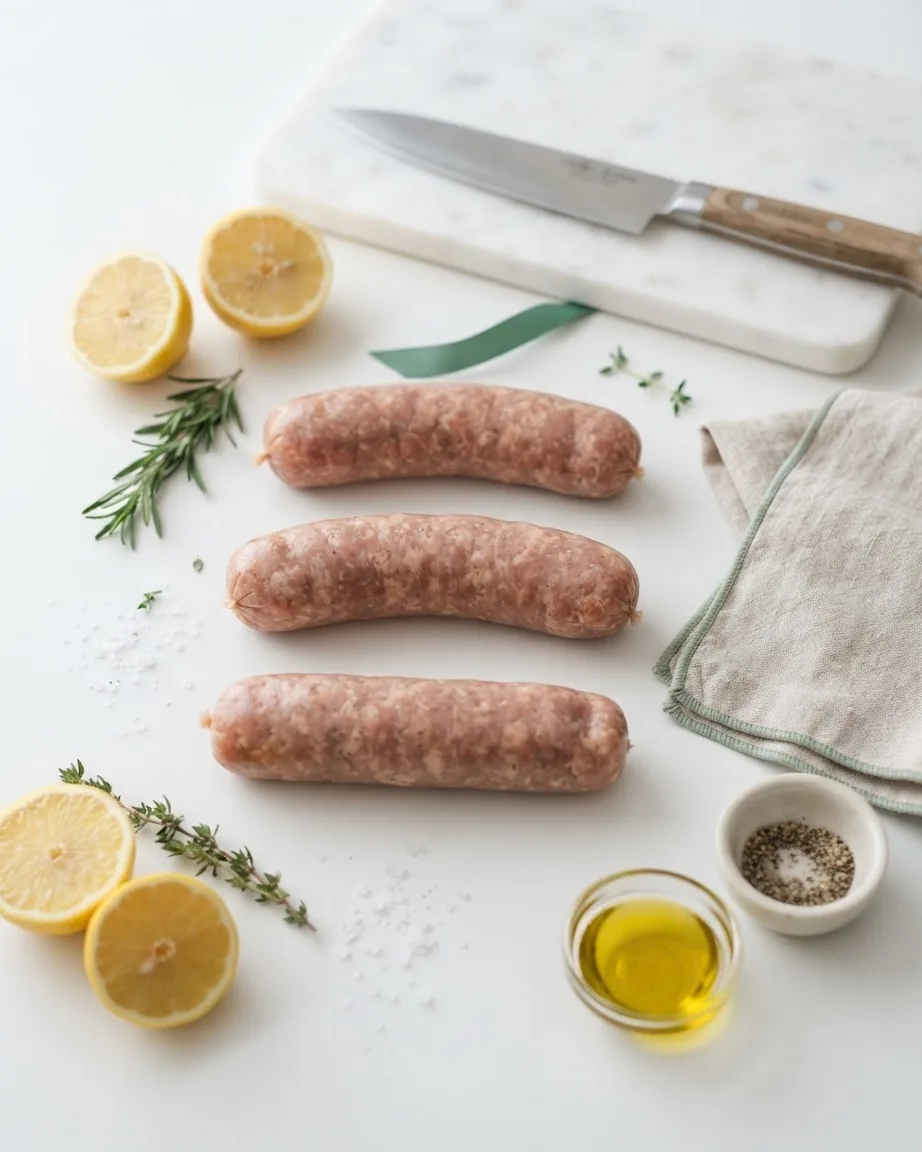
Sodium is where turkey sausage products diverge hardest, and it does not track fat content. The declared panels and USDA records land like this:
- Jennie-O All Natural Turkey Sausage – sodium per serving, listed as a percentage of the Daily Value on its Nutrition Facts panel.
- Johnsonville Fully Cooked Turkey Breakfast Sausage Links – 360 mg sodium per 2-link (45 g) serving, per the manufacturer panel.
- USDA “turkey sausage, fresh, cooked” – sodium reported per 57 g serving.
- USDA “turkey sausage, reduced fat, brown-and-serve, cooked” – 922.88 mg sodium per 128 g cup.
The lesson: a “reduced fat” line can carry far more sodium than a standard link, because the two things are cut independently. The reduced-fat brown-and-serve reference carries a substantial share of the FDA Daily Value for sodium in a single cup. Because sodium does not track fat, no brand name alone predicts the lowest-sodium option – you have to read the number.
Does “reduced fat” turkey sausage trade fat for other things?
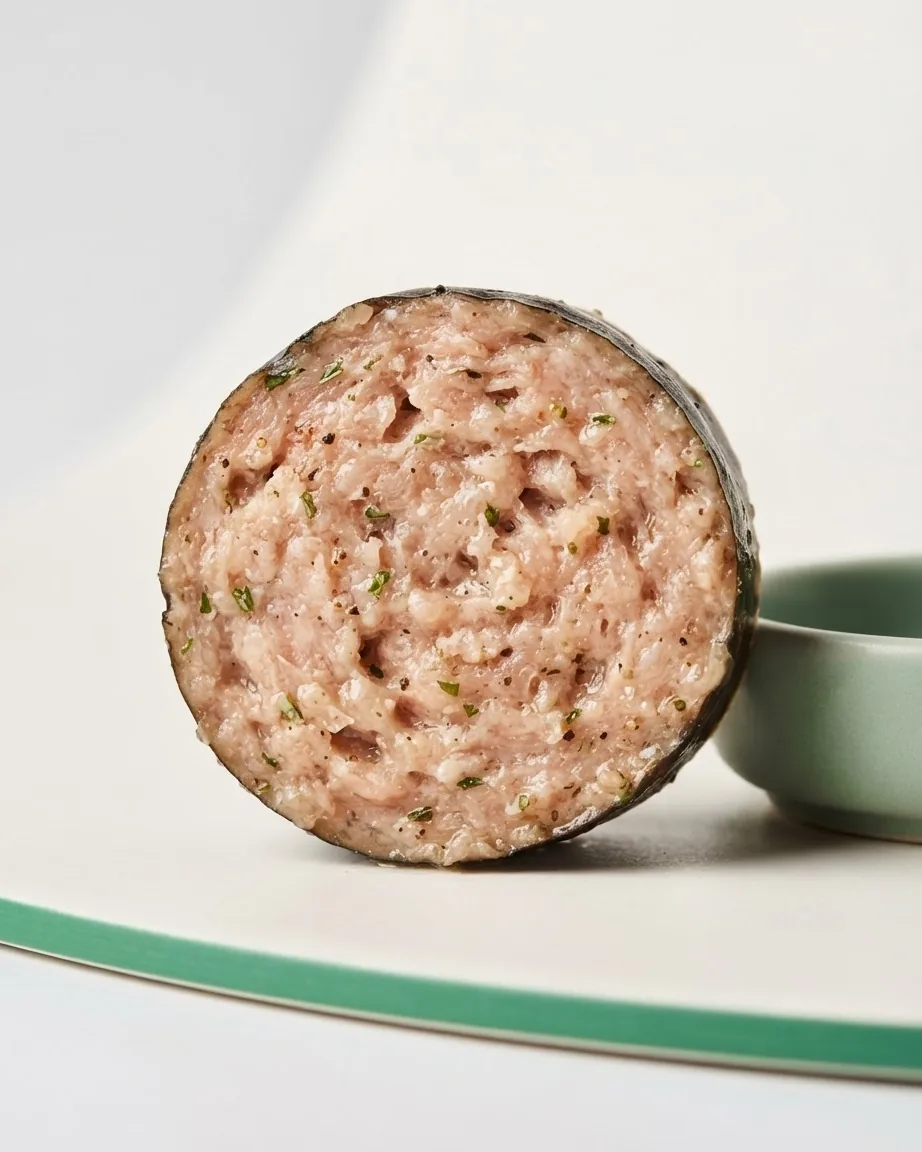
The USDA reference for “turkey sausage, reduced fat, brown-and-serve, cooked” is the clearest case that the label swaps one number for another. Per 128 g cup, BetterMenu reports it at 261.12 kcal and 922.88 mg sodium from the underlying record.
The takeaway for shopping: “reduced fat” describes exactly one macro. It says nothing about calories at a full cup portion, and nothing about sodium, which here runs high. If fat is your only constraint, the reduced-fat line does its job; if calories or sodium also matter, this particular reference does not help you.
Why do calorie numbers for “turkey sausage” differ so much between sites?
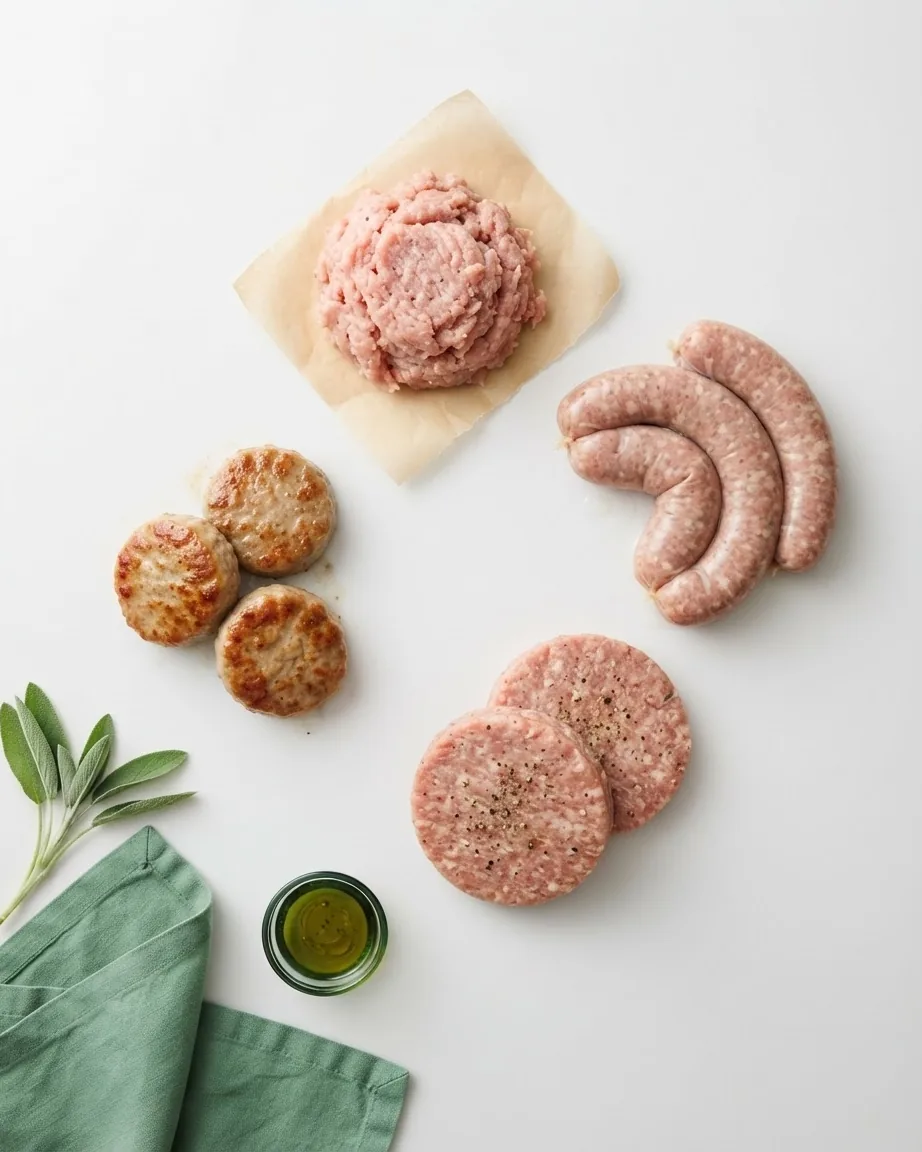
Pull “turkey sausage” from three sites and you may see 100, 111.72, and 235 calories – all correct, none comparable. The differences come from different reference records and different serving bases, not from anyone being wrong.
BetterMenu’s figure is drawn from the reference record, specifically FDC 173871, SR Legacy, released 2018-04, reported per 57 g. Foodstruct’s 235 kcal is reported per 100 grams and traces to a different density basis, with a glycemic load of 0. Jennie-O’s 100 calories is a specific commercial product on its own panel, at its own serving. Line them up and the confusion dissolves: a per-57 g generic, a per-100 g generic, and a per-serving branded product are three different measurements of three different things.
The practical rule when you compare sources: match the serving size first, then the product identity, before you trust any calorie gap between two pages. The same trap shows up whenever a food carries both a brand panel and a USDA record – this desk walks through it in detail for a canned meat in the SPAM Nutrition Label: What Every Line on the Can Means reference.
The full nutrition table for turkey sausage, by source
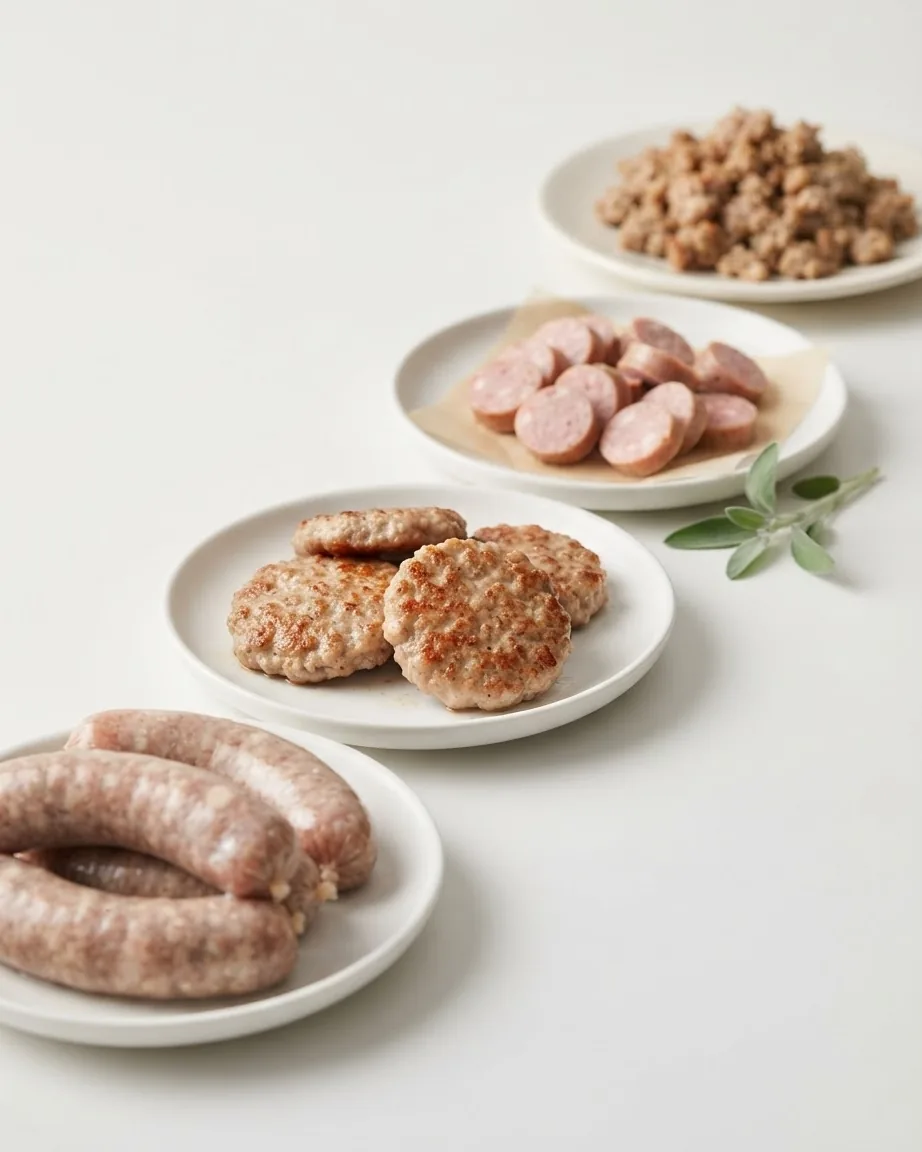
Every figure below is read off a declared Nutrition Facts panel or a USDA-derived record, at the serving each source reports. Because the serving sizes differ, do not read across rows as a direct contest – read down each column against the serving noted.
- Jennie-O Sweet Italian (per 1 link, 109 g) – 160 calories; 10 g total fat; 2.5 g saturated fat; 17 g protein. Source: Food Network Healthy Eats.
- Jennie-O All Natural (per serving) – calories, total fat, saturated fat, sodium, and protein as declared. Source: Jennie-O panel.
- Johnsonville Fully Cooked Turkey Breakfast Links (per 2 links, 45 g) – 80 calories; 5 g total fat; 360 mg sodium; 8 g protein. Source: Johnsonville panel.
- USDA fresh, cooked (per 57 g) – 13.623 g protein; 5.928 g total fat. Source: BetterMenu / USDA FDC 173871.
- USDA reduced fat, brown-and-serve, cooked (per 128 g cup) – 261.12 kcal; 922.88 mg sodium. Source: BetterMenu / USDA FDC 174580.
- Foodstruct (per 100 g) – 235 kcal; 15 g protein; 18 g fat; glycemic load 0.
One line the panels support cleanly: turkey sausage carries essentially no sugar and no meaningful fiber, and the Foodstruct glycemic load of 0 reflects that near-absence of carbohydrate. The macros that move are protein, fat, and sodium. A Jennie-O product page shows exactly why you cite the panel and not the ad copy: the same page states 100 calories on its regulated Nutrition Facts panel while its marketing text describes the product as low fat at 90 calories per serving. Those two numbers are not comparable, and the panel is the one to trust.
Turkey sausage compared with the breakfast plate around it
Numbers only help when they sit next to the rest of the meal. At 160 calories and 17 g protein, a Jennie-O Sweet Italian link supplies more protein than most single breakfast components, but the 10 g of fat is real and the sodium in any turkey sausage tends to be the constraint, not the calories. Build a plate around it and the sodium stacks fast – a fact this desk has documented across processed breakfast items, from the American cheese slice reference to the assembled Sausage Egg McMuffin Nutrition Facts.
For the reader deciding what belongs on the plate: turkey sausage earns its place on protein and on the calorie savings versus pork. It loses points on sodium, which varies widely depending entirely on which product and serving you pick. There is no health claim to make here beyond what the panels declare – this is composition data, structured from manufacturer declarations and public food databases, not dietary advice. For the wider category and how these reference tables are built, see the site’s meat protein section.
Protein per 100 calories: which turkey sausage works hardest
The panels quote four different serving sizes, so the raw protein and calorie numbers can’t be read across rows. Convert each source to protein per 100 calories and the products finally sit on one scale, showing which one gives you the most protein for the energy you spend.
- Jennie-O All Natural – 12 g protein ÷ 100 cal × 100 = 12.0 g protein per 100 cal.
- USDA “turkey sausage, fresh, cooked” – protein per 100 calories converted from the reference record.
- Jennie-O Sweet Italian – 17 g ÷ 160 cal × 100 = 10.6 g protein per 100 cal.
- Johnsonville Fully Cooked Links – 8 g ÷ 80 cal × 100 = 10.0 g protein per 100 cal.
Once normalized, the spread narrows to about 10 to 12 g of protein per 100 calories across every source, and the leanest-looking branded link (Jennie-O All Natural) and the generic USDA record actually deliver the most protein per calorie – not the higher-calorie Italian link that looks more “protein-packed” at 17 g on its own panel.
Frequently asked questions about turkey sausage nutrition
How much protein is in a turkey sausage link?
It depends on the link. A Jennie-O Sweet Italian link at 109 g provides 17 g of protein, per Food Network’s Healthy Eats figures. The Jennie-O All Natural panel lists 12 g per serving, and Johnsonville’s fully cooked turkey breakfast links give 8 g per 2-link (45 g) serving. Match the serving size to the number.
Is turkey sausage low in fat?
Not in absolute terms. The USDA “turkey sausage, fresh, cooked” reference carries 5.928 g of fat per 57 g serving. It is meaningfully leaner than pork sausage – 7-10 g of fat per link versus 23-38 g – but that makes it a lower-fat alternative, not a low-fat food.
Which turkey sausage has the least sodium?
Among the products logged here, the Jennie-O All Natural panel reports the lowest sodium per serving. Johnsonville’s turkey breakfast links run 360 mg per 45 g serving, and the USDA reduced-fat brown-and-serve reaches 922.88 mg per 128 g cup. Sodium does not track fat, so read the panel.
Why does one site say 100 calories and another says 235?
Different reference records and serving bases. The 100-calorie figure is a specific Jennie-O product per serving. Foodstruct’s 235 kcal is measured per 100 g. The USDA generic is reported per 57 g via FDC 173871. Each is accurate for its own basis; the numbers only conflict if you mix serving sizes. Does turkey sausage have carbs or affect blood sugar? Barely. Foodstruct reports a glycemic load of 0 for turkey sausage, reflecting the near-absence of carbohydrate in the food. The macros that carry weight here are protein, fat, and sodium, not sugar or starch. If you are tracking blood sugar, turkey sausage is not the line item to watch; the sodium is the number that varies enough to matter across products. Can I compare a USDA turkey sausage record directly to a brand panel? Not without normalizing first. The USDA reference foods are generic composites reported at fixed weights – 57 g for the fresh cooked record, 128 g for the reduced-fat brown-and-serve cup. Brand panels like Jennie-O and Johnsonville report specific products at their own serving sizes, from 45 g up to a 109 g link. Serving basis and product identity both differ, so the totals are not directly comparable until you convert them to a shared weight. The bottom line on turkey sausage nutrition Turkey sausage is a genuine calorie and fat saving over pork, roughly 150 to 295 calories and 13 to 31 grams of fat per link swapped, and it carries respectable protein in the USDA fresh cooked reference. What it is not is a low-fat or automatically low-sodium food: a large share of the reference food’s calories still come from fat, and sodium runs high in some products, reaching 922.88 mg in a cup of the reduced-fat brown-and-serve USDA record. Read every number against the serving it belongs to, cite the regulated panel rather than the marketing copy, and match both serving size and product identity before you trust any gap between two sources. Done that way, the figures here give you a clean basis for deciding whether a turkey link belongs on your plate – and exactly what it costs in fat and sodium when it does.