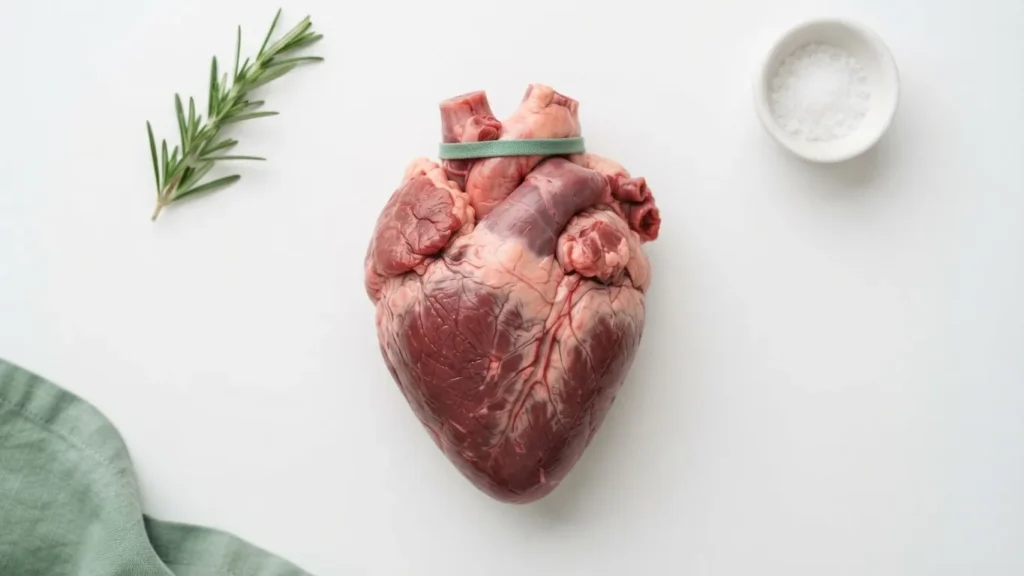
The one figure that separates beef heart from a beef steak or a slice of liver is its coenzyme Q10 load: roughly 11.3 mg per 100 g, with a measured raw content of 109.97 μg/g. Nothing else in the case for beef heart nutrition comes close to that as a differentiator. A 3 oz cooked serving reads like lean steak on the macro line, carries organ-meat micronutrients, and skips the one thing that makes liver a problem for some people. This desk aggregates the panel and USDA-derived figures below; every number is tied to the source that publishes it and the portion it was measured against.
Quick answer: A 3 oz (85 g) cooked, simmered serving of beef heart logs 140 calories, 24.2 g protein, 4 g total fat (1.2 g saturated), 0.13 g carbohydrate, no sugar of note, 50.2 mg sodium, and 180.2 mg cholesterol. The standout micronutrients are vitamin B12 at 9.2 mcg (383% DV) and riboflavin at 1 mg (79% DV). Its edge over other organ meats is coenzyme Q10, about 11.3 mg per 100 g. Beef heart nutrition mirrors steak on protein and fat while adding CoQ10 that muscle cuts lack. Cooked heart carries essentially 0 vitamin A.
The 3 oz cooked panel: 140 calories, 24.2 g protein, 4 g fat
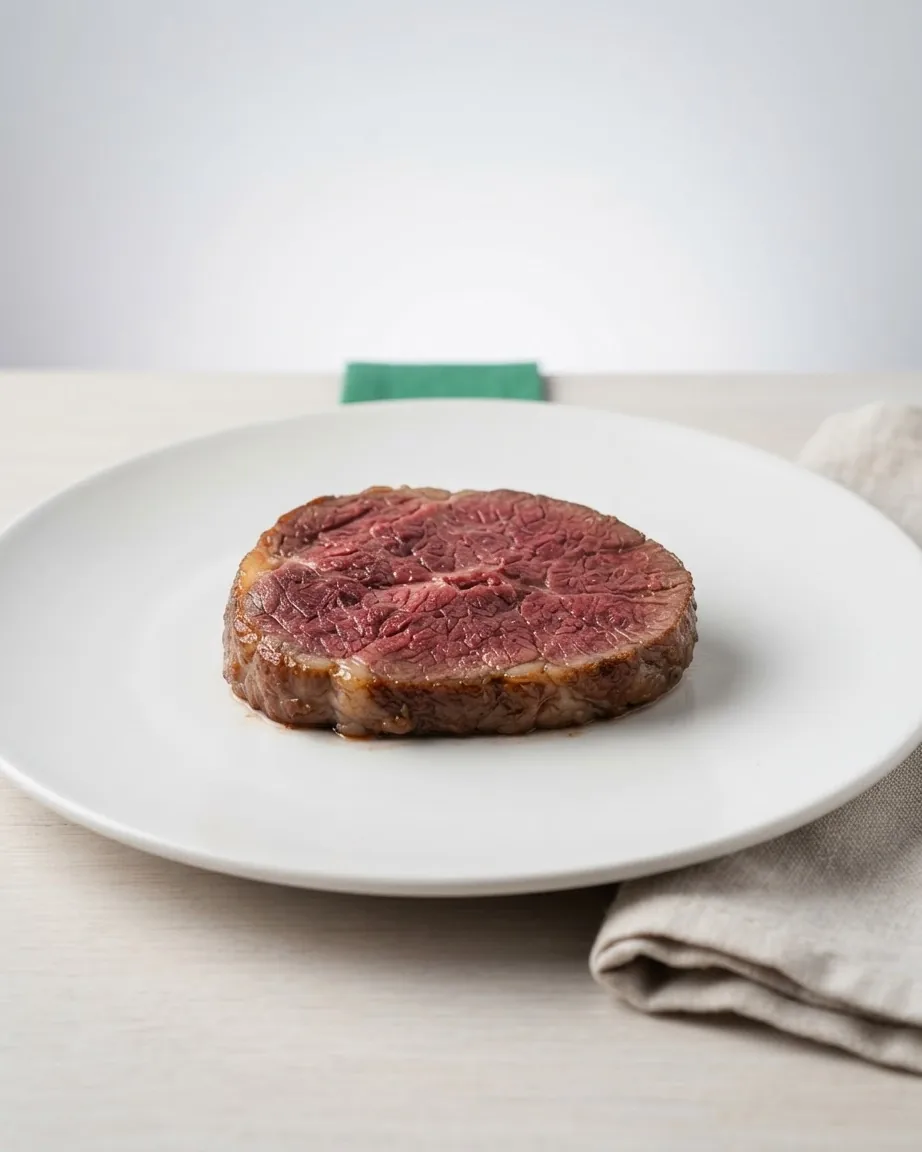
Read against a 3 oz (85 g) cooked, simmered portion – the standard organ-meat entry in USDA FoodData Central, presented here via MyFoodData – beef heart is a lean, protein-dense cut. It carries 140 calories, 24.2 g protein, and 4 g total fat, of which 1.2 g is saturated. Carbohydrate is negligible at 0.13 g, which means no meaningful sugar and no fiber. Sodium sits at 50.2 mg, or 2% DV, low enough that heart is not a salt concern the way cured meats are.
That macro shape puts unseasoned beef heart close to a trimmed steak. For contrast on the lean end, our breakdown of the Beef Filet Mignon Nutrition: What a 3 oz Cut Really Delivers logs a comparable protein figure from a premium muscle cut – the difference being what heart adds underneath the macros.
| Nutrient (3 oz / 85 g cooked, simmered) | Amount | % DV |
|---|---|---|
| Calories | 140 | – |
| Protein | 24.2 g | – |
| Total fat | 4 g | – |
| Saturated fat | 1.2 g | – |
| Total carbohydrate | 0.13 g | – |
| Sodium | 50.2 mg | 2% |
| Cholesterol | 180.2 mg | 60% |
| Vitamin B12 | 9.2 mcg | 383% |
| Riboflavin (B2) | 1 mg | 79% |
| Niacin (B3) | 5.7 mg | 35% |
| Iron | 5.4 mg | 30% |
| Copper | 0.48 mg | 53% |
| Selenium | 33.1 mcg | 60% |
| Zinc | 2.4 mg | 22% |
| Choline | 194.5 mg | 35% |
| Vitamin A | 0 mcg RAE | 0% |
These values are structured directly from the USDA FoodData Central record (FDC 169448) as displayed by MyFoodData. Manufacturer trim and cooking method shift them; the panel above is the reference point, not a guarantee for any given cut.
Why raw (100 g) and cooked (85 g) numbers don’t match
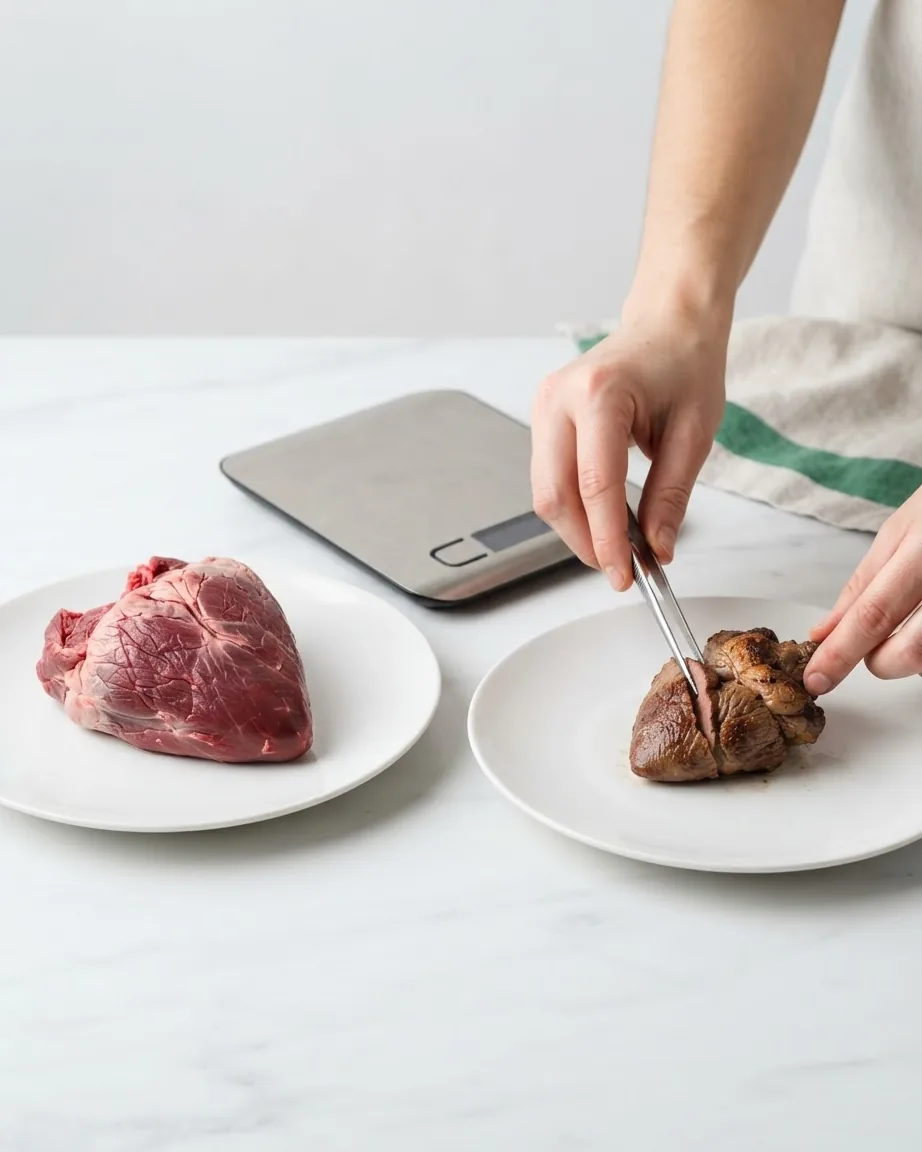
Two figures for the same food will not line up, and the reason is water, not a data error. Raw beef heart carries about 17.7 g protein per 100 g. Cooked and simmered, the same food reads 24.2 g protein per 85 g serving. Nothing was added – cooking drives off moisture, so the nutrients concentrate into less mass. Nutrivore puts the shrink at roughly 30%, meaning 100 g raw comes down to about 68 g cooked. When you compare beef heart against another food, check whether both numbers are raw or both are cooked before you trust the gap between them.
The same rule governs cholesterol. The cooked simmered panel lists 180.2 mg per 3 oz, while the raw comparison record lists 124 mg per 100 g. Different preparation, different portion weight – both are correct on their own basis, and averaging them produces a number that describes no real serving.
Cholesterol: 180.2 mg cooked, and how heart, liver and kidney rank
Cholesterol is the figure that decides beef heart for a lot of readers, so here it is against its two closest organ-meat neighbors on a like-for-like raw basis. Per the USDA comparison tool via MyFoodData (records 169451, 168625, 169449), raw beef heart carries 124 mg cholesterol per 100 g. Heart is the lowest-cholesterol option in that trio.
That said, the cooked 3 oz serving still logs 180.2 mg (60% DV), because the moisture loss above concentrates it. Cleveland Clinic dietitian Julia Zumpano, RD, LD, notes that people managing heart-disease risk are generally better served by lean muscle meat than by organ meats high in cholesterol and saturated fat; that guidance is set out in the clinic’s overview of organ-meat benefits and cautions. Heart’s low saturated fat (1.2 g per serving) softens the picture, but the cholesterol figure stands.
- Beef heart (raw, 100 g): 124 mg cholesterol – lowest of the three
- Beef liver (raw, 100 g): 275 mg cholesterol
CoQ10: the beef heart nutrition figure nothing else matches
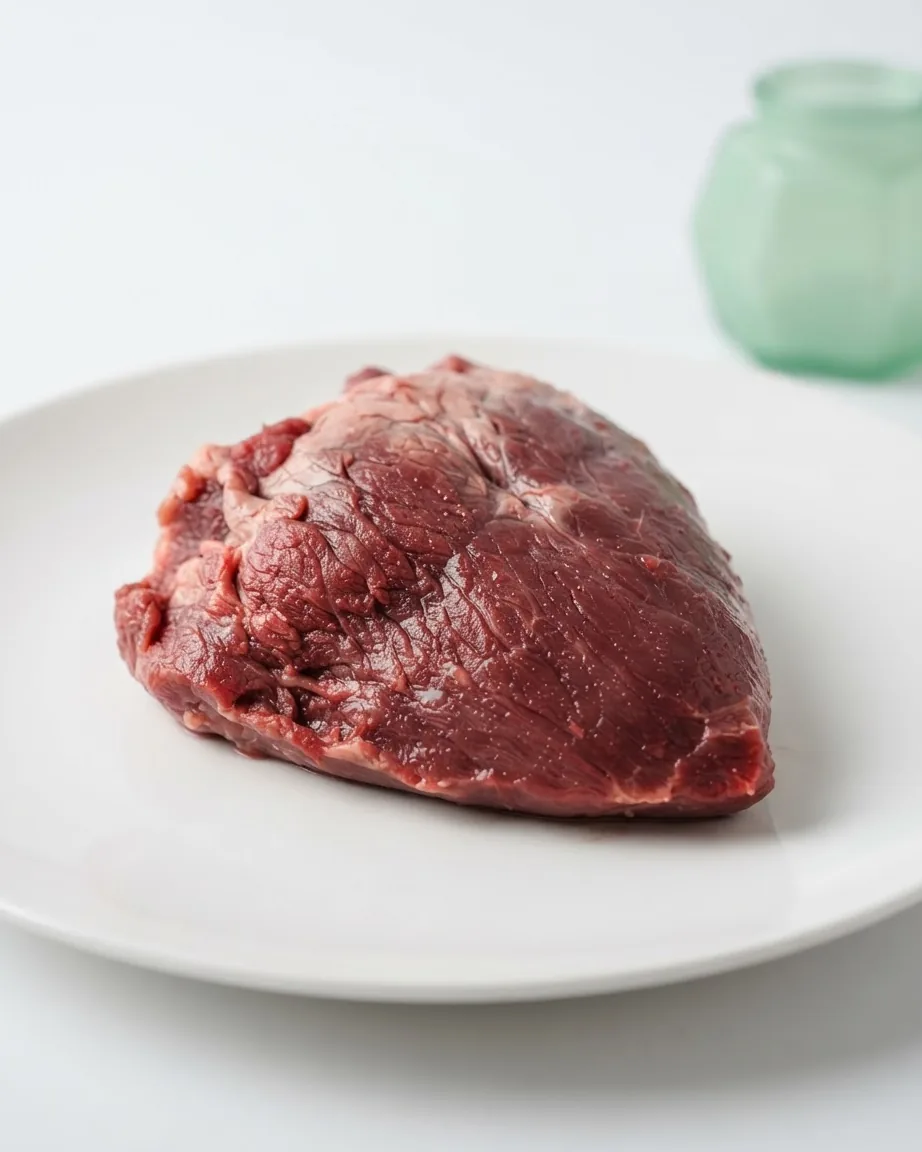
This is the reason to reach for heart over a steak. Swanson, in an article by Amy Sunderman, MS, RD, puts a 100 g serving of beef heart at around 11.3 mg of coenzyme Q10, and lists it among the densest dietary food sources of CoQ10. Independent measurement backs the ranking: research published in Elsevier’s Food Chemistry (Ercan & El, 2011) recorded 109.97 μg/g in raw beef heart, against 33.34 μg/g in liver and 23.47 μg/g in ordinary muscle.
Cooking method matters for what survives. The same study on CoQ10 in meat found frying dropped beef heart’s CoQ10 retention to about 69.42%, the lowest retention among the cuts tested – a point in favor of gentler methods if the CoQ10 is your reason for eating it. On the absorption side, in-vitro digestibility of the CoQ10 in beef heart came in at about 65.84%, higher than beef muscle at 60.16%, so more of what remains is available to the body.
The micronutrients: B12 at 383% DV, plus copper, selenium and choline
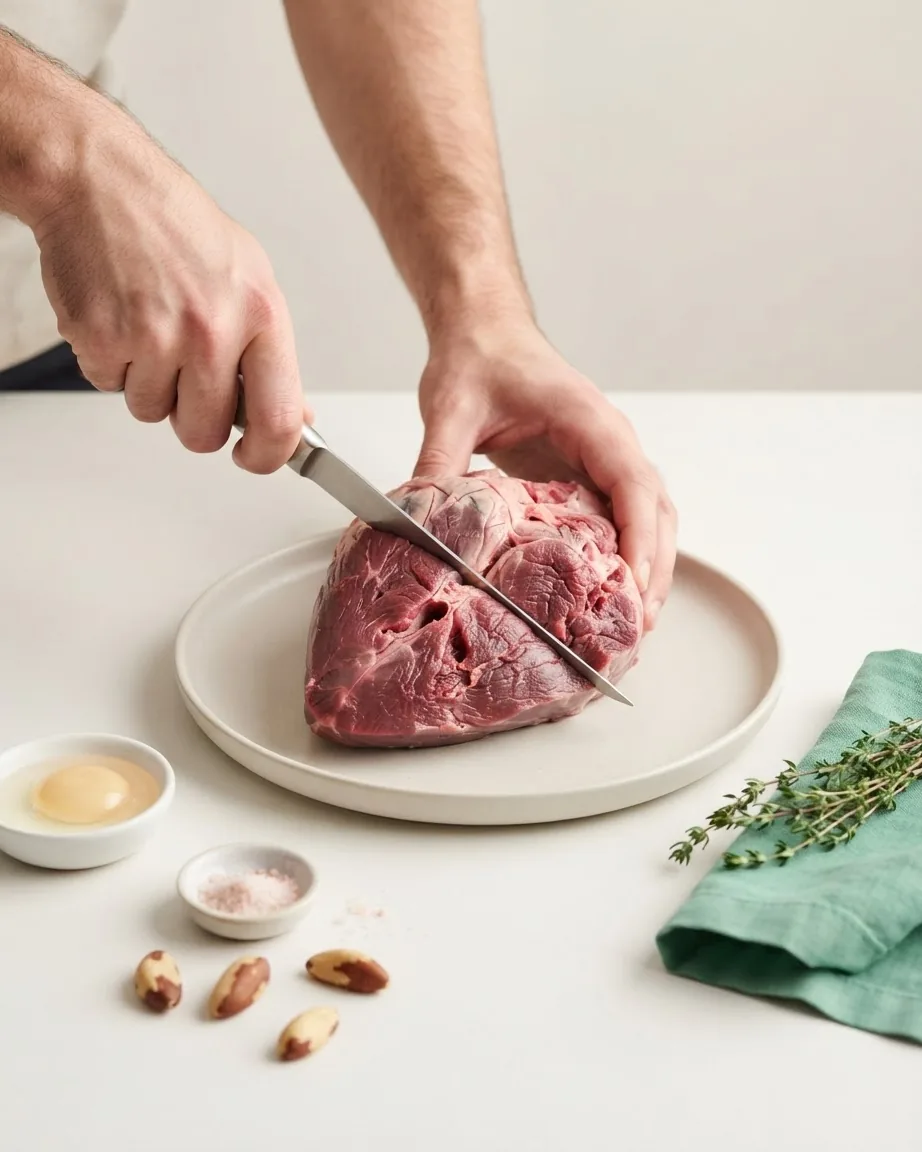
Beyond the macros, the 3 oz cooked panel is where beef heart earns its place. Vitamin B12 is the headline at 9.2 mcg, or 383% DV – a single serving covers a multiple of the daily target. Riboflavin (B2) reaches 1 mg (79% DV), niacin (B3) 5.7 mg (35% DV), and the trace minerals stack up: copper at 0.48 mg (53% DV), selenium at 33.1 mcg (60% DV), zinc at 2.4 mg (22% DV), and iron at 5.4 mg. Choline lands at 194.5 mg (35% DV), a nutrient most muscle cuts supply in smaller amounts.
One number here is not settled. The MyFoodData record lists iron at 5.4 mg as 30% DV. The milligram figure is the fact to anchor on; the percentage depends on which DV standard the publisher applies, so a “% DV” for iron is not something to quote loosely.
Heart vs liver: steak-like protein without liver’s vitamin A megadose
People often lump heart and liver together as “organ meat,” but they solve different problems. Liver edges heart on protein – 20.4 g versus 17.7 g per 100 g raw – and it is the more famous nutrient bomb. The catch is vitamin A. Cooked beef heart carries essentially 0 mcg RAE.
So the trade reads cleanly: heart gives you protein in the steak range, top-tier CoQ10, and the same B12 category, without loading vitamin A you then have to ration. If you want the fuller organ-meat context alongside more familiar cuts, this desk keeps its wider meat protein coverage in one place. For a conventional muscle-cut comparison point, the Nutritional Value of Filet Mignon Steak shows what heart matches on protein and where it pulls ahead on micronutrients.
Amino acids, taurine and the other compounds in beef heart
Beef heart is a complete protein – Kiltz Health notes it supplies all 9 essential amino acids, which places it in the same nutritional category as steak and eggs rather than as a partial protein you have to combine with something else; the detail sits in the site’s rundown of beef heart nutrition and benefits. On top of that, Nutrivore’s beef heart nutrient profile lists about 42.0 mg of taurine per 100 g raw, a compound concentrated in heart muscle.
Cleveland Clinic adds that among organ meats, “beef hearts and kidneys contain the most” alpha-lipoic acid – a qualitative ranking rather than a measured milligram figure, so treat it as direction, not a number to log. Several other beef-heart compounds get cited in benefit-focused writeups without a verified quantity behind them; where this desk has no confirmed figure, it does not print one.
Who should limit or avoid beef heart
The cautions are where benefit-first pages tend to go quiet. Cleveland Clinic’s organ-meat guidance flags several groups, and these belong attached to any recommendation to eat heart regularly rather than buried:
- Gout or high uric acid: organ meats are high in purines, which can worsen gout.
- Iron overload (e.g. hemochromatosis): the readily absorbed iron in organ meats is a reason for caution.
- Heart-disease risk: lean muscle meat is generally the better default than cholesterol-rich organ meats.
- Children: smaller portions are advised.
This desk formats published data; it does not give medical or dietary advice. Anyone in the groups above should take the numbers here to a clinician who knows their history. The figures describe the food, not a prescription.
Where these beef heart numbers come from
Every figure above is pulled from a manufacturer declaration or an established public database and structured into the reference table through an automated extraction process – no cut was weighed, cooked or tasted for this article. The cooked panel traces to USDA FoodData Central record 169448 as presented by MyFoodData; the raw organ-meat comparison to the USDA comparison tool records 169451, 168625 and 169449; the CoQ10 measurements to Ercan & El (2011) in Food Chemistry and to Swanson; taurine to Nutrivore; and the amino-acid and cooking notes to Kiltz Health. Brands and preparations change without notice, so a specific package may not match the database line exactly.
For related panels read the same way, see Beef Jerky Nutrition: What the Numbers Actually Say and Turkey Sausage Nutrition: What the Panels and USDA Records Actually Say.
How much CoQ10 you actually absorb from a 3 oz fried serving
The 11.3 mg per 100 g figure is a raw-food density, not what lands in your body. Scaled to a 3 oz (85 g) serving and then run through the two losses the research already reports – frying retention and in-vitro digestibility – the usable dose is less than half the headline. All inputs below come straight from the numbers in this article; only the arithmetic is new.
- Start (3 oz serving): 11.3 mg/100 g × 85 g = 9.61 mg of CoQ10 before cooking.
- After frying (69.42% retention): 9.61 mg × 0.6942 = 6.67 mg – frying is the lowest-retention method tested, so gentler cooking keeps more.
- After digestion (65.84% digestibility): 6.67 mg × 0.6584 = 4.39 mg actually made available to the body.
Even after those losses, heart stays the standout choice: at 109.97 μg/g raw versus 23.47 μg/g in ordinary muscle, it packs 4.69× the CoQ10 of a regular steak before any cooking loss – which is why the differentiator survives the shrink.
Figures are derived from this article’s own numbers (Swanson 11.3 mg/100 g; Ercan & El 2011 retention and digestibility) and are estimates, not a measurement of any single cooked cut.
Frequently asked questions about beef heart nutrition
Does grilling change the beef heart numbers versus simmering?
Cooking method mainly affects moisture and heat-sensitive compounds. Kiltz Health suggests grilling the heart for 5-6 minutes per side. High-heat frying cut measured CoQ10 retention to roughly 69.42%, the poorest among tested cuts, so if that compound is your goal, quicker or gentler cooking preserves more of it than prolonged frying.
Is beef heart safe during pregnancy?
Iron intake is still a consideration, and purine content matters for anyone prone to gout. Because pregnancy needs are individual, confirm portions with your own clinician rather than a general chart.
How much raw beef heart do I need for a cooked serving?
Plan for shrinkage. Roughly 30% of the raw weight is lost in cooking, so 100 g raw yields about 68 g cooked. If a recipe or panel quotes cooked grams, buy noticeably more raw to land on target. This also explains why the cooked 3 oz protein figure of 24.2 g outruns the 17.7 g measured on 100 g raw.
Is beef heart a complete protein?
Yes. It supplies all 9 essential amino acids, putting it in the same tier as steak for protein quality. That distinguishes it from most plant proteins, which lack one or more essentials. Alongside the amino acids, a raw 100 g portion also carries about 42.0 mg of taurine, a compound muscle cuts contain in smaller amounts.