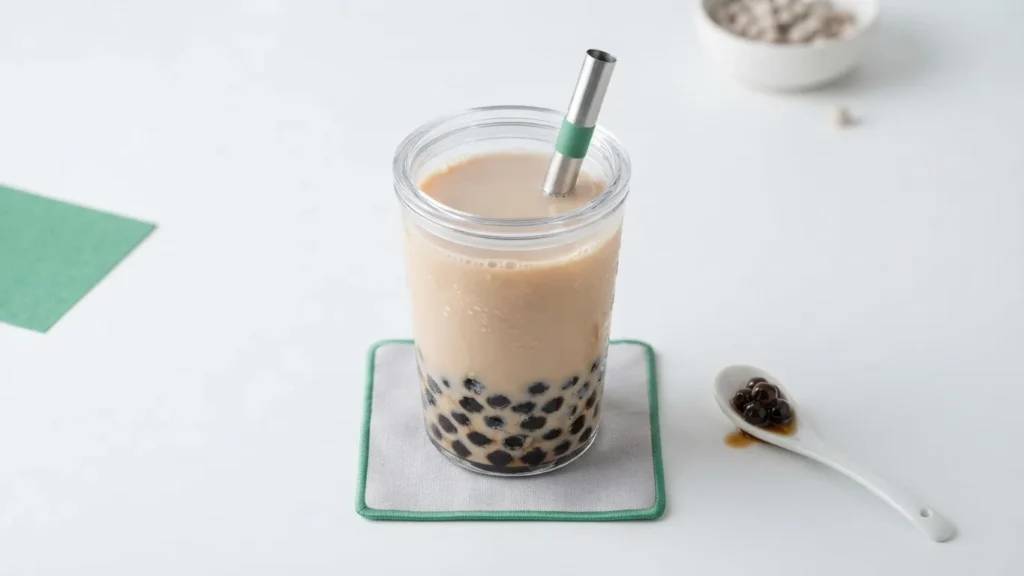
A 16 ounce (473 mL) milk tea with tapioca pearls carries 299 calories and 38 grams of sugar. That single pairing – a cup size most shops treat as the default, and the sugar load that rides inside it – is where boba nutrition facts start to mean something, because the two numbers move together the moment you change the size, the base, or the topping on top. The 299-figure comes from a peer-reviewed measurement by Min and colleagues in Food Science & Nutrition, who ran a real store-bought drink through laboratory analysis rather than reading a label. This desk aggregates manufacturer declarations, brand menus, and public food databases into standardized tables; what follows is the pulled-together picture, base by base and topping by topping.
Quick answer: A 16 oz boba milk tea with tapioca pearls runs about 299 calories and 38 grams of sugar. Strip the pearls and plain milk tea alone measured 263 calories, still with 38 grams of sugar. The pearls themselves are almost pure starch – closer to empty calories than nutrition. Scale up to a loaded 32 oz with jelly and egg pudding and the drink reached 515 calories and 96 grams of sugar. Dry tapioca by the half cup (76 g) lists 272 calories and only 2.5 grams of sugar, so most of a finished drink’s sugar is added, not intrinsic to the pearl.
The 16 oz milk tea with pearls: 299 calories, 38 grams of sugar
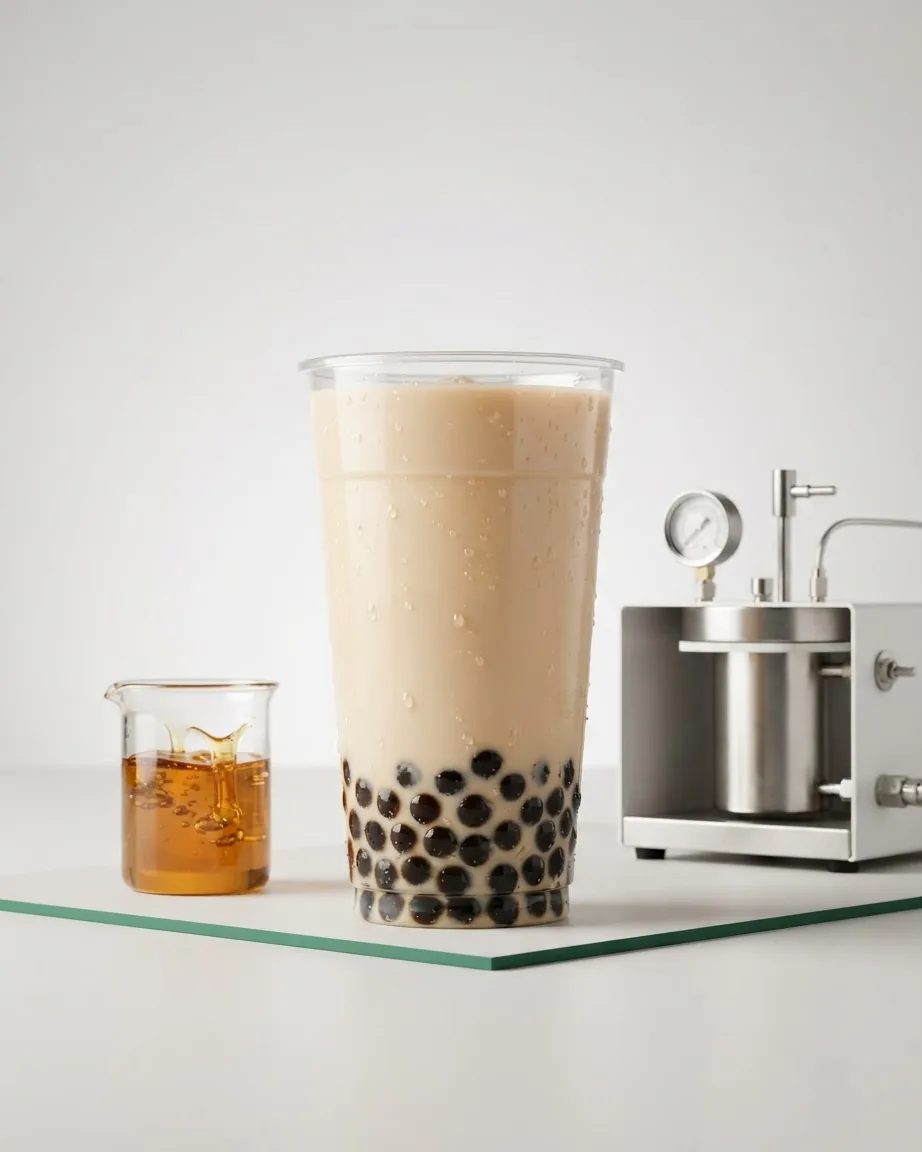
The anchor number for a standard cup is the Min et al. measurement published in Food Science & Nutrition: a 16 ounce (473 mL) milk tea with tapioca “boba” balls at 299 calories and 38 grams of sugar. That is one drink from one store, measured by bomb calorimetry, not a menu claim.
Pull the pearls out and the same study’s table lists plain milk tea at 263 calories – carrying the same 38 grams of sugar. The jump from 263 to 299 is the tapioca doing its work: starch energy, almost no sugar of its own. One point worth flagging, because it travels badly: a secondary summary of this study has quoted “about 263 calories” for boba milk tea, which reads the plain-milk-tea row rather than the milk-tea-with-tapioca row. For a cup that actually has pearls in it, 299 is the number to trust.
The study’s authors also found the drink’s sugar was dominated by fructose, which points to high-fructose corn syrup as the sweetener. And they were direct about the limit of their own work: the beverages came from one retail boba store, so the analysis cannot be generalized to all boba drinks. Treat 299 as a well-measured reference point, not a universal constant.
Per-topping calories and sugar: tapioca, jelly, egg pudding, popping boba
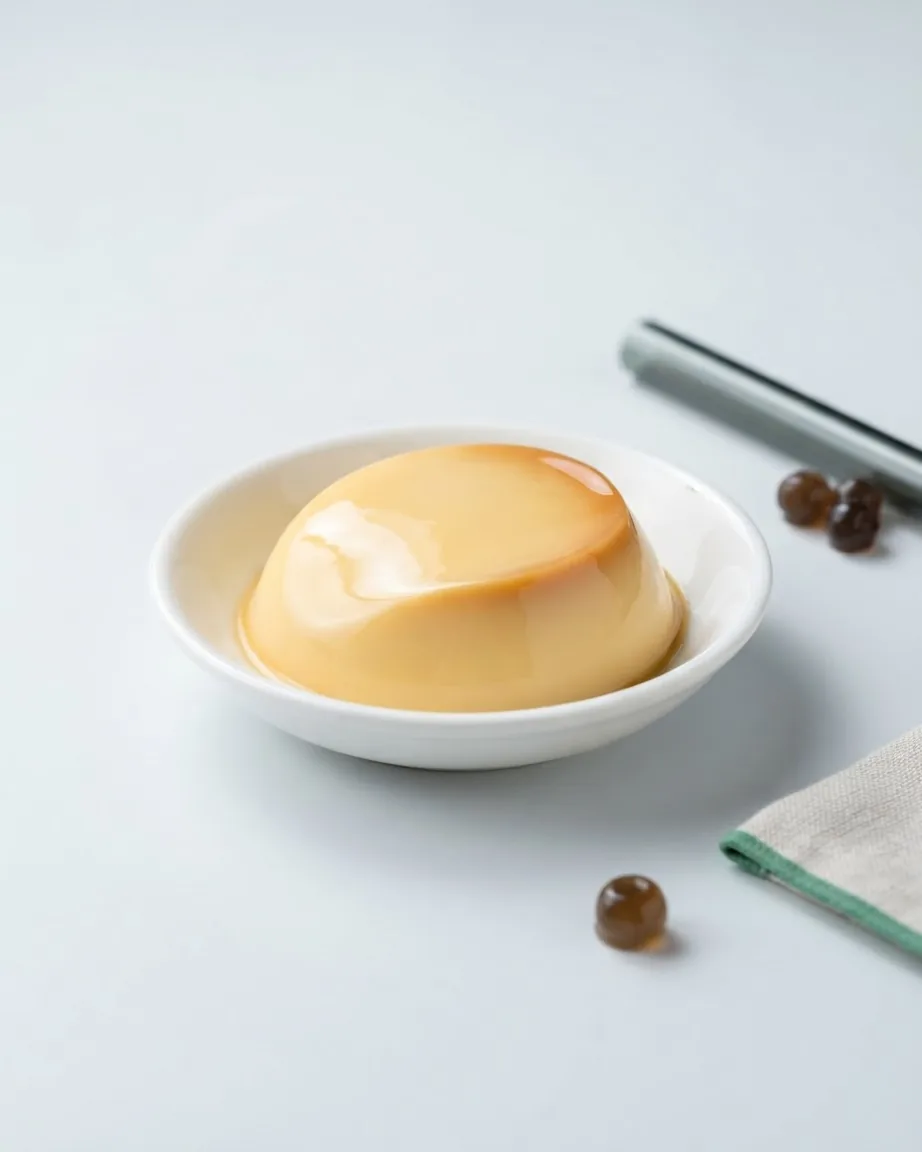
Toppings are where two people order “the same drink” and walk out with very different numbers. The Min study measured each one as a weighed serving, and the ranking is not intuitive.
- Tapioca pearls (60 g serving): about 77.9 calories and 6.53 grams of sugar – the middle of the pack.
- Egg pudding (80 g serving): about 53.7 calories but 18.03 grams of sugar – the lowest in calories, the highest in sugar.
That egg-pudding line is the one most people get backward. It adds the fewest calories of the three yet pours in the most sugar; the study noted its sugar profile strongly suggests high-fructose corn syrup. So “I picked the lighter topping” and “I picked the lower-sugar topping” can be opposite choices. If you are counting calories, jelly is the one to watch; if you are watching sugar, egg pudding is.
Popping boba sits in a different lane. Per Verywell Fit’s summary of USDA data, one ounce of bursting boba holds 25 calories, with 6 grams of total carbs and 5 grams of sugar. The same source puts traditional tapioca boba at 63 calories per ounce with 15 grams of carbs. Ounce for ounce, popping boba is lighter in calories but almost entirely sugar.
The pearls themselves: starch, empty calories, and a sugar number people misread
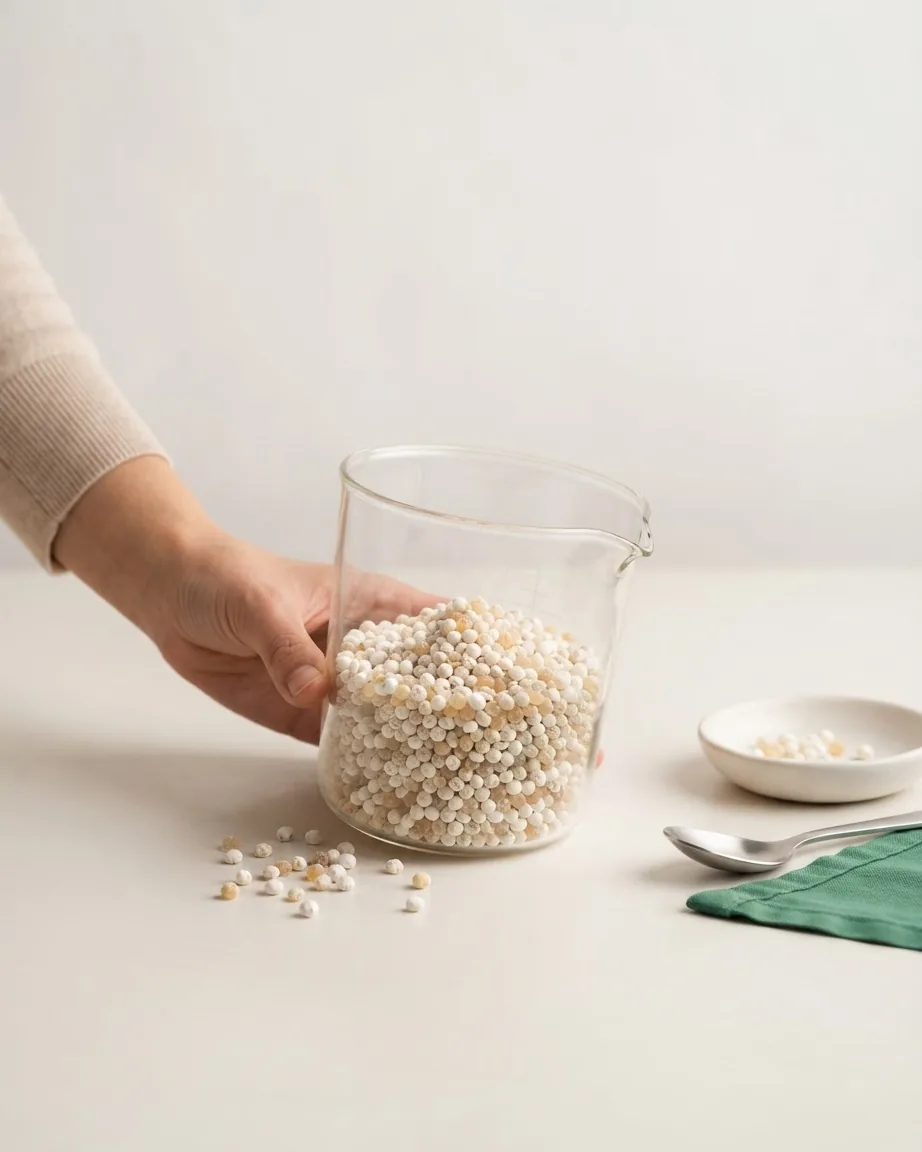
Before anything is added to it, a tapioca pearl is essentially starch. Healthline describes tapioca as a source of empty calories – it provides energy but almost no essential nutrients. The database numbers back that up, and they come in two portion sizes that must not be stacked against each other.
Verywell Fit, citing the USDA, lists dry pearl tapioca per half cup (76 g) at 272 calories, 67.5 g carbohydrate, 2.5 g sugar, and 0.1 g protein. The University of Rochester Medical Center’s Health Encyclopedia, also drawing on USDA data, lists one full cup at 544.16 kcal, 134.81 g carbohydrate, 5.09 g total sugars, and 0.29 g protein. These are the same food at different portions – half cup versus full cup – not a disagreement. Keep the portion label attached to each figure and they line up.
Two things stand out in that full-cup profile from Rochester: just 1.52 mg of sodium and only 1.37 g of dietary fiber. The pearl contributes calories and carbs and very little else. And note the sugar basis: the 2.5 g (half cup) and 5.09 g (cup) are sugar intrinsic to the dry pearl. The 38 grams in a finished drink is a different question entirely – that is overwhelmingly added sugar from the sweetened milk tea, not the tapioca. Related on this site: cereal nutrition facts.
Boba nutrition facts: the dry-pearl reference table
| Dry pearl tapioca | ½ cup (76 g) | 1 cup |
|---|---|---|
| Calories | 272 | 544.16 kcal |
| Carbohydrate | 67.5 g | 134.81 g |
| Sugar | 2.5 g | 5.09 g |
| Protein | 0.1 g | 0.29 g |
| Sodium | – | 1.52 mg |
| Fiber | – | 1.37 g |
Source: USDA data, as reported by Verywell Fit (½ cup) and the University of Rochester Medical Center Health Encyclopedia (1 cup).
The half-sugar trap: why ordering “50% sweet” may not cut much
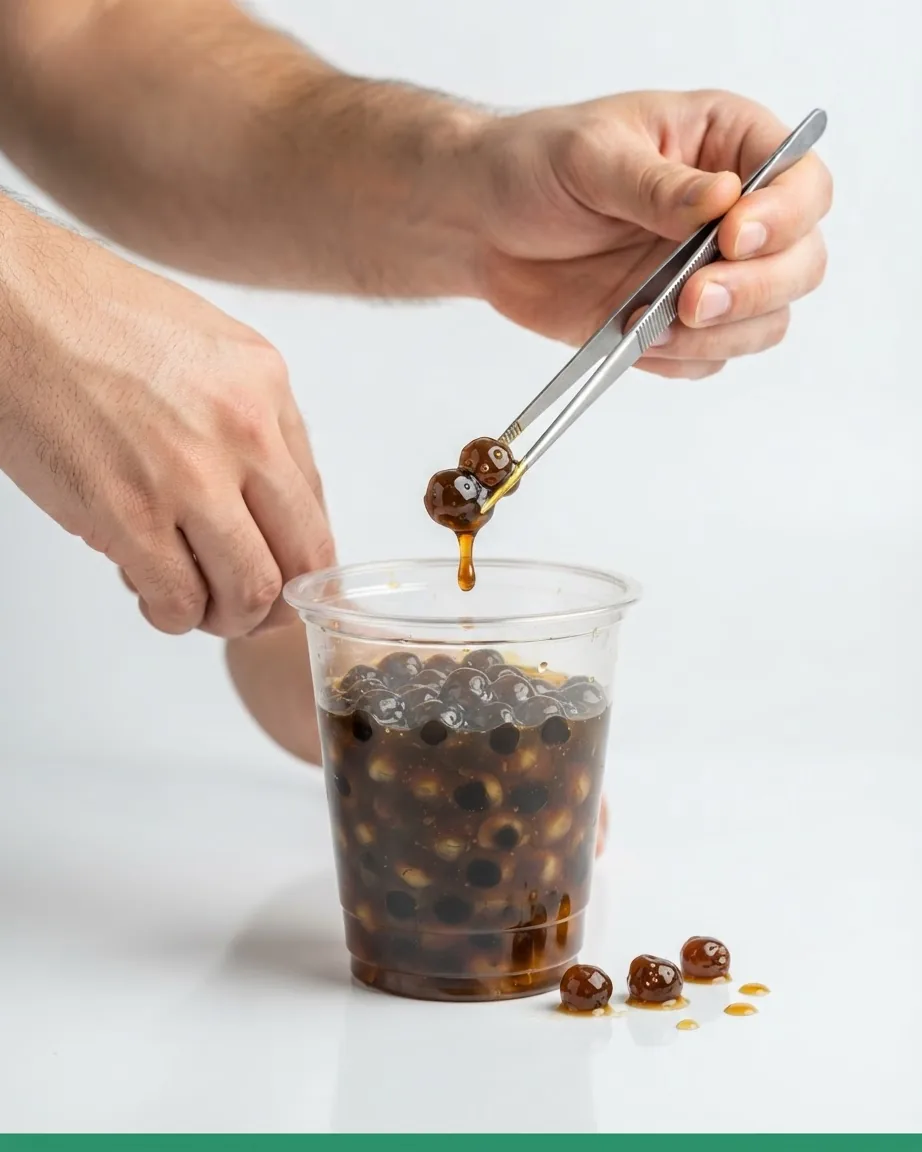
The most useful correction in all of this is one the slider on the counter hides. The National University Health System in Singapore points out that lowering the ordered sugar level may not cut the total much, because the boba pearls are usually pre-soaked in sugar before they ever reach the cup. Their framing, written by clinicians who between them have clocked more than 150 years of service, is blunt: an average drink at 50 per cent sugar with no toppings still contains around five teaspoons of sugar. A full-sweet cup with pearls, they note, can hold more than eight teaspoons.
So the decision this changes: if you want a genuinely lower-sugar boba, the sweetness slider alone will not get you there, because a share of the sugar lives in the pearls. Cutting the topping, the size, or the syrup does more than cutting the labeled sweetness percentage on a drink that still has pearls soaking in syrup.
How size, milk, and syrup each move the number
Size is the single biggest lever, and it scales almost linearly. Balance Pan-Asian Grille’s editorial notes that a standard 16 oz is the default, but moving to a 24 oz roughly doubles most of what’s in the cup, calories included. The Min study makes the same point at the extreme end: a large 32 oz milk tea with jelly and egg pudding reached 96 grams of sugar and 515 calories.
The base matters next. Per Balance Pan-Asian Grille, whole milk can add over 100 calories to a drink, while oat or soy milk usually lands around 50 to 80 calories. And the sweetener on top of the sweetener counts: one ounce of simple syrup can add 30 to 50 calories. Stack a large size, whole milk, syrup, and a calorie-dense topping and the cup climbs fast; swap to oat milk, skip the syrup, and drop a size, and it falls just as fast.
On the pearls as a topping specifically, the brand numbers converge on a per-weight figure. Both Verywell Fit and Balance Pan-Asian Grille put tapioca pearls at 63 calories per ounce. Sharetea states the tapioca pearl base runs around 35 calories per 10 grams. These describe pearls by weight as sold or added – do not equate them with the study’s 77.9-calorie, 60 g measured serving, which is one specific drink’s portion, not a per-ounce rate.
Boba vs. cola: more calories, less sugar, same dataset
Because the Min team ran soda through the identical method, there is a clean head-to-head rather than two numbers from two labs. A 16 oz cola measured 56 grams of sugar and 200 calories. The 16 oz milk tea with tapioca measured 38 grams of sugar and 299 calories.
Read it carefully: the boba drink carried fewer grams of sugar (38 versus 56) but more total calories (299 versus 200). The gap is the tapioca’s starch and the milk – energy that isn’t sugar. So “boba is just soda” is wrong in both directions. It is not lower in calories, and it is not higher in sugar. If sugar is your constraint, the cola was worse here; if total calories are, the boba was.
One drink against the daily added-sugar limit
There is no single “sugar limit” to measure a cup against – the number depends on which body issued it and for whom. Harvard’s Nutrition Source lays out the main ones side by side.
- American Heart Association: no more than about 100 calories per day – 6 teaspoons or 24 grams – of added sugar for most women, and 150 calories, 9 teaspoons or 36 grams, for most men.
- Dietary Guidelines for Americans: added sugars under 10% of total calories, which on a 2,000-calorie diet works out to 50 grams a day.
- Children ages 2 – 18 (AHA): less than 6 teaspoons or 24 grams of added sugar per day, and sugary beverages held to no more than 8 ounces a week.
Now place the drink: a standard 16 oz milk tea with pearls at 38 grams of sugar already passes the AHA’s 24-gram ceiling for women, clears most of the 36-gram ceiling for men, and lands near the Guidelines’ 50-gram mark – in one cup. A 32 oz loaded drink at 96 grams blows past all of them at once. For children the math is starker still: a single serving exceeds a whole day’s 24-gram limit, and the 8-ounces-a-week beverage cap means a 16 oz cup is roughly two weeks of allowance. The Harvard source also notes toddlers and infants younger than 2 years should not be given any added sugars at all. Pick the guideline that fits the drinker, then compare.
Protein, allergy edge cases, and what the pearls don’t give you
Protein is thin. Balance Pan-Asian Grille notes most boba tea is low in protein, though milk-based or red bean versions may offer 2 to 5 grams per serving. That tracks with the pearl data – 0.1 g protein per half cup, 0.29 g per cup of dry tapioca – so whatever protein a cup has comes from the milk, not the boba.
Allergen warning
The edge case worth knowing: Healthline notes that people allergic to latex may react to cassava, the root tapioca is made from, through cross-reactivity. If latex is a known allergy, that is a reason to be cautious with tapioca pearls that a calorie count would never surface.
For another beverage where the per-bottle total and the per-serving line diverge sharply, see our vitamin water per bottle breakdown, or browse the wider drinks section.
Reading these numbers the way the labs intended
Two caveats keep these figures honest. First, the Min study’s calorimetry may slightly overestimate metabolizable energy, because bomb calorimetry burns insoluble fiber and unavailable carbohydrates that your body doesn’t fully use – so 299 is, if anything, a touch generous. Second, and more important for ordering: those figures came from one store. Recipes differ by shop, and a brand can change a formula without announcing it, so a cup from a different chain may land above or below these marks. The structure holds even when the exact digit shifts – size drives calories, pearls carry starch, toppings decide sugar – and that framework is what lets you read any cup, not just the one that was measured.
One boba against your whole day’s added-sugar budget
Grams of sugar only mean something next to a limit, so here is the arithmetic the slider on the counter never shows you. The American Heart Association caps added sugar at 24 grams a day for most women and 36 grams for most men. Measured against those ceilings, a single boba drink is not a snack-sized indulgence – it is most or all of a day’s budget in one cup.
- Standard 16 oz milk tea with pearls (38 g sugar): 38 ÷ 24 = 1.58 days of a woman’s limit (158%), and 38 ÷ 36 = 1.06 days of a man’s limit (106%). The default cup already overshoots the daily ceiling for both.
- Loaded 32 oz with jelly and egg pudding (96 g sugar): 96 ÷ 24 = 4 full days of a woman’s limit (400%), and 96 ÷ 36 = 2.67 days of a man’s limit (267%). One drink spends the better part of a week’s allowance.
- What the size-and-topping jump costs: 96 − 38 = 58 g of extra sugar between the standard cup and the loaded one – more than two full daily limits for a woman added by size and toppings alone.
Because every input here – the 38 g and 96 g drink figures and the 24 g and 36 g AHA limits – comes straight from the numbers above, you can run the same division on any drink you are about to order: divide its sugar grams by 24 or 36 and you will know, before you pay, how much of the day it has already used up.
Frequently asked questions
Does drinking boba count toward a child’s sugar allowance?
Heavily. The AHA caps children ages 2 to 18 at 24 grams of added sugar daily and limits sugary drinks to 8 ounces weekly. A 16 oz cup carries 38 grams of sugar – over a full day’s ceiling in one serving, and roughly two weeks of the beverage cap. Under-2s should have no added sugars at all.
Is popping boba lower in calories than tapioca pearls?
Yes, by weight. Verywell Fit’s USDA-based figures put bursting boba at 25 calories an ounce versus 63 for tapioca. The trade-off is composition: popping boba is 5 grams sugar per ounce, almost entirely sugar, while tapioca’s 15 grams of carbs per ounce are mostly starch. Fewer calories, proportionally more sugar.
How much does switching to oat milk actually save?
Per Balance Pan-Asian Grille, whole milk can add over 100 calories to a cup, while oat or soy milk usually adds 50 to 80. So the swap trims roughly 20 to 50 calories on the milk alone. Dropping an ounce of simple syrup saves another 30 to 50. Neither touches the sugar baked into pre-soaked pearls, though.
Which topping should I skip to cut sugar fastest?
Egg pudding, if sugar is the target. The Min study measured it at 18.03 grams of sugar for an 80 g serving – the highest of the three toppings – despite adding only 53.7 calories. Low calories and low sugar are not the same pick here.