One 12 fl oz serving of Angry Orchard Crisp Apple does not have a single agreed calorie number. Three sources log it at 180, 190, and 221 calories, and they do not round from the same data. That split is the thing to settle before anything else, because picking the wrong figure throws off every total built on top of it. The angry orchard nutrition facts below are read off the retailer panel and two public databases, line by line, with the serving basis named each time.
The reason the figures diverge is not sloppiness. The carb and sugar lines move with the calories, which points to different data bases rather than a single measurement error. We log each one against its source and tell you which to trust for which purpose.
Quick answer, before the details:
A 12 fl oz serving of Angry Orchard Crisp Apple carries about 180 calories on the current U.S. Nutrition Facts panel, with 22 g total carbohydrate, 18 g total sugars (16 g of it added), 20 mg sodium, and 210 mg potassium. It is 5.0% ABV and classified gluten-free. There is no fat and no protein. Third-party databases log higher numbers, up to 221 calories, because they draw on different data. For a single bottle, the panel number and the serving number are the same thing: this product comes 12 fl oz to the serving.
Crisp Apple: The Panel Line for a 12 fl oz Serving
The serving basis here is 12 fl oz, one bottle. On the current Nutrition Facts panel reproduced by the retailer H-E-B, that serving posts 180 calories. The carbohydrate line reads 22 g, carrying 8% of the Daily Value. Sodium is low at 20 mg, 1% of the DV. Potassium comes in at 210 mg, 5% of the DV.
Sugar is where this panel does more than most. It separates total sugars from added sugars: 18 g total, of which 16 g is added, and that added figure alone covers 32% of the Daily Value for added sugars. That one line matters for anyone tracking added sugar specifically, because most beverage listings never break it out.
These figures are published on the H-E-B product page, which reproduces the U.S. panel and the ingredient statement.
| Item | Value |
|---|---|
| Serving size | 12 fl oz (one bottle) |
| Calories | 180 |
| Total fat | 0 g |
| Sodium | 20 mg (1%) |
| Total carbohydrate | 22 g (8%) |
| Total sugars | 18 g |
| Added sugars | 16 g (32%) |
| Potassium | 210 mg (5%) |
| Protein | 0 g |
ABV, Gluten, and What Goes Into Crisp Apple
Crisp Apple is 5.0% ABV and classified gluten-free, per the figures published by the brand owner, The Angry Orchard Cider Company, on its Crisp Apple style page. The 5.0% figure is the one that fixes the alcohol contribution to calories, covered further down.
The apple side is a culinary blend. The ingredient statement reproduced by H-E-B names Braeburn, Fuji, Granny Smith, and Gala apples, and repeats the gluten-free classification. There is no listed fat or protein in the product, which is expected for a fermented apple beverage: the calories come from carbohydrate, sugar, and alcohol, nothing else.
Allergen warning
For a reader avoiding gluten, the brand’s own classification is the authority that settles it. Retailer ingredient lists and the brand style page agree on gluten-free here.
Why the Same Cider Reads 180, 190, or 221 Calories
Here is the discrepancy laid out plainly, on a single 12 fl oz basis for the same 5% Crisp Apple:
- H-E-B (U.S. panel): 180 calories, 22 g carb, 18 g total / 16 g added sugar
- Twin Peaks (menu listing): 190 calories, 25 g carb, 20 g sugar
- CalorieKing (database): 221 calories, 30.9 g carb, 23.4 g sugars
Notice the carbs and sugar climb in step with the calories. That rules out a rounding quirk. The 221-calorie entry at CalorieKing carries 30.9 g carbohydrate (10% DV) and 23.4 g sugars, markedly above the panel. The 190-calorie figure comes from the Twin Peaks menu listing, which logs 25 g carb and a single 20 g sugar figure.
Which to use? For a product you are drinking in the United States today, the Nutrition Facts panel is the governing document, so 180 calories is the figure to trust. The higher database and menu numbers are not wrong for what they describe; they draw on a different data basis. If your goal is label accuracy, take 180. If you want the most conservative estimate for budgeting, the 221 figure is the cautious ceiling.
None of these three figures is independently confirmed against a current laboratory analysis, so treat the 41-calorie spread as the real uncertainty band and plan around the number that fits your purpose.
Where the Calories Actually Come From
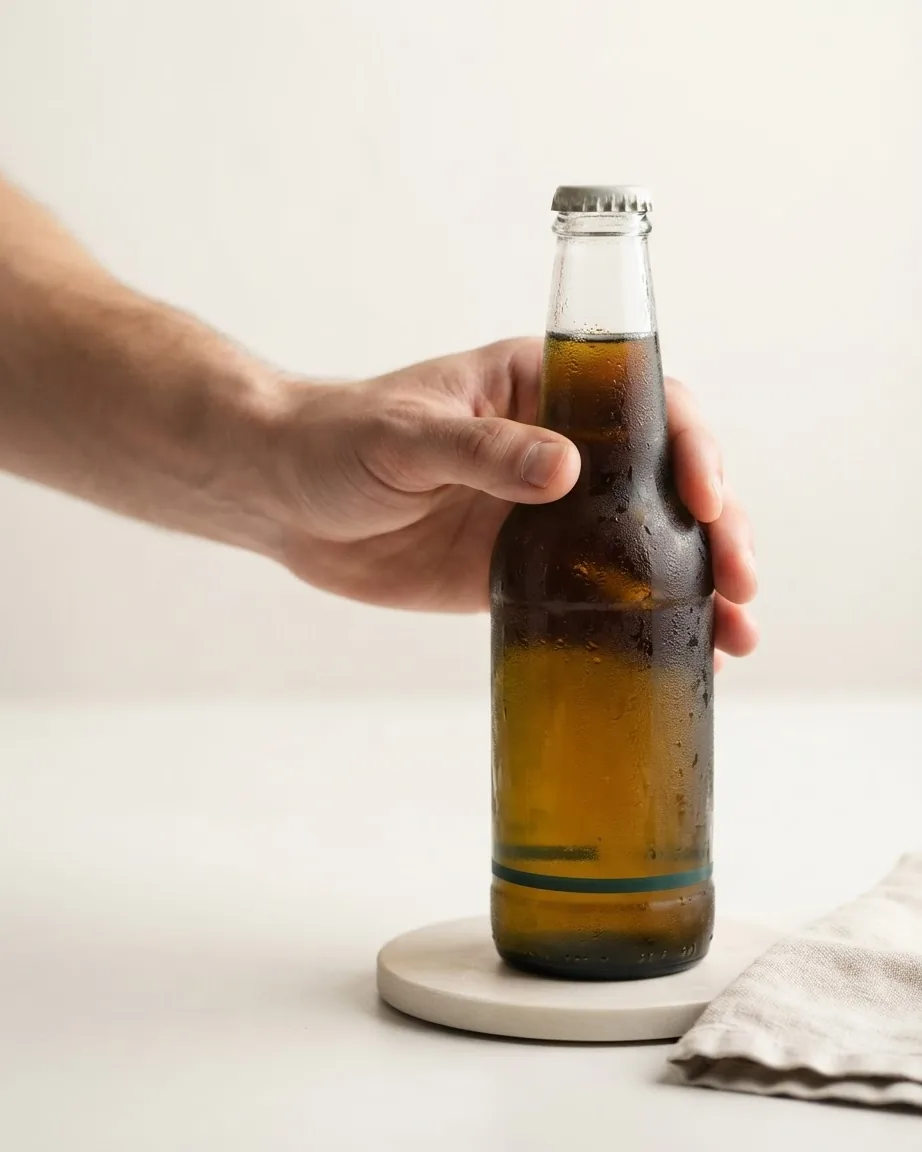
This beverage has no fat and no protein, so every calorie traces to two places: carbohydrate (mostly sugar) and alcohol. The sugar side is on the panel at 18 g total. The alcohol side is logged by CalorieKing at 14 g of alcohol for the 12 fl oz serving.
Alcohol is calorie-dense, second only to fat by gram, which is why a 5% cider lands well above a sugared soda of the same size even when the sugar looks comparable. The carb and alcohol figures here sit across two different source bases – the panel for sugar, the database for alcohol grams – so read them as directional rather than as one audited breakdown.
The practical takeaway: you cannot cut the alcohol calories out of a full-strength cider without switching to a lower-ABV variant. Sugar you might, to a point, by choosing a drier style; the 14 g of alcohol is fixed by the 5.0% strength.
CalorieKing’s per-serving math is pinned to a reference person – a 35-year-old female, 5’7″ tall, weighing 144 lbs – which is why its Daily Value and exercise equivalents differ from the flat 2,000-calorie basis used on the retail panel.
Crisp Light vs Crisp Apple: The Lower-Calorie Trade
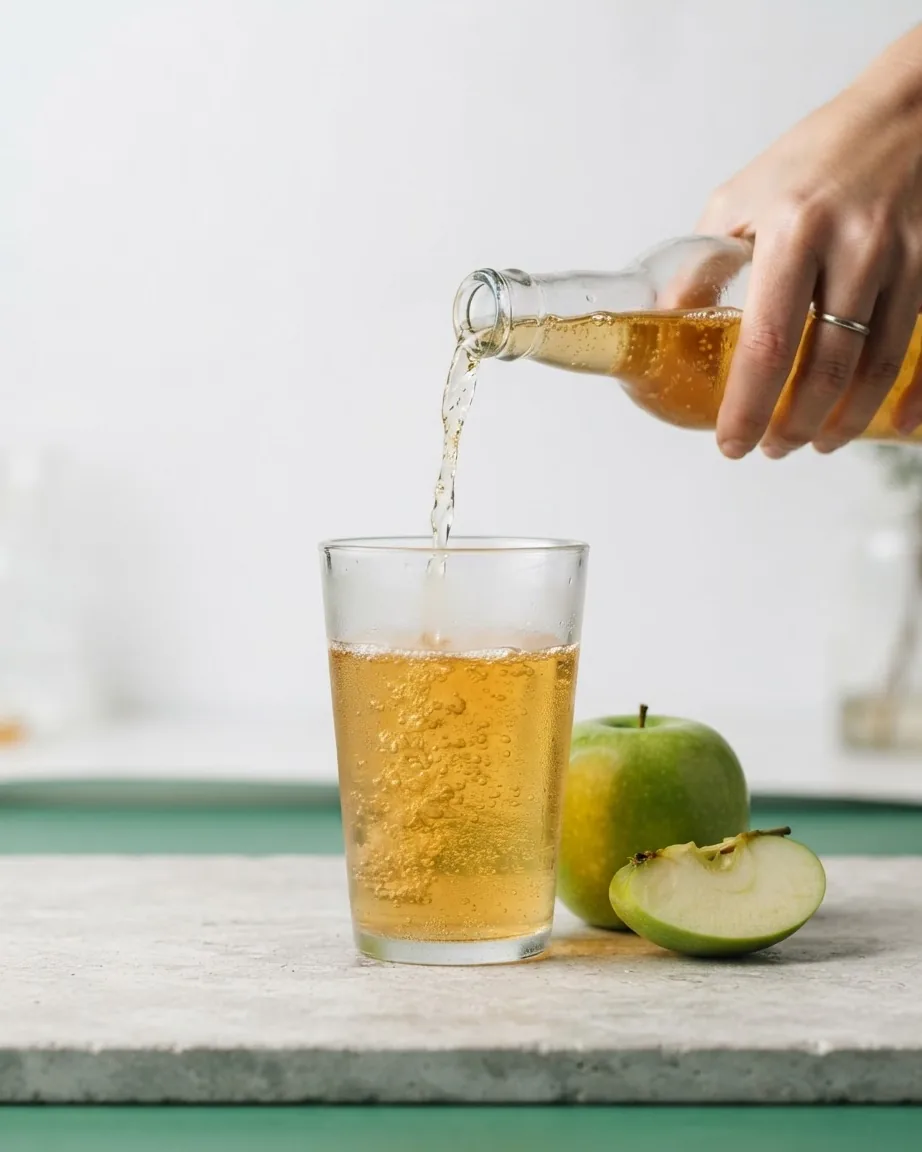
Crisp Light is the pared-back version. A 12 fl oz serving of Crisp Light logs 120 calories, with 11 g carbohydrate and 6 g sugar, per the figures at Eat This Much. Sodium is 15 mg, 1% of the DV.
The sugar drop is steeper still: 6 g versus 18 g total. For a reader counting carbs or added sugar, that is the meaningful split between the two core styles.
- Crisp Apple (12 fl oz): 180 cal, 22 g carb, 18 g sugar
- Crisp Light (12 fl oz): 120 cal, 11 g carb, 6 g sugar, 15 mg sodium
The catch worth naming: a lighter cider does not mean a weaker drink by strength alone. Compare serving sizes before assuming the lighter can is proportionally lower in alcohol.
Rosé and the Serving-Size Problem
Angry Orchard Rosé is logged at 230 calories, with 23 g carbohydrate and 16 g sugar, but on a different basis: “per 1 can,” not per 12 fl oz, per Eat This Much. The can size is not stated in that entry.
That makes a direct calorie comparison with Crisp Apple and Crisp Light unreliable. If the Rosé can is larger than 12 fl oz, part of its higher 230-calorie figure is simply more liquid, not a richer recipe. Until a per-12-fl-oz Rosé figure is confirmed, do not line up 230 against 180 as if they share a serving. Use the Rosé number only when you know your can’s volume.
A Clean Table: Angry Orchard Nutrition Facts by Variant
All figures below are per source and per the serving basis stated. Where a variant is logged on a non-comparable basis, that is flagged in the row.
| Item | Value |
|---|---|
| Crisp Apple (12 fl oz, H-E-B panel) | 180 cal · 22 g carb · 18 g total / 16 g added sugar · 20 mg sodium · 210 mg potassium · 5.0% ABV · gluten-free |
| Crisp Apple (12 fl oz, Twin Peaks) | 190 cal · 25 g carb · 20 g sugar |
| Crisp Apple (12 fl oz, CalorieKing) | 221 cal · 30.9 g carb · 23.4 g sugar · 14 g alcohol |
| Crisp Light (12 fl oz, Eat This Much) | 120 cal · 11 g carb · 6 g sugar · 15 mg sodium |
| Rosé (per 1 can, size unstated, Eat This Much) | 230 cal · 23 g carb · 16 g sugar |
For the wider category, see our drinks section. Readers tracking sugared beverages often also look at Vitamin Water nutrition facts, and for a zero-sugar point of reference there is Coca-Cola Zero nutrition.
Angry Orchard is an alcoholic beverage. Standard government warnings for alcohol apply, and none of the figures here imply a health benefit from drinking it.
Crisp Apple vs Crisp Light: What Switching Six Bottles Actually Saves
Both core styles are reported on the same 12 fl oz serving basis, so the difference between them is a clean subtraction – and it compounds across a typical six-bottle pack. Here is the trade on a per-bottle basis and scaled to six bottles, using the panel figures reported above (Crisp Apple: 180 cal, 22 g carb, 18 g total sugar; Crisp Light: 120 cal, 11 g carb, 6 g sugar).
- Across a six-bottle pack: that becomes (180 − 120) × 6 = 360 calories, (22 − 11) × 6 = 66 g of carbohydrate, and (18 − 6) × 6 = 72 g of total sugar avoided.
Note this compares the two panels on their stated 12 fl oz basis only; it is not a strength comparison, and it does not extend to Rosé, which these sources log on a per-can basis that is not comparable.
Frequently Asked Questions
How much sugar is in a bottle of Angry Orchard Crisp Apple?
The panel lists 18 grams of total sugars per bottle, and separates out 16 grams as added sugars, which alone meets 32% of the added-sugar Daily Value. Databases that report a single sugar line show 20 g (Twin Peaks) or 23.4 g (CalorieKing). Match the kind of sugar you are tracking to the right figure.
Is Angry Orchard safe for someone avoiding gluten?
The brand classifies Crisp Apple as gluten-free, and the retailer ingredient statement repeats that. The base is a culinary apple blend – Braeburn, Fuji, Granny Smith, Gala – with no grain listed. Anyone with celiac disease should still confirm against the current label, since recipes can change without notice between production runs.
Which calorie number should I log for Crisp Apple?
For a bottle bought and consumed in the U.S., log 180, the Nutrition Facts panel value. Use 221 only if you want a deliberately conservative ceiling. The 41-calorie gap across sources reflects different data bases, not a correctable error, so pick one figure and stay consistent.
Does Crisp Light have less alcohol than Crisp Apple?
Fewer calories do not automatically mean lower strength. Crisp Light cuts calories to 120 and carbs to 11 g versus Crisp Apple’s 180 and 22 g, but ABV and can volume are separate variables. Check both the strength and the serving size on your specific can before assuming a proportional drop.
Why can’t I compare Rosé directly to Crisp Apple?
Rosé’s 230-calorie figure is logged “per 1 can” with no stated volume, while Crisp Apple and Crisp Light are per 12 fl oz. A larger can inflates totals through volume alone. Without a confirmed Rosé serving size, lining up 230 against 180 compares two different amounts of liquid, not two recipes.