
The Liquid IV nutrition facts on the back of a single stick tell a short but loaded story: 45 calories, 11 grams of sugar, and a striking 500 mg of sodium packed into 16 grams of powder. A box is handy for long hikes and the occasional rough morning, but flip the packet over and the sodium number is the one that stands out. That is not a rounding error. That is a design choice, and it explains almost everything about how this drink mix works.
So this is the panel broken all the way down, with the numbers verified against the current label and public nutrition databases, plus the context that the marketing bullets skip. If you have ever compared it to a Gatorade nutrition label and wondered which one is really the sugar bomb, that comparison is coming too.
Quick answer: One stick of the original Liquid I.V. Hydration Multiplier has 45 calories, 11 g of total sugar (all added, from cane sugar and dextrose), 500 mg of sodium, 370 mg of potassium, and roughly 66 mg of vitamin C. The sodium is 22 percent of a full day’s Daily Value, which is high for a drink but intentional. The sugar-free version drops to about 15 calories and 0 g of sugar by using allulose instead.
Liquid IV Nutrition Facts Per Stick
Here is the full panel for one 16 g stick of the original Hydration Multiplier, the lemon-lime and similar classic flavors. The amounts come straight off the Nutrition Facts label and match what the United States Department of Agriculture keeps in its FoodData Central records. Each amount is paired with its percent Daily Value so the numbers actually mean something instead of floating on their own.
| Nutrient | Amount per stick | Percent Daily Value |
|---|---|---|
| Serving size | 16 g (1 stick) | Makes 16 fl oz |
| Calories | 45 calories | – |
| Total fat | 0 g | 0% |
| Total carbohydrate | 11 g | 4% |
| Total sugars | 11 g | – |
| Added sugars | 11 g | 22% |
| Protein | 0 g | 0% |
| Sodium | 500 mg | 22% |
| Potassium | 370 mg | 8% |
| Vitamin C | 66 mg | 73% |
| Niacin (B3) | 22 mg | 138% |
| Vitamin B6 | 2.2 mg | 129% |
| Pantothenic acid (B5) | 11 mg | 220% |
| Vitamin B12 | 6.6 mcg | 275% |
A few things jump out. There is no fat and no protein, so every one of those 45 calories comes from carbohydrate, and every gram of that carbohydrate is sugar. The B vitamins look enormous on a percentage basis, but they are water-soluble, so the body simply flushes what it does not use. The two numbers that carry real weight are sodium and sugar, and they are the two most people misread.
The Sugar Reality: 11 Grams in One Packet
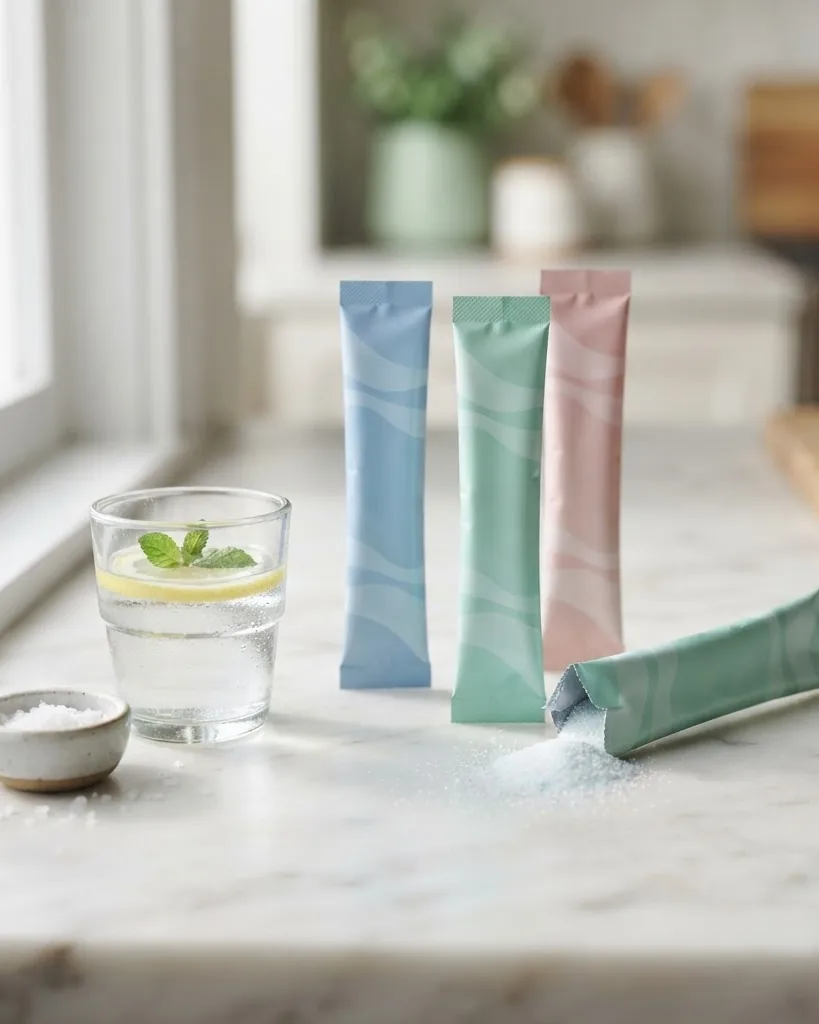
Eleven grams of sugar is about two and a half teaspoons. In a drink you might reach for because it sounds healthy, that can feel like a bait and switch. The Nutrition Facts label lists all 11 g as added sugars, which the FDA now requires as its own line precisely so shoppers can see it. At 22 percent of the added-sugars Daily Value of 50 g, a single stick uses up nearly a quarter of the day’s budget before you have eaten anything.
Here is the twist, though. The sugar is not decorative. Liquid I.V. leans on a glucose-and-sodium partnership to move water across the gut wall faster, and that mechanism needs actual sugar to run. The cane sugar and dextrose in the mix are the fuel for that transport, not an afterthought. So the 11 g is doing a job. Whether you want that job done with sugar every single day is a separate question, and a fair one.
For comparison, it sits next to other drinks broken down on this site, like the numbers on a can of hard tea. If you have looked at the Twisted Tea nutrition facts, you know how fast sugar stacks up in beverages that do not taste especially sweet. Liquid I.V. is denser than it looks going down.
- 11 g total sugar per stick, all added.
- Sources: pure cane sugar plus dextrose (a form of glucose).
- 22 percent of the FDA added-sugars Daily Value in one packet.
- Zero grams from fruit or naturally occurring sources.
The Sodium Story: 500 mg and Why It Matters
Now the big one. A single stick carries 500 mg of sodium, which is 22 percent of the 2,300 mg Daily Value the FDA sets for a full day. Drink two on a hot afternoon and you have crossed 1,000 mg from this one product alone. For an endurance athlete sweating hard, that is a feature. For someone managing blood pressure, it is a number worth respecting.
The CDC reports that the average American already takes in about 3,400 mg of sodium a day, well over the recommended ceiling of 2,300 mg. Most of that comes from packaged and restaurant food, not the salt shaker. Adding a 500 mg drink mix on top can quietly push a normal day into high territory. The CDC ties chronic high sodium intake to raised blood pressure, which is the mechanism behind a lot of heart and kidney risk over time.
None of that makes the drink dangerous for a healthy, active person. Sweat is salty, and replacing lost sodium is the whole point of an electrolyte mix. It does mean the label deserves a second look if a doctor has ever mentioned your blood pressure. The right amount of sodium depends entirely on how much you are losing, and a person sitting at a desk loses very little.
For anyone who sweats heavily, say through long sessions over a hot stove in summer, 500 mg is not automatically too much. Treat it as information. On a low-effort day, skipping the stick and just drinking water is enough.
What CTT and the 3x Electrolytes Claim Actually Mean
Liquid I.V. markets something it calls Cellular Transport Technology, or CTT, and the phrase “3x the electrolytes of the leading sports drink.” Strip away the branding and CTT is the well-documented science of sodium-glucose co-transport. When glucose and sodium arrive in the small intestine together in the right ratio, they pull water across the intestinal lining through active transport, which is faster than plain water moving by osmosis alone.
This is not a new discovery. The World Health Organization built its oral rehydration solution around the same principle back in 1978, and that formula has saved millions of lives from dehydration due to illness. Liquid I.V. is essentially a consumer-flavored, sweeter take on that idea. The sodium and the sugar work together on purpose, which is why you cannot simply strip the sugar out and expect the same speed.
The “3x electrolytes” line refers mainly to sodium content versus a traditional sports drink, and by that measure it is roughly true: 500 mg per stick is far more than a same-size pour of most sports drinks. Whether you need triple the electrolytes is the real question, and for a light workout the honest answer is usually no.
Liquid IV vs a Sports Drink Like Gatorade
People reach for both, so the comparison matters. A 20 fl oz bottle of a classic sports drink runs around 34 g of sugar and roughly 270 mg of sodium. One Liquid I.V. stick mixed into 16 fl oz gives you 11 g of sugar and 500 mg of sodium. So per equal volume, the sports drink is far heavier on sugar, while the drink mix is far heavier on sodium.
| Metric | Liquid I.V. (1 stick, 16 fl oz) | Sports drink (20 fl oz) |
|---|---|---|
| Calories | 45 calories | ~140 calories |
| Sugar | 11 g | ~34 g |
| Sodium | 500 mg | ~270 mg |
| Potassium | 370 mg | ~75 mg |
The takeaway is not that one wins. It is that they solve different problems. If your goal is rapid sodium and fluid replacement after heavy sweating, the higher sodium and potassium of the drink mix does more with fewer calories. If you mainly want quick carbohydrate fuel during a long effort, the sports drink delivers more sugar energy. Reading both labels beats trusting either brand’s front-of-package claims.
The Sugar-Free Version: What Changes
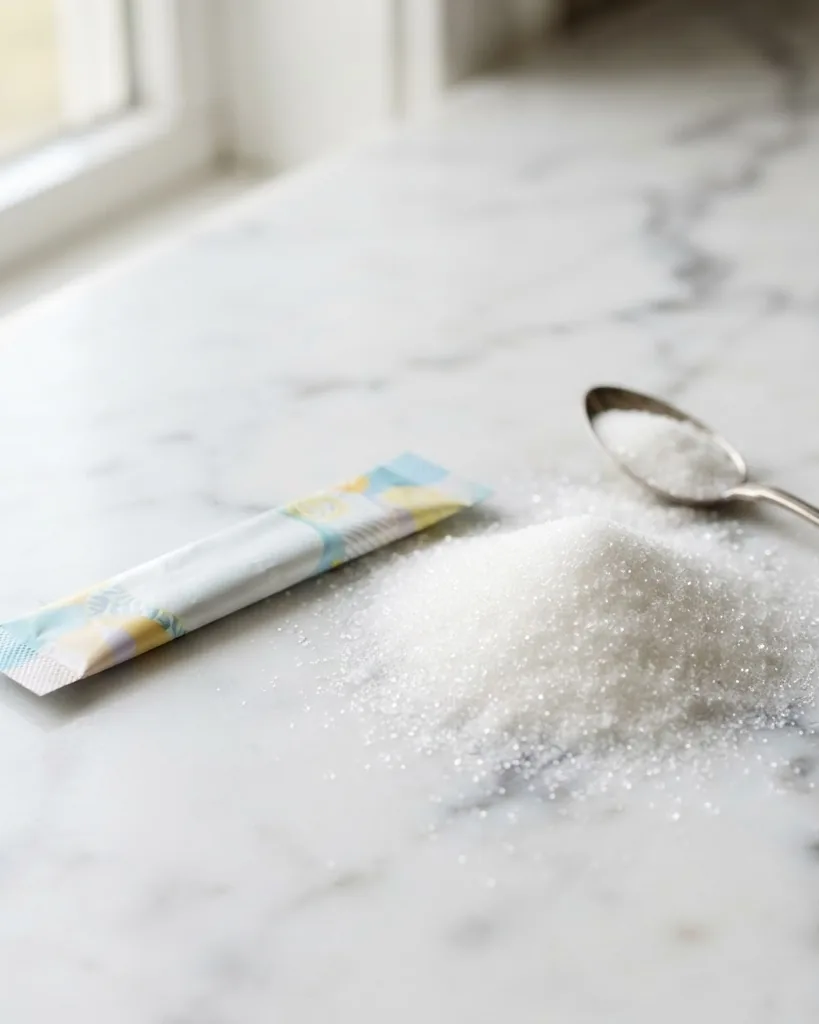
Liquid I.V. also sells a sugar-free Hydration Multiplier, and the swap is meaningful. It drops to about 15 calories per stick and 0 g of sugar by replacing cane sugar with allulose, a rare sugar that occurs naturally in figs, raisins, and maple syrup. Allulose tastes close to real sugar but is largely not absorbed by the body, so the net carbohydrate lands near 1 g even though the label may show about 5 g of total carbohydrate.
The electrolytes stay similar, so you still get a strong sodium and potassium hit without the added-sugar line climbing. That said, the co-transport mechanism that makes the original absorb fast leans on glucose, and allulose does not play that exact role. In practice most people will not notice a hydration difference from a single packet, but it is an honest trade to know about.
- About 15 calories per stick versus 45 in the original.
- 0 g sugar; sweetened with allulose instead of cane sugar.
- Net carbohydrate near 1 g because allulose is mostly not absorbed.
- Sodium and potassium stay close to the original formula.
Vitamins and Daily Value Context
The vitamin content is where the label gets loud. One stick provides about 66 mg of vitamin C, which is 73 percent of the FDA Daily Value of 90 mg. Some earlier formulas listed closer to 76 mg, so the exact figure has shifted between batches, but it lands in the same neighborhood. According to the NIH Office of Dietary Supplements, the vitamin C requirement is 90 mg a day for men and 75 mg for women, so a single stick nearly covers it.
The B vitamins read as huge percentages: 138 percent for niacin, 129 percent for B6, 220 percent for pantothenic acid, and 275 percent for B12. Because these are water-soluble, your body absorbs what it needs and passes the rest. The NIH notes that healthy people rarely fall short on these particular B vitamins, so the megadoses are more about marketing sparkle than a nutritional gap most of us have.
Daily Value context is the honest lens here. The FDA sets those reference amounts for a 2,000 calorie diet, and they are ceilings and targets, not exact personal needs. A number like 22 percent for sodium tells you how a single stick fits into a whole day far better than the raw milligram figure does. If you want the primary source, the FDA publishes the full Daily Value table at fda.gov, and the USDA keeps verified food composition data at FoodData Central.
How One Stick Fits Into a Full Day
Numbers on a packet only matter next to the rest of your day. That is the whole reason the FDA prints percent Daily Value beside every amount. So here are the two figures that actually move the needle, sodium and added sugar, walked through a normal day of eating.
Start with sodium. The Daily Value is 2,300 mg. One stick spends 500 mg, or 22 percent, before lunch. A turkey sandwich from a deli can carry 1,200 mg on its own. Add a handful of chips and you are near the ceiling without trying. The CDC has published extensive guidance on trimming daily sodium at cdc.gov, and the recurring theme is that packaged foods, not the drink mixes, do most of the damage. The stick is not the villain, but it is not free room in the budget either.
Now added sugar. The FDA Daily Value is 50 g, and one stick uses 11 g, or 22 percent. Pair a stick with a flavored yogurt at 15 g and a granola bar at 10 g and you have crossed two-thirds of the day’s added-sugar target before noon. Seeing those percentages side by side is what turns a label from trivia into a decision. Keeping the math rough and adjusting the rest of the day around it is enough.
The vitamins barely register in this exercise. At 73 percent of the vitamin C Daily Value and well over 100 percent for several B vitamins, one stick more than covers those bases, and the surplus is simply excreted. There is no daily budget to blow there, which is exactly why sodium and sugar are the two lines worth tracking.
Who Benefits and Who Should Be Cautious
This is where reading the panel pays off, because the same 500 mg of sodium is a gift for one person and a warning for another. The mix earns its place when your body is actually losing fluid and salt in volume.
Good candidates for a stick include endurance athletes and anyone training in heat, people recovering from a stomach bug that caused vomiting or diarrhea, travelers fighting dehydration on long flights, and folks working physical jobs outdoors in summer. In all of those cases the sodium is replacing real losses, and the fast absorption is genuinely useful.
The cautions are just as concrete. Anyone with high blood pressure, heart failure, or kidney disease should factor 500 mg of sodium into their daily count, and the CDC guidance to stay under 2,300 mg makes that math tight. People watching added sugar, including those managing blood glucose, may prefer the sugar-free version. And for a sedentary day at a desk, plain water usually does the job for a lot less sodium. When sodium intake is a medical concern, a doctor or registered dietitian is the right call, not a label reader.
One more practical note: hydration is not only about drinks. Whole foods carry water, potassium, and other electrolytes too, and a diet built around them steadies things out. If you are rethinking your everyday choices, this roundup of foods high in fiber pairs well with this kind of label reading, since both come down to knowing what is actually in what you eat.
Frequently Asked Questions
How much sugar is in one Liquid I.V. stick?
One stick of the original Hydration Multiplier contains 11 g of total sugar, all of it added sugar from pure cane sugar and dextrose. That is about 22 percent of the FDA added-sugars Daily Value of 50 g and works out to roughly two and a half teaspoons. The sugar-free version uses allulose instead and lists 0 g of sugar with about 15 calories per stick.
Is 500 mg of sodium in Liquid I.V. too much?
It depends entirely on you. For an athlete or anyone sweating heavily, 500 mg helps replace real losses and is not a problem. For someone with high blood pressure or kidney concerns, it is 22 percent of the 2,300 mg the FDA and CDC suggest as a daily ceiling, so it counts. Since the CDC reports the average American already gets about 3,400 mg a day, stacking sticks can add up fast.
Does Liquid I.V. actually hydrate better than water?
The sodium-glucose co-transport it relies on is real science, the same principle behind the World Health Organization oral rehydration formula from 1978. When you are genuinely depleted, that combination can move fluid across the gut faster than plain water. For everyday sipping when you are not sweating much, the advantage over water is small, and you are mostly paying for 500 mg of sodium and 11 g of sugar you may not need.
What is the difference between original and sugar-free Liquid I.V.?
The original delivers 45 calories and 11 g of sugar per stick from cane sugar and dextrose. The sugar-free version delivers about 15 calories and 0 g of sugar by using allulose, a rare sugar the body largely does not absorb, for a net carbohydrate near 1 g. Both keep the sodium and potassium electrolyte load close, so the main change is the sugar and calories, not the salt.