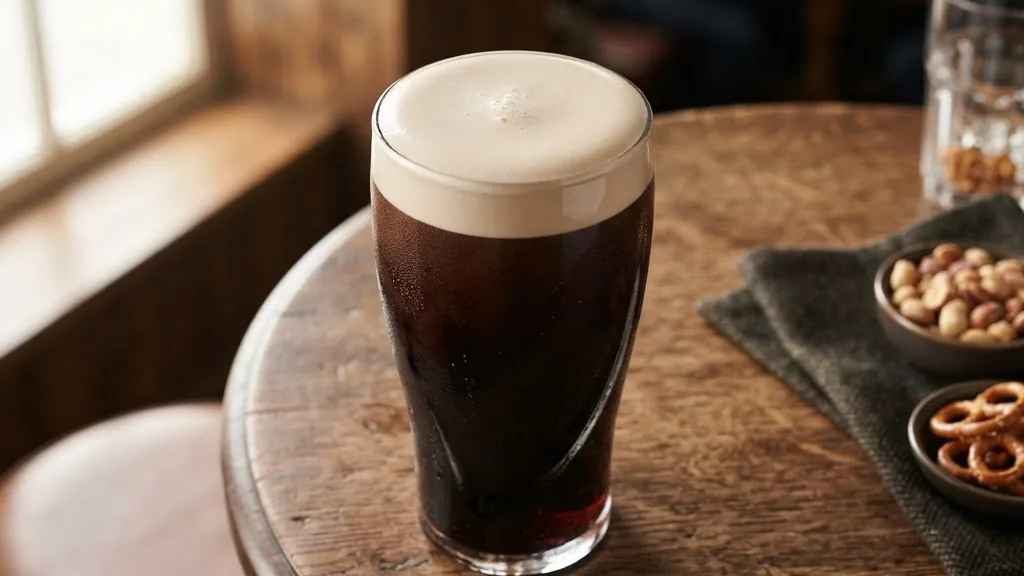
Guinness beer nutrition info surprises almost everyone who looks it up: a 12-ounce serving of Guinness Draught carries about 126 calories, 10 grams of carbohydrate, 0.3 grams of protein, zero fat, and 4.2 percent alcohol by volume, per Guinness brand data and USDA FoodData Central. That is fewer calories than a Budweiser and roughly half of what a big IPA pours. The most common mistake with beer labels is judging a beer’s calories by its color. The darkest beer at the bar is one of the lighter ones on paper, the same wrapper-versus-contents lesson our Blue Moon nutritional content breakdown teaches from the other direction.
The Draught label, line by line
Beer is not required to carry a full FDA nutrition panel, so the numbers below combine Guinness’s published brand data (guinness.com) with the USDA FoodData Central dark-beer entries (fdc.nal.usda.gov) for a 12-ounce serving of Draught.
| Nutrient | Per 12 oz Draught | Context |
|---|---|---|
| Calories | 126 | – |
| Carbohydrate | ~10 g | 4 cal/g |
| Alcohol | ~11.8 g (4.2% ABV) | 7 cal/g |
| Protein | 0.3 g | trace |
| Fat | 0 g | none |
| Sugar | <1 g residual | fermented out |
Two lines organize everything else. The alcohol line is the quiet one, because it never appears on any label, yet at 7 calories per gram it is the beer’s main energy source. And the sugar line is nearly empty: fermentation converts the malt sugars into that alcohol, leaving mostly unfermentable dextrins behind in the carb count. A stout tastes rich for reasons that have nothing to do with sugar content.
Pint math: 12 oz vs the pub pour
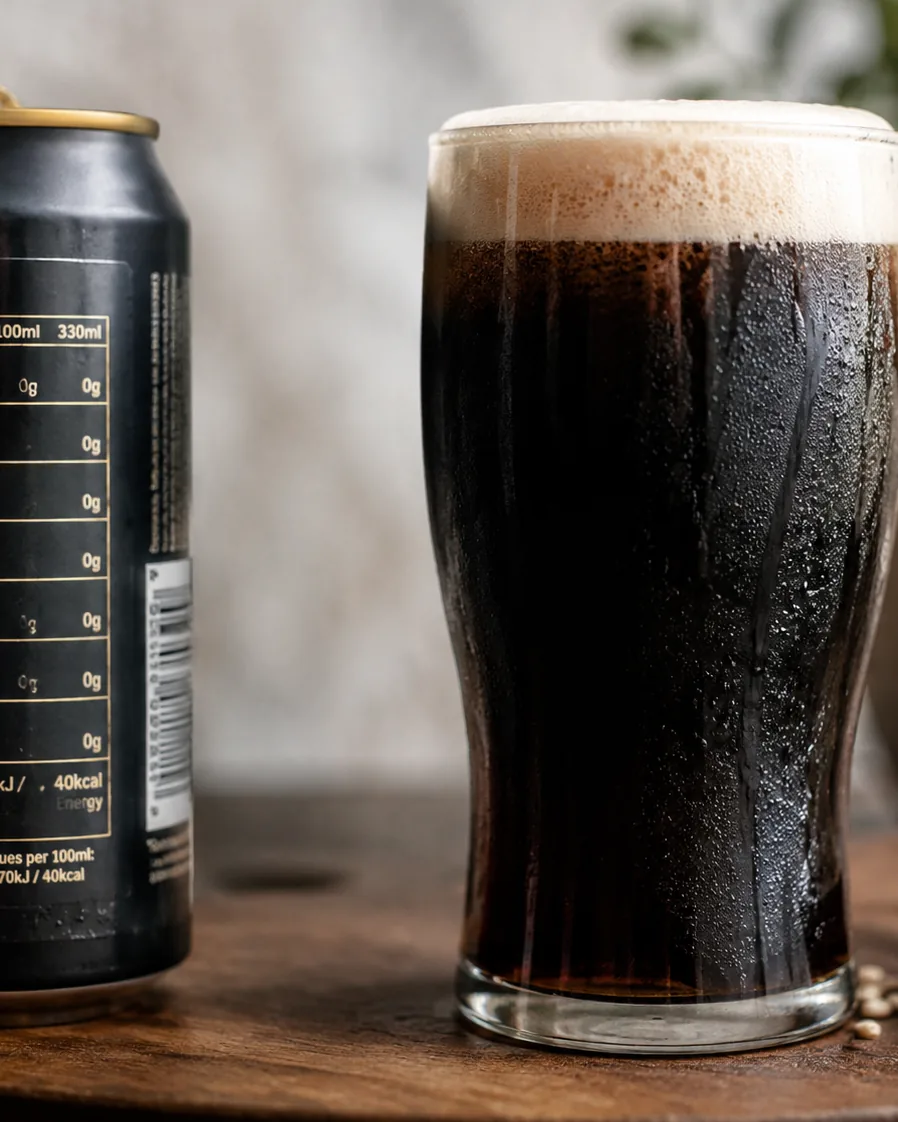
Almost every published beer number describes 12 ounces, and almost nobody drinks Guinness in 12-ounce units. The pub pint is 16 ounces, and the iconic Draught can is 14.9 ounces. Scaling the 126-calorie baseline gives the honest serving sizes.
- 12 oz reference: 126 calories
- 14.9 oz can: ~155 calories
- 16 oz pub pint: ~168 calories
- Two pub pints: ~336 calories, about a fast-food cheeseburger
Convert bar servings into label servings and the 12-ounce convention consistently flatters every beer by 25 to 33 percent against a real pint. The number worth remembering for Guinness is 168, not 126, because the glass in your hand is a pint.
Where beer calories actually come from
Here is the calculation nutrition databases never show, and it is the single most useful piece of beer math there is. Alcohol carries 7 calories per gram; carbohydrate carries 4. A 12-ounce Guinness Draught at 4.2 percent ABV holds roughly 11.8 grams of pure alcohol.
The math: 11.8 g alcohol x 7 cal/g = ~83 calories, and ~10 g carbs x 4 cal/g = ~40 calories. Alcohol supplies about two-thirds of the beer’s 126 calories. Color supplies none of them.
This one calculation explains the entire stout paradox. Guinness is dark because a small fraction of its barley is roasted almost to charcoal, and roast is pigment, not energy. Calories in beer track ABV nearly linearly, which is why a pale 7 percent IPA outweighs a black 4.2 percent stout by 60 to 90 calories a glass. Line up beers’ ABV against their published calories and the correlation is tight: ABV alone predicts calories within about 10 percent for almost any non-dessert beer.
The variety table: Draught to Guinness 0
Guinness is a family of recipes, and the gaps between them are bigger than the gap between Draught and its competitors. Per 12 ounces, using brand data:
| Variety | Calories (12 oz) | ABV | Note |
|---|---|---|---|
| Guinness 0 (non-alcoholic) | ~55-65 (~70-80 per can) | 0.0% | alcohol removed |
| Draught | 126 | 4.2% | the nitro classic |
| Extra Stout | ~149 | 5.6% | the original bottling |
| Foreign Extra Stout | ~176 | 7.5% | the export strength |
Read the table against the alcohol math above and it behaves exactly as predicted: every step up in ABV drags calories with it, from 55 to 176, same brand, same color, tripling the count. Guinness 0 makes the cleanest case, because removing the alcohol removes roughly two-thirds of the calories while the carbs stay. Anyone choosing by calories is really choosing by ABV, whatever the label art suggests.
The famous nitrogen widget deserves its sentence: nitrogenation builds the creamy cascade and the dense head, and it contributes exactly zero calories. The texture that makes Draught feel like a meal is gas physics, not nutrition.
Guinness vs other beers
Per 12 ounces, using manufacturer and USDA figures, the bar lineup looks like this.
| Beer | Calories (12 oz) | ABV |
|---|---|---|
| Bud Light | ~110 | 4.2% |
| Guinness Draught | 126 | 4.2% |
| Budweiser | ~145 | 5.0% |
| Blue Moon | ~168 | 5.4% |
| Typical IPA | ~180-220 | 6.5-8% |
The placement people do not expect: Guinness Draught sits 16 calories above the flagship light beer, at identical ABV, and comfortably below every regular lager and ale on the list. The reaction to this table is usually the same, because thirty years of “meal in a glass” branding built an intuition the label flatly contradicts. If the darkest beer on the menu is your lowest-calorie non-light option, the color rule is dead.
Three Guinness myths, retired
The first myth: Guinness is good for you because of the iron. A pint carries roughly 0.3 milligrams of iron against a daily value of 8 to 18 milligrams, a rounding error. The belief traces to the 1920s “Guinness is Good for You” advertising campaign and its hospital-era afterlife, not to any modern label. It was marketing then; it is nostalgia now.
The second myth: dark means heavy. Covered above, but worth the plain restatement: roasted barley colors the beer the way a drop of ink colors water, with negligible caloric freight. ABV, not shade, sets the calorie count.
The third myth: the creaminess means cream, or at least richness. There is no dairy, no fat, and under a gram of residual sugar in a Guinness. The mouthfeel is nitrogen bubbles, which are smaller and denser than carbon dioxide bubbles. The overlooked detail in every Guinness conversation is that the sensory richness and the nutritional lightness are the same fact wearing two costumes.
Carbs, keto, and gluten
For carb-counters, Guinness Draught’s roughly 10 grams per 12 ounces, call it 13 grams per pint, is mid-pack: more than a 2 to 3 gram light beer, less than many craft ales. On strict keto, where the day’s budget is 20 to 30 grams, one pint spends close to half of it; the usual keto answer is spirits with zero-carb mixers, the territory our Tito’s nutritional value page covers. By carbs alone, Guinness is a sometimes-beer for keto, not a staple.
Worth knowing: Guinness is brewed from barley and is not gluten free, and the brand does not market a gluten-removed version. Celiac drinkers need a dedicated gluten-free beer, not a low-carb one; the two labels solve different problems.
One honest nuance belongs here: alcohol pauses fat oxidation while the body clears it, regardless of the carb count. While the liver processes those 11.8 grams of ethanol, it deprioritizes burning stored fat, a queue-jumping effect that applies to every alcoholic drink at every carb level. A low-carb beer is not a metabolic free pass; it is just a smaller deposit into the same account, and the account still settles in standard drinks. For anyone running a strict cut, the cleanest reading of this label is that the carbs are negotiable and the alcohol never is.
The standard-drink math
A standard US drink is 0.6 ounces, about 14 grams, of pure alcohol, per the NIAAA definition (niaaa.nih.gov). A 12-ounce Guinness Draught at 4.2 percent holds about 11.8 grams, slightly under one standard drink; a 16-ounce pint holds about 15.7 grams, slightly over. Call a pint one standard drink and a strong hand pour a bit more.
The CDC’s moderate-drinking guidance draws the line at one drink or fewer per day for women and two or fewer for men (cdc.gov). Against those lines, Foreign Extra Stout changes the count: at 7.5 percent, a single 12-ounce bottle is 1.3 standard drinks, and a pint of it is 1.75. The variety table above is also a pacing table, which is the most practical way to read it.
The label Guinness does not print
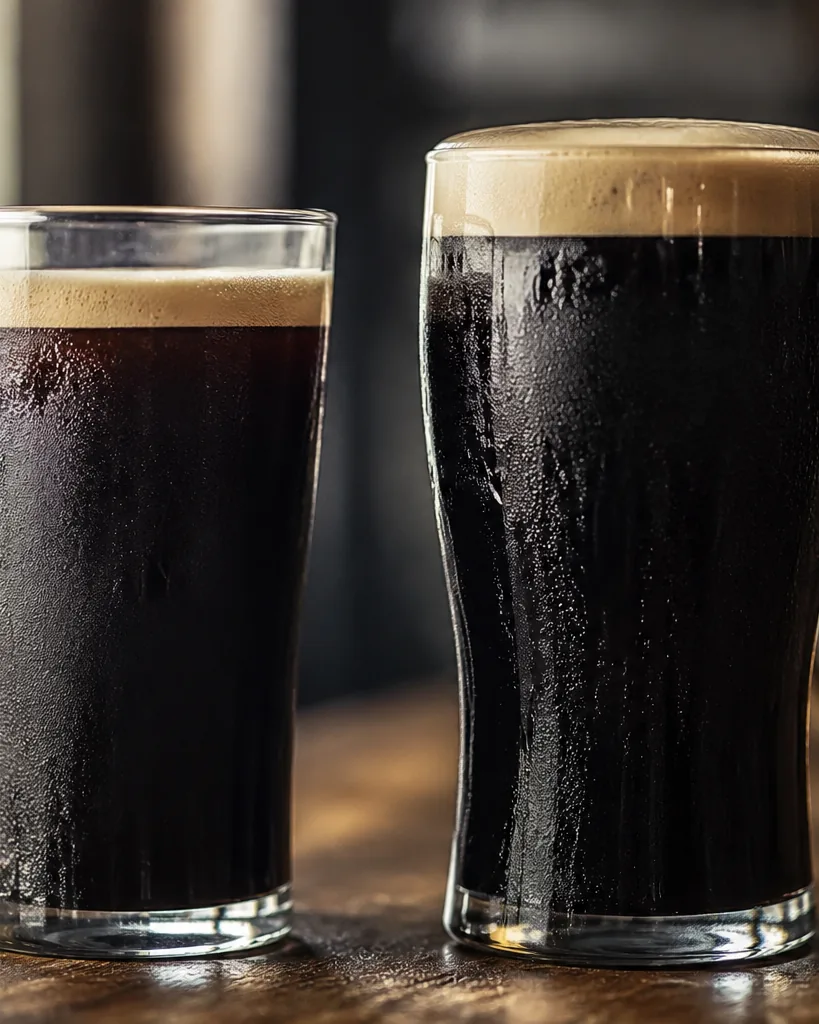
A fair question hides under this whole page: why does a can of soda carry a full nutrition panel while a can of stout carries almost nothing? The answer is jurisdictional. Beer is regulated by the Alcohol and Tobacco Tax and Trade Bureau, not the FDA, and TTB rules make nutrition labeling voluntary for most alcoholic drinks. Brands publish numbers on their websites, as Guinness does, but the can itself is only required to state alcohol content and standard warnings.
The practical consequence is that every beer-calorie figure you have ever read, including the ones on this page, is a manufacturer disclosure or a laboratory average rather than a regulated panel. According to USDA FoodData Central, generic dark-beer entries cluster within a few calories of Guinness’s published 126, which is reassuring, but the habit worth building is checking the brand’s own published data whenever a number matters to you. Beverage figures vary across brand sites and databases, so any beer number without a named source is best treated as folklore.
How the brewery sets these numbers
The calorie count is decided in the fermentation tank, not the marketing department, and the process explains the stout paradox better than any table. Brewers start with malted barley whose sugars feed the yeast; the more sugar fermented, the more alcohol and the more calories. Guinness Draught starts from a relatively low-gravity wort, which is the technical reason it finishes at a modest 4.2 percent ABV and 126 calories while tasting enormous.
The taste-size illusion has two mechanical parts. The roasted barley, under 10 percent of the grain bill, delivers the near-black color and the coffee edge while contributing almost no fermentable sugar. And the nitrogen dispense, about 75 percent nitrogen to 25 percent carbon dioxide, builds the dense creamy head that reads as richness on the tongue. Color from roast, texture from gas, calories from alcohol: three separate levers, and only the third one shows up on a calorie counter.
Brewery spec sheets show how little the recipe drift matters: Draught’s published numbers have held within a few calories for decades, because the gravity and ABV targets are fixed points of the brand. The beer is engineered to be exactly this size.
Session math: the St. Patrick’s audit
One pint is a number; an evening is a multiplication, so here is the honest session table. Two pub pints of Draught are about 336 calories and 2 standard drinks, a full CDC day for men in one sitting. Three pints reach roughly 504 calories, about the calorie load of a fast-food burger, and 3 standard drinks. A four-pint session crosses 670 calories, a quarter of a 2,000-calorie day, drunk rather than eaten.
The pacing reading matters more than the calorie reading. At roughly one standard drink per pint, the body clears about one pint per hour; a three-pint evening is a three-hour commitment or a rising blood alcohol curve, whichever you choose. The most common mistake on stout holidays is pacing by fullness, and Guinness’s low carbonation makes it drink faster than its reputation suggests. Pace by the clock and the count, not by the stomach.
What a pint contributes to a day
Placed against a 2,000-calorie day, one 16-ounce pint of Guinness Draught looks like this.
- Calories: ~168, about 8% of the day, comparable to a large banana with peanut butter.
- Carbs: ~13 g, about 5% of a standard 275 g daily reference.
- Protein, fat, sugar: effectively zero, zero, and under a gram.
- Micronutrients: traces of B vitamins and minerals from barley, none at meaningful daily-value levels.
- Alcohol: ~15.7 g, one standard drink, the line that actually matters for health guidance.
The label’s verdict is almost boring: Guinness is a moderate-calorie, low-carb, zero-fat drink whose only nutritionally significant ingredient is the alcohol itself. The health question about Guinness was never a food question; it is a drinking question, and the CDC lines answer it better than any nutrition panel.
Frequently asked questions
How many calories are in a Guinness?
About 126 per 12 ounces of Draught, 155 per 14.9-ounce can, and 168 per 16-ounce pub pint. Extra Stout runs about 149 per 12 ounces and Foreign Extra about 176.
Is Guinness lower in calories than regular beer?
Yes, against most of the shelf. Budweiser carries about 145 calories per 12 ounces and typical IPAs 180 to 220, versus Guinness Draught’s 126. Only light beers, around 110, come in under it.
How many carbs are in a Guinness?
About 10 grams per 12 ounces of Draught, roughly 13 grams in a pint. Most of the beer’s calories come from its 11.8 grams of alcohol at 7 calories per gram, not from carbohydrate.
Is Guinness gluten free?
No. Guinness is brewed from barley, a gluten grain, and no gluten-removed version is sold. Celiac and gluten-sensitive drinkers should choose a certified gluten-free beer instead.
Is Guinness 0 actually low calorie?
Yes. At roughly 70 to 80 calories per 14.9-ounce can, Guinness 0 carries about half the calories of the alcoholic Draught, because removing the alcohol removes the beer’s main energy source.
Does Guinness have more calories than wine?
Per serving, barely. A 16-ounce pint of Draught runs about 168 calories against roughly 120 to 125 for a 5-ounce glass of wine, but the pint is also three times the volume and a comparable alcohol dose. Ounce for ounce, wine is more than twice as caloric as Guinness; serving for serving, the two drinks land within 45 calories of each other. As with every comparison on this page, the alcohol grams, not the drink category, set the count.
About the author and sources
Tastybend Nutrition Desk writes nutrition label breakdowns for TastyBend, working directly from manufacturer data, USDA FoodData Central entries, and federal health guidance. This page draws its figures from Guinness brand nutrition data for Draught, Extra Stout, Foreign Extra, and Guinness 0, USDA FoodData Central beer entries, NIAAA standard-drink definitions, and CDC moderate-drinking guidance. Where published figures vary slightly by market, the text shows the US numbers.
This article explains label information and is not medical advice. Alcohol carries health risks at any intake level for some people; pregnant readers and anyone managing a medical condition should consult a physician about drinking.