A single 591 mL bottle of the sugared line carries 120 – 130 calories and 31 – 33 grams of sugar, per the manufacturer’s own statement. That one figure settles most of what a shopper needs to know, and it is the first thing the generic coverage tends to blur by quoting a per-serving row instead of the whole container. These vitamin water nutrition facts split cleanly along one line: whether the bottle in your hand is sweetened with cane sugar or with stevia and erythritol. This desk aggregates manufacturer declarations, brand menus, and public food databases into one reference, and the numbers below come straight from those panels.
Because serving-size conventions have changed and reference amounts differ across sources (per 8 fl oz, per 500 mL, per 591 mL bottle), raw numbers from two labels are not directly comparable unless you first check the basis each one uses. We state the basis every time.
The Answer Block: Calories and Sugar in a Bottle of Vitamin Water
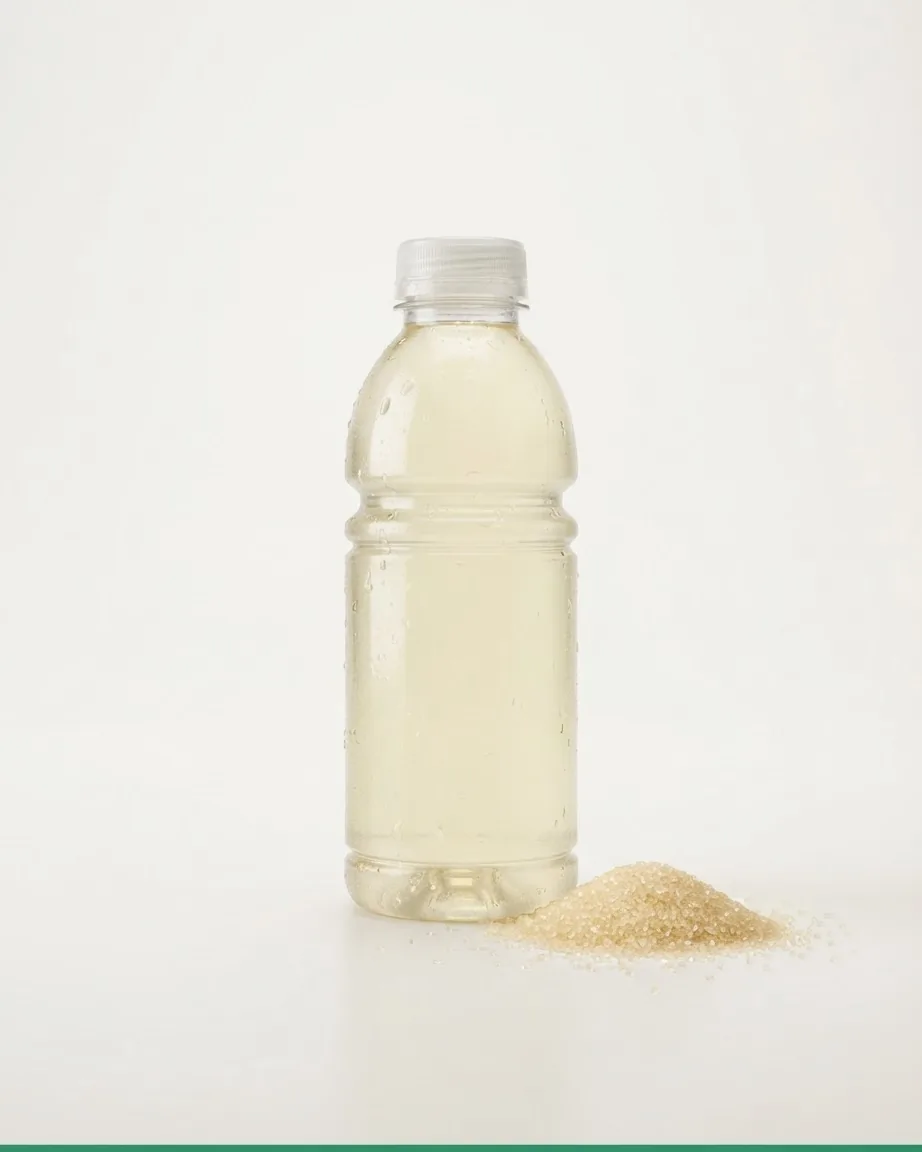
For the sugared line (mega c, focus, essential, energy, multi-v, restore, shine, xxx), a 591 mL bottle holds 120 – 130 calories and 31 – 33 grams of sugar, all from cane sugar. Healthline puts a 20 fl oz bottle at about 120 calories and 32 grams of sugar. The zero-sugar line (shine zero, squeezed, rise, xoxox) lands at 0 calories and 0 – 1 g sugar, sweetened with stevia leaf extract and erythritol. A full sugared bottle supplies 50 – 100% of the recommended upper limit for added sugar. Fat and protein read 0 g across every flavor. Which bottle you grab decides everything here.
Calories and Sugar Per Bottle in the Sugared Line
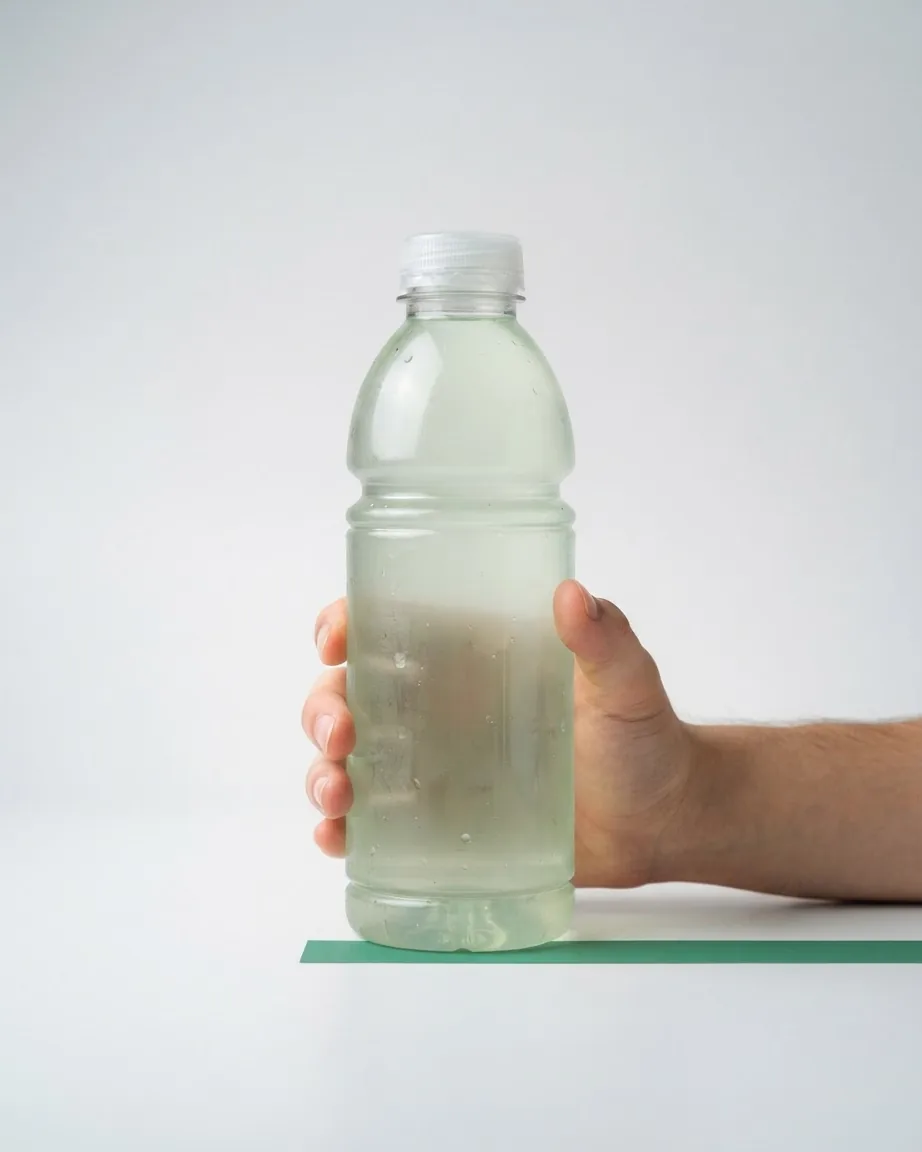
The Coca-Cola Company states on its Canadian FAQ that the sugared varieties “use cane sugar to deliver a great tasting product with 120-130 calories and 31-33 grams of sugar per 591ml bottle.” That range covers mega c, focus, essential, energy, multi-v, restore, shine, and xxx. The spread exists because sugar and calorie content differ by flavor; no single number applies to all of them.
Healthline, analyzing a 20 fl oz (591 mL) bottle, reports about 120 calories and 32 grams of sugar, which it frames as “about 50% less than a regular Coke.” That lands inside the manufacturer’s own 120 – 130 cal / 31 – 33 g band, so the two sources corroborate rather than conflict. For a drink positioned next to bottled water on the shelf, 32 grams is close to what a soda delivers, not a splash on top of water.
HowStuffWorks adds the soda comparison with real numbers: “an entire bottle contains about 32.5 grams of sugar. For the sake of comparison, a can of Coca-Cola Classic contains about 39 grams of sugar.” So a full sugared bottle runs most of the way to a Coke can’s sugar, not a fraction of it.
Why a Full Sugared Bottle Hits 50 – 100% of Your Added-Sugar Limit
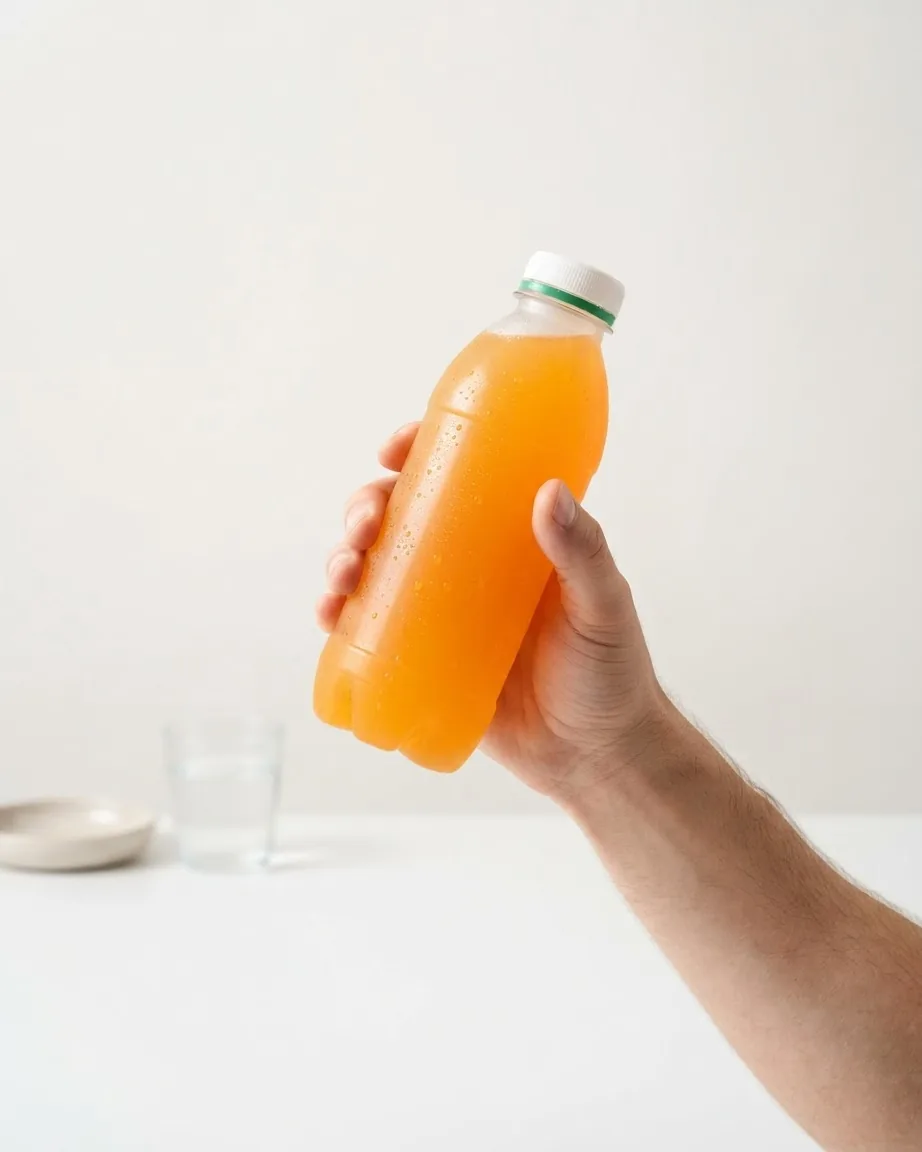
Here is the number a per-serving row hides. Healthline notes that “as one bottle of Vitaminwater supplies 32 grams of added sugar, that’s 50-100% of your recommended upper limit.” The site also lays out the guidance behind that claim: keep added sugars under 10% of total daily calories, “preferable less than 5%.”
The practical read: on a tighter 5% budget, one sugared bottle can run past the whole day’s allowance for added sugar; on the looser 10% ceiling, it still eats roughly half. That is the decision point the sugared line forces. If you drink one for the vitamins, you are buying that load along with them.
Zero-Sugar Vitamin Water: What Stevia and Erythritol Change
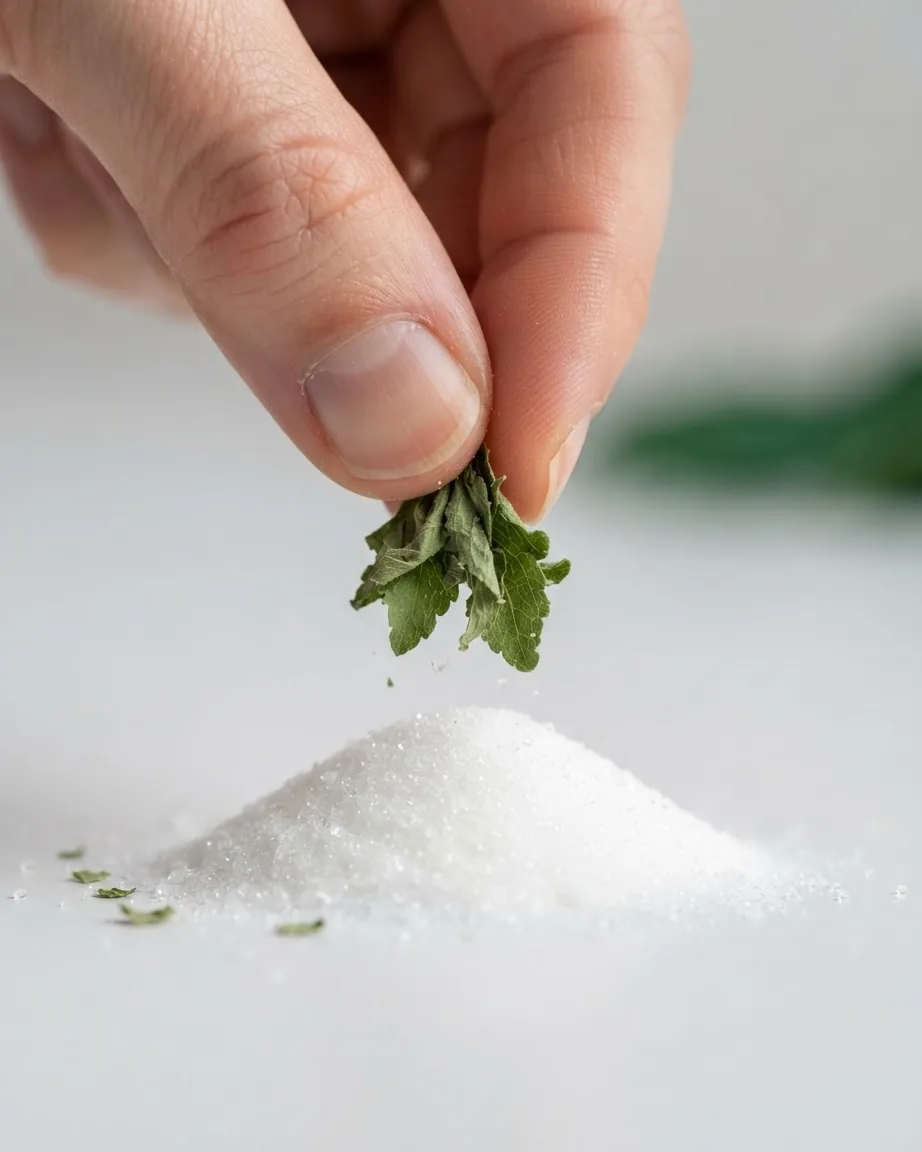
The zero line is a different drink on the panel. Coca-Cola states that “vitaminwater shine zero, squeezed and rise are sweetened with a combination of stevia leaf extract and erythritol,” and that these “have zero calories and 0-1g of sugar.” The xoxox variety sits slightly apart: Coca-Cola lists it as “sweetened with a combination of stevia leaf extract, fructose and erythritol; they have zero calories and 0-1g of sugar.”
The Environmental Working Group’s captured panel for Vitaminwater Zero Squeezed Lemonade backs this at the ingredient level, listing “reverse osmosis water, less than 1% of: erythritol and stevia leaf extract (as natural sweeteners),” with 0 calories, 0 g sugar, and 5 g total carbs per 20 fl oz. For a reader cutting sugar, the zero line is the correct pick, and the squeezed, shine zero, rise, and xoxox names are how you find it.
The Ingredient Order That Complicates “100% Cane Sugar”
The sugared line is marketed around cane sugar, but the ingredient order on at least one flavor tells a fuller story. EWG’s captured panel for Vitaminwater Power-C Dragonfruit lists “reverse osmosis water, crystalline fructose, less than 0.5% of: vitamins c, b5, b6, b12,” with cane sugar appearing further down the list. Ingredients are declared by weight, so crystalline fructose outweighs cane sugar in that particular flavor.
That Power-C Dragonfruit panel also reports 90 calories and 23 g total carbs per 500 mL. Note the basis: 500 mL, not the 591 mL bottle Coca-Cola and Healthline quote. The same product family reads differently depending on the reference amount printed, which is exactly why two “vitamin water” numbers can both be right and still disagree.
Serving Size: Why 2.5 Servings Became 1
This is where older coverage and current labels split, and the gap is worth understanding before you trust any per-serving row. HowStuffWorks describes an earlier label where “Glacéau has listed one bottle of Vitaminwater as 2.5 servings.” On that convention, “there are 13 grams of sugar in one serving, so an entire bottle contains about 32.5 grams of sugar.” The headline 13 g was never the bottle; it was two-fifths of it.
Current labeling treats the whole container as one serving. EWG’s captured Zero Squeezed Lemonade panel reads “1.0 servings per container” for the 20 fl oz bottle. True Citrus, a competing-brand blog, makes the same point about reading serving size before sugar grams. So if you find an old 13 g figure, multiply by 2.5 to reach the bottle; a current label already gives you the full-bottle number in one row.
EatThisMuch adds a third reference amount for the aggregated sweetened product: per 8 fl oz, it logs 52 calories, 13 g carbs, and 13 g sugar, with a macro split of “100% carbs, 0% fat, and 0% protein.” Three sources, three bases: 8 fl oz, 500 mL, and 591 mL. Convert nothing by eye; match the basis first.
The Added Vitamins: Percent DV Per Serving
The vitamins are the selling point, so here is what one serving actually supplies. Per 8 fl oz, EatThisMuch reports the sweetened product as “a good source of vitamin b12 (25% of your Daily Value), vitamin c (33% of your Daily Value), and vitamin e (30% of your Daily Value).” Those are real contributions on paper.
Whether you need them is a separate question. True Citrus notes that “most people already get B vitamins through everyday foods like grains, meats and vegetables.” That comes from a competing-brand blog, so weigh it accordingly, but the logic is simple: if your diet already covers B12 and C, the added vitamins in a sugared bottle arrive attached to 31 – 33 grams of sugar you may not want. The zero line delivers the vitamin content without that trade.
Vitamin Water vs. Coca-Cola, Side by Side
The cleanest comparison is sugar per container, matched at similar volumes. A sugared bottle runs about 32 – 32.5 grams of sugar; a can of Coca-Cola Classic runs about 39 grams. Vitamin water comes in lower on sweetness, but not by the margin “water” in the name suggests.
- Sugared vitamin water, 591 mL bottle: 120 – 130 cal, 31 – 33 g sugar (Coca-Cola CA); ~120 cal, ~32 g sugar per 20 fl oz (Healthline).
- Vitamin water “charge,” per bottle: ~32.5 g sugar, from 13 g per serving × 2.5 servings (HowStuffWorks, older label).
- Coca-Cola Classic, one can: ~39 g sugar (HowStuffWorks).
- Zero-sugar vitamin water, per bottle: 0 cal, 0 – 1 g sugar (Coca-Cola CA).
Vitamin Water Nutrition Facts Table, By Basis
Every row below carries its reference amount and source, because the basis is what makes these numbers usable. Protein and fat read 0 g throughout. For the wider category, see our drinks reference.
| Item | Value |
|---|---|
| Sugared line, 591 mL bottle (Coca-Cola CA) | 120 – 130 calories, 31 – 33 g sugar, cane sugar, 0 g fat, 0 g protein. |
| Sugared, 20 fl oz bottle (Healthline) | ~120 calories, ~32 g sugar. |
| Sweetened, per 8 fl oz (EatThisMuch) | 52 calories, 13 g carbs, 13 g sugar, 0 g fat, 0 g protein; 33% DV vitamin C, 25% DV vitamin B12, 30% DV vitamin E. |
| Power-C Dragonfruit, per 500 mL (EWG) | 90 calories, 23 g total carbs; first ingredients reverse osmosis water, crystalline fructose. |
| Zero Squeezed Lemonade, 20 fl oz (EWG) | 0 calories, 0 g sugar, 5 g total carbs, 1.0 servings per container; erythritol and stevia leaf extract. |
| Zero line – shine zero, squeezed, rise, xoxox (Coca-Cola CA) | 0 calories, 0 – 1 g sugar. |
For other panels where the serving row and the package total diverge the same way, see our tonic water nutrition facts and the Frosted Flakes breakdown.
A Note on Label Changes and Loyalty Numbers
Figures carry a date. The 2.5-servings convention belongs to an older label era; the 1.0-servings-per-container reading reflects current panels. Published values can shift when a brand changes a recipe without announcing it, so a panel is a snapshot of what was declared, not a permanent guarantee. One current brand-program detail worth knowing: Coca-Cola’s US loyalty reward is “awarded as 24 drinks per month (or the equivalent) for 12 months,” which is a marketing figure, not a nutrition one, but it tells you the brand expects a bottle-a-day habit. Over 12 months, that habit multiplied by 31 – 33 grams of sugar is the real question behind these facts.
What One Whole Bottle Actually Delivers in Vitamins
The vitamins are the reason people reach for this drink, but the widely cited %DV figures are listed per 8 fl oz – and the bottle isn’t 8 fl oz. EatThisMuch logs 33% DV vitamin C, 25% DV vitamin B12, and 30% DV vitamin E for an 8 fl oz serving. HowStuffWorks notes the bottle has been counted as 2.5 servings of that size, which is also simply how a 20 fl oz (591 mL) bottle divides into 8 fl oz pours (20 ÷ 8 = 2.5). Multiply the row by 2.5 and you get what the whole container actually supplies:
- Vitamin C: 33% × 2.5 = 82.5% DV per bottle
- Vitamin E: 30% × 2.5 = 75% DV per bottle
- Vitamin B12: 25% × 2.5 = 62.5% DV per bottle
So a single sugared bottle isn’t a quarter of your vitamin C – it’s most of a day’s worth. The catch is that in the sugared line those vitamins arrive bundled with the full bottle’s 31 – 33 g of sugar, while the zero line carries the same vitamin content without it.
FAQ
Does the zero-sugar line really have no carbs?
Not exactly. EWG’s panel for the Squeezed Lemonade zero variety shows 5 g total carbs per 20 fl oz despite 0 g sugar. Those grams are the erythritol sweetener, a sugar alcohol that counts as carbohydrate on the label but contributes none of it and essentially no calories. So a “zero sugar” bottle can still print a small carb figure.
Which sugared flavor has the most sugar?
No source enumerates every flavor, so a complete ranking is not available. The manufacturer gives a band of 31 – 33 g per 591 mL across the sugared varieties, and True Citrus confirms sweetness differs by flavor. For a specific SKU, read that bottle’s own panel; the band tells you the ceiling, roughly 33 g, but not which name sits at it.
Is an old 13-gram sugar figure wrong?
It is not wrong, just mislabeled by basis. That 13 g reflects one 8 fl oz serving when a bottle counted as 2.5 servings. Scale it to the full container and you reach about 32.5 g, matching the current whole-bottle figure. Always check servings per container before trusting any such number off an older panel.
Is sugared vitamin water a healthier swap for soda?
On sugar alone, a bottle at roughly 32 g undercuts a 39 g Coke can, and Healthline frames it as about 50% less than regular Coke at a 20 fl oz comparison. But one bottle still covers 50 – 100% of the recommended added-sugar ceiling. The zero line removes that trade entirely while keeping the added vitamins.