A 19.2-ounce Clawtails can and a 12-ounce Clawtails can both carry the same calorie line at the retailer: 150 calories per serving. The words “per serving” carry weight here, because none of the cited US listings state how many ounces a serving holds. Most clawtails nutrition facts passed around online quote that single number as if it described a whole can, which the 19.2-ounce listing never says. This desk assembles the published figures from manufacturer declarations, brand product pages, and retailer listings into one reference table, and keeps the confirmed numbers separate from the ones that only circulate.
Clawtails nutrition facts, in short: US cans run 7% ABV and 150 calories per serving across the 12-ounce and 19.2-ounce Strawberry Cosmo and Mango Margarita formats. The serving volume behind that 150-calorie figure is undefined on the cited pages, so the 19.2-ounce can should not be read as a single 150-calorie pour. White Claw confirms no artificial sweeteners, no caffeine, and no sulfites, and flags possible trace gluten. Exact sugar, carbohydrate, and sodium grams are not published by the brand; values near 2 to 3 g of sugar trace back to third-party trackers, not a label.
What “Per Serving” Hides on the 19.2-Ounce Can
The 150-calorie figure comes off US retailer listings worded the same way across sizes. BevMo! lists the 19.2-ounce Strawberry Cosmo at 7% ABV with “150 calories per serving, low sugar, lightly sparkling,” and the same retailer describes the 12-ounce variety pack at 7% ABV with the identical calorie phrasing. A 19.2-ounce can is a large-format container. Reading its “per serving” line as the can total understates what a full pour contains, since the page never equates one serving with the full 19.2 ounces.
The 12-ounce can sits closer to a single-serve format, so for that size the per-serving line and the per-can total are plausibly the same – plausibly, because no cited White Claw or retailer page pairs the serving size with the calorie count in writing. Treat the 150-calorie number as confirmed for a serving and unconfirmed as a whole-can figure on the 19.2-ounce size. Both US formats hold 7% ABV, and both require buyers to be 21 years or older at the retailer.
Clawtails Nutrition Facts: the Macro Line, and What the Panel Won’t Confirm
Split the macro line into what the brand confirms and what only circulates. White Claw’s product page confirms the 7% ABV, the “made with real fruit juice, lightly sparkling” identity, and the absence of artificial sweeteners. BevMo! adds the 150-calorie-per-serving line and the “low sugar” descriptor. Protein and fiber grams appear on no cited US source. Fat, carbohydrate, sugar, and sodium grams are not published by White Claw either; the numbers people quote come from third-party food-tracking databases and a retailer Q&A.
Those circulating figures put a US Mango Margarita near 2 g carbohydrate, 2 g sugar, 0 g fat, and 20 mg sodium per 12-ounce can, with sugar across flavors reported around 2 to 3 g per 12-ounce can. None of that carries a manufacturer label behind it, so hold it loosely. “No artificial sweeteners” and “low sugar” both describe the product without making it sugar-free; the first speaks to what is absent, the second is a relative claim with no gram value attached. See also: our Oikos yogurt guide.
| Line | US 12oz / 19.2oz (per serving) | Source status |
|---|---|---|
| Calories | 150 calories | Retailer listing (BevMo!) |
| ABV | 7% | White Claw / BevMo! |
| Fat | 0 g | Third-party tracker, not label |
| Carbohydrate | 2 g | Third-party tracker, not label |
| Sugar | 2 – 3 g per 12-ounce can | Third-party tracker, not label |
| Sodium | – | Third-party tracker, not label |
| Protein | Not published | – |
| Fiber | Not published | – |
| Caffeine | 0 | White Claw support |
US at 7% and 150 Calories vs the UK Can at 6% and 130
A reader who finds a 130-calorie figure online may be looking at a different product entirely. White Claw UK sells Clawtails as a 250 mL can balanced at 6% alcohol by volume – a separate formulation from the US line. Wm Morrisons Supermarkets Limited lists the UK 250 mL Strawberry Cosmo at 130 calories and 6% ABV per can. Note what the UK listing does that the US one does not: it states calories against a defined container, the 250 mL can, rather than an undefined serving.
So the two markets give you different numbers for different cans. US: 7% ABV, 150 calories per serving, 12-ounce and 19.2-ounce formats. UK: 6% ABV, 130 calories per 250 mL can. Applying the UK 130-calorie figure to a US 12-ounce or 19.2-ounce can mixes two products that share a name and little else on the panel. Keep them in separate columns. For a wider look at how beverage panels report their numbers, see our drinks and beverages section, and our evaporated milk breakdown.
Malt Beverage, Trace Gluten, No Caffeine – the Ingredient Questions
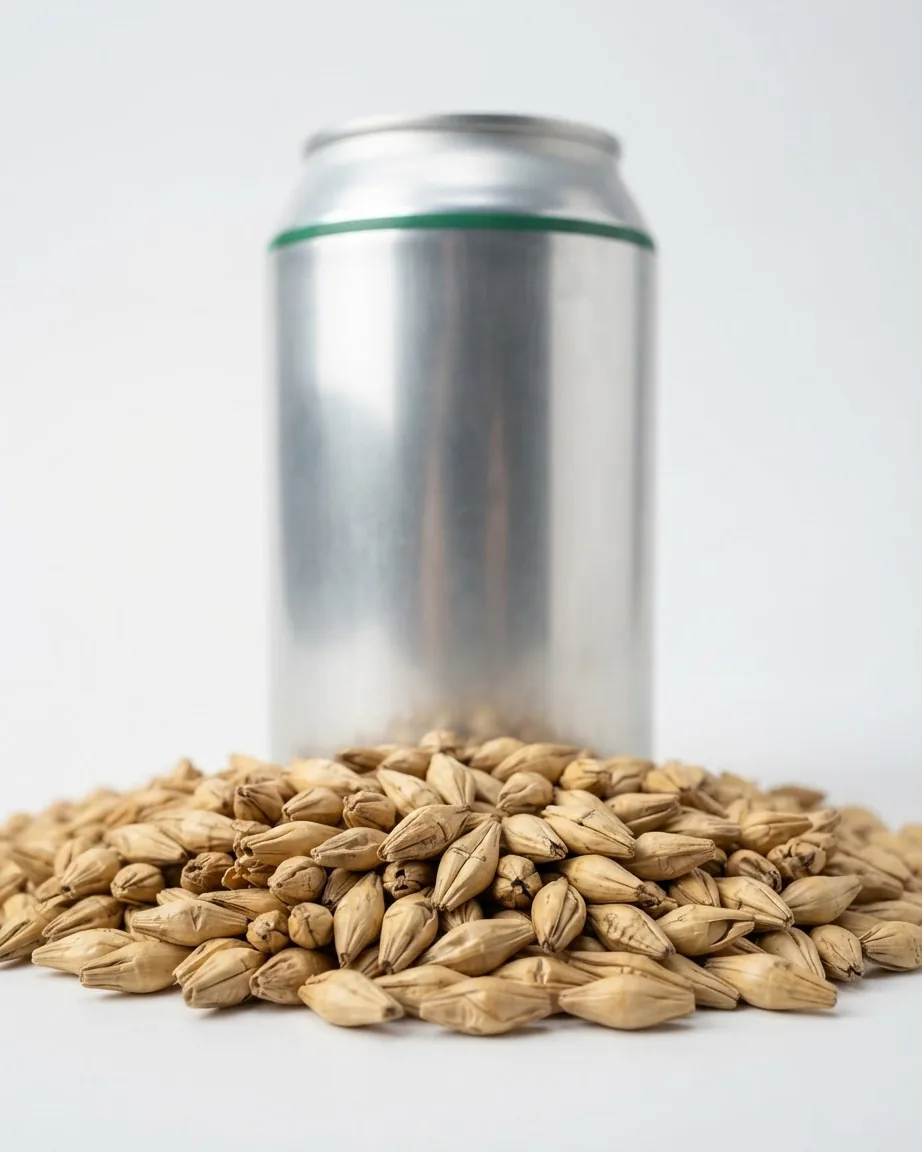
Clawtails reads like a hard seltzer, which drives the common assumption that it carries the seltzer line’s gluten-free positioning. It does not. White Claw’s US support pages describe Clawtails as a premium malt beverage – the alcohol base is malt, not vodka or tequila. Because the base is malt, the gluten support page states the drink “should not be consumed by persons with gluten sensitivity” and may contain trace amounts of gluten.
Allergen warning
The other ingredient answers are cleaner. White Claw confirms Clawtails contain no caffeine, no sulfites, and no artificial sweeteners. For anyone with celiac disease or a gluten sensitivity, the malt base is the line that matters; the seltzer resemblance does not change it.
Does One Can Count as a Standard Drink?
At 7% ABV, a single can carries more alcohol than a casual “one drink” count assumes. The National Institute on Alcohol Abuse and Alcoholism (NIAAA), part of the National Institutes of Health, defines one US standard drink as about 14 grams of pure alcohol, and gives 8 to 10 fluid ounces of a roughly 7%-ABV flavored malt beverage as a single standard drink.
Line that up against the cans. A 12-ounce Clawtails at 7% ABV sits above the 8-to-10-ounce window NIAAA ties to one standard drink. A 19.2-ounce can at the same strength sits well above it. The figure to anchor on is the 14 grams of pure alcohol per standard drink, which is defined by alcohol content rather than by can size – a point BevMo!’s “150 calories per serving” line, framed around calories, does not address.
How Many Standard Drinks Is One Can, by NIAAA’s Own Yardstick
NIAAA puts 8 to 10 fluid ounces of a roughly 7%-ABV flavored malt beverage at one US standard drink. Both US Clawtails cans are 7%-ABV flavored malt beverages, so dividing each can’s volume by that same 8-to-10-ounce window – no outside numbers, just the figures already on these pages – shows how far one can sits past a single drink:
- 12-oz can: 12 / 10 = 1.2 drinks at the low end, 12 / 8 = 1.5 at the high end – so roughly 1.2 to 1.5 standard drinks.
- 19.2-oz can: 19.2 / 10 = 1.92 drinks at the low end, 19.2 / 8 = 2.4 at the high end – so roughly 1.9 to 2.4 standard drinks.
Reading either can as “one drink” undercounts. The 12-oz can is already about one and a half, and the 19.2-oz can approaches two and a half. This is a volume-to-window ratio, not a measurement of alcohol grams, so it inherits NIAAA’s own 8-to-10-ounce range rather than pinning a single value.
Frequently Asked Questions
Are Clawtails safe for a gluten-free diet?
No. The drink is built on a malt base, and White Claw’s support desk warns that trace gluten may be present and that anyone with a gluten sensitivity should skip it. Celiac disease is the specific concern here. The hard-seltzer look does not carry over to the ingredient profile, so the malt beverage classification governs rather than the seltzer association.
How much sugar does a can actually contain?
White Claw publishes no exact gram figure. The retailer descriptor reads “low sugar,” and outside trackers report roughly 2 to 3 g per 12-ounce can, which is an estimate rather than a label value. Protein and fiber grams are also absent from every cited US source, so a complete gram-by-gram panel is not available from the brand itself.
Can I treat a 19.2-ounce can as one 150-calorie serving?
Safer to assume not. The retailer wording ties 150 calories to a serving without stating its ounces, and a 19.2-ounce container is a large format. For a 12-ounce can, the serving and the can likely coincide, though no page confirms it in writing. For the 19.2-ounce size, the whole-can calorie total is unstated.
What’s the minimum age to buy Clawtails?
US retailers gate the purchase at 21 years or older, as stated on BevMo!’s listing. That is a point-of-sale requirement enforced at checkout and on delivery, where age verification applies. The rule tracks the beverage’s alcohol content at 7% ABV, which places it under the same purchase restrictions as other alcoholic drinks sold in those markets.