
Figuring out nutritional information in recipes starts with dependable nutrient data: use the nutrient data that matches the ingredient you actually used, keep raw weights paired with raw data and cooked weights paired with cooked data, total every ingredient, then divide by the servings you actually define. The practical hand method works from values per 100 g. The mistake to avoid is mixing weight bases: a cooked food can weigh less because water has left even when its calorie contribution has not fallen in the same proportion. That mismatch alone produced about a 12% undercount in the documented bread example.
The working rule is simple: trust the ingredient match and weight basis before trusting the final decimal. Use gram weights when possible, use the appropriate USDA FoodData Central entry or a package declaration, include fats that actually reach the finished food, and decide the serving count only after the full recipe total is known. Calories can be estimated closely at home; micronutrients need more caution because cooking retention and database methodology can change the result.
A Recipe Analyzer for Nutritional Information in Recipes
A useful recipe analyzer is not just a calorie counter. It is a chain of decisions: which food record matches the ingredient, whether that record describes the food raw or cooked, what weight entered the dish, what cooking changed, and how much finished food belongs to one serving. A calculator can automate the arithmetic, but those choices still determine what the result means.
Before calculating, assemble these inputs:
- The complete ingredient list, including cooking oil, greasing fat, sauces, toppings, and packaged ingredients that contribute to the finished food.
- Gram weights for ingredients whenever they are available, rather than relying on a count or volume measure that must be converted through a standard weight.
- A matching nutrient record for each ingredient, preferably the exact package declaration for a branded food or a suitable public food-database entry for a basic ingredient.
- The same preparation basis on both sides of the calculation: raw ingredient weight with raw nutrient data, or cooked weight with cooked nutrient data.
- A defined number of finished servings so the recipe total can be converted to a per-serving number.
Choose the database record before doing the math
The USDA Agricultural Research Service describes FoodData Central as containing five data types, which matters because records that look similar may come from different collection systems. Foundation Foods, Experimental Foods, SR Legacy, FNDDS, and Branded Foods are not interchangeable snapshots of one universal value. A whole ingredient and a packaged branded product may reasonably call for different record types.
Database age matters too. On the FoodData Central FAQ, USDA Agricultural Research Service states that SR Legacy was released in April 2018 and “is the final release of this data type and will not be updated.” FNDDS, by contrast, is updated every 2 years. When two analyzers select different data types or vintages, different nutrition totals do not automatically mean one has made an arithmetic error.
For a pantry ingredient, check whether the selected record describes the ingredient itself rather than a prepared version with added ingredients. For a packaged item, the branded record or package panel can be the better match. That distinction is especially useful with foods such as canned vegetables, where a reader may also want the panel-based numbers in the canned corn nutrition guide.
Keep raw weights with raw data and cooked weights with cooked data
Cooking changes food weight, especially through water gain or loss. If a recipe records a cooked weight but the analyzer applies a raw-food value per 100 g, the nutrient concentration is being applied to the wrong mass basis. The documented bread example shows the consequence: a slice can be undercounted by about 12% when the weight change is handled as though calories disappeared with the water.
For example, flour weighed before baking belongs with a flour record stated on that uncooked basis. A finished bread weight belongs with data intended for the finished bread. The decision is not “raw is better” or “cooked is better.” The reliable choice is the matching pair.
Separate calorie changes from micronutrient retention
Water loss and micronutrient loss are different problems. The USDA retention material covers 16 vitamins, 8 minerals, and alcohol across approximately 290 foods. Its retention factors are reported to the nearest 5%, and factors calculated above 100% are reported as 100%. Those rules are useful when a recipe analysis needs more than calories and macros.
The spinach material illustrates why a single cooked-food adjustment should not be invented. One worked fragment begins from 28 mg of ascorbic acid per 100 g raw spinach and applies a 0.85 retention factor. Another fragment from the same source records 8 mg per 100 g cooked spinach, but the archived extraction is incomplete. Because those fragments do not resolve cleanly, they should not be merged into one homemade correction factor.
That is the practical limit: for calories and macronutrients, match the food and weight basis closely. For vitamins and minerals after cooking, use a source that already incorporates retention or a cooked-food record rather than applying an improvised percentage.
Count the fat that reaches the finished dish
Oil used for frying and butter used to grease a pan belong in a recipe calculation when they remain in the food. Oil left in a pan or discarded with drippings should not automatically be counted as though the full starting amount was eaten. Without a measured retained amount, claiming an exact absorption figure would add precision the source data does not support.
This is one reason homemade calorie totals can vary even when both people start from the same ingredient list. One entry may count all cooking fat; another may count only the portion considered to reach the plate. The arithmetic can be correct in both cases while the assumptions differ.
Prefer grams when count and volume measures are ambiguous
Count-based ingredients such as 2 eggs or 1 onion are typically resolved through a standard weight in a recipe analyzer. That is convenient, but a standard weight may not match the ingredient in the kitchen. Weighing the ingredient in grams removes that particular assumption.
FoodData Central also shows why household measures need context. A survey-data example can offer 1 cup, 33 g, or a quantity listed as 17 g. Those are distinct entry routes into the nutrient record. A home recipe should use the measure that corresponds to the ingredient amount actually used rather than switching among them after the calculation has started.
For another ingredient where a recipe-sized dose matters, see the vanilla extract nutrition facts reference. More household-kitchen reference material is collected under Tastybend tips.
Use one calculation path from ingredient to serving
The following procedure is the practical route from an ingredient list to a usable estimate. It is also the point where a recipe calculator should be checked: each automated result should correspond to these same decisions.
- List every ingredient that contributes to the finished food, including oils, spreads, sauces, toppings, and branded components.
- Weigh each ingredient in grams when possible so the quantity can be matched directly to nutrient values stated per 100 g.
- Select the nutrient record that matches the ingredient, brand when relevant, and preparation state rather than choosing the first similarly named food.
- Match raw quantities to raw-food records and cooked quantities to cooked-food records so water gain or loss does not distort the concentration basis.
- Multiply each ingredient weight by its nutrient value per 100 g, then divide by 100 to obtain that ingredient’s contribution.
- Add all ingredient contributions to obtain the full-recipe total for calories and each nutrient being tracked.
- Adjust micronutrients only when a suitable cooked-food record or supported retention method applies; do not invent a universal cooking-loss percentage.
- Divide the finished recipe total by the servings actually defined for that recipe to obtain the per-serving value.
Worked calculation input
The published hand-calculation example uses this ingredient block:
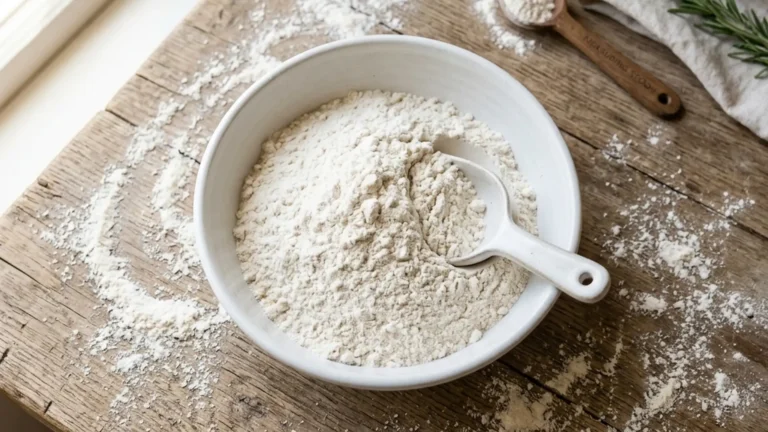
- 500 g bread flour
The preparation block for the nutrition calculation is:
- Find the flour value of 361 kcal per 100 g.
- Multiply the ingredient weight by the per-100 g value.
- Divide by 100 to obtain 1,805 kcal for that ingredient amount.
This example demonstrates the nutrition arithmetic only; the source does not provide a complete bread formula, baking method, or finished yield, so adding those details would require unsupported recipe data.
Numbers That Change a Recipe Nutrition Result
| Calculation issue | Research figure | What the figure changes | Source basis |
|---|---|---|---|
| Ingredient calculation basis | 100 g | Ingredient nutrient values can be scaled from the database basis to the weight used in the recipe. | Recipe-analyzer method |
| Raw/cooked mismatch | about 12% | The documented bread example shows how weight-basis mismatch can undercount a serving. | Recipe-analyzer example |
| Calculated versus analyzed proximate nutrients and minerals | less than 10% | Database calculation can be close to analyzed values without being chemically identical. | Food-composition research |
| FDA Class II compliance floor | 80% | A declared label value is governed by a compliance framework rather than a promise of laboratory identity to the printed number. | Federal labeling regulation |
| Retention-factor reporting | nearest 5% | Micronutrient retention values are not presented as infinitely precise cooking corrections. | USDA retention method |
| FNDDS update cycle | every 2 years | Food records can represent different database vintages even when food names look alike. | FoodData Central |
Schakel, Buzzard, and Gebhardt, writing in the Journal of Food Composition and Analysis, reported that calculated and analyzed values for proximate nutrients and minerals were generally less than 10% apart, with the stated exception in the research record. Their paper also recommends serious consideration of yield and retention methods when recipe values are estimated from ingredient data. The study is available through the USDA Agricultural Research Service archive.
That research figure and the federal labeling rule answer different questions. The study addresses calculated recipe values compared with analyzed composition. The U.S. FDA rule in 21 CFR 101.9 states that, for the relevant class of nutrients, “the nutrient content of the composite must be at least equal to 80 percent of the value for that nutrient declared on the label”; that is an 80% compliance floor, not a claim that every home recipe estimate should be expected to miss by the same amount.
Serving rules can move the displayed per-serving value even when the full food total has not changed. Under the same regulation, a discrete unit weighing at least 67% but less than 200% of the reference amount can use one unit as the serving. A unit at least 200% and up to and including 300% of the reference amount follows a different serving-size rule. That legal framework is for labeling; a home recipe still needs a serving definition that reflects how the finished dish is being divided.
The 100 g Method for Recipe Calories
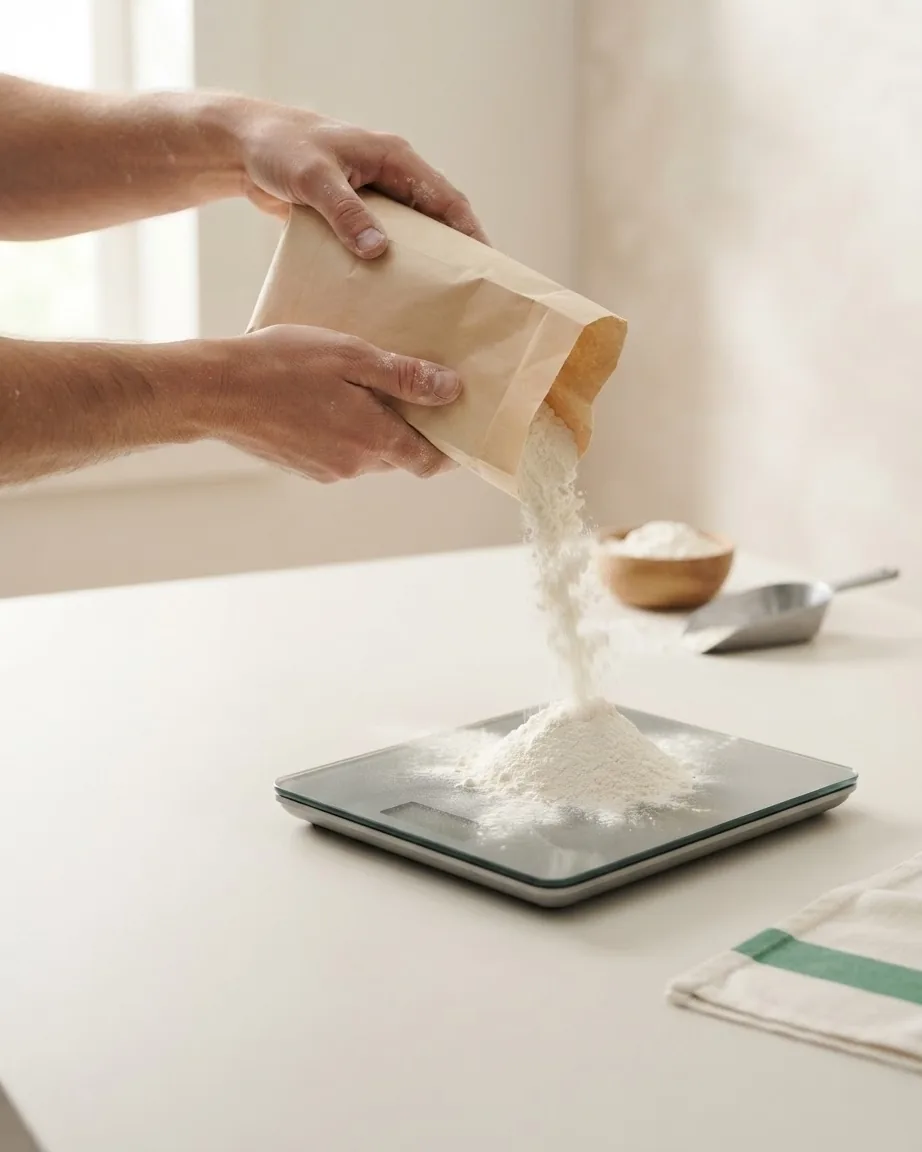
WPZOOM’s Recipe Card Blocks documents the practical hand method clearly: find calories per 100 g, multiply by the ingredient’s gram weight, divide by 100, and add the ingredient results. Its published example uses 500 g of bread flour at 361 kcal per 100 g, producing 1,805 kcal. The method is described on the recipe nutrition analyzer page.
Do not force the calorie total to equal a macro calculation when the database uses a different energy method. The familiar general approach assigns 4 kcal per gram to protein or carbohydrate and 9 kcal per gram to fat. FoodData Central also uses Atwater factors, and food-specific factors can make a database energy value differ from a simple macro reconstruction. When that happens, use the energy value supplied by the matched food record instead of “correcting” it to fit a separate formula.
How Tastybend Structures Recipe Nutrition Data
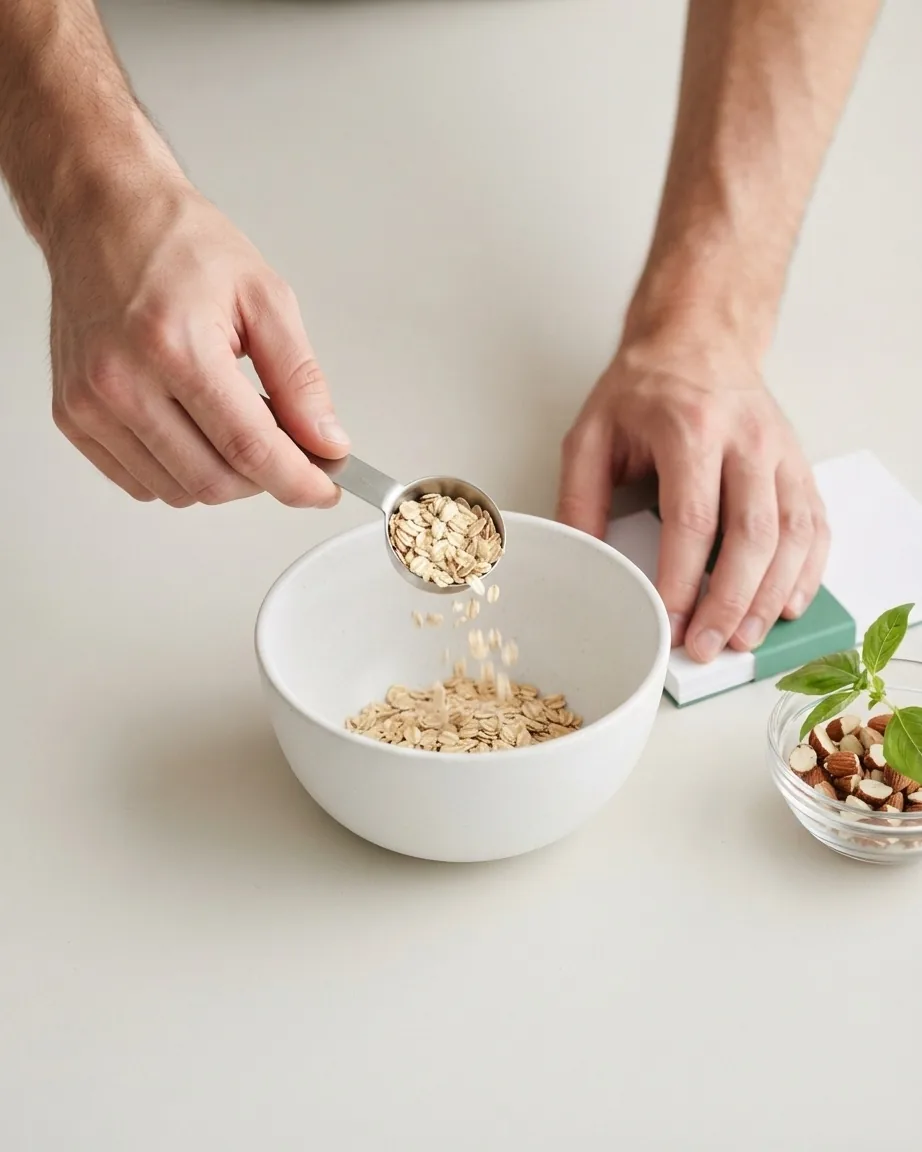
The Tastybend Nutrition Desk works as a data-aggregation and formatting desk: manufacturer declarations, official brand menus, and established public food databases are structured through automated extraction pipelines into standardized reference tables. For recipe calculations, the usable number is tied to its serving basis and ingredient record. Database values remain estimates of food composition, while labeled packaged foods remain subject to the applicable labeling rules and to later manufacturer changes.
How a 33 g vs. 17 g Entry Changes the Same Ingredient
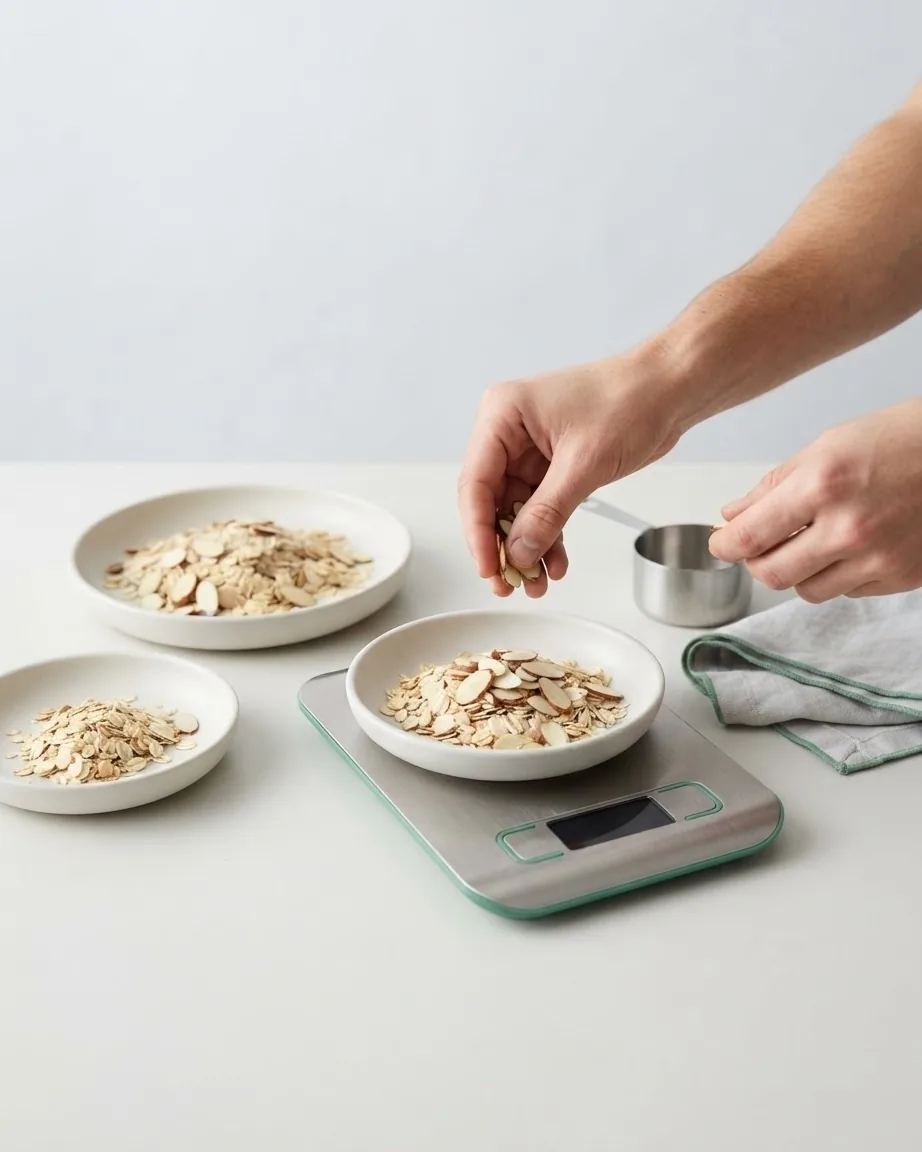
The article’s FoodData Central example includes household-measure routes of 33 g and 17 g. If the same per-100 g nutrient record is applied, choosing 33 g instead of 17 g makes that ingredient’s calculated contribution 1.94× as large.
- The weight difference is 16 g.
This is why resolving a household measure to the amount actually used matters before totaling the recipe: a measure-selection error can nearly double one ingredient’s contribution even when the nutrient database value itself is correct.
Frequently Asked Questions
How to figure out nutritional information on homemade recipes?
Choose a matching data source for every ingredient, preserve the correct raw or cooked basis, total the nutrients, and define the serving. When micronutrients are affected by cooking, supported retention data are more defensible than a blanket adjustment: USDA retention tables cover 16 vitamins and 8 minerals and report retention factors to the nearest 5%.