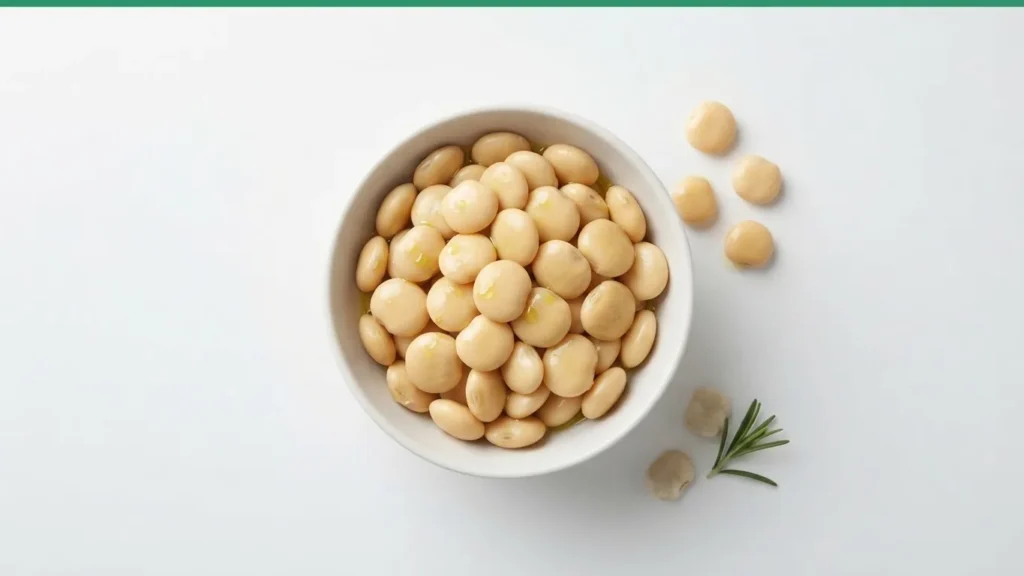
The single number that decides whether lupini beans fit your plate is protein, and it depends entirely on how the bean was prepared: a cooked, boiled, unsalted cup (166 g) carries 25.8 g of protein against 16.4 g of total carbohydrate, per USDA FoodData Central. Raw or dry, the same cup reads far higher because no water has been absorbed. For that first number to mean anything, you have to read the label that matches the jar, bag, or pot in front of you. This guide separates the three states so the figure you quote is the one you are eating. The lupini beans nutrition picture is three profiles, not one.
Quick answer: Cooked and boiled without salt, one cup (166 g) of lupini beans gives about 198 calories, 25.8 g protein, 16.4 g carbohydrate, 4.6 g fiber, and only 6.6 mg sodium, per USDA FoodData Central. Dry or raw, the per-100 g protein is roughly double because the water is not there yet. Canned in brine, sodium can climb to 960 mg per serving from one brand. Raw lupini are not edible straight from the pod; bitter alkaloids require long soaking first.
Top nutrition facts for cooked lupini beans
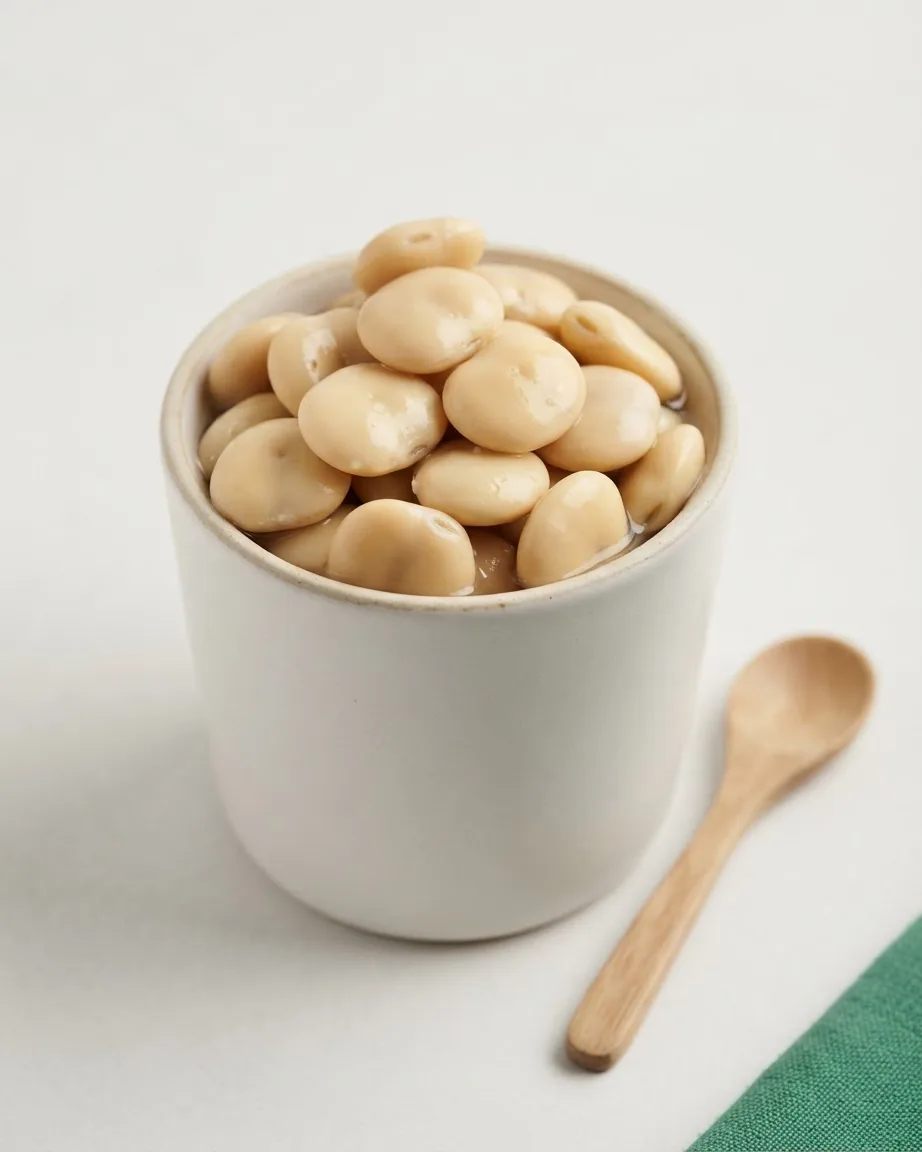
Read against a cooked, boiled, unsalted cup of 166 g, the standout line is protein at 25.8 g, which USDA FoodData Central lists at 52% of the Daily Value. Precision Nutrition, working from the same USDA record, rounds the same cup to roughly 198 calories, 26 g protein, 16 g carbohydrate, 5 g fat, and 5 g fiber in its food encyclopedia. The figures agree; the difference is only rounding.
Two numbers set lupini apart from most legumes in this niche. Protein (25.8 g) exceeds total carbohydrate (16.4 g) in the cooked cup, and almost a third of that carbohydrate is fiber at 4.6 g, 17% of the Daily Value. Fat is modest at 4.8 g, of which 0.57 g is saturated. Sodium in the unsalted USDA profile is 6.6 mg, rounding to 0% DV. That low-sodium baseline is the database bean, not the jar on the shelf, a gap the preparation section below resolves. For the wider category, see our pantry basics.
Lupini beans by preparation: the data table
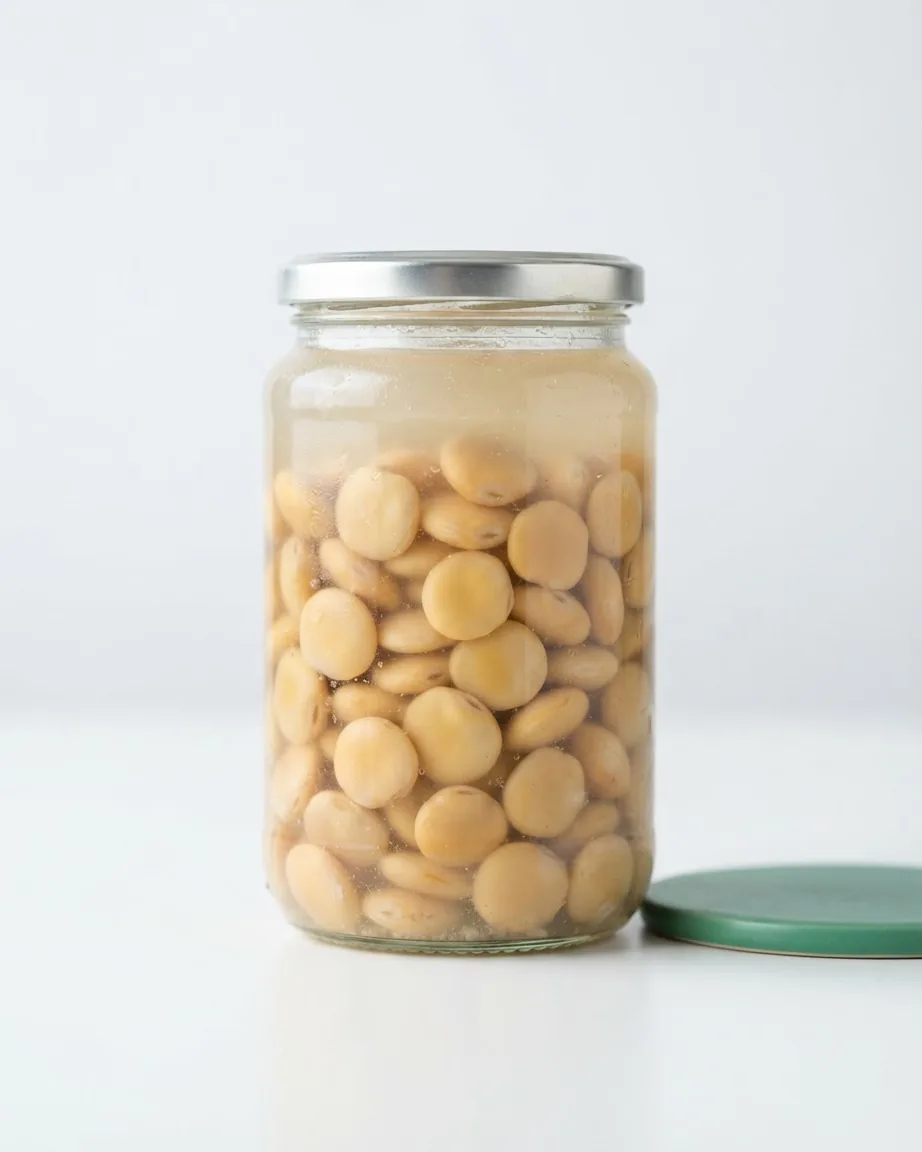
The same bean reads three ways depending on water and brine. This table compares cooked, raw/dry, and brined profiles side by side, each cell from a named source, so you can match the label in your hand before you quote a number.
| Preparation (serving) | Calories | Protein | Carbohydrate | Fiber | Sodium | Source |
|---|---|---|---|---|---|---|
| Cooked, boiled, no salt (1 cup, 166 g) | 198 kcal | 25.8 g | 16.4 g | 4.6 g | 6.6 mg | USDA FoodData Central |
| Cooked (per 100 g) | 116 kcal | 15.6 g | 9.9 g | NutriScan | ||
| Raw / dry (per 100 g) | 36 g | 19 g | Foodstruct | |||
| Raw / dry (1 cup, 180 g) | 65.1 g | 34 g | USDA FoodData Central | |||
| Jarred, brined (1 oz, 30 g) | 2 g | 105 mg | Pastene |
Calories in a cooked cup of lupini beans
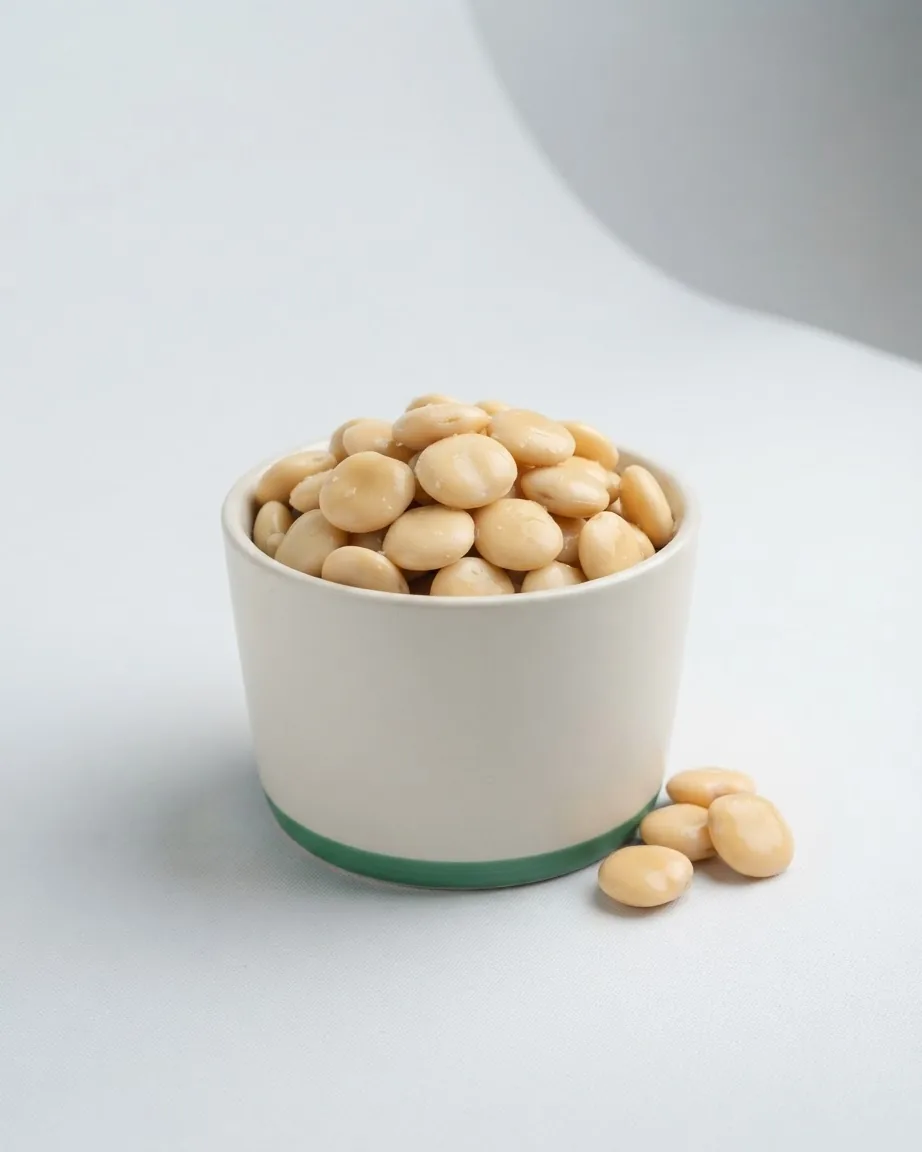
A cooked, boiled, unsalted cup (166 g) runs about 198 calories per USDA FoodData Central, which is roughly 119 kcal per 100 g; NutriScan lists 116 kcal per 100 g cooked. The gap reflects rounding and water content, not a real dispute.
Macronutrient breakdown
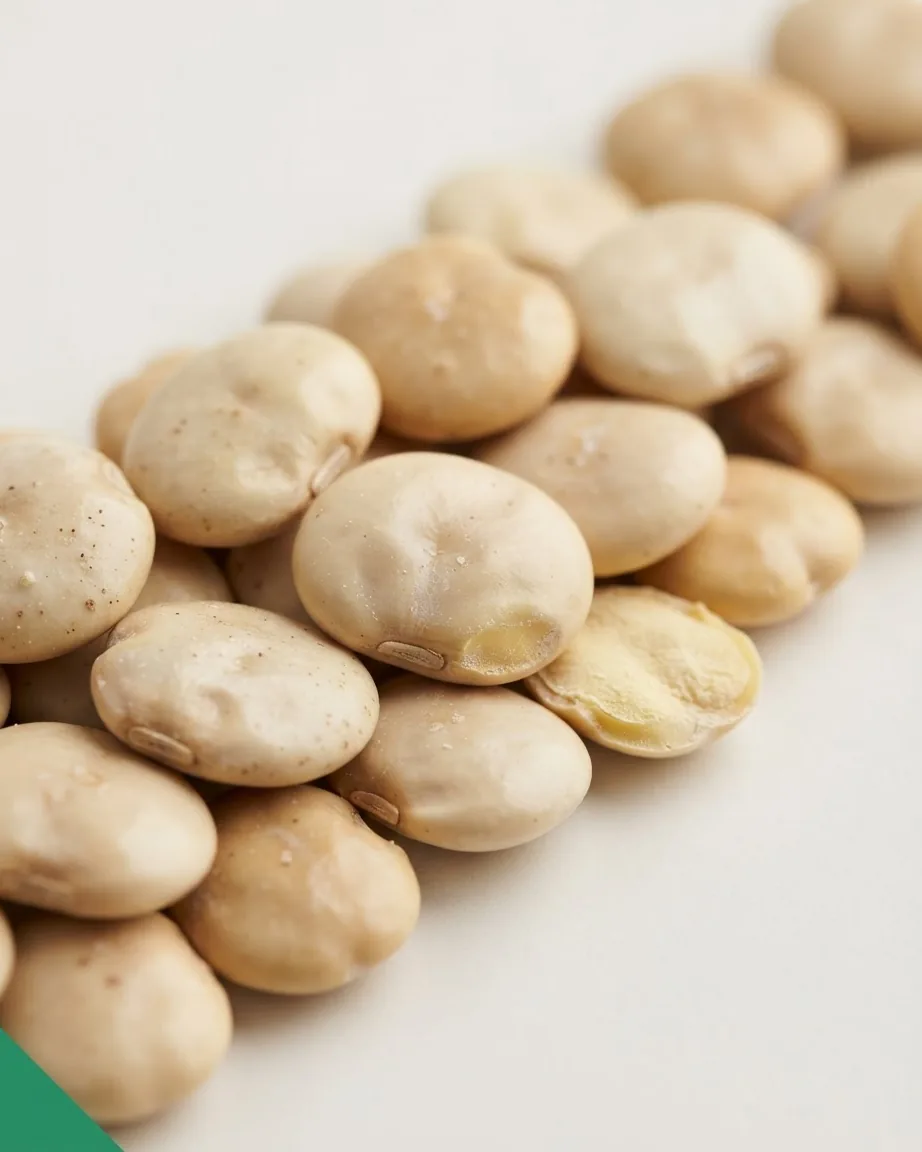
Per cooked cup (166 g), USDA FoodData Central lists the four macro lines a reader compares:
- Protein 25.8 g, 52% DV, the dominant macro.
- Carbohydrate 16.4 g, 6% DV, of which fiber is 4.6 g.
- Fat 4.8 g, 6% DV, including 0.57 g saturated.
- Fiber 4.6 g, 17% DV.
Reading the macros against low-carb and diabetic goals
NutriScan frames lupini for low-carb and high-protein eating, and the math behind that framing is visible on the panel. Subtract fiber from total carbohydrate in the cooked cup (16.4 g minus 4.6 g, same source and serving) and the carbohydrate left is small relative to 25.8 g of protein. NutriScan reports the per-100 g version as 16 g protein against 9 g net carbs, and states on its page that at that ratio they are “actually excellent for blood sugar management”.
Two cautions keep this honest. NutriScan also writes that only 116 calories with 16 g protein “creates exceptional satiety,” which is a food property, not a treatment. No numeric glycemic index value appears in the sources, so “very low GI” stays qualitative. Anyone managing diabetes should confirm with a clinician before building a plan around any single food; the panel reports nutrients, not clinical outcomes. For another high-fiber bean to weigh against it, see our navy beans nutrition breakdown.
Fiber is 4.6 g of the 16.4 g carbohydrate per cooked cup, roughly 28%.
All nutrients for lupini beans per 100 g
Per-100 g figures let you scale to any portion, but the value swings with preparation because water absorbed during cooking dilutes everything by weight. That is why “protein per 100 g” reads about 36 g raw and dry (Foodstruct) but roughly 15.6 g once cooked (NutriScan): same bean, more water. Keep the two states apart or the number will be off by nearly double.
On the raw and dry side, Foodstruct’s USDA-derived record lists 36 g protein and 19 g fiber per 100 g, with protein at 86% of the Daily Value. Scaled to a 180 g raw cup, USDA FoodData Central reports 65.1 g protein (130% DV) and 34 g fiber (121% DV). These raw figures describe dry seed, not a plate of food: raw lupini are not eaten as-is.
The micronutrient lines are where lupini earns its place in a pantry. USDA FoodData Central lists, for the cooked, boiled cup (166 g):
- Folate (B9) 97.9 mcg, 24% DV.
- Magnesium 89.6 mg, 21% DV.
- Methionine 183 mg, the limiting essential amino acid at 25% RDI.
Raw and dry, the trace-mineral density climbs sharply. A 180 g raw cup supplies 639 mcg folate (160% DV) and 1.8 mg copper (204% DV) per USDA FoodData Central. On completeness, cooked lupini carry all essential amino acids but score 79% on USDA’s amino acid scale, held down by methionine. Pairing lupini with grains or seeds, which are richer in that amino acid, rounds out the profile: the same logic that makes beans-and-rice a complete protein.
Preparation: why raw lupini are not edible straight
Dry lupini beans are not ready to eat out of the bag. Bitter-tasting alkaloids make the raw bean inedible and require lengthy soaking and brining to leach out before the bean is safe and palatable, as Precision Nutrition’s encyclopedia entry describes. The bitter variety needs the longest treatment; a lower-alkaloid “sweet” variety exists and needs less. This is the one preparation point that is a safety matter, not a flavor preference.
The traditional process is a multi-day cycle. Dry beans are soaked, then cooked, then held in repeatedly changed salted water over several days until the bitterness is gone, which is also how the signature brined texture and taste develop. Because the brine does the curing, the finished bean carries the sodium of that brine: the reason the jarred product reads so differently from the USDA unsalted record. Precision Nutrition’s page carries the full from-scratch method; this guide does not reproduce step quantities.
Three shortcuts cover most kitchens:
- From a jar or can: already cured and ready to eat; drain and rinse to cut the brine sodium.
- From dry, sweet variety: shorter soak-and-cook because alkaloids start lower.
- From dry, bitter variety: the full multi-day soak-cook-brine cycle, tasting until the bitterness clears.
If a home-cured bean still tastes sharply bitter, it is not finished; continue the water changes rather than eating it. Bitterness is the practical signal that alkaloids remain. People eat the firm bean; the thin skin is edible but many slip it off before eating for a softer bite. Store-bought jarred beans skip the entire process and are the reliable path for anyone unsure about curing at home.
Health checks: lupin allergy warning signs and who to see
Allergen warning
Lupin belongs to the same legume family as peanut, and the American Academy of Allergy, Asthma & Immunology documents known cross-reactivity, with clinical reactivity rates reported across studies from 5% to 37%. Peanut-allergic people carry the highest risk, and reactions can include anaphylaxis. Hidden exposure matters because lupin flour appears in some gluten-free pastas and baked goods. The signs below separate what you can watch for from what only a clinician can assess.
- Hives, swelling, itching after eating: stop eating lupini and see a clinician (an allergist) for testing (a shop or label is not an assessment).
- Trouble breathing, throat tightness, or faintness: treat as a medical emergency and call emergency services; this can be anaphylaxis.
- Known peanut allergy, considering lupini: ask an allergist before trying them, given the 5% (37% cross-reactivity range the AAAAI reports).
The AAAAI’s lupin allergy page is the primary reference here. Nothing on a nutrition panel screens for this; a “natural” or “plant protein” label is not a safety guarantee.
Lupini beans side effects
Beyond allergy, the two documented downsides are alkaloids and sodium. Improperly cured bitter beans retain alkaloids that make them inedible: the failure mode is eating beans that were never debittered, which is why a bitter taste means stop. Rinsing brined beans cuts sodium by close to half. Jarred Pastene lists 105 mg sodium (5% DV) per 1 oz serving, lower per ounce but still well above the unsalted bean.
Lupini beans: where to buy
Lupini are sold three ways, each matching a row in the table above. Jarred or canned beans in brine are the most common retail form: Pastene is one commercial example whose label lists 105 mg sodium per 1 oz serving, and these are already cured and ready to eat. Dry lupini, sold in bags, require the full soaking and brining before they are edible. The sweet, lower-alkaloid variety is also sold dry and needs less curing. For the numbers on each option:
- Jarred/canned in brine: ready to eat; check sodium per serving and rinse to lower it.
- Dry, standard (bitter): cheapest per gram but needs the multi-day cure.
- Dry, sweet variety: shorter cure because alkaloids start lower.
Do lupini beans cause gas
Lupini are legumes, and the cooked cup carries 4.6 g of dietary fiber (17% DV), with the raw and dry seed far higher at 19 g per 100 g per Foodstruct. Fiber at that level is fermented in the gut, which is the ordinary mechanism behind bloating and gas from any bean. There is no figure in the sources quantifying gas specifically, so the honest statement is that the high fiber load makes some digestive effect plausible, especially when intake jumps quickly. Raising portions gradually and rinsing brined beans (which also drops sodium) are the usual moderating steps. If bloating is severe or paired with the allergy signs above, see a clinician rather than adjusting portions alone.
The brine penalty: cooked cup vs. one jarred cup of sodium
The article quotes two sodium figures on the same food but never puts them on the same serving. The USDA unsalted cooked cup (166 g) reads 6.6 mg of sodium, while the Pastene jarred label lists 105 mg per 1 oz (30 g). Scaling the jar label up to the same 166 g cup weight makes the gap concrete: 105 mg ÷ 30 g × 166 g works out to about 581 mg of sodium in one jarred cup.
That means a jarred cup carries roughly 574 mg more sodium than the unsalted USDA cup (about 581 mg versus 6.6 mg): the same bean, with the brine still on it. This is why the preparation you read off matters: the protein line barely moves between an unsalted home batch and a drained jar, but the sodium line swings by orders of magnitude.
- Jarred cup (scaled from the 1 oz label): 105 mg ÷ 30 g × 166 g ≈ 581 mg sodium.
- USDA unsalted cooked cup: 6.6 mg sodium.
- Difference: about 574 mg more per cup from the brine (about 581 mg versus 6.6 mg).
Frequently asked questions
Are lupini beans fattening?
The cooked, unsalted cup sits at about 198 calories, with protein (25.8 g) outweighing carbohydrate (16.4 g). NutriScan notes 116 calories with 16 g protein per 100 g drives satiety. Calories still count, but the macro split leans toward protein and fiber rather than fat, which is 4.8 g per cup.
Are lupini beans gluten free?
The bean itself contains no gluten. The real hazard is the reverse: lupin flour turns up inside some gluten-free pastas and baked goods, so a product labeled gluten-free can still carry lupin. That matters for anyone with the peanut cross-reactivity the AAAAI reports at 5% to 37%. Read ingredient lists, not just the gluten-free flag.
Can dogs have lupini beans?
Dry lupini are not safe for anyone, pet or person, until the bitter alkaloids are cured out by soaking and brining. The sources here cover human nutrition and the 960 mg-per-serving brine sodium of some canned products, not canine tolerance. Given the alkaloid and sodium concerns, ask your veterinarian before offering any to a dog rather than relying on a label.
How long do lupini beans last once opened?
The sources here do not give a shelf-life figure for opened lupini beans. Because the brine can carry up to 960 mg sodium per serving, rinsing before each use both freshens them and cuts sodium by close to half. When in doubt on storage safety, follow the manufacturer’s on-label guidance.