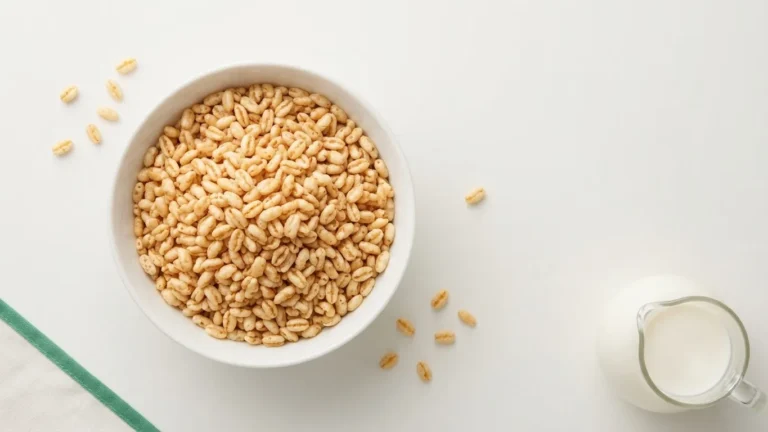
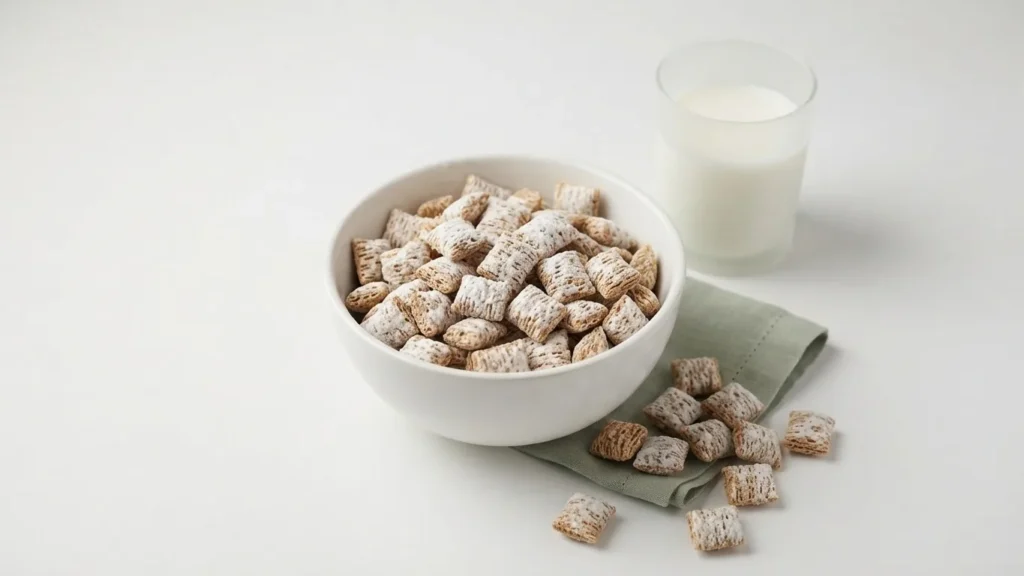
The mini wheats nutritional value readers hunt for splits three ways across websites because each page uses a different serving: a cup, 23 biscuits, or 25. Match the number to its basis before you trust it.
Here is the short version. The fiber (6 g, mostly insoluble) and the fortification (18 mg iron, 400 mcg folic acid) are the real nutrition. The sugar is the catch: 12 g per serving, entirely added, close to half the American Heart Association daily ceiling for women. A poured bowl runs larger than the label, so every number here is a floor, not a cap.
Full Panel Per 60 g Serving
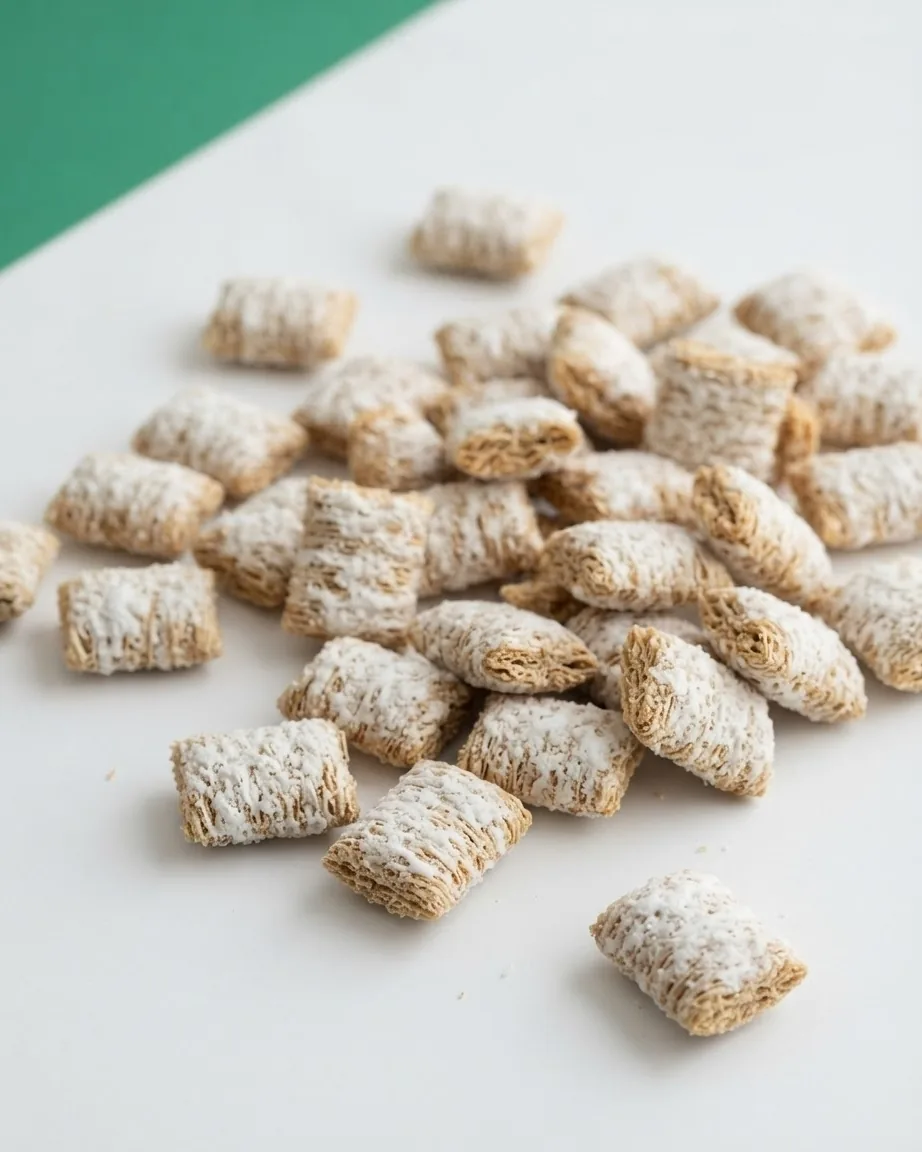
These values come from the WK Kellogg Co SmartLabel panel for the 60 g serving, dry.
| Nutrient | Cereal only |
|---|---|
| Calories | 210 kcal |
| Total fat | 1.5 g |
| Sodium | 10 mg |
| Total carbohydrate | 51 g (19%) |
| Dietary fiber | 6 g |
| Total sugars (all added) | 12 g |
| Protein | 5 g |
| Iron | 18 mg (100%) |
For a condiment-and-cereal section the figure to log is sodium: 10 mg dry is negligible, but milk changes that. See also: our overnight oats guide.
Why One Page Says 175 and Another Says 210
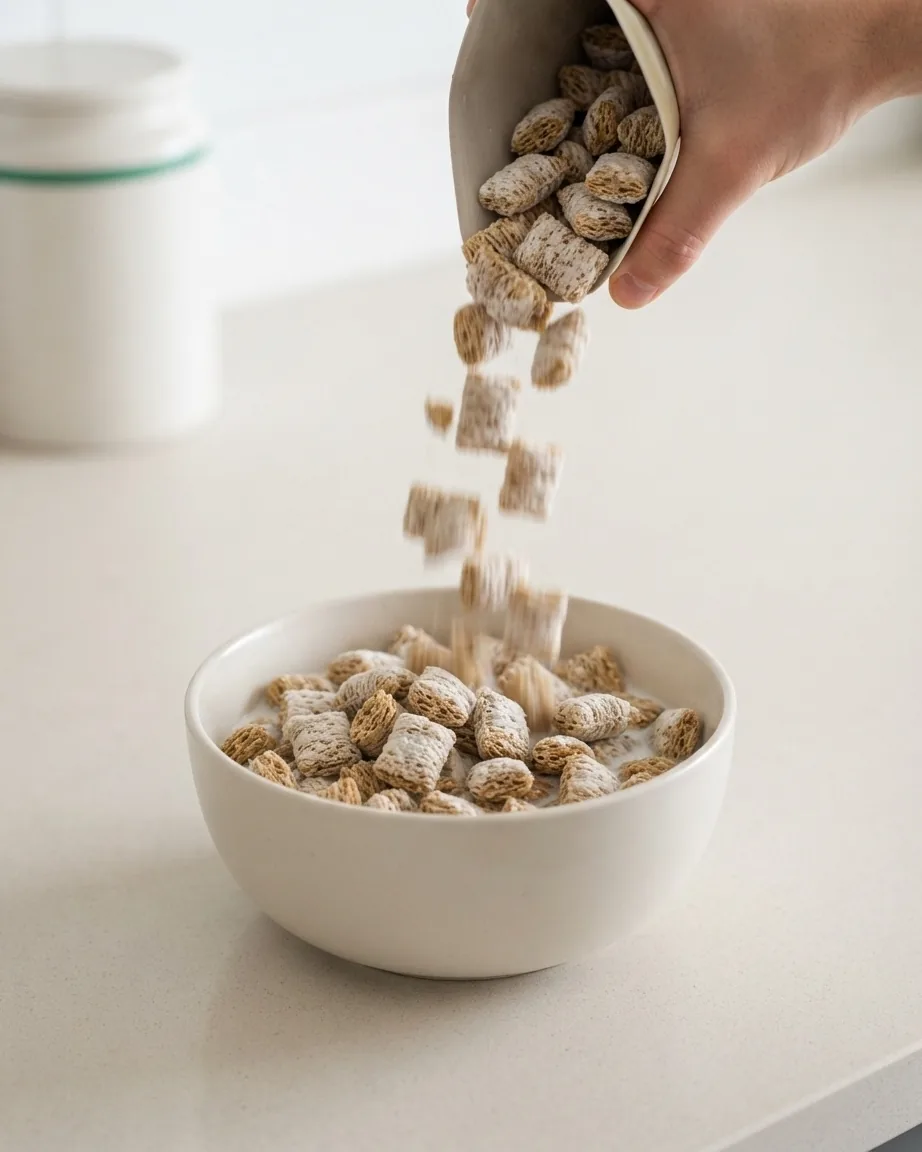
Three records, three serving sizes. Kansas State University Housing & Dining lists the cereal on a 1-cup basis at 175 kcal with 5.1 g fiber and 10 g sugar. The Kellogg’s label uses 25 biscuits (60 g) at 210 calories. A separate 23-biscuit (55 g) record reads 190 kcal. None contradicts the others: they measure different amounts.
The table below lines up what each source reports and the serving it measured, so you can read any page you land on.
| Source | Serving | Calories | Sugar | Fiber |
|---|---|---|---|---|
| WK Kellogg Co (SmartLabel) | 25 biscuits / 60 g | 210 kcal | 12 g | 6 g |
| Kansas State University | 1 cup | 175 | 10 g | 5.1 g |
| Eat This Much | 23 biscuits / 55 g | 190 | 11 g | |
| USDA FoodData Central | 100 g | 353 kcal | 20.8 g | 9.7 g |
The biscuit count also drifts: one source calls the 60 g serving “25 biscuits,” another “21 biscuits” at 210 calories. Same gram weight, different count. And a real poured bowl usually runs one and a half to two times the labeled serving, per Nutrola, before milk, so logging 210 calories for a casual bowl understates it.
Are mini-wheats actually healthy?
The honest answer is split by nutrient. The whole-grain and fiber side is strong; the added-sugar side is the reason dietitians hedge.
The fiber and whole-grain case
Each serving delivers 48 grams of whole grain from 100% whole grain wheat, the first ingredient, per WK Kellogg Co, which also calls it a good source of 7 vitamins and minerals. The 6 g of fiber is mostly insoluble (5 g insoluble, under 1 g soluble on the label) and provides 21% of the Daily Value: the type that adds stool bulk rather than the soluble kind tied to cholesterol.
Fortification is the other draw: 18 mg iron (100% DV), 400 mcg folic acid (100% DV), and 10 percent DV thiamin, per Everyday Health reading the Kellogg’s and USDA records. The whole-grain wheat is 100 percent of the grain in the first ingredient.
The sugar problem, measured against guidance
All 12g of sugar is added: 24% of the Daily Value in one serving, and the 51 g of total carbohydrate accounts for 19% of the Daily Value. Everyday Health puts that at “about 21 g of sugar for every 100 g of cereal” and notes the American Heart Association caps added sugar at 25 g a day for women and 36 g for men (dietitian breakdown). One serving burns nearly half a woman’s daily ceiling. The Environmental Working Group flags the product as having 64% more sugar per serving than the average cold cereal, while noting whole grain is the #1 ingredient (EWG Food Scores entry).
Against that, the Original qualifies as a USDA WIC-eligible cereal, a program with an added-sugar limit of 21.2%, per WK Kellogg Co (brand nutrition page). A “frosted” cereal that clears a federal nutrition standard is not automatically junk, but the per-serving sugar is still high because the serving is large.
The Gelatin Line Nutrition Panels Never Show
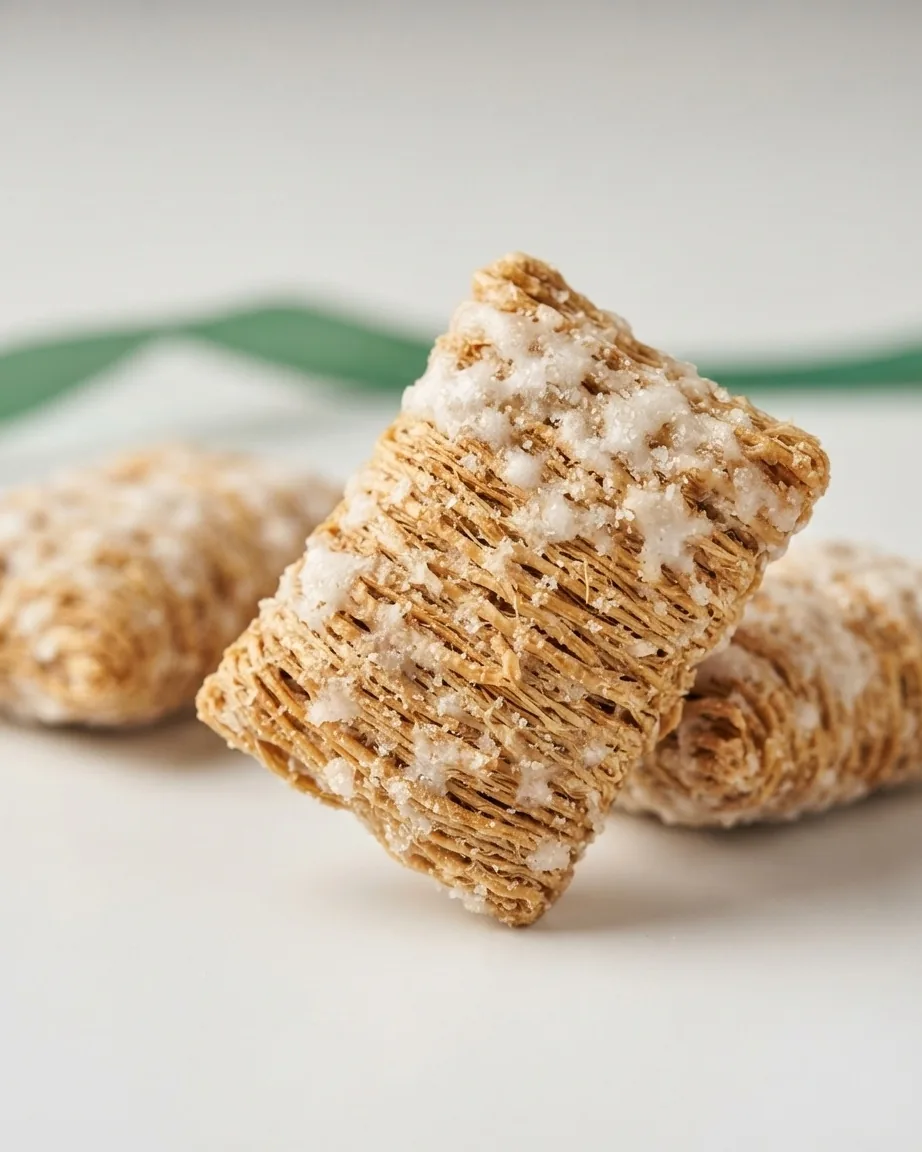
One ingredient never appears in a nutrition panel but changes the answer for some readers: gelatin, which is animal-derived. For vegetarians and vegans it is a dealbreaker that calories and grams alone will not flag. The protein figure for the 60 g serving also splits across sources: the Kellogg’s panel states 5 g, while Nutrola states 6 g for the same 21-biscuit (60 g) serving. Use the panel’s 5 g as the conservative log. For the wider category, see our pantry basics hub. See also: our navy beans guide.
What the Milk Adds: Cereal-Only vs. With 3/4 Cup Skim
The WK Kellogg Co SmartLabel panel prints two columns for the same 60 g serving: cereal only at 210 calories with 5 g protein, and the serving with 3/4 cup skim milk at 270 calories with 11 g protein. Subtracting one column from the other isolates what the milk alone contributes: 60 calories and 6 g of protein.
On the SmartLabel figures, skim milk more than doubles the protein of the dry serving while adding under a quarter of the calories.
Frequently Asked Questions
Is there a lot of sugar in mini-wheats?
Yes by the serving, no by the gram. The panel shows 12 g, all added, but spread across a 60 g serving, the per-100-g figure sits near 21 g, below many sweet cereals. USDA FoodData Central lists 20.8 g total sugars and 20.1 g added per 100 g, confirming the per-serving sugar rides on the large portion rather than extreme sweetness, roughly 20 g to 21 g of sugar for every 100 g.
Does mini wheat help with constipation?
Of the 6 g of dietary fiber per 60 g serving (21% DV), 5 g is insoluble fiber and under 1 g is soluble fiber, derived from 48 g of whole grain wheat. On a 1-cup basis the figure drops to 5.1 g, so a bigger poured bowl carries more. This is nutrition data, not medical advice.
Can a diabetic eat Frosted Mini-Wheats?
The decisive numbers are 51 g carbohydrate and 12 g added sugar against 6 g fiber per serving: a carbohydrate-heavy load for one meal. The whole-grain base and insoluble fiber temper it, but a poured bowl runs larger than the 60 g label. Portion and pairing matter; confirm targets with a clinician.
Do mini wheats have any nutritional value?
Beyond calories, each serving carries 100 percent DV iron at 18 mg and 100% DV folate at 400 mcg, plus 10 percent DV thiamin and 48 grams of whole grain. The USDA record shows 9.7 g fiber per 100 g. The fortification and whole-grain content are the substance; the added sugar is the offset.