
A single 56 g survey sandwich of peanut butter and jelly runs about 200 calories; a whole-wheat classic on two slices with a couple of spoonfuls of spread reaches 400. The nutrition facts for a PB and J sandwich move that much because the build and the serving a label counts against are not fixed. Peanut butter carries the fat and the bulk of the calories, the bread sets the fiber, and the jelly adds the sugar.
Read against a whole-wheat build, the nutrition facts for a PB and J sandwich land near these numbers: about 400 calories a serving, with 14 g protein, 18 g fat, 43 g carbohydrate, 2 g fiber and 360 mg sodium. Scale down to a single 56 g survey sandwich and it is lighter, about 200 calories with 6 g protein and 9 g fat. Jelly supplies the sugar, peanut butter supplies the fat, and the bread decides the fiber. Match the figure to the sandwich in front of you before you trust it.
Nutrition facts for PB and J sandwich: why one number won’t do
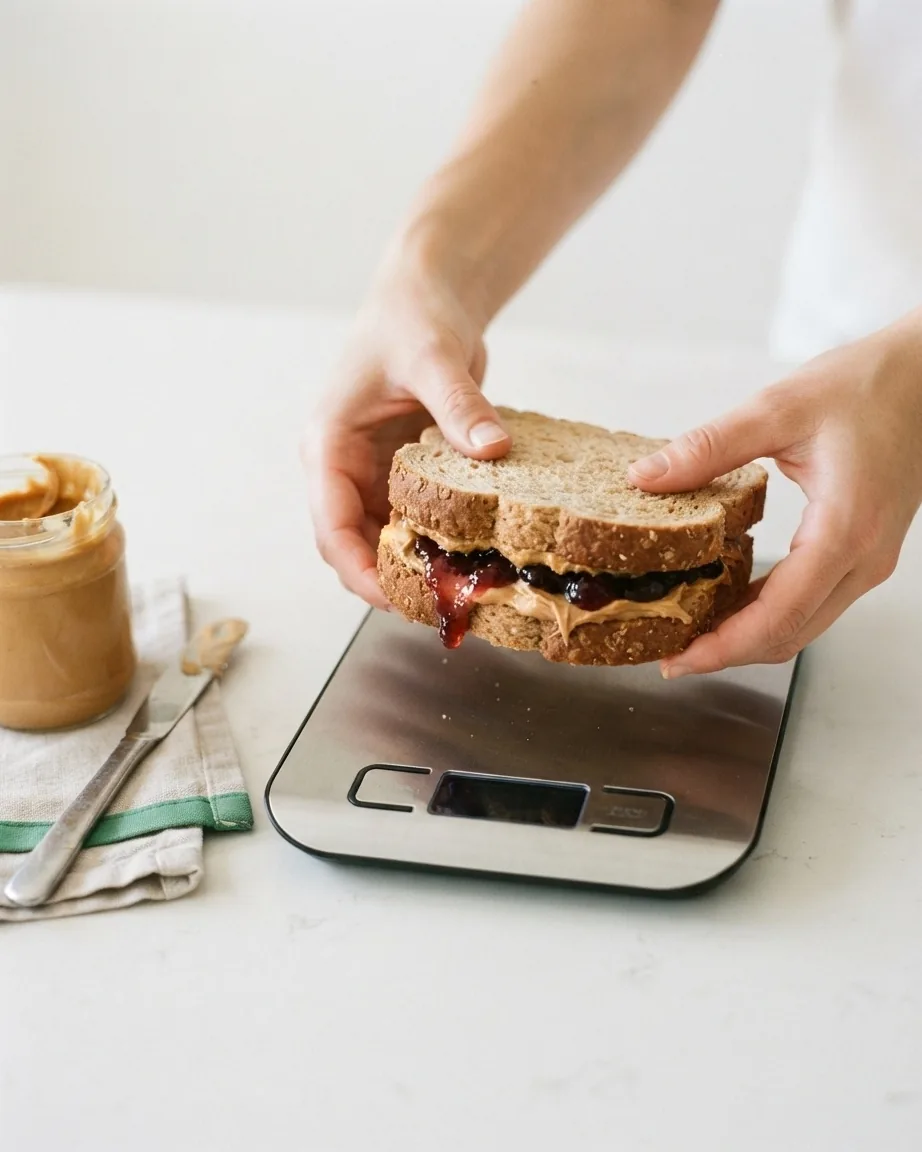
Most of what people eat falls into 4 builds, and they do not line up. A whole-wheat classic from the University of Illinois Extension reports 400 calories a serving. A USDA survey record mirrored on GetFoodFacts gives a single 56 g sandwich at 200 calories. That same survey record is also published per 100 g, a different basis that makes the two figures look further apart than the sandwiches are. A fuller whole-wheat sandwich weighed at 112 g sits higher again. Read the serving first; the calorie line follows from it.
See also: our granola nutrition facts guide.
The 4 builds this guide reads report against different servings, so the honest comparison is a table that keeps the weights visible.
| Build (source) | Serving | Protein | Total fat | Fiber |
|---|---|---|---|---|
| Whole-wheat classic (Illinois Extension) | 1 serving | 14 g | 18 g | 2 g |
| Whole-wheat, regular PB & jelly (USDA FNDDS via MyFoodData) | 112 g | 14 g | 18.8 g | 5 g |
| PB&J, NFS (USDA Survey via GetFoodFacts) | 56 g | 6 g | 9 g | 2 g |
The 56 g sandwich is half the weight of the 112 g one, which is why its protein and fat read lower. Across these builds the number tracks weight and spread far more than any brand name.
The 112-gram panel, nutrient by nutrient
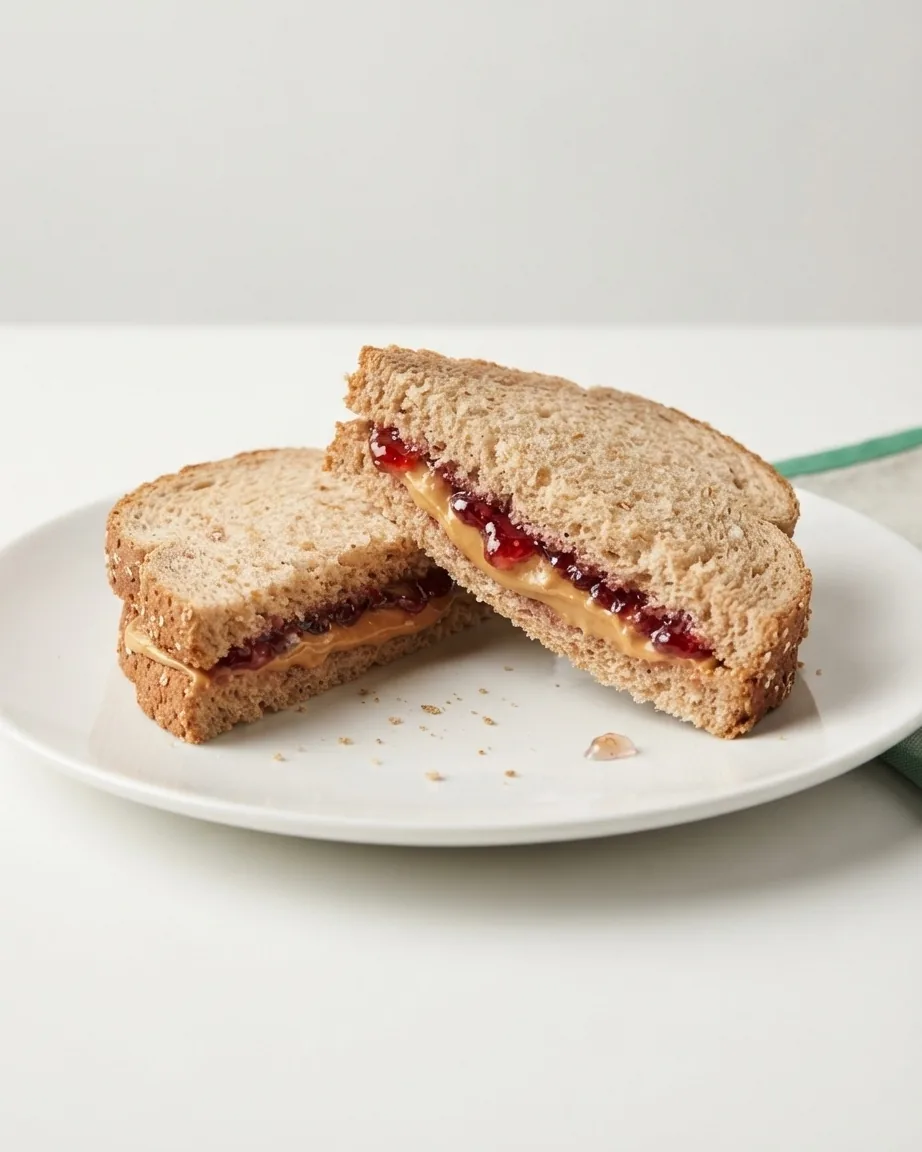
MyFoodData‘s copy of the USDA FNDDS record for a whole-wheat PB&J, at a 112 g serving, fills out the line that a calorie figure alone hides.
It lists 18.8 g total fat, 48.3 g total carbohydrate, 5 g dietary fiber, 16.7 g total sugars and 14 g protein, with 421.1 mg sodium. Niacin comes in at 7.1 mg, 45% of a day’s value. By weight the same sandwich is 26.1% water, 12.8% protein, 44% carbohydrate and 17.1% fat, with 0% alcohol.
| Nutrient | Per 112 g sandwich |
|---|---|
| Total fat | 18.8 g |
| Sodium | 421.1 mg |
| Total carbohydrate | 48.3 g |
| Dietary fiber | 5 g |
| Total sugars | 16.7 g |
| Protein | 14 g |
| Niacin | 7.1 mg (45% DV) |
This panel reads like the other everyday foods on the pantry basics shelf: one serving, one column, every figure off the label.
Where the sugar comes from, and how much is added

The 16.7 g total sugars on that whole-wheat sandwich come mostly from the jelly; peanut butter and bread add little. Homemade panels report total sugars without splitting out added sugar, so the label does not tell you how much is from the fruit spread versus the grain. The practical read: jelly is the sugar lever. A thinner layer, or a lower-sugar spread, pulls the figure down while leaving the protein and fat alone.
Sodium rides on the peanut butter you pick
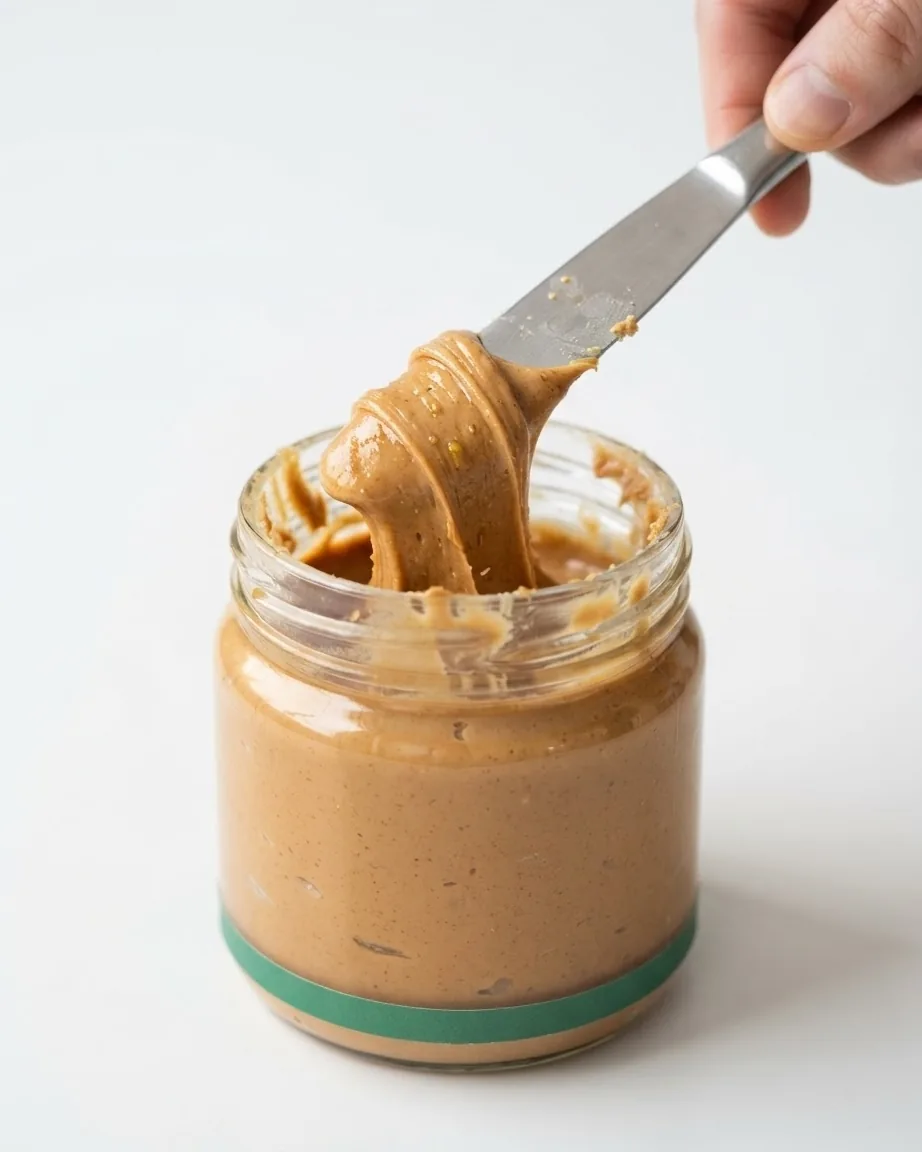
Two whole-wheat builds report different sodium because the peanut butter differs. The Illinois Extension recipe lists 360 mg a serving; the 112 g USDA-based sandwich lists 421.1 mg. The jelly barely moves the number. Salted peanut butter and the bread carry it, so a no-salt-added or unsalted spread is the one swap that lowers the total. If sodium is the figure you watch, read the peanut butter jar before the bread bag.
Whole wheat vs white: the fiber you gain
The bread’s real nutritional lever is fiber, and even two loaves both labeled “whole wheat” disagree: one build reports 2 g fiber, another 5 g. The bread explains the gap, since the two loaves differ in grain and density. A lighter whole-wheat loaf sits near the low figure, a denser higher-fiber loaf near the high one. To land at the top, pick a loaf that lists two or more grams of fiber in each slice and shows no added sugar. Protein holds near 14 g across the whole-wheat builds, so fiber is where the bread choice actually shows up.
See also: our mini wheats guide.
Peanut butter and bread make a complete protein
Peanut butter and bread each miss some essential amino acids on their own; eaten together they cover each other. As Livestrong puts it, “combined they create a complete protein.” That is the food-science reason the pairing works as more than a sugar hit: the 14 g protein in a whole-wheat build arrives as a usable amino-acid set rather than a half-set. A from-scratch version, such as the LSU AgCenter’s EatSmart recipe, lets you set the bread and the spread so the fiber and sodium land where you want them.
The frozen Uncrustables, and keeping a PB&J fresh
J.M. Smucker’s frozen Uncrustables is a single, smaller sandwich that runs well under a full homemade build; its sealed panel is printed on retail listings such as the Food Lion catalog. Handling one is a short sequence:
- Thaw about 30 to 60 minutes at room temperature; the fridge dries the bread out.
- Eat it within 8 to 10 hours of defrosting for the best texture.
A homemade sandwich keeps, refrigerated, for about 24 hours, and reads best eaten soon after it is made.
See also: our canned corn guide.
What Share of a PB&J’s Carbs Is Sugar, and How Much Is Added
The USDA FNDDS record mirrored on MyFoodData puts the 112 g whole-wheat sandwich at 16.7 g total sugars and 5 g dietary fiber against 48.3 g total carbohydrate. Divide those out and sugar is 34.6% of the carbohydrate, fiber is 10.4%, and the remaining 26.6 g (about 55%) is other carbohydrate.
A homemade panel reports total sugars with the added-sugar line left blank, so this split only reads off the branded label.
Common questions about PB&J nutrition
What is the healthiest peanut butter and jelly sandwich?
The build with the most fiber and the least salt. A whole-wheat sandwich can reach 5 g fiber when the loaf lists two or more grams of fiber in each slice, and a no-salt-added peanut butter keeps sodium under the 421.1 mg seen on salted versions. Thinning the jelly trims the sugar.
How much protein is in a PB and J sandwich?
It scales with the sandwich. A 112 g whole-wheat build reports 14 g protein; a single 56 g survey sandwich reports 6 g. Peanut butter supplies most of it, which is why a bigger sandwich with more spread reads higher. Count on about 14 g from a full whole-wheat build.
Can I eat PB&J while losing weight?
The sandwich fits a calorie goal if the portion does. A small 56 g survey sandwich is about 200 calories; a larger whole-wheat build runs near 400, with 18 g fat. The spread is the lever: a thinner layer of peanut butter and one spoon of jelly keep the total down.
Why do athletes eat peanut butter and jelly?
It packs carbohydrate and protein into one portable item that needs no refrigeration for a short stretch. A whole-wheat build carries 43 g carbohydrate with 14 g protein, and the 112 g version reports 48.3 g of carbohydrate. Much of the 16.7 g sugar comes from jelly, which reads as fast fuel.
What happens if I eat a peanut butter and jelly sandwich every day?
One sandwich is modest, but a daily habit stacks the figures. A salted build brings 421.1 mg sodium and about 16.7 g sugar each day, most of the sugar from jelly. Against that, you gain 7.1 mg niacin (45% of a day’s value), and up to 5 g fiber on whole wheat. Vary the bread and spread.