The number that trips people up first is sodium: a 260-gram portion of standard Alfredo sauce carries 1404 milligrams, or 59 percent of the daily value, per the recipe calculator published by MyFoodData. That single figure decides whether Alfredo fits your week or blows past your salt budget in one plate. These alfredo sauce nutrition facts only make sense once you pin down which portion size a label is talking about, because the same word “serving” means a heaping restaurant bowl in one place and a modest sixth of a homemade batch in another. Get the portion straight and every other number falls into line.
Below is the clean baseline, then the variations that actually shift your decision.
The Standalone Answer: What One Portion Delivers
A 260-gram portion of standard Alfredo sauce contains 382 calories, 39 grams of total fat, and 24.9 grams of saturated fat (124 percent of the daily value), alongside 1404 milligrams of sodium (59 percent of the daily value). Fat is the dominant macronutrient here by a wide margin. Restaurant Alfredo runs richer still, and keto and low-sodium home versions cut different corners: a keto recipe drops to 277 calories with 2.9 grams of net carbs, while a kidney-friendly version brings sodium down to about 184 milligrams. The right number for you depends entirely on which portion and which recipe you are eating.
382 Calories and 39 Grams of Fat: The Standard Portion Line
Start with the full macro picture for the 260-gram portion, since that is the figure the standard nutrition calculator reports against. MyFoodData lists 382 calories for that portion, with 39 grams of total fat carrying most of the load. Of that fat, 24.9 grams is saturated, which reaches 124 percent of the daily value all on its own.
That saturated-fat number is the one to sit with. It clears the entire day’s recommended ceiling in a single portion, before you count the butter on your bread or anything else on the plate. If you are watching saturated fat for cholesterol reasons, this is the line that matters more than the calorie count.
Here is the standard portion laid out:
- Serving size: 260 grams (a large, likely multi-serving restaurant-style portion)
- Calories: 382
- Total fat: 39 grams
- Saturated fat: 24.9 grams (124 percent DV)
- Sodium: 1404 milligrams (59 percent DV)
One honest caveat: this is a calculated recipe profile, not a scanned commercial panel. Fiber, sugar, and total carbohydrate weren’t reported as hard figures in the same breakdown, so treat the fat-and-sodium spine as the reliable part and the missing lines as recipe-dependent. Alfredo is fundamentally butter, cream, and Parmesan, so the carbohydrate share is small no matter whose version you use.
Why 260 Grams Isn’t the Same “Serving” Everyone Else Reports
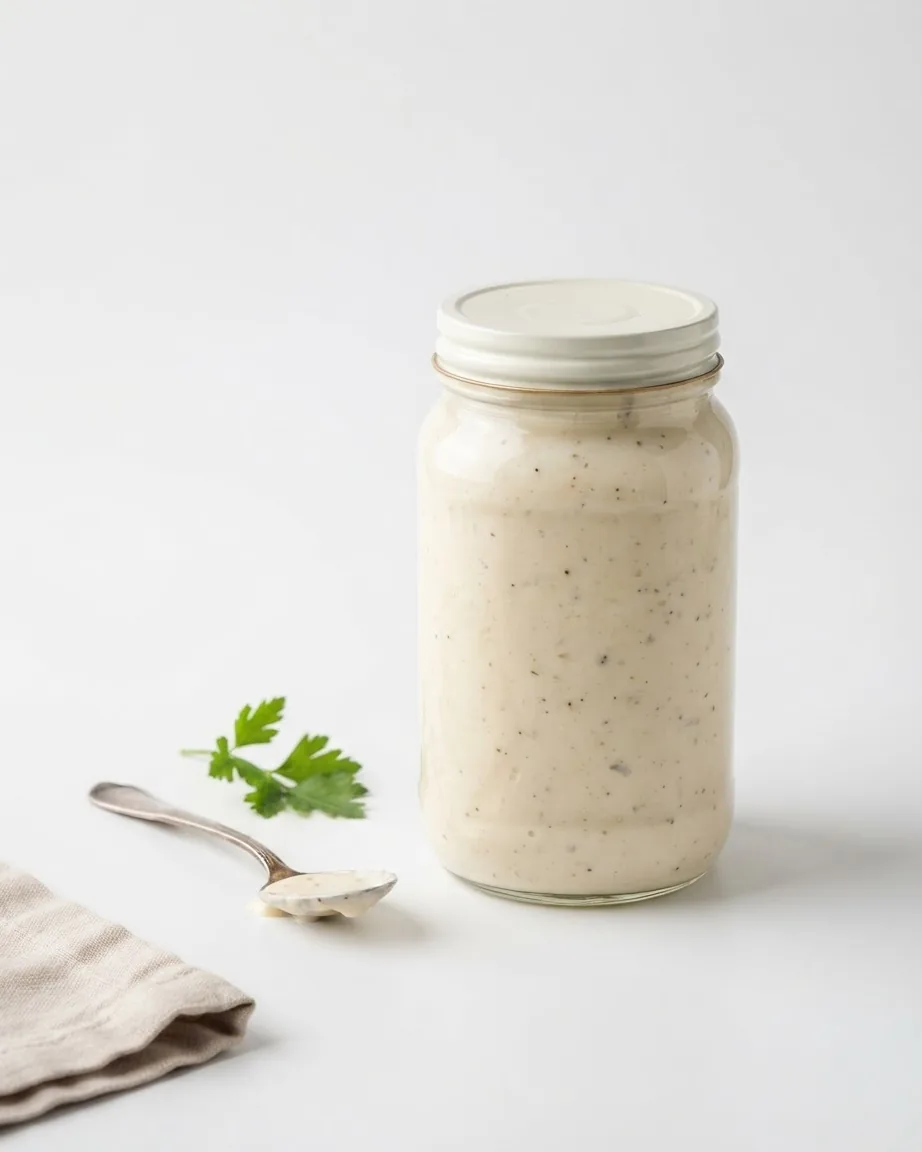
The single biggest source of confusion in alfredo sauce nutrition facts is that every source counts a different amount of food. The standard breakdown uses a 260-gram portion. Olive Garden’s figures use an unspecified restaurant “serving.” Homemade keto and low-sodium numbers usually reflect a sixth of a batch. You cannot stack those side by side and call it a comparison unless you first note what each one weighs.
This is why two accurate labels can look like they contradict each other. A restaurant serving that reads higher isn’t necessarily a richer recipe; it may just be more sauce on the plate. Before you trust any Alfredo number, find the portion behind it. When a source only says “serving” without grams, treat its calorie and fat figures as directional rather than exact.
The same portion-first habit applies to any dairy-heavy food. If you want to see how a clean commercial panel reads line by line, our breakdown of the Parmesan Cheese Nutrition Facts: What a Tablespoon, an Ounce, and 100 Grams Actually Deliver shows the same food reported three ways so the weight is never ambiguous.
1404 mg vs 184 mg: The Sodium Gap That Decides Your Plate
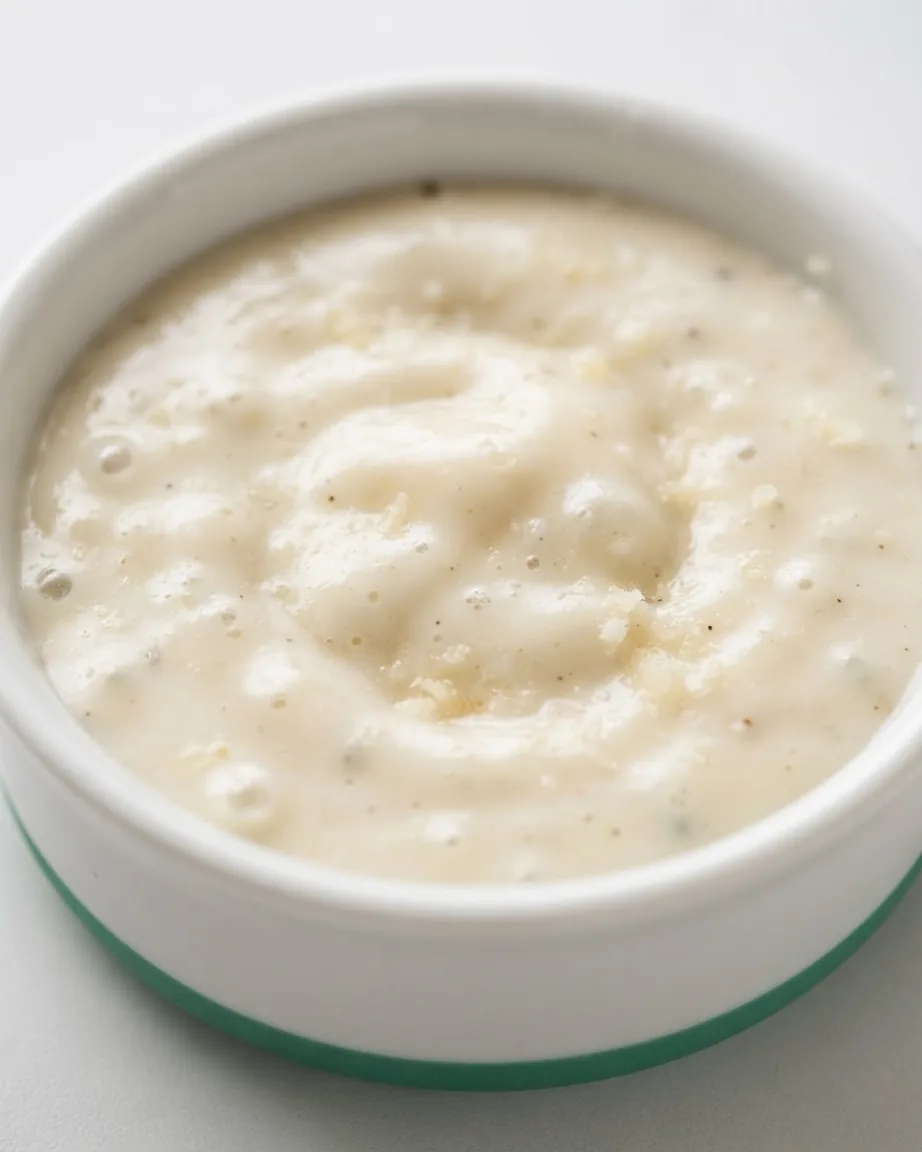
Sodium is where Alfredo separates the people who can eat it freely from the people who need to plan for it. The standard 260-gram portion’s 1404 milligrams reaches 59 percent of the daily value in one sitting. For anyone managing blood pressure or kidney load, that is a meaningful chunk of a full day’s allowance.
The contrast is dramatic once you look at a version built for it. The Everyday Kidney Cook publishes a one-pot low-sodium fettuccine Alfredo that lands at about 184 milligrams of sodium per serving. That is a fraction of the standard portion’s load, achieved by keeping the surrounding ingredients low in salt rather than relying on the naturally salty cheese to carry the dish.
What makes that swap work is food-science plain: most of Alfredo’s sodium rides in on the aged, salted Parmesan and any added salt. Dial back those two inputs and the rest of the dish barely registers on the sodium scale. That same recipe reports 17 grams of protein per serving, roughly equivalent to two ounces of meat, so you are not trading salt for an empty plate. And it comes together fast, from start to finish in under 30 minutes.
If you are cooking for someone on a sodium restriction, the CDC’s plain-language guidance on reducing sodium explains why the difference between 1404 and 184 milligrams isn’t a rounding matter – it is the gap between one dish eating most of a day’s budget and one that leaves you room for everything else.
5 Grams of Carbs: Keto Compatibility, Restaurant vs Homemade
Alfredo has a reputation as a keto safe harbor, and the numbers mostly back it up – but “mostly” is doing work. WebMD’s rundown of how to eat keto at Olive Garden puts the restaurant’s Alfredo at 43 grams of fat, 5 grams of carbs, and 8 grams of protein per serving. Five grams of carbohydrate is low, but on a strict keto day that is not nothing, especially once pasta or breadsticks enter the picture.
A homemade keto version tightens it further. Ruled Me’s keto Alfredo sauce comes in at 277 calories and 27.7 grams of fat per serving, with 2.9 grams of net carbs and 5.1 grams of protein. That net-carb figure is what a strict keto tracker actually cares about, and it beats the restaurant number while running leaner on total calories too.
So the decision splits cleanly. If you are eating out and counting carbs loosely, Olive Garden’s 5 grams is workable. If you are logging net carbs to the gram, the homemade route at 2.9 grams gives you margin – and control over exactly what goes in. The restaurant version’s higher fat (43 grams) also means a bigger calorie hit than the 277-calorie home batch, which matters if you are watching total intake rather than carbs alone.
Under 30 Minutes for 17 Grams of Protein: The Specialized-Diet Versions
Two of the sourced recipes are built for specific needs, and both answer a practical question: what do you actually get for the effort? The low-sodium kidney-friendly fettuccine Alfredo delivers 17 grams of protein per serving – the equivalent of about two ounces of a meat or protein serving – and cooks in under 30 minutes in one pot. For a weeknight where someone at the table has a renal or blood-pressure restriction, that combination of speed and a real protein number is the whole reason to pick it.
The keto version answers a different question. At 5.1 grams of protein and 27.7 grams of fat per serving, it is engineered to keep you in fat-forward macros, not to be a protein source. Knowing which job a recipe is doing keeps you from reaching for the wrong one. A sauce optimized for ketosis won’t hit a protein target, and a sauce optimized for low sodium won’t necessarily be lowest in fat.
If you cook these alongside a pasta night, the same portion discipline you use for sauce applies to what you pair it with. Our guide to pantry basics is the wider home for this kind of by-the-label thinking across the staples you already keep on hand.
The Micronutrients These Labels Don’t Print
Here is a gap worth naming outright: none of the standard Alfredo breakdowns surface the micronutrients you would expect from a butter-cream-Parmesan dish – calcium, vitamin D, and potassium chief among them. Alfredo is dairy-heavy, so those nutrients are almost certainly present, but the recipe calculators and restaurant figures used here simply don’t itemize them. Do not assume a number that isn’t printed.
Potassium in particular is why the kidney-friendly framing matters. Renal diets often restrict potassium as well as sodium, and a dish’s potassium load can swing based on the dairy and any added ingredients. Because the sourced labels don’t list it, the responsible move is to check with whoever manages that diet rather than guess. For general context on what these dairy minerals do, the NIH Office of Dietary Supplements maintains a plain fact sheet on calcium that reads without a nutrition degree.
If you like your dairy numbers reported cleanly by variety, we do the same variety-by-variety work in our Fairlife Milk Nutrition Facts: The Full US Label Breakdown by Variety – a useful companion when you are estimating the dairy backbone of a homemade sauce.
Alfredo Nutrition Table: Four Versions Side by Side
Because each source counts a different portion, this table keeps the original serving basis for each version rather than pretending they are interchangeable. Read the serving column first, then the numbers.
- Standard (260g portion): 382 calories · 39g fat · 24.9g saturated fat · 1404mg sodium – source: MyFoodData recipe calculator
- Olive Garden (restaurant serving): 43g fat · 5g carbs · 8g protein – source: WebMD
- Homemade keto (per serving): 277 calories · 27.7g fat · 2.9g net carbs · 5.1g protein – source: Ruled Me
- Low-sodium kidney-friendly (per serving): ~184mg sodium · 17g protein · under 30 minutes to make – source: The Everyday Kidney Cook
Two practical reads come out of this. First, if sodium is your constraint, the kidney-friendly version at about 184 milligrams is the only one in this set that leaves your daily salt budget mostly intact. Second, if net carbs are your constraint, the homemade keto version at 2.9 grams undercuts even the restaurant’s 5 grams while running lighter on calories. The standard 260-gram portion is the richest of the four on fat and by far the highest on sodium – accurate as a restaurant-style serving, but not the number to quote for a controlled diet.
One standing caveat applies to all four rows: brands and kitchens change recipes without announcement, so a panel that is right today can shift on the next batch. These figures are read off the sources named, not independently weighed.
Frequently Asked Questions
Is Alfredo sauce keto-friendly?
Generally yes, since it is fat-forward and low in carbohydrate. Olive Garden’s serving lists 5 grams of carbs, while a homemade keto version drops to 2.9 grams of net carbs. If you track strictly, the homemade route gives more margin and runs lighter at 277 calories versus the restaurant’s higher fat load.
Why is Alfredo sauce so high in sodium?
Most of the sodium rides in on aged, salted Parmesan and any added salt, not the cream itself. That is why a standard 260-gram portion hits 1404 milligrams while a version built with low-sodium ingredients around the cheese can land near 184 milligrams per serving without losing the dish’s character.
Which serving size should I trust for Alfredo?
Always check the weight behind the word “serving.” The standard figures use a 260-gram portion, Olive Garden uses an unspecified restaurant serving, and homemade recipes typically report a sixth of a batch. Two accurate labels can look contradictory purely because they count different amounts of sauce.
How much saturated fat is in a standard portion?
A 260-gram portion carries 24.9 grams of saturated fat, which reaches 124 percent of the daily value on its own. That clears the full recommended daily ceiling in one serving, which matters more than the calorie count if you are watching saturated fat for heart or cholesterol reasons.