
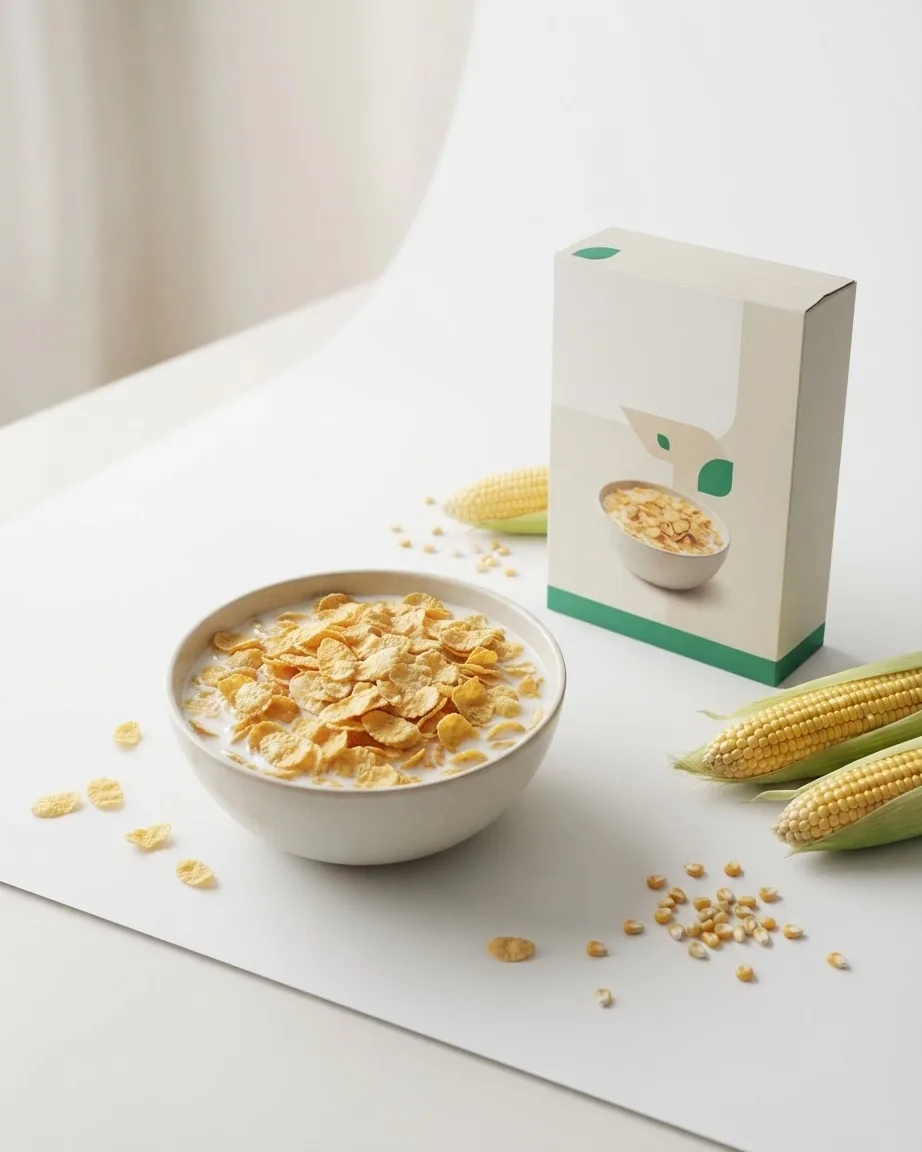
Salt is the fourth ingredient in Kellogg’s Corn Flakes. That single line on the box reframes everything people assume about a “plain” cereal, because a food most of us file under bland and harmless carries 300mg of sodium in one standard bowl. The corn flakes nutrition facts that matter most aren’t the calories everyone quotes; they’re the numbers hiding behind the pale, sweet-looking flakes: sodium, added sugar, and a glycemic index that runs higher than a lot of foods you’d never call a “diet” breakfast.
This walks through each line on the panel, tells you which serving size the number is tied to, and shows what changes the moment you pour milk over the bowl.
The Answer, Straight Off the Panel

A standard serving of Kellogg’s Corn Flakes is 1 1/2 cups (42g) and logs 150 calories. That serving carries 36g of carbohydrates, 4g of added sugars, and 300mg of sodium, which is 13 percent of a daily limit. The cereal is heavily fortified, delivering 12mg of iron (60% DV) per serving. Corn flakes carry a high glycemic index of 81 and a glycemic load of 21 per serving. Almost no one eats them dry: whole milk adds roughly 8 grams of protein and about 150 calories to the bowl, changing the meal’s real profile.
Which Serving Size the Number Is Tied To

Before any calorie count means anything, you have to know what portion it’s counting. This is where corn flakes trip people up more than almost any other cereal, because three different baselines float around online and each one tells a different story.
The official figure from WK Kellogg Co sets the serving at 1 1/2 cups, or 42g, and reports 150 calories against it. That’s the number printed on the box in a U.S. kitchen. But generic nutrition databases frequently report against a 100g baseline instead, and at 100g the same cereal shows 357 calories, per Eat This Much. A third common baseline, a 1-cup 28g portion, sits below the label serving entirely.
None of these figures is wrong. They’re measuring different amounts of the same flakes. The mistake to avoid is grabbing a 357-calorie number off one page and a 300mg sodium number off the box and treating them as the same meal. When you compare corn flakes to anything else, anchor to the 42g label serving, because that’s the portion the sodium and sugar figures below are built on.
The Full Macro Line for a 42g Serving
Here’s what one label serving actually carries, read off the panel and laid out so you don’t have to hunt for it.
- Serving size: 1 1/2 cups (42g)
- Calories: 150
- Total carbohydrates: 36g
- Added sugars: 4g
- Sodium: 300mg (13% of a daily limit)
- Iron: 12mg (60% DV)
The carbohydrate figure is the headline: 36g out of a 42g serving is carbohydrate by weight. That’s what a milled, dried corn flake is. Protein and fat are both minor here, which is exactly why the dry cereal doesn’t hold you long. There’s very little to slow digestion down, and that matters more than the calorie count for anyone watching blood sugar.
The 100g baseline reported by Eat This Much shows 357 calories, which is useful only if you weigh your cereal. Most people pour by volume, so the 42g label serving is the one that maps to your actual bowl.
The 4g of Added Sugar That Isn’t the Real Problem

Corn flakes look tame on the sugar line. Four grams of added sugar per serving is genuinely low for a boxed cereal, and it’s why the box gets waved through as the “sensible” choice next to the marshmallow options. If you’ve compared it to something like the Fruit Loops label or the Lucky Charms panel, corn flakes win the added-sugar contest by a wide margin.
But the sugar number is a decoy for the reader who actually cares about blood sugar. GlycemicList puts the glycemic index of corn flakes at 81 and the glycemic load at 21 per serving. An index of 81 sits in the high range, and it comes not from added sugar but from how finely the corn is milled. The processing that makes the flakes crisp also strips out the structure that would normally slow digestion, so the starch converts to blood glucose fast.
The practical decision this settles: if you’re managing diabetes or eating low-carb, reading only the 4g added-sugar line and calling the cereal safe is the error. The glycemic load of 21 tells a different story than the sugar gram count, and for blood-sugar purposes it’s the figure to trust. You can verify the general framework for glucose and diet on MedlinePlus, which covers how carbohydrate-heavy foods move blood sugar.
Hidden Sodium and Why Ingredient Order Matters

The ingredient list on the box is ranked by weight, largest first. On Kellogg’s Corn Flakes, salt is the fourth ingredient. For a cereal nobody thinks of as salty, that placement is the tell, and it lands the bowl at 300mg of sodium per 42g serving, or 13 percent of a daily limit.
That’s more sodium than a lot of savory snacks carry per serving. It rivals the sodium in some crackers; if you’ve looked at the Club Crackers numbers, you already know how a “plain” product can quietly stack salt. Corn flakes do the same thing, just under a breakfast label instead of a snack one.
The number moves with your pour. Because sodium is reported against the 42g serving, a heaping bowl that’s closer to two full servings carries proportionally more before you’ve added anything. That’s the figure to watch if you’re tracking sodium for blood pressure, and it’s the reason the “bland cereal” label is misleading. The flakes taste mild; the sodium doesn’t read as salty because sugar and grain mask it.
Iron Fortification and the 60% DV Line
The one place corn flakes genuinely outperform their reputation is fortification. A single 42g serving delivers 12mg of iron, which is 60 percent of the Daily Value. That iron isn’t naturally in corn; it’s sprayed on during manufacturing, which is why a cereal this simple can post a micronutrient number this high.
For households where iron intake is a concern, that 60% DV per serving is a real contribution to the day. It’s worth knowing that the iron in fortified cereal is non-heme iron, the plant-and-additive form, which the body absorbs less efficiently than the iron in meat. Pairing the bowl with a vitamin C source, like orange juice, helps absorption. For the full picture on iron needs and forms, the NIH Office of Dietary Supplements keeps a plain-language fact sheet.
This is the number a generic breakfast article usually skips, and it’s the one that might actually swing your choice: if you’re feeding kids who need iron, 60% DV in a low-sugar cereal is a fair trade for the sodium.
Corn Flakes Nutrition Facts Once You Add Milk
Here’s the section that matters most, because almost nobody eats corn flakes dry. Every number above describes flakes in an empty bowl. The meal you actually eat includes milk, and milk changes the corn flakes nutrition facts in ways that work in your favor.
Whole milk on the bowl adds roughly 8 grams of protein and about 150 calories to the meal. That protein is the missing piece from the dry panel. Corn flakes on their own are almost all carbohydrate, but the milk brings protein and fat that slow digestion, which softens the high glycemic hit the flakes deliver alone. The glycemic load of the actual bowl runs lower than the 21 the dry cereal posts.
The tradeoff is calories and, depending on the milk, saturated fat. A dry serving is 150 calories; whole milk roughly doubles the meal to around 300. Skim or low-fat milk cuts the added calories and fat while keeping most of the protein, which is the swap to make if you want the blood-sugar benefit without the calorie jump. For combined cereal-and-milk figures, the searchable database at USDA FoodData Central lets you build the exact pairing you drink.
The decision this settles: don’t judge corn flakes by the dry panel alone. The bowl you eat is a different food than the box describes, and the milk you choose changes the answer more than the cereal does.
How Corn Flakes Stack Against Close Alternatives
Context turns a number into a decision. Set the 42g corn flakes serving next to two things people actually weigh it against at breakfast.
Against sweeter boxed cereals, corn flakes win on added sugar and lose nothing on calories, since most run in the same 150-calorie range per serving. Where corn flakes fall behind is fiber and protein: the milling that gives them a glycemic index of 81 also leaves little to hold you between meals. A whole-grain or bran cereal at similar calories usually carries more fiber and a lower glycemic load, which is the reason those cereals sit better for blood-sugar management even when the calorie line looks identical.
Against a puffed-rice treat, the comparison flips toward corn flakes. If you’ve seen the Rice Krispie Treat numbers, you know a bound, sweetened rice snack piles on far more sugar per serving than a bowl of flakes. Corn flakes with milk is the steadier choice of the two.
For a wider look at how boxed pantry staples log their numbers, our pantry basics section lines up the panels side by side, and the same reading method applies to drinks like Diet Dr Pepper, where the label hides as much as it shows.
Corn Flakes Nutrition Table
The clean version, per 1 1/2 cup (42g) serving, sourced from the brand panel unless noted.
- Calories (42g): 150 | Calories (100g): 357
- Total carbohydrates: 36g
- Added sugars: 4g
- Sodium: 300mg (13%)
- Iron: 12mg (60% DV)
- Glycemic index: 81 (high)
- Glycemic load: 21 per serving
- Salt rank in ingredients: 4th
- With whole milk: +150 calories, +8g protein (approx.)
One caution worth keeping: brands adjust recipes and manufacturing without announcement, so a box in your cabinet can differ slightly from any figure published here. The panel on your own box is always the final word.
What the Bowl You Actually Eat Logs (Two-Serving Pour + Whole Milk)
The panel is built on a 42g serving, but a heaping bowl runs closer to two of them – and nobody eats it dry. Here is that real meal, worked out from the label numbers so you don’t have to double anything in your head. A two-serving pour with whole milk carries noticeably more calories and sodium than the single-serving panel, before you touch anything else on the table.
- Calories: 150 dry per serving, plus ≈150 from whole milk on a single-serving bowl
- Sodium: 300mg per 42g serving (13% of a daily limit)
- Added sugar: 4g per serving – still low, still the wrong number to trust for blood sugar
- Iron: 12mg per serving (60% DV)
- Protein: the dry flakes bring almost none; the milk adds ≈8g – that’s where the meal’s protein comes from
This also explains the serving-size confusion. A 100g database entry looks alarming purely because it’s counting more than twice the flakes – not because the cereal changed. Anchor to your actual pour, and the numbers that move most are sodium and iron, both of which climb the moment your bowl passes one label serving.
Frequently Asked Questions
Why do corn flakes show different calories on different sites?
Because sites measure different amounts. The brand panel reports against a 1 1/2 cup (42g) serving at 150 calories, while generic databases often use a 100g baseline, which shows 357 calories. A third format uses a smaller 28g cup. Anchor to the 42g label serving, since that’s what matches a normal pour.
Are corn flakes a good choice for someone watching blood sugar?
They carry only 4g of added sugar, which looks fine, but the glycemic index is 81 and the glycemic load is 21 per serving. The fine milling makes the starch digest fast. Adding milk and protein lowers the real impact, but the dry cereal alone is a high-glycemic food despite the low sugar line.
How much sodium is really in a bowl of corn flakes?
A 42g serving carries 300mg of sodium, about 13 percent of a daily limit, because salt is the fourth ingredient. A heaping bowl that runs closer to two servings carries proportionally more before milk. It reads as bland, but the sodium is there.
Does adding milk make corn flakes healthier?
It makes the meal more complete. Whole milk adds roughly 8 grams of protein and about 150 calories, and the protein and fat slow digestion, easing the high glycemic hit of the dry flakes. Skim or low-fat milk keeps most of that protein while trimming the added calories and saturated fat.