The quaker oatmeal nutrition facts a reader wants depend entirely on which box and whether the number is read dry or cooked. Plain Old Fashioned Oats, measured dry at 1/2 cup, carry 150 calories with 0 g added sugars and 0 mg sodium. Flavored packets are a different food: Maple & Brown Sugar reaches 160 calories, 12 g added sugars, and 260 mg sodium. Original Instant plain sits between them.
Use this answer block to pick your number before reading further. Plain Old Fashioned Oats, per 1/2 cup dry (40 g), give 150 calories, 3 g total fat, 27 g total carbohydrate, 4 g fiber (2 g of it soluble), 1 g total sugars, 0 g added, 5 g protein, and 0 mg sodium. Cooked oats read lower only because water is added, not because the oats changed. Flavored instant adds sodium and added sugar from the flavoring, not from the grain. Match the variant to the panel and the numbers stop contradicting each other.
What the plain Old Fashioned panel reports, dry
The brand’s digital Nutrition Facts panel from PepsiCo / The Quaker Oats Company lists plain Old Fashioned Oats at 150 calories, 3 g total fat (4% DV) of which 0.5 g is saturated fat, 27 g total carbohydrate (10% DV), 0 g added sugars, and 5 g protein.
Minerals per serving include iron 1.5mg (8% DV) and thiamin 0.2 mg (15% DV). USDA FoodData Central, drawn from The Quaker Oats Company record, confirms the sole ingredient as whole grain rolled oats and the 40 g household serving of 1/2 cup: no additives, one grain.
The dry versus cooked table that reconciles the numbers
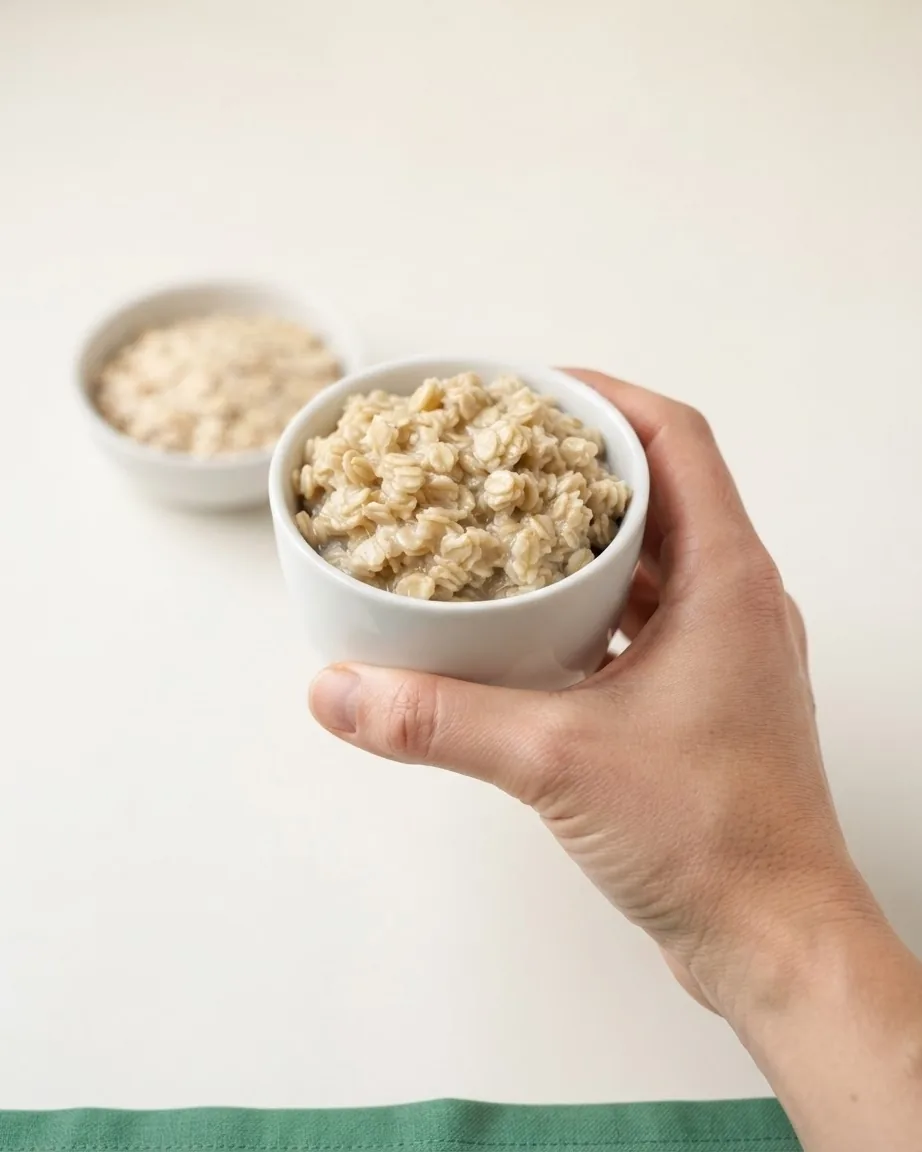
The table below lines up the same oats measured dry, measured per 100 g, and measured cooked, so a 150-calorie box and an 83-calorie serving stop looking like a conflict.
| Basis | Source | Calories | Carbohydrate | Sodium |
|---|---|---|---|---|
| 1/2 cup dry (40 g) (per USDA / EWG) | Brand panel | 150 | 27 g | 0 mg |
| Per 100 g | USDA FoodData Central | 375 kcal | 67.5 g | |
| 1/2 cup cooked, no salt (117 g) | USDA FNS fact sheet | 83 | 14 g | 5 mg |
The USDA per-100 g figure and the per-40 g label figure must not be averaged. Carbohydrate at 27 g per 40 g and 67.5 g per 100 g agree directionally. The cooked ½-cup (117 g) reading is a typical value for quick-cooking rolled oats cooked without salt, where roughly 1 ounce dry or 1/2 cup cooked credits as one ounce-equivalent of grains. See also: our overnight oats nutrition facts guide.
What’s in Quaker Instant Oatmeal, plain versus flavored
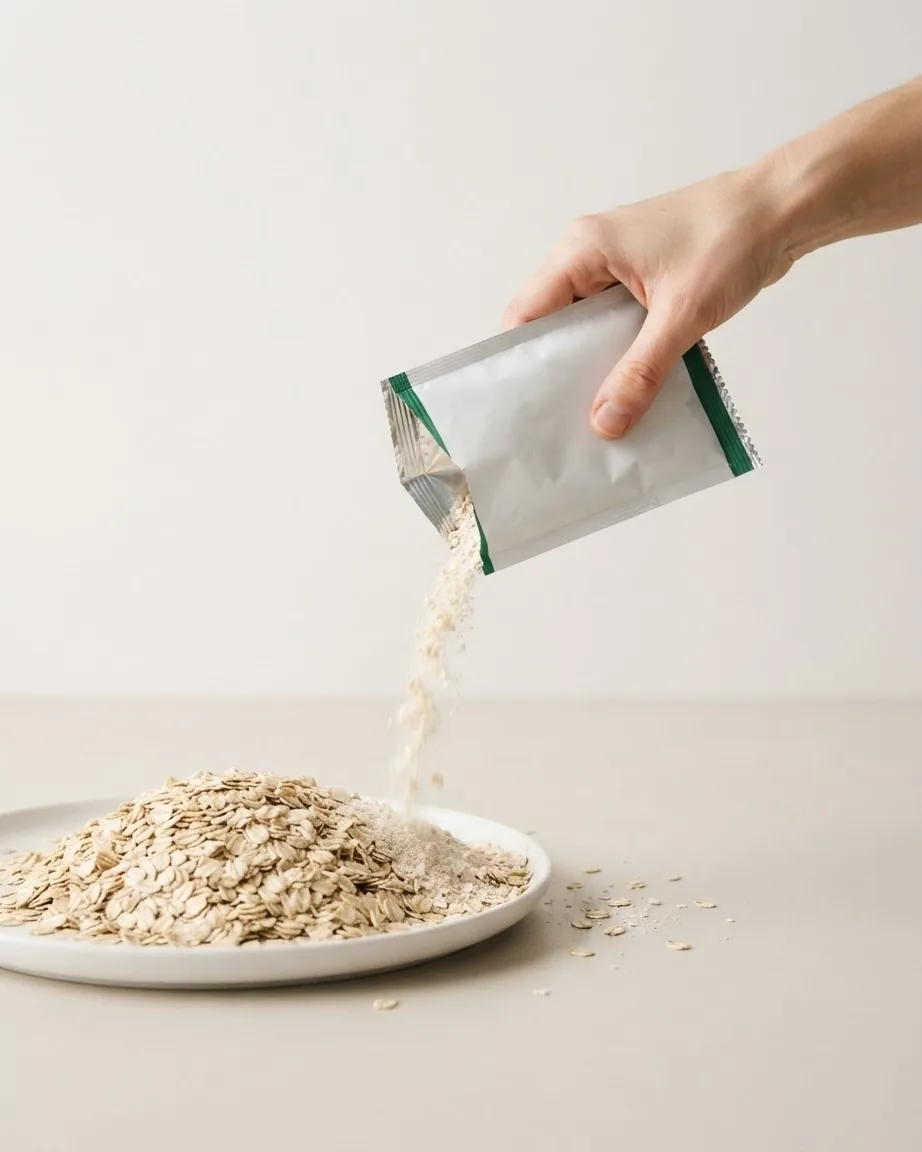
Original Instant plain, per the brand panel, provides 100 calories, 2 g total fat including 0.5g saturated fat, 18 g total carbohydrate (7% DV), 0g total sugars, and 75 mg sodium (3% DV). It is fortified: iron reaches 7.8 mg (40% DV), well above the 1.5 mg in plain rolled oats. The Environmental Working Group’s EWG Food Scores states these figures per 28.0 g and lists the fortified ingredient line. Flavoring, not the oat, drives the rest of the gap:
- Original Instant plain: 75 mg sodium, 0 g total sugars, 7.8 mg iron, fortified but unsweetened.
- Maple & Brown Sugar (U.S.): 160 calories, 33 g carbohydrate, 12 g added sugars, 260 mg sodium.
- Maple & Brown Sugar (Canada): 13 g sugars and 190 mg sodium per 43 g packet, per Quaker Canada.
The two Maple & Brown Sugar readings differ by jurisdiction and packet weight; both are shown rather than merged. Plain oats carry 0 g added sugars; the added sugar in a flavored packet is the flavoring.
The quaker oatmeal nutrition facts that carry the heart-health claim
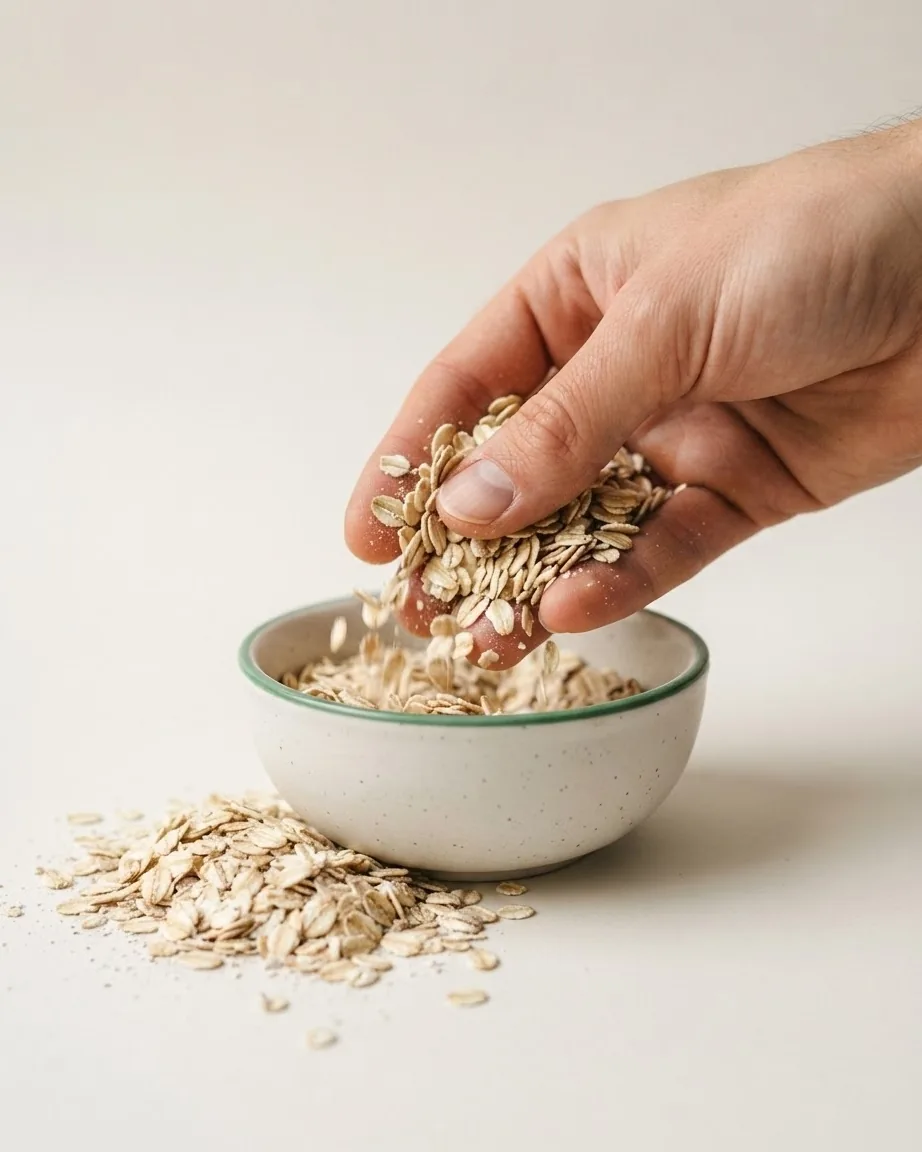
Of the 4 g dietary fiber in plain Old Fashioned Oats, 2 g is soluble. PepsiCo’s product page states that “3 grams of soluble fiber daily from oatmeal daily in a diet low in saturated fat and cholesterol may help reduce the risk of heart disease. This cereal has 2 grams per serving.” One serving supplies 2 g of that 3 g daily reference, two-thirds.
The claim is conditional on the wider diet being low in saturated fat and cholesterol; the fiber figure alone does not carry it. USDA FoodData Central also records manganese at 1.200 mg (52% DV) per 40 g serving. For the half-cup rolled-oats breakdown, see our Quaker Oats nutrition facts guide, and the wider pantry basics section.
Why one instant packet reads 100 calories and another reads 130
The current brand label gives Original Instant at 100 calories and 18 g carbohydrate per 28 g serving. An older USDA record referenced through MyFoodData, built from USDA FoodData Central, reads 130 calories and 24 g carbohydrate per 1 packet of 35 g. The gap is serving weight (28 g versus 35 g) plus formulation and record date, not one source being wrong.
When you read a database value, confirm the gram basis before trusting the calorie count: a per-100 g entry and a per-packet entry are not the same measurement. NutritionValue.org, drawn from USDA data, places the plain oats at 150 calories per 40 g and above 68% of database foods by calories per 100 g.
How Much of Each Oatmeal’s Carbohydrate Is Fiber or Added Sugar
The carbohydrate line on a Quaker panel holds different things depending on the variant. On the PepsiCo / The Quaker Oats Company panel for plain Old Fashioned Oats, a serving contains 27 g total carbohydrate, 4 g dietary fiber, and 0 g added sugars. On the U.S. Maple & Brown Sugar panel, a serving contains 33 g total carbohydrate, 3 g dietary fiber, and 12 g added sugars.
Inside the plain-oat fiber itself, dividing the 2 g of soluble fiber by the 4 g of total fiber on the Old Fashioned panel splits it evenly: half the fiber is soluble, half is not.
- Old Fashioned Oats: 2 g soluble ÷ 4 g total fiber = 50%, so half the fiber is soluble (PepsiCo / The Quaker Oats Company panel).
Frequently Asked Questions
Is Quaker oatmeal high in sugar?
Plain Old Fashioned Oats carry 0 g added sugars and 1 g naturally occurring. The sugar lives in flavored packets: the U.S. Maple & Brown Sugar panel lists 12 g added sugars (24% DV), and the Canadian version records 13 g. Switching from a sweetened packet to plain rolled oats removes essentially all of that added sugar.
What is the difference between rolled oats and oatmeal?
“Oatmeal” names the finished dish or any oat product; rolled oats are the specific cut. USDA FoodData Central lists plain Quaker’s sole ingredient as whole grain rolled oats, served at 40 g dry. Instant oats are rolled thinner and often fortified: Original Instant shows 7.8 mg iron against 1.5 mg in the plain rolled version.
Is 1 cup of oatmeal a day too much?
A 1/2 cup dry (40 g) serving is the panel’s basis, so one cup dry is two servings: roughly 300 calories and 54 g carbohydrate before toppings. The variant and the dry-versus-cooked basis matter more than the cup count.