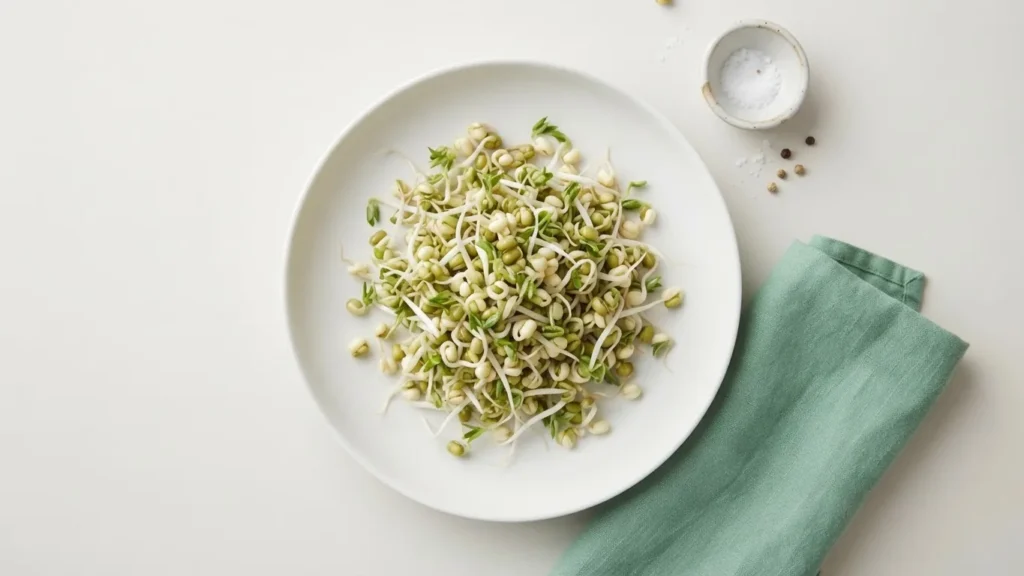
Raw sprouted mung beans carry 31.2 kcal in a one-cup serving. Pour a cup of raw soybean sprouts instead and the reading climbs to 42.7 kcal, same measuring cup, different plant. Settling which one is in the bag comes before any sprout beans nutrition facts make sense, because a package labeled “bean sprouts” rarely says which species you bought. The figures here are read off published food-composition tables at a 1-cup serving, logged the way the rest of our pantry basics are.
Here are the sprout beans nutrition facts for one cup, raw: sprouted mung beans supply 31.2 kcal, 3.16 g protein, 6.18 g carbohydrate, 0.19 g total fat, and 1.87 g dietary fiber, with 154.96 mg potassium, 13.73 mg vitamin C, and 63.44 mcg folate. Raw soybean sprouts, a separate food, run higher at 42.7 kcal and 4.58 g protein per cup. Boiling and draining mung bean sprouts without salt produces a different record again: 26.04 kcal and 2.52 g protein per cup. Whether to eat any of them raw raises a separate food-safety question with its own answer.
Mung or soybean? The species sets the calorie line
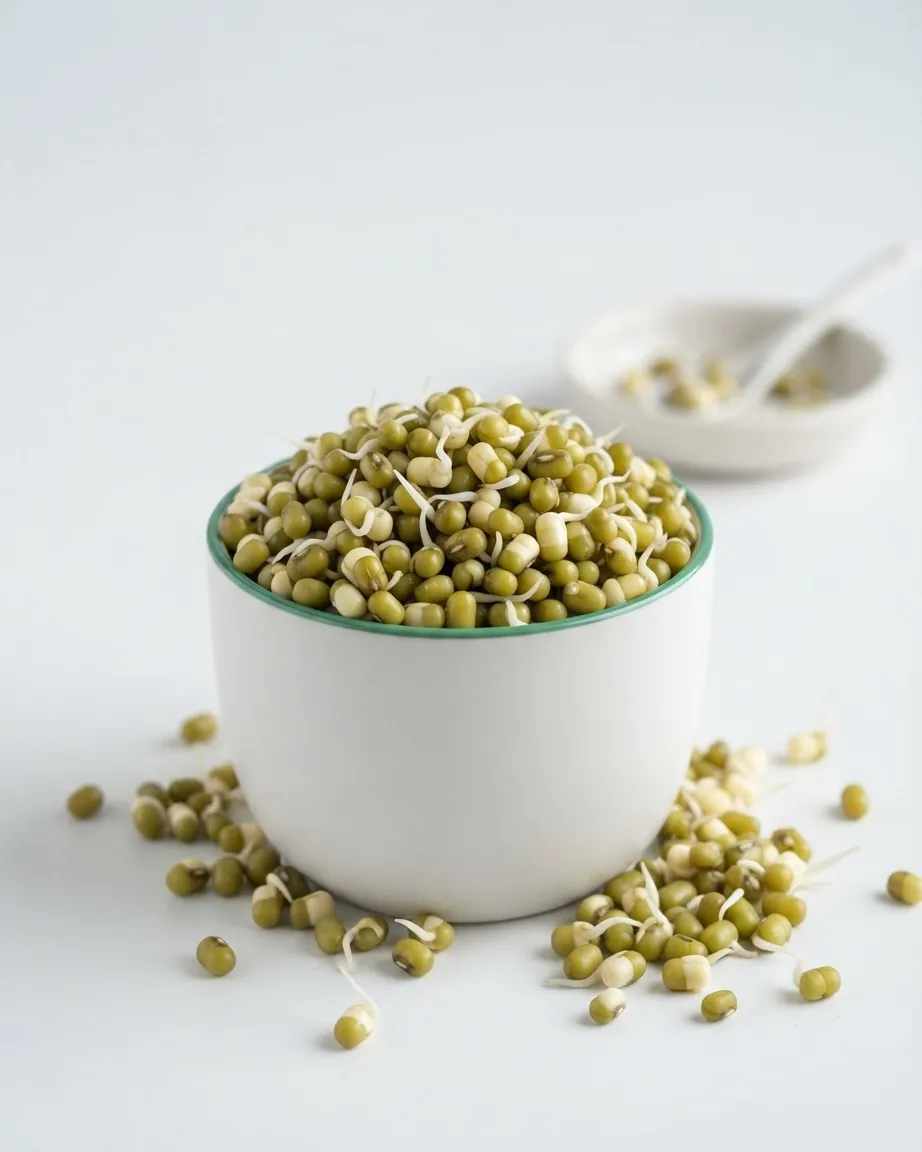
These are two foods, not one food cooked two ways. Per cup, raw sprouted mung beans sit at 31.2 kcal and 3.16 g protein; raw soybean sprouts sit at 42.7 kcal and 4.58 g protein. The mung figures come from the University of Rochester Medical Center food tables; the soybean figures from the University Hospitals tables. Averaging the two into a single “bean sprouts” number would misstate whichever one is actually on your plate.
Raw mung bean sprouts: the 1-cup macro panel
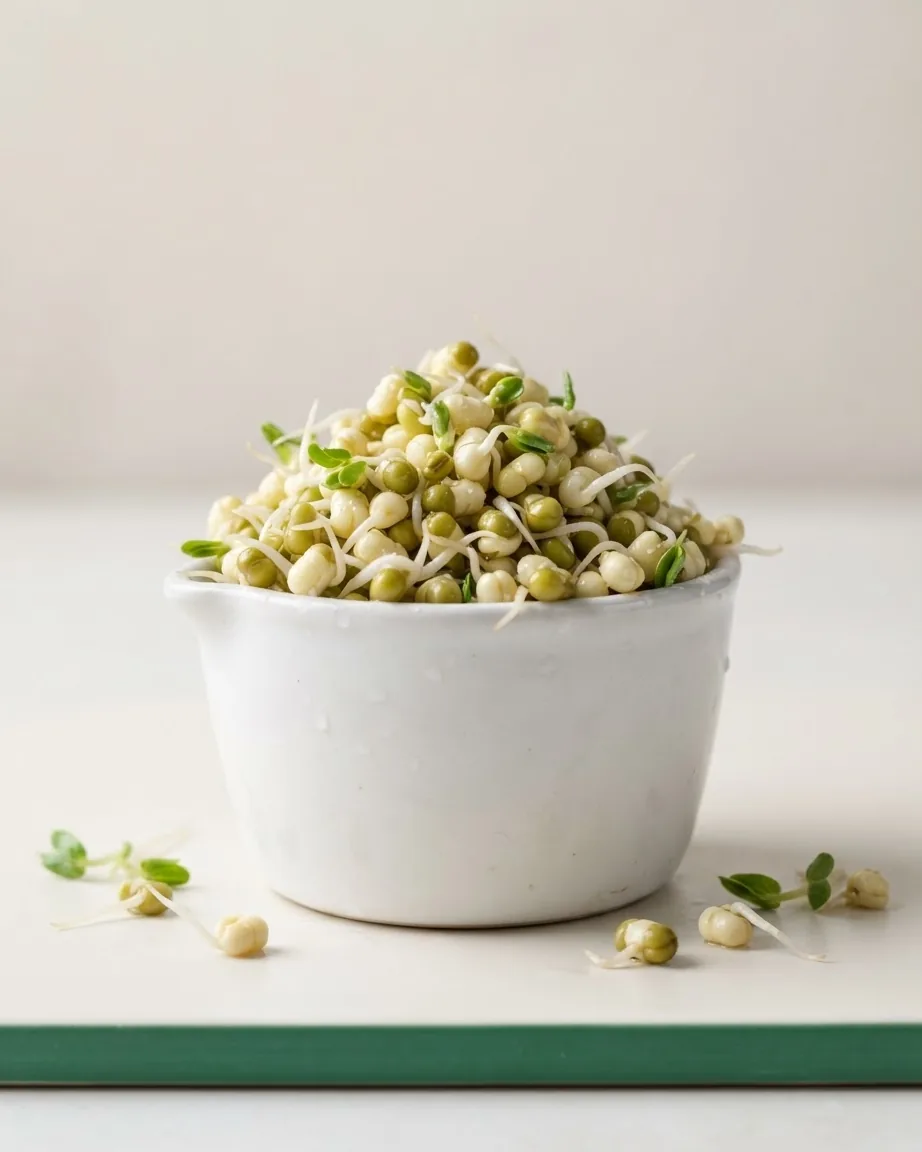
A cup of raw sprouted mung beans is mostly water and carbohydrate with a light protein load. The macro line, per the University of Rochester Medical Center table: 31.2 kcal, 3.16 g protein, 6.18 g carbohydrate, 0.19 g total fat, and 1.87 g dietary fiber. Fat is near zero; fiber is real but modest at under 2 g a cup, so these sprouts add crunch and bulk more than they move your fiber total. One thing the cited table does not carry is a sodium or added-sugar row, so neither is stated here rather than guessed. For other high-fiber choices, see our foods high in fiber roundup.
Potassium, vitamin C and folate in a cup of mung sprouts
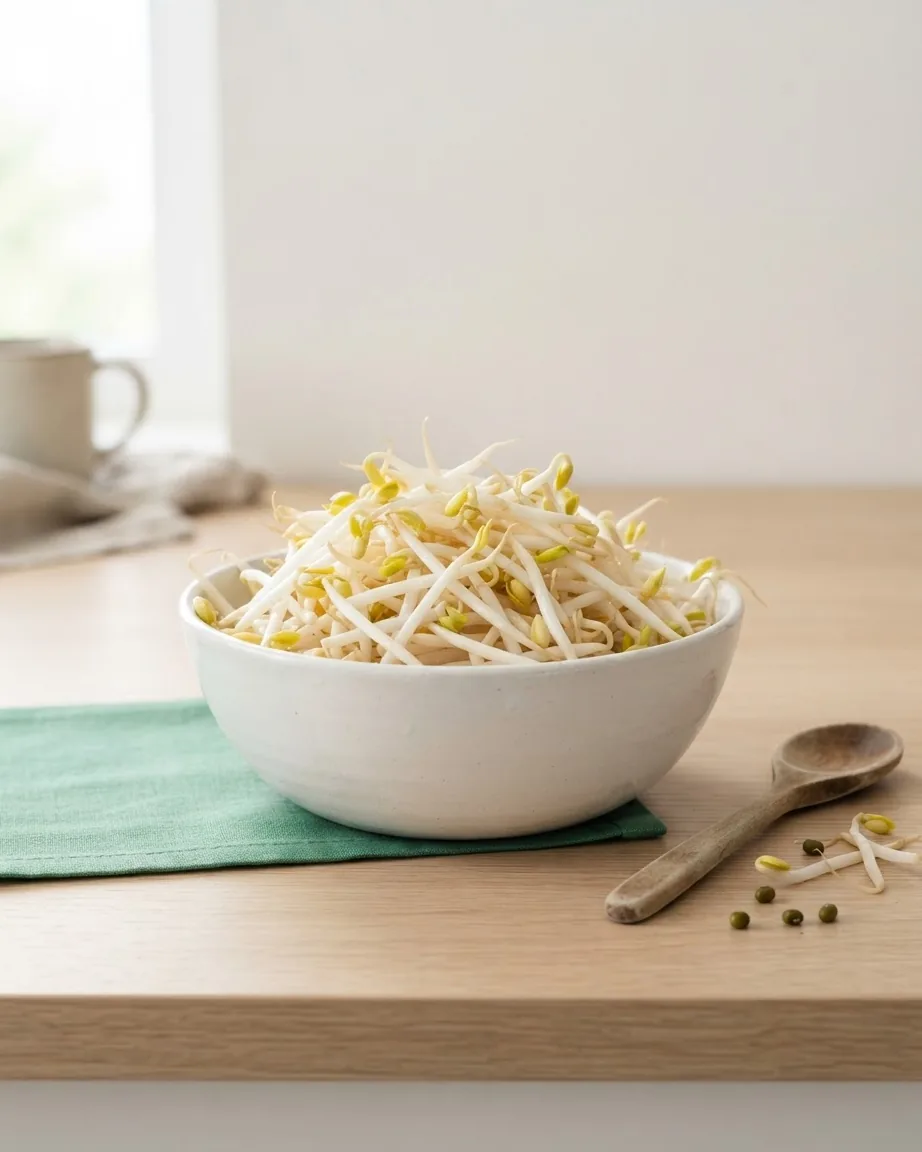
The micronutrient side is where the raw mung cup earns its place. The same University of Rochester Medical Center table logs 154.96 mg potassium, 13.73 mg vitamin C, and 63.44 mcg folate per cup. Vitamin C is heat-sensitive and water-soluble, which is one reason the raw entry and the boiled entry below are not interchangeable. Folate at 63.44 mcg a cup is the figure worth noting if you are tracking it, though it is a contributor, not a sole source. See also our bean sprouts guide.
Boiled and drained: a separate record, not a cooking-loss chart
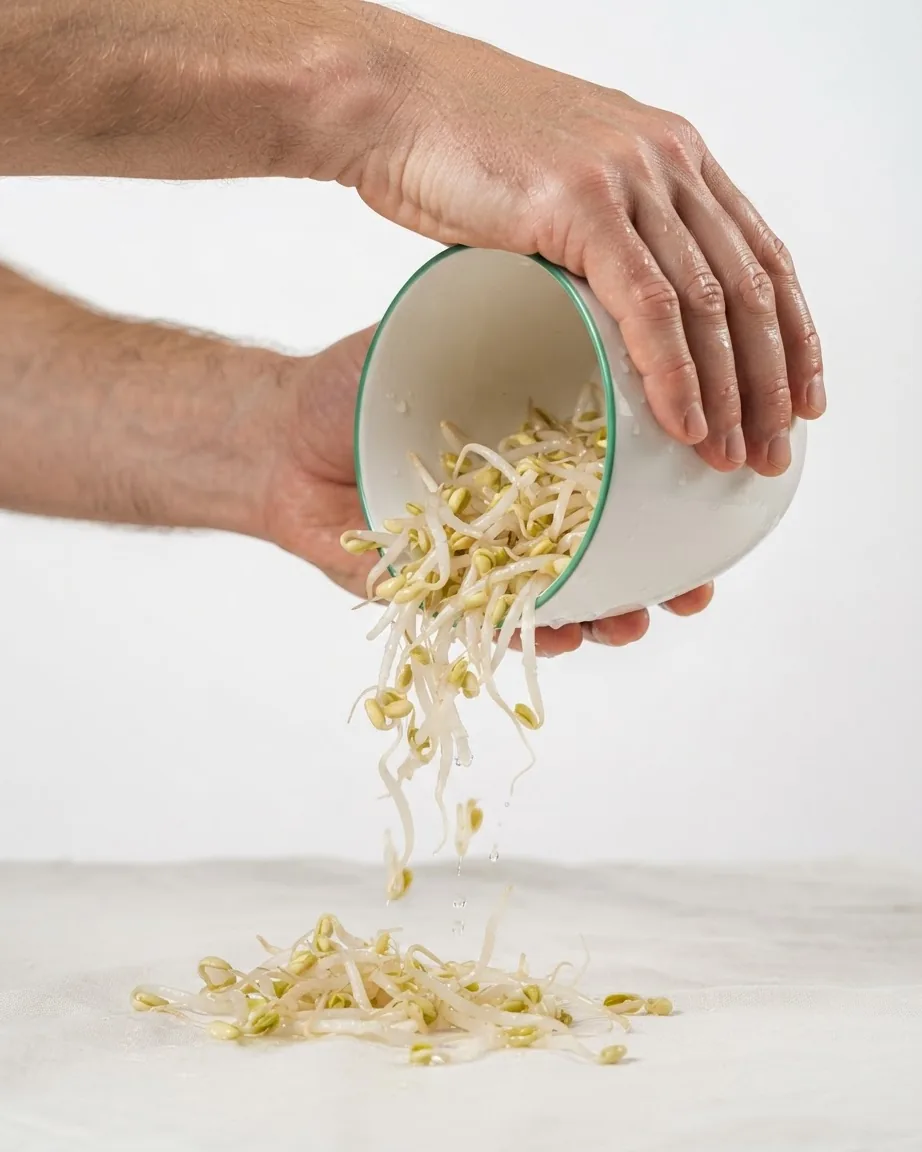
Boil mung bean sprouts and drain them without salt, and the University of Rochester Medical Center table reports 26.04 kcal, 2.52 g protein, 0.99 g dietary fiber, and 35.96 mcg folate per cup. Lower across the board than the raw cup. It is tempting to read that drop as “cooking destroys X,” but the comparison does not hold up that cleanly.
Here is why. The raw and boiled entries are two distinct preparation records, and the 1-cup portions behind them are not established as equal in weight. Cooked sprouts pack differently into a cup than raw ones, so part of any per-cup gap is packing, not nutrient loss. Without a matched gram basis, the honest read is that these are two separate measurements, each valid for its own preparation, and the difference between the raw 31.2 kcal and boiled 26.04 kcal should not be reported as a cooking-loss percentage.
Soybean sprouts are a denser food, not a swap
If a recipe calls for “bean sprouts” and you reach for soybean sprouts, the numbers shift. The University Hospitals table puts a raw 1-cup serving at 42.7 kcal and 4.58 g protein, both higher than the mung cup. Treating them as equal in a meal plan would overcount or undercount depending on which you actually used. For a bigger pure-legume protein and fiber load, whole cooked beans outrun either sprout; our navy beans figures sit in a different range entirely.
The raw-sprout safety call is separate from the nutrition call
Safety warning
A food can be low in calories and still be a riskier raw choice. Sprouting needs warm, humid conditions, and the U.S. Food and Drug Administration notes those same conditions favor bacteria including Salmonella, Listeria, and E. coli, as covered on its produce safety page. That is a microbiological issue, not a nutritional one, so the 31.2 kcal cup can be perfectly good nutrition and still carry raw-sprout risk.
The same FDA guidance tells people more vulnerable to foodborne illness to skip raw or lightly cooked sprouts of any kind, mung included. The Centers for Disease Control and Prevention sorts the choices plainly on its safer food choices page: raw or undercooked sprouts are the riskier option, and sprouts cooked until steaming hot are the safer one. Heat, not a quick rinse, is the control.
Sprout beans nutrition facts at a glance
One table, three records, read directly from the cited food-composition tables. Blank cells mean the source table did not list that value, not that the value is zero.
| Per 1 cup | Raw mung sprouts | Boiled mung, drained, no salt | Raw soybean sprouts |
|---|---|---|---|
| Calories | 31.2 kcal | 26.04 kcal | 42.7 kcal |
| Protein | 3.16 g | 2.52 g | 4.58 g |
| Carbohydrate | 6.18 g | not listed | not listed |
| Total fat | 0.19 g | not listed | not listed |
| Dietary fiber | 1.87 g | 0.99 g | not listed |
| Potassium | 154.96 mg | not listed | not listed |
| Vitamin C | 13.73 mg | not listed | not listed |
| Folate | 63.44 mcg | 35.96 mcg | not listed |
Mung figures: University of Rochester Medical Center. Soybean figures: University Hospitals. Panels can change without notice when a data source is revised, so the serving basis matters as much as the number.
Mung-to-soybean swap: what one cup actually costs you
If you grab soybean sprouts when a recipe says “bean sprouts,” here is the precise per-cup shift, worked from the two cited tables rather than rounded off. The protein jump is actually the larger of the two – which flips the usual framing that soybean is just “a bit heavier.”
- +11.5 kcal per cup (42.7 − 31.2), a 36.9% increase over the mung cup.
- +1.42 g protein per cup (4.58 − 3.16), a 44.9% increase – the protein climbs faster than the calories.
- Protein per 100 kcal: mung sprouts deliver 10.13 g (3.16 ÷ 31.2 × 100); soybean sprouts deliver 10.73 g (4.58 ÷ 42.7 × 100). So soybean isn’t only denser overall – it’s marginally more protein-efficient per calorie too.
Takeaway: swapping in soybean sprouts adds about a third more calories but nearly half again as much protein, so the substitution is a net win if protein is what you’re after, and a quiet calorie creep if it isn’t. Both figures come straight from the mung (University of Rochester Medical Center) and soybean (University Hospitals) 1-cup records.
Common questions on sprout beans nutrition facts (FAQ)
Can I eat raw sprouted mung beans while pregnant?
Federal guidance says no to raw. The U.S. Food and Drug Administration directs pregnant people away from raw sprouts and points to heat as the fix, stating cooking them thoroughly “significantly reduces the risk of illness.” Cook until steaming hot before eating. The nutrient profile does not change this answer; a low-calorie, folate-carrying cup is still a raw-sprout exposure during pregnancy.
How soon after eating contaminated sprouts might I get sick?
Most of the time, fairly fast. The U.S. Food and Drug Administration says dangerous foodborne bacteria usually bring on symptoms within 1 to 3 days of the meal. The outer window is wider than people expect, though: it can hit as quickly as 20 minutes after eating, or surface as late as 6 weeks later, which makes tracing a single bad batch harder than it sounds.
Does rinsing sprouts at home make them safe to eat raw?
Rinsing clears surface grit, but it does not remove the risk baked into how sprouts are grown. Because the warm, humid sprouting stage itself favors bacteria, the contamination can be inside the sprout, not just on it. Guidance points to thorough cooking as the control step, not washing. If you want them raw, the safer answer is to choose a lower-risk vegetable instead.